Same Himalayan flood, two truths: How China and Nepal control the story同一场喜马拉雅山洪,两种真相:中国和尼泊尔如何掌控舆论
HONG KONG, Sept 12 — China and Nepal have taken different approaches to information after a Himalayan flood, shaping what the public saw of a disaster that killed more than 1,400...
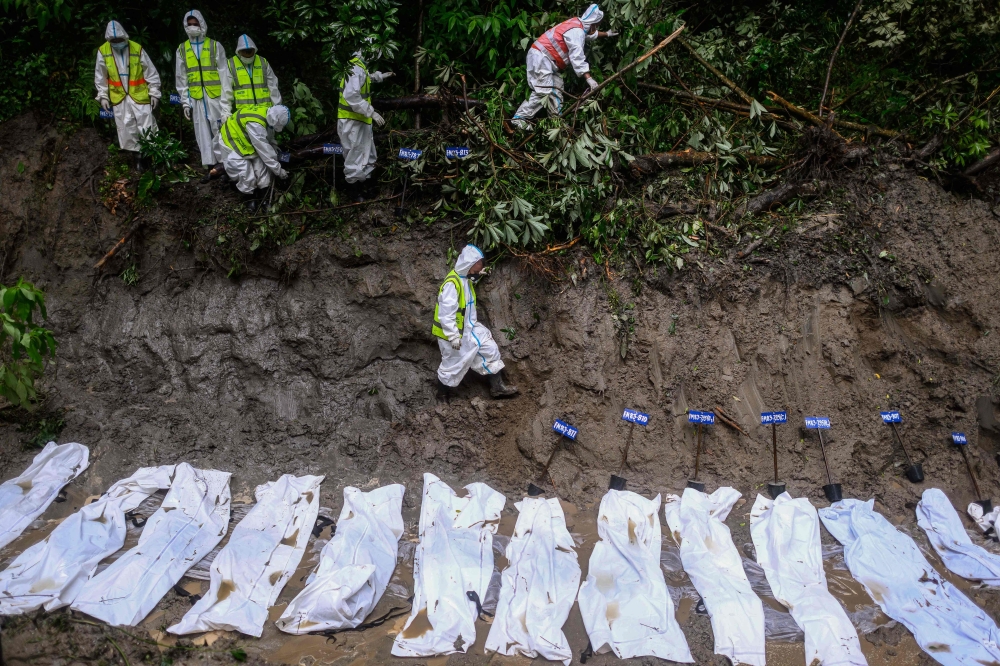
Following a catastrophic Himalayan flood on the China-Nepal border that resulted in more than 1,400 deaths and over 5,650 missing persons, China and Nepal adopted divergent information policies.
While China focused on suppressing dissenting narratives and eyewitness footage, emphasizing state-controlled recovery reports, Nepal provided regular updates, facilitating dialogue with victims' families and collaborating with social media platforms to manage misinformation.
Despite China's efforts to maintain a controlled narrative, discrepancies in reported fatalities, mainly due to geographical and scale factors, have fueled external conspiracy theories and mistrust, further scrutinized by organizations like Reporters Without Borders.
HONG KONG, Sept 12 — China and Nepal have taken different approaches to information after a Himalayan flood, shaping what the public saw of a disaster that killed more than 1,400 people.
The August 26 tsunami-like surge of water, mud and debris from a glacial mountain collapse on the China-Nepal border left more than 5,650 missing, including hundreds of foreigners.
Both China and Nepal have gone after fabricated posts on the flood.
But Beijing has gone further to suppress eyewitness video footage and punish people challenging official figures, in an information crackdown that rights groups say follows a familiar pattern.
Information transmitted by Chinese state media on the flood gave little voice to the missing people’s relatives and focused on emergency workers’ recovery efforts in Tibet, where foreign journalists do not enjoy unfettered access.
Nepal has pressured social media platforms and news outlets to remove fabricated visuals — including some debunked by AFP fact-checkers — but Kathmandu offers regular updates of death tolls via social media. Direct commentary from families of victims is readily available on and offline.
Umesh Shrestha, chair of the independent regulatory body Press Council Nepal, said it had asked more than 100 social media accounts to remove content. Most obeyed.
“Things can spread very quickly,” Shrestha said.
Nepali police arrested one man who allegedly shared a fabricated donation to a relief fund to promote his personal account.
The disaster came just ahead of the one-year anniversary of anti-corruption protests that toppled the previous government, triggered by a social media ban.
China penalised 10 people accused of spreading falsehoods online, according to the Ministry of Public Security.
They include some who allegedly suggested the actual death toll was higher than official figures.
Beijing’s foreign ministry insists the release of information has been “open, transparent and timely”, and criticised what it has called “malicious smearing and sensationalism”.
It also organised a trip for a small number of foreign media to the Tibetan epicentre of the disaster.
AFP fact-checkers have debunked dozens of claims about the floods in multiple languages.
One video that falsely claimed to show the glacial and mountain collapse that caused the flooding – posted on Facebook and X – was filmed in Alaska’s Columbia Glacier days beforehand.
Other footage created using Google’s AI tools showed water breaching a riverbank and flooding streets and amassed tens of thousands of interactions.
“During disasters, public panic is high,” said Nepali investigative journalist Rabi Raj Baral, who is also a member of the Press Council Nepal.
But both Nepal and China have not only gone after fabrications, but have also targeted posts including some sharing genuine footage.
Nepali authorities have held talks with Meta and TikTok to speed up the removal of AI content, graphic images and fraudulent aid schemes.
Both platforms pay AFP to fact-check posts with potentially false information.
Video verified by AFP as showing the deluge engulfing Gyirong Port – the border post with Nepal – and other eyewitness content have largely disappeared from the Chinese internet.
Social media sites such as Douyin and Weibo have instead featured extensive state media coverage of search operations, without naming the missing or showing much footage of families’ reactions.
‘Atmosphere of mistrust’
AFP fact-checkers found flood-related misinformation is mostly absent from Chinese platforms, although conspiracy theories have blossomed abroad.
Posts shared from Canada to South Korea allege China lied about the death toll, and that its dam construction projects caused the disaster — even though scientists say a glacial collapse in Nepal was to blame.
Online critics also point to the fact that the vast bulk of the dead and missing reported by the two governments are in Nepal.
In Nepal, rescuers have retrieved 1,369 bodies, while around 5,132 people are missing, according to the disaster agency Thursday. In China, the toll is 43 dead and 519 missing, according to state media.
The stark difference, however, may be a reflection of the disaster’s geography and scale.
The glacial mountain collapse occurred in downstream Nepal, sending a wave of debris so powerful it smashed China’s high-altitude border post in tightly restricted Tibet, before carving a path of destruction across Nepal.
Bodies on the Chinese side may have washed downstream too, but because of the geography, they could be buried in a thick layer of mud and debris that makes recovery impossible.
Aleksandra Bielakowska, a Taipei-based advocacy manager for Reporters Without Borders (RSF), said that Beijing’s restrictions had created an “atmosphere of mistrust”.
In contrast, Celia Mercier, head of RSF’s South Asia Desk, said Nepal had “largely treated misinformation as a problem within an otherwise relatively open information environment”. — AFP
Fewer bullets, fewer bombs: How Sweden is turning the tide on gangland violence
Xi urges Brics members to reject sovereignty violations and protectionism
Houthis tell US to stay out as Red Sea corridor grip tightens, Trump says
From dishwasher in Melbourne to heading the kitchen at Gilda in George Town, a Malaysian (food) love story
Temiar facial art tradition embraces a modern touch while preserving its heritage
Social media overtakes TV, news websites as Malaysians’ main source of news
在中国和尼泊尔边境喜马拉雅山脉发生灾难性洪水,造成 1400 多人死亡、5650 多人失踪后,中国和尼泊尔采取了不同的信息政策。
中国专注于压制异议叙述和目击者录像,强调官方控制的灾后重建报告,而尼泊尔则定期发布最新消息,促进与受害者家属的对话,并与社交媒体平台合作,以控制虚假信息。
尽管中国努力维持对事件的掌控,但由于地理和规模因素等原因,报告的死亡人数存在差异,这加剧了外部阴谋论和不信任,并受到无国界记者等组织的进一步审查。
香港,9 月 12 日——喜马拉雅山洪灾后,中国和尼泊尔采取了不同的信息发布方式,这影响了公众对这场造成 1400 多人死亡的灾难的认知。
8月26日,中国-尼泊尔边境一座冰川山体崩塌,引发类似海啸的水、泥和碎石涌入,造成5650多人失踪,其中包括数百名外国人。
中国和尼泊尔都对有关洪灾的虚假帖子进行了调查。
但北京方面更进一步,压制目击者拍摄的视频,并惩罚质疑官方数据的人。人权组织称,这种信息封锁遵循着一种熟悉的模式。
中国官方媒体报道洪灾时,很少提及失踪者家属,而是将重点放在西藏的救援工作上,而外国记者在西藏无法自由进入。
尼泊尔已向社交媒体平台和新闻媒体施压,要求其删除捏造的图片——其中一些已被法新社事实核查人员辟谣——但加德满都方面仍会定期通过社交媒体更新死亡人数。遇难者家属的直接评论也可通过线上线下渠道获取。
尼泊尔新闻理事会主席乌梅什·什雷斯塔表示,该理事会已要求100多个社交媒体账户删除相关内容,其中大部分账户都已遵照执行。
“病毒传播速度非常快,”施雷斯塔说。
尼泊尔警方逮捕了一名男子,该男子涉嫌伪造捐款信息,向救济基金捐款,以推广其个人账户。
这场灾难发生之际,正值反腐败抗议活动一周年纪念日前夕,这场抗议活动推翻了前政府,而引发这场抗议的导火索是社交媒体禁令。
据公安部消息,中国对10名被控在网上散布虚假信息的人员进行了处罚。
其中一些人据称暗示实际死亡人数高于官方数字。
北京外交部坚称,信息的发布是“公开、透明、及时的”,并批评了所谓的“恶意抹黑和耸人听闻”。
它还组织了一次小型外国媒体之旅,前往西藏灾难中心地带。
法新社事实核查人员用多种语言驳斥了数十条有关洪灾的说法。
一段错误地声称显示导致洪水的冰川和山体崩塌的视频——发布在 Facebook 和 X 上——实际上是在几天前于阿拉斯加的哥伦比亚冰川拍摄的。
使用谷歌人工智能工具创建的其他视频显示,河水冲破河岸,淹没了街道,并获得了数万次互动。
“灾难发生时,公众恐慌情绪很高,”尼泊尔调查记者拉比·拉杰·巴拉尔说道,他同时也是尼泊尔新闻理事会的成员。
但尼泊尔和中国不仅打击了捏造的内容,还打击了包括分享真实视频在内的一些帖子。
尼泊尔当局已与 Meta 和 TikTok 举行会谈,以加快删除人工智能内容、血腥图片和欺诈性援助计划。
这两个平台都付费给法新社,请其核实可能包含虚假信息的帖子。
法新社证实,洪水淹没了吉隆港(与尼泊尔接壤的边境口岸)的视频以及其他目击者的内容已基本从中国互联网上消失。
相反,抖音和微博等社交媒体网站则大量刊登了官方媒体对搜寻行动的报道,但没有透露失踪者的姓名,也没有展示太多家属的反应画面。
“不信任的气氛”
法新社事实核查人员发现,尽管阴谋论在国外盛行,但与洪水相关的虚假信息在中国平台上基本不存在。
从加拿大到韩国,流传着一些帖子,声称中国谎报了死亡人数,并指责其水坝建设项目造成了这场灾难——尽管科学家表示,尼泊尔的冰川崩塌才是罪魁祸首。
网络上的评论人士还指出,两国政府报告的死亡和失踪人员绝大多数都发生在尼泊尔。
据尼泊尔灾害管理机构周四发布的消息,救援人员已在尼泊尔找到1369具遇难者遗体,另有约5132人失踪。据中国官方媒体报道,中国地震造成的死亡人数为43人,失踪人数为519人。
然而,这种鲜明的差异可能反映了灾难的地理位置和规模。
冰川山体崩塌发生在尼泊尔下游,引发的碎石波威力巨大,摧毁了中国在戒备森严的西藏地区的高海拔边境哨所,随后又在尼泊尔境内造成了严重的破坏。
中国一侧的遇难者遗体可能也被冲到下游,但由于地理原因,它们可能被厚厚的泥浆和碎石掩埋,无法打捞。
无国界记者组织(RSF)驻台北倡导经理亚历山德拉·比拉科夫斯卡表示,北京的限制措施造成了“不信任的氛围”。
相比之下,无国界记者组织南亚事务负责人西莉亚·梅西耶表示,尼泊尔“基本上将虚假信息视为一个相对开放的信息环境内的问题”。——法新社
更少的子弹,更少的炸弹:瑞典如何扭转帮派暴力犯罪的局面
习近平敦促金砖国家成员拒绝侵犯主权和保护主义行为。
特朗普称,胡塞武装要求美国不要介入,红海走廊的控制正在加强。
从墨尔本的洗碗工到乔治市Gilda餐厅的主厨,一段马来西亚(美食)情缘。
泰米亚尔面部彩绘传统在保留其历史精髓的同时,也融入了现代元素。
社交媒体取代电视和新闻网站,成为马来西亚人获取新闻的主要来源。