What happens after govt handouts? Singapore NTU researchers use AI to find out政府救济金发放之后会发生什么?新加坡南洋理工大学研究人员利用人工智能寻找答案。
SINGAPORE, Sept 13 — Researchers in Singapore are developing an artificial intelligence tool that could help policymakers estimate how people might respond to economic measures...
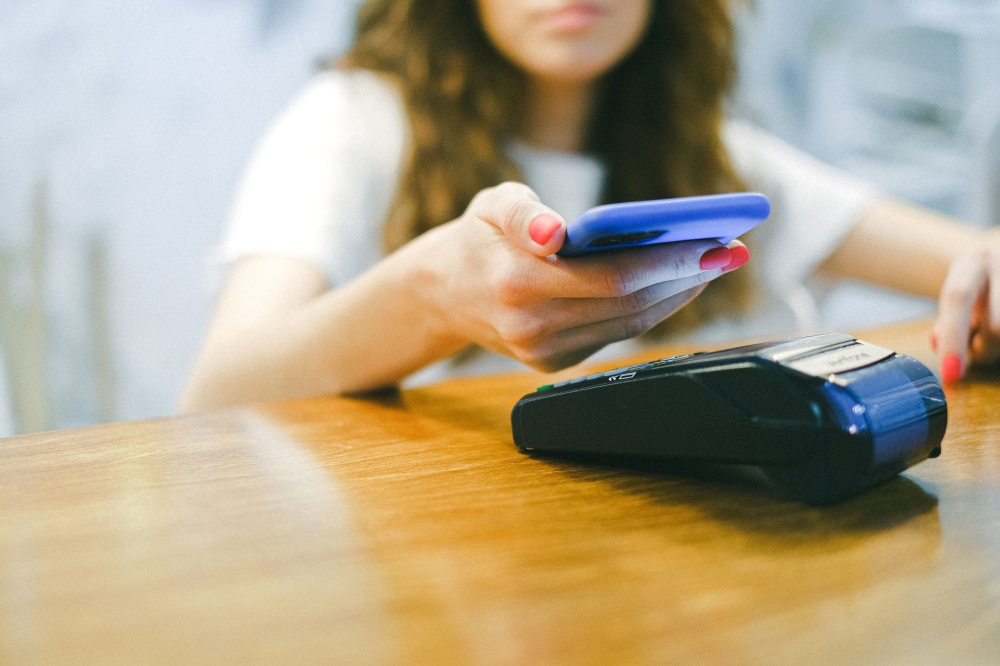
Researchers at Nanyang Technological University in Singapore are developing an AI tool to assist policymakers in predicting public responses to economic policies like cash handouts.
Supported by funding from OpenAI, the tool utilizes anonymized transaction data from a South Korean budgeting app to simulate spending behavior.
The initiative seeks to enhance the accuracy of economic predictions compared to traditional survey-based methods.
Additionally, the researchers aim to make the tool open-source by 2027, facilitating its use across different demographics.
SINGAPORE, Sept 13 — Researchers in Singapore are developing an artificial intelligence tool that could help policymakers estimate how people might respond to economic measures such as cash handouts before the policies are implemented.
The tool, developed by four researchers at Nanyang Technological University (NTU), is designed to predict whether people are likely to spend or save additional money, what they might spend it on and how different policy designs could affect the outcome, The Straits Times reported today.
The project is among 14 worldwide selected for funding by OpenAI from more than 400 submissions to a call for proposals launched in April.
The NTU team, led by Nanyang Business School Provost’s Chair Professor in Information Systems Hyeokkoo Eric Kwon, will receive US$100,000 (S$126,800 or RM407,000) to develop and test the unnamed tool over the next six months.
The system is trained using transaction data from more than one million users of a South Korean mobile budgeting app, covering spending, retailers and monthly income between 2023 and 2025.
The data was collected from bank notifications, messages and emails sent to users when transactions were made, with names and bank account numbers removed and spending amounts, income and purchase times grouped into broader ranges.
Kwon said the system uses only anonymised data, with safeguards intended to prevent individual users from being identified.
“There should never be a situation where the data can only be matched to one profile. Depending on the level of sensitivity of the data, a profile is sufficiently anonymised if a minimum of three, five or 10 users share those exact same characteristics,” he was quoted as saying.
The researchers will then use AI agents to simulate how households might respond to proposed government policies.
For example, if a government were to give every citizen S$100 in cash vouchers, the system would estimate how much additional spending the measure could generate, where the money might be spent and how the results could differ under another policy design.
Kwon said conventional economic simulations often rely on rules based on interviews and surveys, which may not fully reflect how people behave when they actually receive money.
“Qualitative interviews and surveys are conducted to set these rules, but there is often a gap between how people actually behave and how they respond in surveys,” he said.
The researchers plan to test the AI against real-world spending data from South Korea, including transactions recorded before and after two rounds of government cash handouts distributed in July and September 2025.
Recipients had to spend the handouts at eligible retailers by November 2025, giving the team data against which to compare the system’s predictions.
The researchers also aim to make the tool open-source and capable of being used with different populations by February 2027.
The system is intended to analyse other information, including interests and political views, to improve its predictions and provide an explanation for how it reaches its conclusions.
Half of the OpenAI funding will be provided in cash, while the remainder will come as credits for subscriptions to OpenAI’s AI models.
Teen among 146 detained in road bully operation at Bukit Raja toll plaza
Motorcyclist dies after trying to avoid pedestrian in Hulu Selangor
Police investigate death of 15-year-old girl after fall from Putrajaya apartment
新加坡南洋理工大学的研究人员正在开发一种人工智能工具,以帮助政策制定者预测公众对现金补贴等经济政策的反应。
该工具由 OpenAI 提供资金支持,利用来自韩国预算应用程序的匿名交易数据来模拟消费行为。
与传统的基于调查的方法相比,该计划旨在提高经济预测的准确性。
此外,研究人员的目标是到 2027 年将该工具开源,以方便不同人群使用该工具。
新加坡,9 月 13 日——新加坡的研究人员正在开发一种人工智能工具,该工具可以帮助政策制定者在实施现金补贴等经济措施之前,预测人们可能会如何应对。
据《海峡时报》今日报道,南洋理工大学 (NTU) 的四位研究人员开发的这款工具旨在预测人们是否可能增加支出或储蓄,他们可能会把钱花在什么地方,以及不同的政策设计会如何影响结果。
该项目是从 OpenAI 在 4 月份发起的提案征集活动中收到的 400 多份申请中选出的 14 个全球资助项目之一。
由南洋商学院教务长信息系统讲席教授权赫九 (Hyeokkoo Eric Kwon) 领导的南洋理工大学团队将获得 10 万美元(126,800 新元或 407,000 令吉)用于在未来六个月内开发和测试这款尚未命名的工具。
该系统使用来自韩国一款移动预算应用程序的超过一百万用户的交易数据进行训练,涵盖 2023 年至 2025 年的支出、零售商和月收入。
数据收集自银行在用户进行交易时发送的通知、短信和电子邮件,其中删除了姓名和银行账号,并将支出金额、收入和购买时间归入更广泛的范围。
权表示,该系统仅使用匿名数据,并采取了安全措施以防止识别个人用户。
“绝不应该出现数据只能与一个用户画像匹配的情况。根据数据的敏感程度,如果至少有三、五或十个用户拥有完全相同的特征,那么该用户画像就足够匿名化了。”他说道。
研究人员随后将利用人工智能代理来模拟家庭可能对政府提出的政策作出的反应。
例如,如果政府向每位公民发放 100 新元的现金券,该系统将估算该措施可能产生的额外支出,这些钱可能会花在哪里,以及在另一种政策设计下结果可能会有何不同。
权表示,传统的经济模拟通常依赖于基于访谈和调查的规则,但这可能无法完全反映人们在实际获得金钱时的行为。
他说:“定性访谈和调查是为了制定这些规则,但人们的实际行为与他们在调查中的回答之间往往存在差距。”
研究人员计划使用来自韩国的真实消费数据来测试人工智能,其中包括在 2025 年 7 月和 9 月发放的两轮政府现金补贴之前和之后记录的交易。
受助者必须在 2025 年 11 月之前在符合条件的零售商处消费这些补助金,以便团队能够将数据与系统的预测进行比较。
研究人员还计划在 2027 年 2 月之前将该工具开源,并使其能够用于不同的人群。
该系统旨在分析其他信息,包括兴趣和政治观点,以改进其预测并解释其得出结论的方式。
OpenAI 的资金将有一半以现金形式提供,其余部分将以订阅 OpenAI 人工智能模型的积分形式提供。
在武吉拉惹收费站的反路霸行动中,一名青少年等146人被拘留
摩托车手在乌鲁雪兰莪州为避让行人而丧生
警方调查一名15岁女孩从布城公寓坠亡事件。