Paramount to make blades for Africa’s Mi-type helicopters in UAE派拉蒙将在阿联酋为非洲的米型直升机生产旋翼叶片
There are more than 23 operators of Mi-type helicopters across the continent.
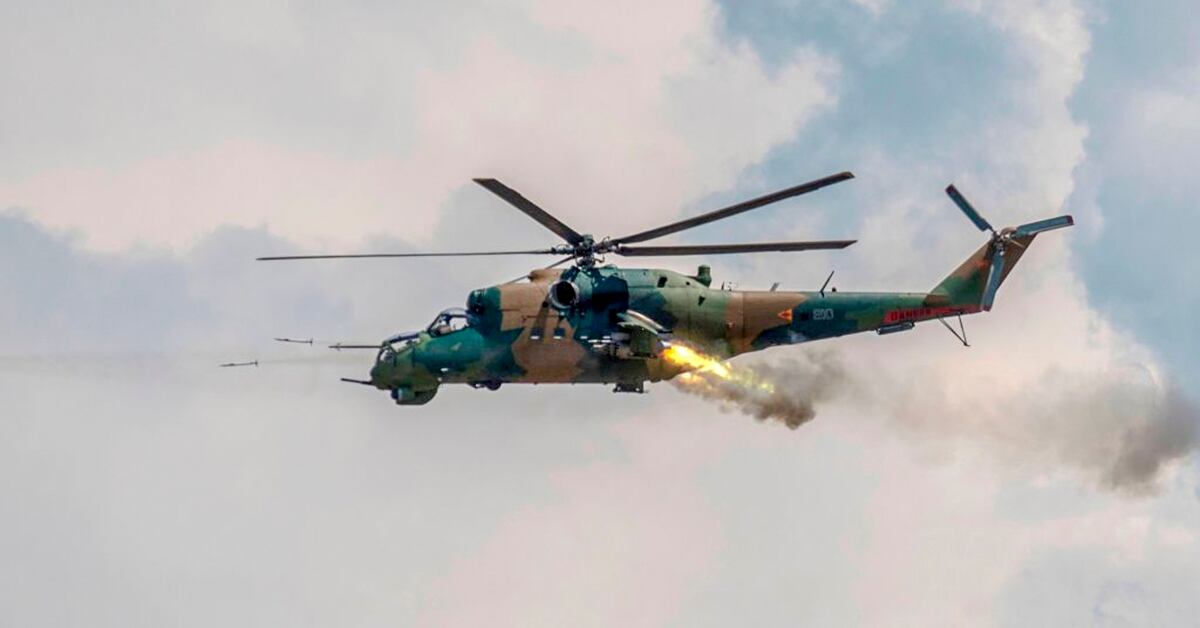
MILAN, Italy — South Africa’s Paramount Group is gearing up production of composite blades for Mi-type helicopters with the establishment of a production facility in the United Arab Emirates as the defense company seeks orders from African operators of the aircraft in need of maintenance and configuration upgrades.
Last month, Paramount said it signed a strategic partnership agreement with UAE-based AAL Group to locally manufacture main and tail rotor composite blades for the helicopters. The Emirati entity has provided a full-range of maintenance and repair services for the Mi family of rotary-wing aircraft for more than two decades
“Our activities with AAL Group in the UAE will include but not be limited to the management of an advanced manufacturing plant, an assembly line, and maintenance, repair and operations facilities, servicing and upgrading fleets of helicopters for our African partners,” Steve Griessel, CEO of Paramount, told Defense News.
There are more than 23 operators of Mi-type helicopters across the African continent, with Togo being the most recent to receive new deliveries of two Mi-17 transport aircraft in December.
These aircraft are often equipped with metallic blades, which undergo significant stress during intense operations. This can increase the types of damage to which they’re exposed, making them prone to faster erosion. A traditional metal helicopter blade is made with titanium alloy, of which Russia is one of the largest exporters in the world. Financial services company Citigroup recently warned the export of important metals could be next on Moscow’s list of restricted natural resources in response to Western sanctions.
A high percentage of Soviet-era helicopters among African fleets are unserviceable, meaning they’re either grounded for long periods of time or completely retired. This was in part due to customers’ inability to maintain their fleets — an issue likely aggravated by Ukraine war, which itself has impacted global supply chains and deliveries. In addition, several nations in Africa face budgetary constraints.
Paramount is offering composite blades for Mi-17s and Mi-24s, a fully interchangeable replacement for the original metallic ones, which offer logistical and operational benefits.
“Metal blades have a limit of around 4,000 hours of operational activity, whereas composite is almost infinite and closer to 20,000. Generally most aircraft have limits based on time and hours operated. The time limit — that is, the number of useful working years — would depend on storage, operational conditions and so on, but composite blades would far outlast metal ones,” the head of Paramount’s aerospace systems unit, Brian Greyling, told Defense News.
This alternative further allows for the replacement of individual blades rather than an entire set. Although they are more expensive, the company said that the longer life expectancy they provide make the overall cost of operations significantly cheaper. Composite blades become financially viable after 200 flight hours per aircraft.
Whereas African customers may have turned to Russian manufacturers for upgrades, maintenance, repairs and overhauls, the UAE-based installations may give a significant advantage to Paramount in terms of seizing new business opportunities.
Paramount has experience in providing maintenance, repair and overhaul services, having modernized Algeria’s Mi-24s to the SuperHind standard. Many systems have found homes among Middle Eastern customers over the past few years. While Africa and the Middle East both face distinct challenges and have varying defense budgets, they also share intriguing similarities and demands, Griessel said.
“For example, there is a shared requirement for interoperability; the ready utilization of our land vehicles in border patrol, policing and peacekeeping; and military support operations,” he explained. “The need for the ability for technologies and mission systems to be rapidly substituted from reconnaissance to engagement scenarios is another one.”
Elisabeth Gosselin-Malo was a Europe correspondent for Defense News. She covers a wide range of topics related to military procurement and international security, and specializes in reporting on the aviation sector. She is based in Milan, Italy.
意大利米兰——南非派拉蒙集团正在阿联酋建立生产设施,加紧生产米型直升机的复合材料旋翼。这家国防公司正在寻求非洲运营商的订单,这些运营商的飞机需要维护和配置升级。
上个月,派拉蒙宣布与总部位于阿联酋的AAL集团签署战略合作协议,由AAL集团在阿联酋本地生产直升机的主旋翼和尾旋翼复合材料桨叶。这家阿联酋公司二十多年来一直为米系列旋翼飞机提供全方位的维护和修理服务。
“我们在阿联酋与 AAL 集团的合作活动将包括但不限于管理一家先进的制造工厂、一条装配线以及维护、修理和运营设施,为我们的非洲合作伙伴提供直升机机队的维修和升级服务,”派拉蒙首席执行官史蒂夫·格里塞尔告诉《防务新闻》。
非洲大陆共有 23 多个米型直升机运营商,其中多哥是最近一个在 12 月份接收两架新米-17 运输机的国家。
这些飞机通常配备金属旋翼,在频繁作业中承受着巨大的应力。这会增加旋翼所面临的各种损伤,使其更容易受到侵蚀。传统的金属直升机旋翼由钛合金制成,而俄罗斯是世界上最大的钛合金出口国之一。金融服务公司花旗集团近期警告称,由于西方制裁,莫斯科可能将重要金属的出口列入下一个限制自然资源出口的名单。
非洲机队中很大一部分苏联时代的直升机已无法使用,这意味着它们要么长期停飞,要么彻底退役。部分原因是客户无力维护其机队——乌克兰战争可能加剧了这一问题,因为战争本身已经影响了全球供应链和交付。此外,非洲一些国家还面临着预算限制。
派拉蒙公司为米-17和米-24直升机提供复合材料桨叶,可完全替代原装金属桨叶,从而带来后勤和操作方面的优势。
“金属叶片的使用寿命极限约为4000小时,而复合材料叶片的使用寿命几乎无限,接近20000小时。通常,大多数飞机的使用寿命都基于飞行时间和飞行小时数。时间限制——即有效工作年限——取决于储存条件、运行条件等,但复合材料叶片的寿命将远远超过金属叶片,”派拉蒙航空航天系统部门负责人布莱恩·格雷林告诉《防务新闻》。
这种方案允许单独更换叶片,而不是更换整套叶片。虽然复合材料叶片价格更高,但该公司表示,其更长的使用寿命能够显著降低整体运营成本。每架飞机飞行200小时后,复合材料叶片才具有经济效益。
尽管非洲客户可能已经转向俄罗斯制造商进行升级、维护、维修和大修,但位于阿联酋的工厂可能会给派拉蒙公司带来巨大的优势,使其能够抓住新的商机。
派拉蒙公司在提供维护、修理和大修服务方面经验丰富,曾将阿尔及利亚的米-24直升机升级至超级雌鹿标准。过去几年,许多系统已在中东地区投入使用。格里塞尔表示,尽管非洲和中东面临着不同的挑战,国防预算也各不相同,但它们在需求和方面也存在着一些有趣的相似之处。
他解释说:“例如,互操作性是共同的需求;我们需要随时在边境巡逻、警务和维和行动以及军事支援行动中使用我们的陆地车辆。另一个需求是,技术和任务系统需要能够在侦察和交战场景之间快速切换。”
伊丽莎白·戈斯林-马洛曾任《防务新闻》欧洲通讯员。她的报道涵盖军事采购和国际安全等广泛领域,尤其擅长航空领域的报道。她常驻意大利米兰。