Marines update logistics doctrine from 1997 ― here’s what’s inside海军陆战队更新了1997年的后勤条令——以下是更新内容
Marine Corps Doctrinal Publication 4 is an updated version of logistics doctrine from 1997.
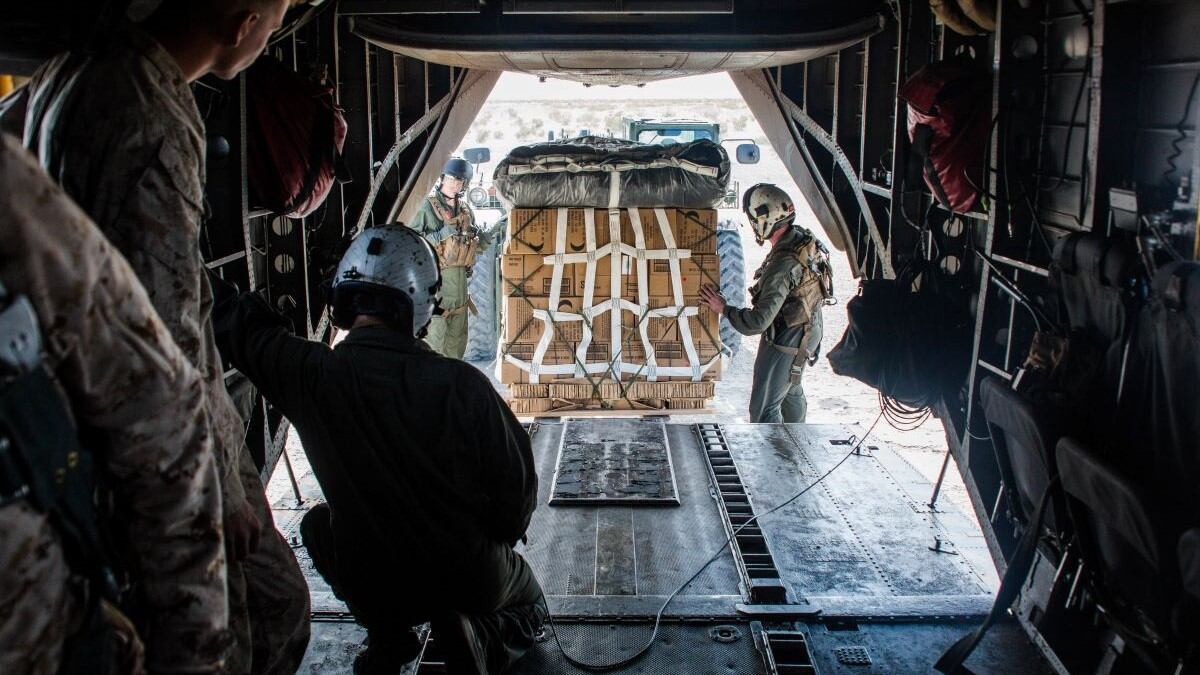
Marine Commandant Gen. David Berger observed recently that logistics has gotten less public attention than other aspects of Marine Corps modernization , because, well, it’s simply less exciting.
“What’s not so cool to talk about: logistics,” he said March 14 at the National Press Club. “But if you were trying to counter the United States right now militarily, I think you would go after our logistics. We’re not overconfident, but, frankly, since World War II, no one has challenged our logistics.”
But that lack of challenge is no longer the case. A technologically sophisticated adversary like China could put pressure on the force’s logistics system, Marine officials say.
With that in mind, the Marine Corps in February announced through the release of the Installations and Logistics 2030 report that it was making far-reaching changes to how it approaches logistics . Now, the Corps is setting some of those changes into official doctrine.
The service on Tuesday published Marine Corps Doctrinal Publication 4, an updated version of logistics doctrine from 1997. The new doctrine rehashes some of the concepts from Installations and Logistics 2030, but it is focused less on concrete plans and more on the philosophy of logistics.
“This publication is intended for all Marines. … It is designed to be read from cover to cover, and to be immediately applicable,” proclaims Berger’s preface to the more-than-130-page document (not including footnotes).
In a future conflict, logistics would likely be contested. A single precision strike could now take out a supply ship or a factory, so Marines will increasingly have to get their supplies through diverse networks, according to the doctrine — “supply webs” rather than supply chains.
Another complication: The Marine Corps’ broader force reorganization calls for small groups of Marines to be dispersed in challenged areas, both at sea and close to shore. Supplying and sustaining those Marines could get tricky.
Some things haven’t changed since then-Commandant Gen. Charles Krulak signed the 1997 doctrine.
The Marine Corps still conceives of logistics as both an art and a science. It’s still important, according to the new doctrine, for logisticians to get good training and develop attention to detail.
Not in the 1997 document, however, is the update’s emphasis on “human-machine teams.”
“Emerging technology such as unmanned platforms, artificial intelligence, machine learning, additive manufacturing, and wireless and other advanced connectivity have the potential to increase the speed and tempo of war,” the new doctrine reads.
Logisticians should use technology to help assess troops’ demand for new supplies, it says. But it also indicates the service should work to reduce demand in the first place: by forward-positioning more supplies, partnering with host nations and sister services, and making Marines more self-sufficient.
Self-sufficiency, in some cases, could mean hunting or foraging.
“How do you skin a goat or a cow that perhaps you may have purchased off of the local environment, and then turn that into food that is edible for your own troops?” said Col. Aaron Angell, executive assistant to the deputy commandant for installations and logistics, on a call with reporters.
But the new doctrine isn’t just about methods and technology.
It’s also about making sure that logistics personnel are properly trained and retained in jobs they are good at. That extends beyond logistics personnel — it’s a goal of the Corps’ overarching “talent management” initiative .
“We’re trying to develop Marines who are critically thinking through as many options as they can and then giving them the ability to decide which option is most appropriate for them in that particular operational scenario,” Angell said.
Irene Loewenson is a staff reporter for Marine Corps Times. She joined Military Times as an editorial fellow in August 2022. She is a graduate of Williams College, where she was the editor-in-chief of the student newspaper.
海军陆战队司令大卫·伯杰将军最近指出,后勤保障受到的公众关注度低于海军陆战队现代化的其他方面,原因很简单,就是它不够激动人心。
“后勤保障这个话题不太好谈论,”他3月14日在国家新闻俱乐部说道。“但如果你现在想在军事上对抗美国,我想你会首先攻击我们的后勤保障。我们并非盲目自信,但坦白说,自二战以来,还没有人挑战过我们的后勤保障能力。”
但这种情况已不复存在。海军陆战队官员表示,像中国这样技术先进的对手可能会给海军陆战队的后勤系统带来压力。
鉴于此,美国海军陆战队于今年2月发布了《2030年设施与后勤报告》,宣布将对其后勤保障方式进行意义深远的改革。如今,海军陆战队正将其中一些改革措施纳入正式条令。
海军陆战队周二发布了《海军陆战队条令出版物4》,这是1997年后勤条令的更新版本。新条令重述了《2030年设施与后勤》中的一些概念,但它较少关注具体计划,而更多地关注后勤理念。
“本出版物面向所有海军陆战队员。……它旨在让读者从头到尾阅读,并立即付诸实践,”伯杰在超过 130 页的文件(不包括脚注)的前言中宣称。
在未来的冲突中,后勤保障很可能成为争夺的焦点。一次精确打击就能摧毁一艘补给船或一座工厂,因此,根据作战理论,海军陆战队将越来越需要通过多元化的网络——“补给网络”而非供应链——来获取补给。
另一个复杂因素是:海军陆战队的整体兵力重组计划要求将小股海军陆战队员分散部署在面临挑战的区域,包括海上和近岸地区。为这些海军陆战队员提供补给和后勤保障可能会变得非常棘手。
自时任司令查尔斯·克鲁拉克将军于 1997 年签署该条令以来,有些事情并没有改变。
海军陆战队仍然将后勤视为一门艺术和一门科学。根据新的理论,后勤人员接受良好的训练并培养注重细节的能力仍然至关重要。
然而,1997 年的文件中并没有体现此次更新对“人机团队”的强调。
新条令指出:“无人平台、人工智能、机器学习、增材制造以及无线和其他先进连接等新兴技术有可能提高战争的速度和节奏。”
报告指出,后勤人员应利用技术手段帮助评估部队对新物资的需求。但报告也指出,海军陆战队应首先努力降低需求:通过前沿部署更多物资、与驻在国和兄弟军种合作,以及提高海军陆战队员的自给自足能力。
在某些情况下,自给自足可能意味着狩猎或采集。
“你如何剥去从当地购买的山羊或牛的皮,然后将其变成适合自己部队食用的食物?”负责设施和后勤的副司令的执行助理亚伦·安吉尔上校在与记者的电话会议上说道。
但新理论不仅仅关乎方法和技术。
这还关乎确保后勤人员接受适当的培训,并留在他们擅长的岗位上。这不仅限于后勤人员——这也是海军陆战队“人才管理”总体计划的目标之一。
“我们正在努力培养能够批判性地思考尽可能多的选择,然后让他们有能力决定在特定作战场景下哪种选择最适合他们的海军陆战队员,”安吉尔说。
艾琳·洛文森是《海军陆战队时报》的专职记者。她于2022年8月加入《军事时报》,担任编辑助理。她毕业于威廉姆斯学院,曾担任该校学生报纸的总编辑。