Lithuania’s defense minister is leery Russia will run out of ammo立陶宛国防部长担心俄罗斯会耗尽弹药。
Defense News sits down with Lithuania's defense chief, Arvydas Anušauskas.
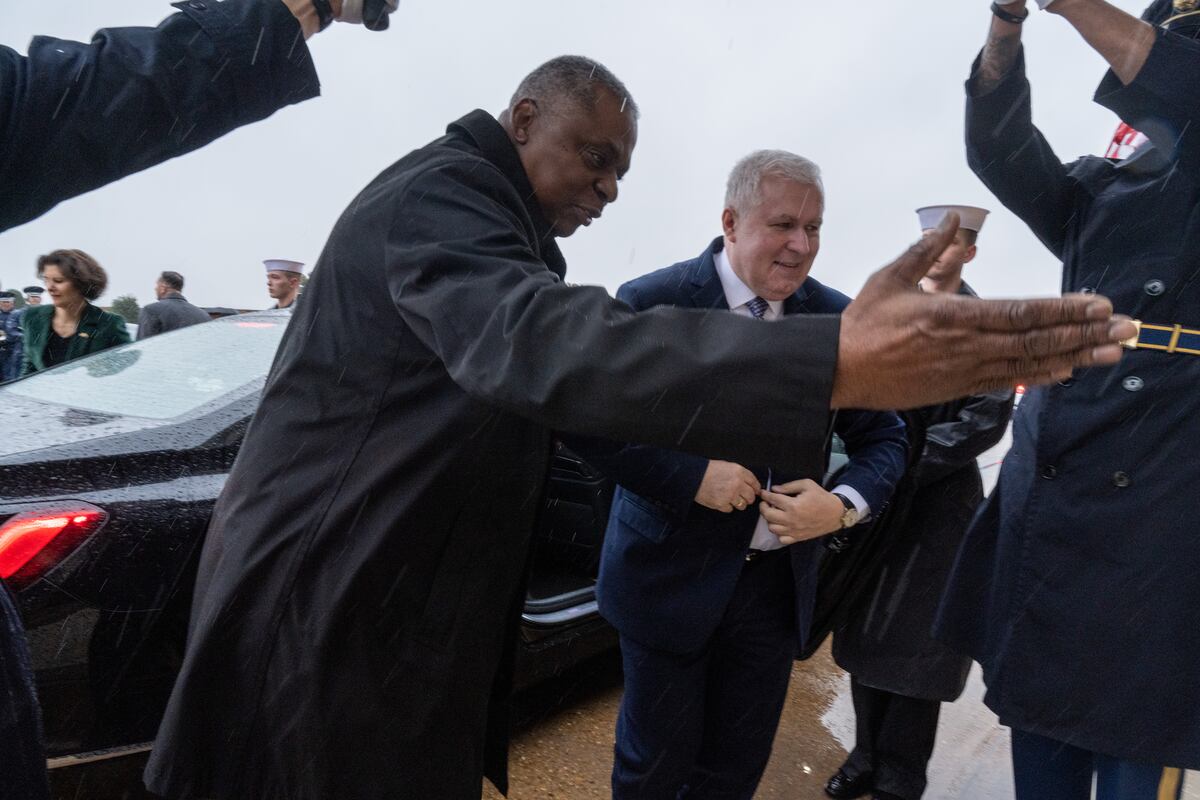
WASHINGTON ― The defense minister of Baltic ally Lithuania voiced skepticism over the recent Pentagon assessment that Russia, after months of fighting Ukraine and slapped with western sanctions, would deplete its fully-serviceable ammunition stockpiles by early 2023.
Arvydas Anušauskas , following visits with U.S. Defense Secretary Lloyd Austin and other U.S. officials here, said in an interview that any appraisals of Russia’s weapons stockpiles ought to also factor in Lithuania’s Russian-allied neighbor Belarus, which sent Russia more than 20,000 tons of ammunition earlier this year.
Anušauskas also discussed Lithuania’s deal to buy the Lockheed Martin-made M142 High Mobility Artillery Rocket System , or HIMARS, reports the U.S. plans to send the Patriot missile defense system to Ukraine, and recent plans to increase the defense ministry’s budget.
This interview, from Dec. 16, was edited for length and clarity.
The big news from your visit to Washington is the the HIMARS deal finalized this week. How does that connect to Latvia and Estonia also buying HIMARS?
A year ago, we agreed with Latvia and Estonia about our joint capability development. The Estonians have already concluded their agreement [to buy HIMARS] a month ago, Lithuania is completing and signing it now, and the Latvians just formed a new government but will probably finalize this deal soon.
To summarize, HIMARS allows us to develop new division-level capabilities and will help us to create a division-level, command-and-control element.
It’s an enabler for us regionally. Current and future regional plans actually link all of our countries into one entity, into one unit. With Latvia and Estonia, our HIMARS will be integrated into NATO defense plans and be interoperable with other elements.
What’s the timing for deliveries?
Delivery for Lithuania will start in 2025 and will be complete in 2026, and for Estonia, deliveries start in 2024 and finish in 2025.
European defense leaders are worried about balancing Ukraine aid, their own readiness and industry’s ability to backfill. What’s Lithuania’s experience, and where is the biggest pinch?
Capability restoration is the major rule we follow when we provide support to Ukraine. If we transfer certain equipment or weapons, we have to have an agreement to replenish our stocks. For example, if we agree to transfer 120mm mortars, we have an agreement with Spain on acquiring more of them. Practically all the support we have sent we have already restored or will restore in the near future.
Of course, the industrial capacities in Europe [alone], because we have some weaponry purchased in Europe, are not sufficient.
Lithuania finalized its HIMARS deal weeks after Estonia, and its deliveries will come a year after Estonia’s. Is that a sign of stretched industrial capacity?
As far as I know, the industry has doubled its pace in producing HIMARS, including launchers and ammunition. But in terms of orders, Poland also ordered them so the waiting list is rather long.
Lithuania is sandwiched between Kaliningrad and Belarus. Do you feel the threat has degraded at all?
I would say that their threat-level remains unchanged; capability is diminished on Kaliningrad but the overall threat level has not changed.
Diminished but unchanged, how?
Some part of the capabilities were deployed to Ukraine from Kaliningrad. The Ukrainians destroyed them, as we know. But the recent mobilization in Russia allowed it restore its human resources. And we have to bear in mind that only land forces were used for fighting in Ukraine, so the aviation capabilities, the navy, Iskanders, remained in Kaliningrad.
The U.S. government just assessed that Russia will run out of serviceable ammunition in 2023. Do you agree?
The people in the hotspots, at the frontline, cannot confirm this information. And as far as we know, Russia has sufficient artillery capabilities and ammunition. We’re not sure about stocks, but some experts calculate that by spring next year, it may run out of it. We are not sure about their industrial capacity, which would allow for replenishing their stocks, and that’s the question.
You think they have the ability to replenish their stocks?
They have the possibility to restore some of their stocks.
Is there some particular information that makes you think that and is there a specific kind of ammunition that they might be able to restore?
No, I do not have such detailed information about as we are well aware, Russia is using the ammunition in line with the old standards: 152mm and 122mm ammunition, so it may be able to restore it or it may be receiving it from North Korea.
We should also count ammunition from Belarus, from which Russia has taken more than 20,000 tons of ammunition. We don’t know how large stocks are in Belarus, but by transferring its armored equipment and ammunition to Russia, Belarus remains a major resource.
From left, Ukrainian Ambassador to Lithuania Petro Beshta, Baykar CEO Haluk Bayraktar and Lithuanian Defence Minister Arvydas Anusauskas attend the presentation of the Bayraktar TB2 combat drone at an Air Force base in Siauliai, Lithuania, on July 6, 2022. (Petra Malukas/AFP via Getty Images)
The U.S. is expected to send Patriot air defenses to Ukraine, which Russia may see as an escalation. Is that a weapon that the U.S. should not send, and are there new weapons that the U.S. should be sending?
The major challenge in this issue is training of personnel using this equipment, and Lithuania along with other European countries do not care, so to speak‚ about the position of Russia. There is a great need to protect Ukraine’s civilian infrastructure by all means, and I believe that the transfer of this capability should be treated as a deescalation measure that does not allow Russia to escalate.
In February, when we transferred Stingers to Ukraine, the talk was that this transfer would escalate the situation and we had a different position. Our position was that the stronger Ukraine would have been, the fewer possibilities Russia would have had to implement its aggressive policy. If more countries supported Ukraine at that point in time, this was done then by only several countries, we probably wouldn’t have had a war.
What decisions do you think need to be pushed forward?
Looking back at support Ukraine from March until now, the process probably was not as fast as we would have liked, but it is going on and now we’re start speaking about the transfer of air defense systems and Western-type armored equipment. Even now Lithuania is now transferring to Ukraine sniper equipment, night vision equipment, optics, to contribute to creating an advantage for the Ukrainians on the battlefield at night.
The U.S. earlier this month announced that it would change the status of its forces in in Lithuania to a persistent rotational presence. What is what does that mean and how does it relate to NATO plans to increase its presence on its eastern edge?
NATO’s Madrid summit took this decision, but this is an additional step made in the Baltic region. Along with other Baltic States, Lithuania has actively aimed for persistent rotations of U.S. troops. And along with the NATO Enhanced Forward Presence forces, it’s an additional capability which is very important in my opinion.
And are there any capability gaps that you see that allies still need to plug?
Our priorities are strong air defense and anti-missile defense, prepositioning of weapons and ammunition, the greater presence of NATO allies in Lithuania, and we work actively on this with our European partners, especially in Germany.
In the area of military capability development, there is still a lot of work to be done and we see no end. If we want to reach a presence of our allies in Lithuania, we need to do our homework as well, we have to build infrastructure, and we started establishing a new training range we have to complete. All of our allies are saying the same thing, that these forces cannot just be present in Lithuania, the forces have to train here.
Has Lithuania has been seeking the creation of rotational air defenses, and how does that relate to its push to expanding Baltic air policing?
Indeed Lithuania is aiming for this and in the near future we will circulate a white paper to our allies because we need more clarity on how to implement. They’re tied together, it’s the transition from air policing to air defense. I wouldn’t be able to explain that now because we ourselves are not very clear about it yet.
A railway worker walks among Marder light tanks of the Bundeswehr after they had been loaded onto trains for transport to Lithuania on Feb. 21, 2017, in Grafenwoehr, Germany. (Sean Gallup/Getty Images)
Beyond HIMARS, what investments is Lithuania planning after the decision earlier this year to expand defense spending?
Indeed, we increased defense spending on acquisitions. Next year we are completing the acquisition of Boxer infantry fighting vehicles with Spike missiles, and we will enter the next stage of the acquisitions to procure more of them.
Some time ago, we procured from Germany self-propelled howitzers, but because production stopped in Germany, we are in a week’s time going to finalize a contract with France for the Caesar self-propelled howitzer.
We are also implementing projects related to electronic and digital security, counter-UAV capabilities and we will conclude another contract in several days to purchase the Switchblade 600.
We aim at having modern troops, and we want to supply our troops not only with fragmentation vests or helmets but also with weapons equipped with optics, thermal-vision and night vision.
How does Lithuania regard a new entrant into the defense market like South Korea, which also makes self-propelled howitzers, and is known for marketing itself pretty aggressively?
Yes, we were looking into this possibility, and what concerns us and what we learned from Ukraine is that the logistical supply chain should be as short as possible. Maybe when Poland opens a factory for these Korean howitzers, we might consider this possibility, but now we do not have these plans and we’re focused more on European manufacturers. We established contacts with South Korea because it has equipment which might [eventually] be purchased.
Some European officials recently have talked about the importance of reinvigorating the continent’s defense industry and we also hear about coordination between between EU partners. How is that playing out?
At the ministerial level we discuss this very often because money is available, but industry has not responded clearly to the opportunity that has opened up for it. I have heard that industry is saying that that these orders would be short term and what they need to see is a 10-year perspective.
Is that a reasonable request, and will we see 10 years of orders?
Yes, I believe that it’s quite feasible to meet this requirement because some companies already have orders for a decade. That applies to HIMARS and Javelins. And Germany also promised to restore its industrial capacity to produce Panzerhaubitze 2000 howitzers, and they would have long-term orders. The famous Bayraktar, a tactical drone used in Ukraine, has orders for five years.
Joe Gould was the senior Pentagon reporter for Defense News, covering the intersection of national security policy, politics and the defense industry. He had previously served as Congress reporter.
华盛顿——波罗的海盟友立陶宛国防部长对五角大楼最近的评估表示怀疑,该评估认为,俄罗斯在与乌克兰交战数月并受到西方制裁后,其完全可用的弹药库存将在 2023 年初耗尽。
阿维达斯·阿努绍斯卡斯在与美国国防部长劳埃德·奥斯汀和其他美国官员会面后接受采访时表示,对俄罗斯武器库存的任何评估都应该考虑到立陶宛的俄罗斯盟友邻国白俄罗斯,白俄罗斯今年早些时候向俄罗斯运送了超过2万吨的弹药。
阿努绍斯卡斯还谈到了立陶宛购买洛克希德·马丁公司制造的M142高机动性火箭炮系统(HIMARS)的交易、美国计划向乌克兰输送爱国者导弹防御系统,以及最近增加国防部预算的计划。
本次采访于 12 月 16 日进行,为了篇幅和清晰度进行了编辑。
您此次华盛顿之行最大的新闻是本周敲定的HIMARS导弹防御系统交易。这与拉脱维亚和爱沙尼亚也购买HIMARS导弹防御系统有何关联?
一年前,我们与拉脱维亚和爱沙尼亚就联合能力发展达成了协议。爱沙尼亚一个月前已经完成了购买HIMARS导弹防御系统的协议,立陶宛目前正在完成并签署协议,拉脱维亚刚刚组建了新政府,但可能很快也会完成这项交易。
总而言之,HIMARS 使我们能够发展新的师级能力,并将帮助我们创建一个师级指挥控制要素。
这对我们区域发展大有裨益。当前和未来的区域计划实际上将我们所有国家连接成一个整体,一个整体。有了拉脱维亚和爱沙尼亚,我们的HIMARS系统将融入北约防御计划,并与其他系统实现互操作。
送货时间是多久?
交付给立陶宛的货物将于 2025 年开始,2026 年完成;交付给爱沙尼亚的货物将于 2024 年开始,2025 年完成。
欧洲防务领导人担心如何在对乌克兰的援助、自身的战备状态以及国防工业的补充能力之间取得平衡。立陶宛的经验是什么?最大的瓶颈在哪里?
恢复能力是我们向乌克兰提供援助时遵循的主要原则。如果我们向乌克兰转移某些装备或武器,就必须达成补充库存的协议。例如,如果我们同意转移120毫米迫击炮,我们就与西班牙达成协议,采购更多同类武器。事实上,我们已经恢复或将在不久的将来恢复所有已提供的援助。
当然,仅欧洲的工业产能是不够的,因为我们从欧洲购买了一些武器。
立陶宛在爱沙尼亚之后几周才最终敲定其HIMARS导弹防御系统交易,但其交付时间却比爱沙尼亚晚一年。这是否表明立陶宛的工业产能已经捉襟见肘?
据我所知,HIMARS火箭炮的生产速度已经翻了一番,包括发射器和弹药。但由于波兰也下了订单,所以订单等待名单相当长。
立陶宛夹在加里宁格勒和白俄罗斯之间。您认为威胁有所减弱吗?
我认为他们的威胁等级仍然不变;虽然在加里宁格勒的能力有所下降,但总体威胁等级没有改变。
减少但未改变,这是为什么?
部分作战力量从加里宁格勒部署到乌克兰。众所周知,乌克兰人摧毁了这些力量。但俄罗斯近期的动员使其得以恢复人力资源。我们必须记住,在乌克兰作战时只动用了陆军,因此空军、海军以及“伊斯坎德尔”导弹系统都留在了加里宁格勒。
美国政府刚刚评估认为,俄罗斯将在2023年耗尽可用弹药。你同意吗?
身处冲突热点地区和前线的民众无法证实这一信息。据我们所知,俄罗斯拥有充足的火炮能力和弹药。我们不确定其库存情况,但一些专家估计,到明年春季,其弹药可能就会耗尽。我们不确定其工业产能是否足以补充库存,这才是关键所在。
你认为他们有能力补充库存吗?
他们有可能恢复部分库存。
是否有具体信息让你这样认为?他们是否有可能修复某种特定类型的弹药?
不,我没有这方面的详细信息。众所周知,俄罗斯目前使用的是符合旧标准的弹药:152毫米和122毫米弹药,所以它或许能够恢复生产,或者它可能正在从朝鲜获得这种弹药。
我们还应该把来自白俄罗斯的弹药也算进去,俄罗斯已经从白俄罗斯进口了超过2万吨弹药。我们不知道白俄罗斯的弹药库存有多少,但通过向俄罗斯输送装甲装备和弹药,白俄罗斯仍然是俄罗斯重要的弹药来源国。
2022年7月6日,乌克兰驻立陶宛大使彼得罗·贝什塔(左)、拜卡尔公司首席执行官哈鲁克·拜拉克塔尔和立陶宛国防部长阿尔维达斯·阿努绍斯卡斯在立陶宛希奥利艾空军基地出席拜拉克塔尔TB2战斗无人机的发布会。(图片来源:Petra Malukas/AFP via Getty Images)
美国预计将向乌克兰派遣“爱国者”防空系统,俄罗斯可能将其视为局势升级。美国是否不应该向乌克兰派遣这种武器?美国是否应该派遣其他新型武器?
这个问题的主要挑战在于如何培训使用这些装备的人员,而立陶宛和其他欧洲国家可以说并不在意俄罗斯的立场。保护乌克兰的民用基础设施至关重要,我认为转让这种能力应该被视为一种缓和局势的措施,以防止俄罗斯进一步升级冲突。
二月份我们向乌克兰部署毒刺导弹时,外界普遍认为此举会加剧局势,但我们的立场不同。我们认为,乌克兰越强大,俄罗斯推行其侵略政策的可能性就越小。如果当时有更多国家支持乌克兰(当时只有少数几个国家这样做),我们或许就不会爆发战争。
你认为哪些决策需要尽快推进?
回顾自三月以来对乌克兰的支持,进程或许不如我们预期般迅速,但支持工作仍在进行,现在我们已经开始讨论防空系统和西式装甲装备的移交。目前,立陶宛正在向乌克兰移交狙击装备、夜视设备和光学器材,以帮助乌克兰在夜间战场上取得优势。
美国本月初宣布将把其在立陶宛的驻军状态改为常驻轮换制。这意味着什么?这与北约加强其东部边缘军事存在的计划有何关联?
北约马德里峰会做出了这项决定,但这标志着波罗的海地区又向前迈出了一步。立陶宛与其他波罗的海国家一样,一直积极寻求美军的持续轮换驻扎。在我看来,这与北约增强前沿部署部队相结合,是一项非常重要的额外能力。
您认为盟友还需要弥补哪些能力差距?
我们的优先事项是加强防空和反导防御、武器弹药的预置、北约盟国在立陶宛的更多存在,我们正与我们的欧洲伙伴,特别是德国,积极开展这方面的工作。
在军事能力发展领域,我们还有很多工作要做,而且看不到尽头。如果我们想让盟友在立陶宛驻军,我们也需要做好充分的准备工作,比如建设基础设施。我们已经开始建设一个新的训练场,但还需要完成。所有盟友都表达了同样的观点:这些部队不能仅仅驻扎在立陶宛,他们必须在这里进行训练。
立陶宛是否一直在寻求建立轮换防空力量?这与它推动扩大波罗的海空中警戒有何关系?
事实上,立陶宛正朝着这个方向努力,近期我们将向盟友分发一份白皮书,因为我们需要更清晰地了解如何实施。这两者息息相关,是空中警戒向防空过渡的关键所在。我现在还无法解释清楚,因为我们自己对此也还没有完全弄明白。
2017年2月21日,在德国格拉芬沃尔,一名铁路工人走过德国联邦国防军的“黄鼠狼”轻型坦克,这些坦克刚刚被装上火车,准备运往立陶宛。(Sean Gallup/Getty Images)
除了HIMARS项目之外,立陶宛在今年早些时候决定扩大国防开支之后,还计划进行哪些投资?
事实上,我们增加了国防采购方面的开支。明年我们将完成配备“长钉”导弹的“拳击手”步兵战车的采购,并将进入下一阶段的采购,以采购更多此类战车。
前段时间,我们从德国采购了自行榴弹炮,但由于德国已经停产,我们将在一周内与法国敲定凯撒自行榴弹炮的合同。
我们还在实施与电子和数字安全、反无人机能力相关的项目,几天后我们将签订另一份合同,购买Switchblade 600。
我们的目标是拥有现代化部队,我们希望不仅为部队提供防弹背心或头盔,还要提供配备光学瞄准镜、热成像仪和夜视仪的武器。
立陶宛如何看待韩国这样进入国防市场的新国家?韩国也生产自行榴弹炮,并且以积极主动的市场营销而闻名。
是的,我们一直在考虑这种可能性。我们从乌克兰的经验中了解到,物流供应链应该尽可能短。或许等波兰建厂生产这些韩国榴弹炮后,我们会考虑这种可能性,但目前我们没有这样的计划,我们更关注欧洲的制造商。我们与韩国建立了联系,因为他们拥有一些我们最终可能会采购的设备。
最近一些欧洲官员谈到了重振欧洲大陆国防工业的重要性,我们也听到了欧盟伙伴之间协调合作的呼声。这些努力进展如何?
在部长级层面,我们经常讨论这个问题,因为资金到位,但业界尚未明确把握住这一机遇。我听说业界人士认为这些订单只是短期的,他们需要的是一个长达十年的发展规划。
这个要求合理吗?我们能看到未来十年的订单吗?
是的,我认为满足这个要求是完全可行的,因为一些公司已经接到了长达十年的订单。这包括HIMARS和标枪导弹系统。德国也承诺恢复其生产Panzerhaubitze 2000榴弹炮的工业能力,而且这些火炮也将获得长期订单。著名的Bayraktar战术无人机,也就是在乌克兰使用的无人机,也已经接到了五年的订单。
乔·古尔德是《防务新闻》的资深五角大楼记者,负责报道国家安全政策、政治和国防工业的交汇点。他此前曾担任国会记者。