The tiny Japanese island militarizing on Taiwan’s doorstep这个位于台湾家门口的日本小岛正在军事化
A tiny island on Japan’s western frontier is now the front line in a potential clash over Taiwan.
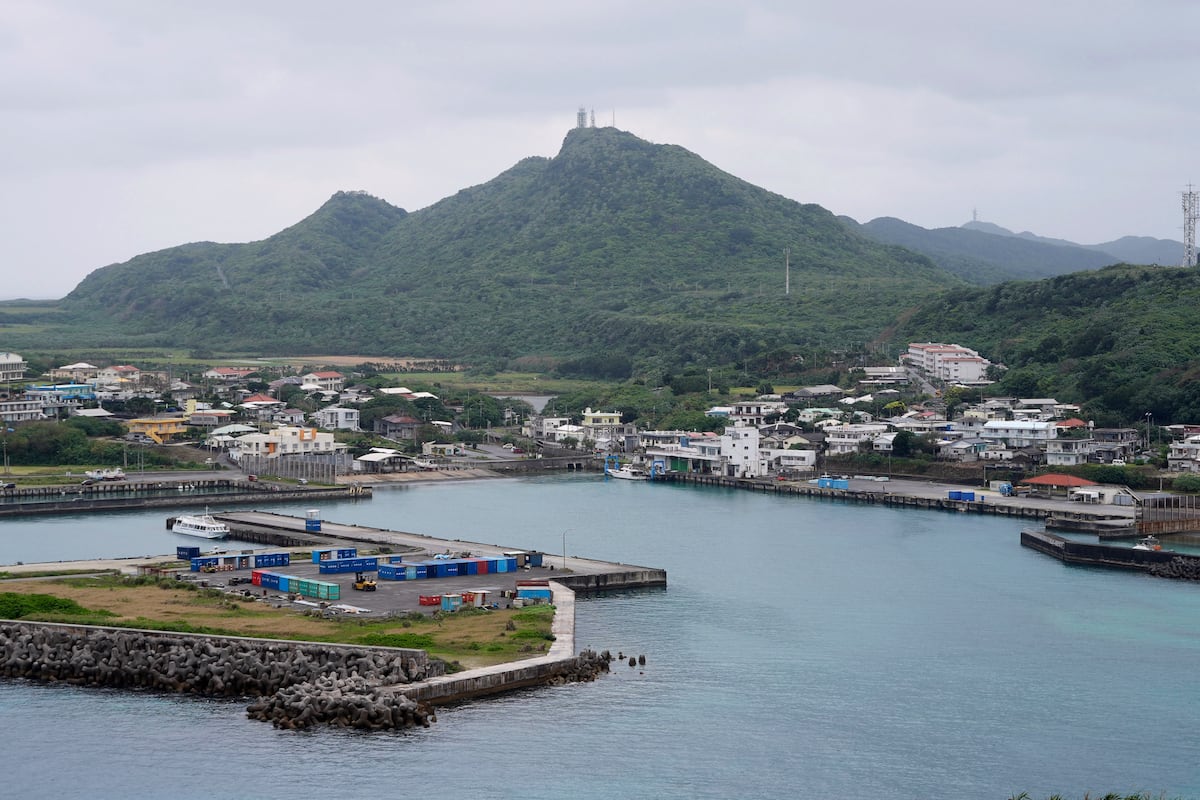
YONAGUNI, Japan — This tiny island on Japan’s western frontier has no chain convenience stores. Nature lovers can dive with hammerhead sharks and watch miniature horses graze on a hill.
But the wooded mountain ranges now carry radar sites. A southern cattle ranch has been replaced with the Japanese Ground Self-Defense Force’s Camp Yonaguni. Japan and its ally, the United States, hold joint military exercises here. Plans are underway to add a new missile unit and expand a small airport and port.
All of the buildup has cemented the island as a front line in a potential clash over Taiwan , the self-governing democratic island that China claims as its own.
“As a child, I was so proud of this westernmost border island,” said Fumie Kano, an innkeeper on Yonaguni. “But recently, we are repeatedly told this place is dangerous, and I feel so sad.”
The militarization has been especially felt as the island’s population shrinks. There are less than 1,500 local residents. Supporters say new service members arriving are needed for the island’s safety and struggling economy. Opponents like Kano say the military buildup is damaging the environment, making the island’s economy dependent on the military and could provoke an attack.
Yonaguni is only 68 miles east of Taiwan, around which China has bolstered military activity. Worried about a conflict, Japan has made a “southwestern shift” in its military posture and accelerated defense buildup and spending around the front line.
Missile units for PAC-3 interceptors have been deployed on Yonaguni and nearby Ishigaki and Miyako islands.
Yonaguni residents find themselves at the center of the geopolitical tension. A recent government plan to deploy more missiles, possibly long-range, has caused unease about the future of the island, even among those who initially supported hosting troops.
Kano, a Yonaguni native, recalls that officials and residents once wanted to improve the economy and environment through commercial exchanges with Taiwan by operating direct ferries between the islands. But that was set aside when a plan to host Japanese troops became an easier alternative to gain government subsidies and protection.
Disagreement about the plan has divided the small community. Support for hosting Japanese troops carried in a 2015 referendum; that meant the island's fate would be largely decided by the central government’s security policy.
A year later a 160-member coast watch unit was set up to monitor Chinese military activity, with radars built on Mount Inbi and elsewhere. Now there are about 210 troops, including an electro-warfare unit. Service members and their families account for one-fifth of the island’s total population.
Radar towers set up by the Japan Self-Defense Forces stand on Yonaguni. (Ayaka McGill/AP)
The local economy largely depends on the service members and their families who use local shops, schools and community services.
There’s worry on the island about the pace and extent of the militarization, says Kyoko Yamaguchi, a potter. “Everything is pushed through in the name of the Taiwan emergency, and many feel this is too much.”
A nonfatal crash in October of a Japanese army tilt-rotor aircraft Osprey during a joint exercise with the U.S. military on the island also caused apprehension.
Japan and China build their militaries
Japan’s air and maritime forces in Okinawa’s prefectural capital of Naha are key to protecting the country’s southwestern airspace and territorial waters.
The Naha-based Southwestern Air Defense Force is the busiest of Japan’s four regional air forces. In fiscal 2023, the force was scrambled 401 times, or 60% of the national total of 669, mostly against the Chinese, according to the Defense Ministry.
Rear Adm. Takuhiro Hiragi, commander of Fleet Air Wing 5 of the Japan Maritime Self-Defense Force, says his group’s mission is to fly P-3C aircraft over the East China Sea near Okinawa and its remote islands, including Yonaguni, and the Japanese-controlled Senkaku island, which Beijing also claims.
“We have to be mobile, quick and thorough to keep tabs in this region,” Hiragi said, noting the presence of key sea lanes in the area, including those that China uses to navigate the Pacific Ocean. “We watch over their exercises, not only near Taiwan but wherever necessary.”
Defense officials say China has been accelerating its military activities in the area between Taiwan and Yonaguni.
In August, a Chinese Y-9 reconnaissance plane briefly violated Japanese airspace off the southern main island of Kyushu, prompting Japan’s military to scramble fighter jets and warn the plane. A Chinese survey ship separately violated Japanese territorial waters off a southern island days later. In September, the Chinese aircraft carrier Liaoning and two destroyers sailed between Yonaguni and nearby Iriomote, entering a band of water just outside of Japan’s territorial waters.
Yonaguni fisherfolk, who closely monitor foreign vessels, have been among the first to see the growing Chinese military activity.
In 2022, several ballistic missiles China fired as part of an exercise landed off Japan’s southwestern waters following then-U.S. House Speaker Nancy Pelosi’s Taiwan visit in August. One of them landed just 50 miles from Yonaguni while more than 20 local fishing boats were operating.
Though it caused no injuries or damage, the Chinese drills kept fisherfolk from operating for a week, Yonaguni fisheries association chief and town assembly member Shigenori Takenishi said. “It was an extremely dangerous exercise that really made us feel China's potential threat right next to us.”
Kyoko Yamaguchi, left, Fumie Kano, center, and Takako Ueno oppose the presence of the Japan Self-Defense Forces base on Yonaguni. (AP Photo)
Fear of a Taiwan war rekindles bitter memories here of the Battle of Okinawa , in which about 200,000 people, nearly half of them civilians, were killed. Historians say the army sacrificed Okinawa to defend Japan’s mainland. Today Okinawa ‘s main island hosts more than half of the 50,000 American troops in Japan.
“Being at the center of this issue is very stressful for residents,” said shopkeeper Takako Ueno. “I don’t want people to imagine this beautiful island turning into a battlefield.”
To keep that from happening Yonaguni needs to be fortified, says Mayor Kenichi Itokazu, a military buildup advocate who has campaigned for the deployment of more Japanese troops for decades.
What happens in an emergency?
Some residents feel uneasy about their vulnerability, even amid the military buildup.
A government evacuation plan last year showed moving 120,000 people from five remote islands, including Yonaguni, to Japan’s main islands would take at least six days. Some question whether such an evacuation is even possible.
Itokazu, the mayor, wants to build a shelter in the basement of a new town hall and to expand the Higawa port for evacuation by ship, a plan opposed by environmentalists who say there are rare marine species there.
But there's skepticism from some.
“It's absurd,” Kano said of the evacuation plan, because all of Japan would be in danger if Okinawa is dragged into fighting. “I just hope the money will be spent on policies that will help the people in Yonaguni live peacefully.”
Associated Press video journalist Ayaka McGill contributed to this report from Yonaguni.
日本与那国岛——这座位于日本西部边陲的小岛上没有连锁便利店。自然爱好者可以与锤头鲨一起潜水,还可以观看小马在山坡上吃草。
但如今,这片林木葱郁的山脉上建起了雷达站。南部的一处牧场已被日本陆上自卫队的与那国营地所取代。日本及其盟友美国在此举行联合军事演习。目前正在计划增设一个导弹部队,并扩建一座小型机场和港口。
所有这些举动都巩固了台湾作为潜在冲突前线的地位。台湾是一个自治的民主岛屿,中国声称对其拥有主权。
“小时候,我为这座最西端的边境岛屿感到无比自豪,”与那国岛的旅店老板娘加纳文惠说道,“但最近,我们不断听到这里很危险的消息,我感到非常难过。”
随着岛上人口减少,军事化的影响尤为显著。岛上居民不足1500人。支持者认为,新兵的到来对岛屿安全和举步维艰的经济至关重要。而像卡诺这样的反对者则认为,军事扩张正在破坏环境,使岛屿经济过度依赖军队,并可能引发袭击。
与那国岛距离台湾仅68英里,而中国已在台湾周边加强了军事活动。出于对冲突的担忧,日本已将其军事部署向西南方向转移,并加快了前线周边的国防建设和开支。
PAC-3拦截导弹的导弹部队已部署在与那国岛以及附近的石垣岛和宫古岛。
与那国岛居民发现自己身处地缘政治紧张局势的中心。政府近期一项部署更多导弹(可能是远程导弹)的计划,引发了人们对该岛未来的担忧,甚至包括那些最初支持驻军的人们。
卡诺是与那国岛本地人,他回忆说,当时官员和居民曾希望通过开通两岛之间的直航渡轮,与台湾开展商业交流,从而改善经济和环境。但后来,由于接收日本军队更容易获得政府补贴和保护,这个计划就被搁置了。
对该计划的分歧使这个小社区分裂。2015年的全民公投中,支持接纳日本军队的提案获得通过;这意味着该岛的命运将在很大程度上由中央政府的安全政策决定。
一年后,一支由160人组成的海岸监视部队成立,负责监视中国军事活动,并在茵碧山等地架设了雷达。如今,该部队约有210名官兵,其中包括一支电子战部队。官兵及其家属占全岛总人口的五分之一。
日本自卫队在与那国岛上架设的雷达塔。(Ayaka McGill/AP)
当地经济很大程度上依赖于使用当地商店、学校和社区服务的军人及其家属。
陶艺家山口京子说,岛上居民对军事化的速度和程度感到担忧。“一切都打着台湾紧急状态的旗号强行推进,许多人觉得这太过分了。”
10 月份,一架日本陆军倾转旋翼机“鱼鹰”在岛上与美国军队进行联合演习时发生坠毁事故,所幸无人伤亡,这也引起了人们的担忧。
日本和中国都在建设自己的军队。
日本驻扎在冲绳县首府那霸的空军和海军部队是保护该国西南空域和领海的关键力量。
驻扎在那霸的西南防空部队是日本四支地方空军中最繁忙的一支。据防卫省统计,在2023财年,该部队共紧急升空401次,占全国总升空次数669次的60%,其中大部分是对中国军队的攻击。
日本海上自卫队第五航空队司令官柊拓弘少将表示,他所在部队的任务是驾驶 P-3C 飞机飞越冲绳及其偏远岛屿(包括与那国岛)和日本控制的尖阁诸岛(北京也声称拥有主权)附近的东海。
“我们必须保持机动性、快速性和全面性,才能密切关注该地区的动向,”柊说道,并指出该地区存在重要的海上航道,包括中国在太平洋航行所使用的航道。“我们不仅在台湾附近,而且在任何必要的地方都会监视他们的演习。”
国防官员表示,中国一直在加快在台湾和与那国岛之间地区的军事活动。
8月,一架中国运-9侦察机短暂侵犯了日本九州岛南部海域的领空,日本军方随即派出战斗机进行警告。数日后,一艘中国勘测船又侵犯了日本南部岛屿附近的领海。9月,中国航母辽宁号和两艘驱逐舰驶入与那国岛和附近的西表岛之间,进入了日本领海之外的一片水域。
与那国岛的渔民密切关注着外国船只,他们是最早发现中国军事活动日益频繁的人群之一。
2022年8月,时任美国众议院议长南希·佩洛西访问台湾后,中国在一次演习中发射的数枚弹道导弹落入日本西南海域。其中一枚导弹落在距离与那国岛仅50英里处,当时有20多艘当地渔船正在作业。
虽然中国军演没有造成人员伤亡或财产损失,但与那国町渔业协会会长兼町议员竹西茂典表示,军演导致当地渔民停工一周。“这是一次极其危险的演习,让我们真切地感受到中国潜在的威胁就在我们身边。”
山口京子(左)、加纳文惠(中)和上野贵子反对日本自卫队在与那国岛驻扎基地。(美联社照片)
对台战争的担忧唤起了人们对冲绳战役的痛苦回忆。在那场战役中,约有20万人丧生,其中近一半是平民。历史学家认为,日军为了保卫日本本土而牺牲了冲绳。如今,驻日美军5万人中,超过一半驻扎在冲绳本岛。
“身处这场风波的中心,对居民来说压力很大,”店主上野贵子说。“我不希望人们想象这座美丽的岛屿变成战场。”
为了防止这种情况发生,与那国岛需要加强防御,岛长伊藤和健一说道。伊藤和健一是一位军事建设倡导者,几十年来一直呼吁部署更多日本军队。
紧急情况下会发生什么?
即使在军事集结的情况下,一些居民仍然对自身的脆弱性感到不安。
去年政府制定的一项疏散计划显示,将包括与那国岛在内的五个偏远岛屿上的12万人转移到日本本岛至少需要六天时间。有人质疑这样的疏散是否可行。
市长伊藤和希望在新市政厅的地下室建造一个避难所,并扩建日川港以便乘船疏散,但环保人士反对该计划,称那里有珍稀海洋物种。
但也有人对此表示怀疑。
“这太荒谬了,”加纳谈到撤离计划时说,“如果冲绳被卷入战事,整个日本都会面临危险。我只希望这笔钱能用于制定政策,帮助与那国岛的人民过上和平的生活。”
美联社视频记者 Ayaka McGill 从与那国岛发回了这篇报道。