NATO sends ships, jets east, Ireland rejects Russia drills over Ukraine threat北约向东部派遣舰艇和战机,爱尔兰因乌克兰威胁拒绝俄罗斯的军事演习
NATO Secretary-General Jens Stoltenberg said NATO will “take all necessary measures to protect and defend all allies."
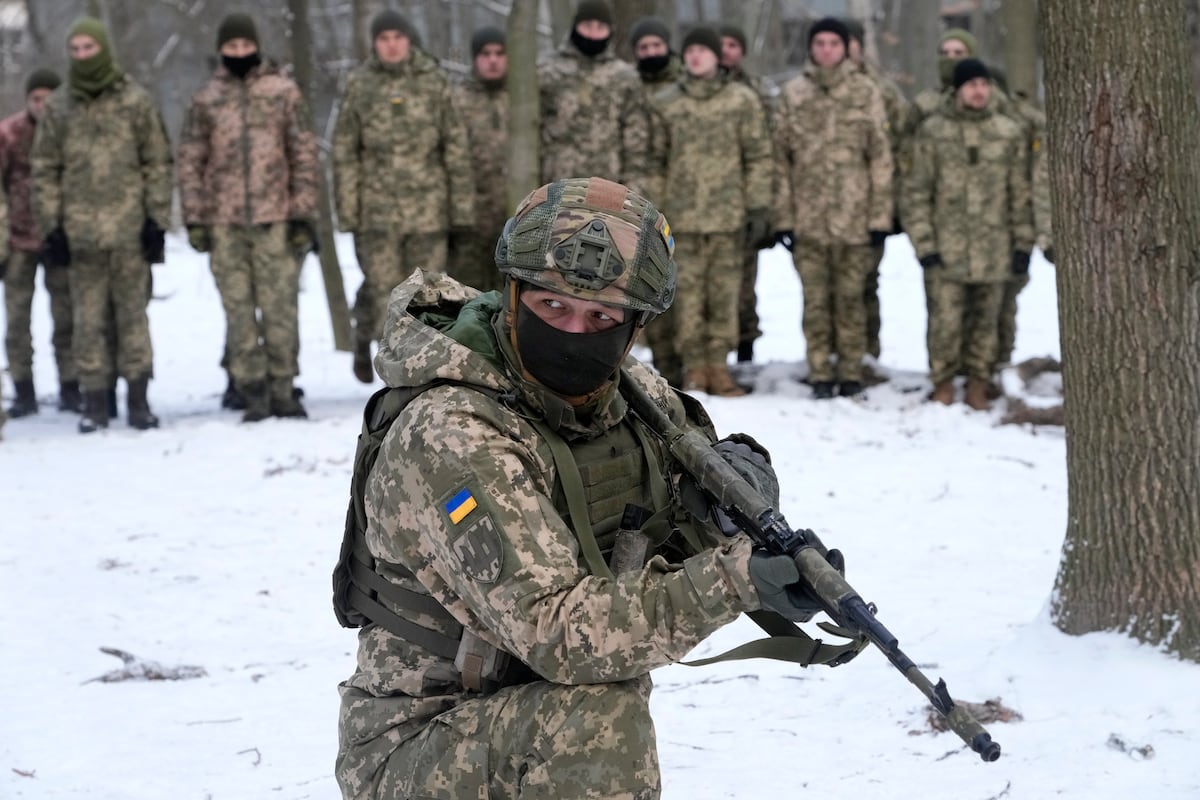
BRUSSELS — NATO said Monday that it’s putting extra forces on standby and sending more ships and fighter jets to eastern Europe, as Ireland warned that new Russian war games off its coast are not welcome given tensions over whether President Vladimir Putin intends to attack Ukraine .
The U.S.-led military organization said that it is beefing up its “deterrence” presence in the Baltic Sea area. Denmark is sending a frigate and deploying F-16 war planes to Lithuania; Spain will also send warships and could send fighter jets to Bulgaria; and France stands ready to send troops to Bulgaria.
Secretary-General Jens Stoltenberg said NATO will “take all necessary measures to protect and defend all allies.” He said: “We will always respond to any deterioration of our security environment, including through strengthening our collective defense.”
The announcement came as European Union foreign ministers sought to put on a fresh display of resolve in support of Ukraine, and paper over concerns about divisions on the best way to confront any Russian aggression.
“We are showing unprecedented unity about the situation in Ukraine, with the strong coordination with the U.S.,” EU foreign policy chief Josep Borrell, who is chairing their meeting, told reporters in Brussels.
Asked whether the EU would follow a U.S. move and order the families of European embassy personnel in Ukraine to leave, Borrell said: “We are not going to do the same thing.” He said he is keen to hear from Secretary of State Antony Blinken about that decision.
Britain on Monday also announced it is withdrawing some diplomats and dependants from its embassy in Kyiv. The Foreign Office said the move was “in response to the growing threat from Russia.”
Ukraine’s foreign ministry spokesman, Oleg Nikolenko, said the U.S. decision was “a premature step” and a sign of “excessive caution.” He said that Russia is sowing panic among Ukrainians and foreigners in order to destabilize Ukraine.
Germany is monitoring developments, but German Foreign Minister Annalena Baerbock stressed that “we must not contribute to unsettling the situation further; we need to continue to support the Ukrainian government very clearly and above all maintain the stability of the country.”
Arriving at the EU meeting, Irish Foreign Minister Simon Coveney said he would inform his counterparts that Russia plans to holds war games 240 kilometers (150 miles) off Ireland’s southwest coast — in international waters but within Ireland’s exclusive economic zone.
“This isn’t a time to increase military activity and tension in the context of what’s happening with and in Ukraine.” Coveney said. “The fact that they are choosing to do it on the western borders, if you like, of the EU, off the Irish coast, is something that in our view is simply not welcome and not wanted right now, particularly in the coming weeks.”
During Monday’s meeting, which Blinken will attend virtually, the ministers will restate Europe’s condemnation of the Russian military build-up near Ukraine, involving an estimated 100,000 troops, tanks, artillery and heavy equipment, diplomats and officials said ahead of the meeting.
They’ll renew calls for dialogue, notably through the European-backed “Normandy format,” which helped to ease hostilities in 2015, a year after Putin ordered the annexation of Ukraine’s Crimean Peninsula. Fighting in eastern Ukraine has killed around 14,000 people and still simmers today.
Should Putin move on Ukraine again, the ministers will warn, Russia would face “massive consequences and severe costs.” Those costs would be of a financial and political nature. The EU insists that it stands ready to slap hefty sanctions on Russia within days of any attack.
Over the weekend, some of the member countries closest to Russia — Estonia, Latvia and Lithuania — confirmed that they plan to send U.S.-made anti-tank and anti-aircraft missiles to Ukraine, a move endorsed by the United States.
But questions have been raised about just how unified the EU is. Diverse political, business and energy interests have long divided the 27-country bloc in its approach to Moscow. Around 40% of the EU’s natural gas imports come from Russia, much of it via pipelines across Ukraine.
Gas prices have skyrocketed, and the head of the International Energy Agency has said that Russian energy giant Gazprom was already reducing its exports to the EU in late 2021 despite high prices. Putin says Gazprom is respecting its contract obligations, not putting the squeeze on Europe.
The EU’s two major powers appear most cautious. Germany’s Nord Stream 2 pipeline from Russia, which is complete but yet to pump gas, has become a bargaining chip. French President Emmanuel Macron has renewed previously rejected calls for an EU summit with Putin.
Late last year, France and Germany initially expressed doubts about U.S. intelligence assessments that Moscow might be preparing to invade.
Late on Saturday, the head of the German navy, Vice Admiral Kay-Achim Schoenbach, resigned after coming under fire for saying that Ukraine would not regain the Crimean Peninsula, and for suggesting that Putin deserves “respect.”
Hungarian Prime Minister Viktor Orban plans to meet with Putin next week to discuss a Russian-backed project to expand a Hungarian nuclear power plant.
Still, diplomats and officials said hard-hitting sanctions are being drawn up with the EU’s executive branch, the European Commission. But they were reluctant to say what the measures might be or what action by Russia might trigger them.
The aim, they said, is to try to match the doubts Putin has sowed about his intentions for Ukraine with uncertainty about what any retaliatory European action might look like, or when it would come.
Yuras Karmanau in Kyiv, and Geir Moulson in Berlin contributed.
布鲁塞尔——北约周一表示,将增派部队待命,并向东欧派遣更多舰艇和战斗机。与此同时,爱尔兰警告称,鉴于俄罗斯总统弗拉基米尔·普京是否打算攻击乌克兰,爱尔兰不欢迎俄罗斯在其海岸附近举行新的军事演习。
美国领导的军事组织表示,正在加强其在波罗的海地区的“威慑”力量。丹麦将向立陶宛派遣一艘护卫舰并部署F-16战斗机;西班牙也将向保加利亚派遣军舰,并可能向其派遣战斗机;法国也随时准备向保加利亚派遣军队。
北约秘书长延斯·斯托尔滕贝格表示,北约将“采取一切必要措施保护和捍卫所有盟国”。他说道:“我们将始终对安全环境的任何恶化做出回应,包括加强集体防御。”
欧盟外长们发表此声明之际,正值他们试图再次展现支持乌克兰的决心,并掩盖在如何应对俄罗斯侵略问题上存在的分歧。
欧盟外交政策负责人何塞普·博雷尔在布鲁塞尔主持会议时告诉记者:“我们在乌克兰局势上展现了前所未有的团结,并与美国进行了强有力的协调。”
当被问及欧盟是否会效仿美国,命令驻乌克兰欧洲大使馆人员家属离开时,博雷利表示:“我们不会这样做。” 他说,他很想听听国务卿安东尼·布林肯对此决定的看法。
英国周一也宣布将从其驻基辅大使馆撤回部分外交官及其家属。外交部表示,此举是“为了应对来自俄罗斯日益增长的威胁”。
乌克兰外交部发言人奥列格·尼科连科表示,美国的决定是“为时过早”,也是“过度谨慎”的表现。他还说,俄罗斯正在乌克兰人和外国人中散布恐慌,企图破坏乌克兰的稳定。
德国正在密切关注事态发展,但德国外交部长安娜莱娜·贝尔伯克强调,“我们绝不能进一步加剧局势动荡;我们需要继续明确地支持乌克兰政府,最重要的是维护该国的稳定。”
爱尔兰外交部长西蒙·科文尼抵达欧盟会议现场时表示,他将告知欧盟同行,俄罗斯计划在爱尔兰西南海岸 240 公里(150 英里)处举行军事演习——该地点位于国际水域,但属于爱尔兰的专属经济区。
科文尼表示:“鉴于乌克兰目前的局势,现在不是增加军事活动和紧张局势的时候。他们选择在欧盟西部边界,也就是爱尔兰海岸附近发动袭击,我们认为这完全不受欢迎,尤其是在未来几周内。”
外交官和官员在会前表示,在周一的会议上,布林肯将以视频方式出席,部长们将重申欧洲对俄罗斯在乌克兰附近集结军队的谴责,据估计,此次集结涉及约 10 万名士兵、坦克、大炮和重型装备。
他们将再次呼吁对话,特别是通过欧洲支持的“诺曼底模式”。该模式曾在2015年帮助缓和敌对行动,当时距离普京下令吞并乌克兰克里米亚半岛仅一年时间。乌克兰东部的冲突已造成约14000人死亡,至今仍在持续。
部长们警告说,如果普京再次对乌克兰采取行动,俄罗斯将面临“巨大的后果和沉重的代价”。这些代价将包括经济和政治两方面。欧盟坚称,一旦俄罗斯发动任何袭击,欧盟随时准备在数日内对其实施严厉制裁。
上周末,一些与俄罗斯关系最密切的成员国——爱沙尼亚、拉脱维亚和立陶宛——证实,他们计划向乌克兰运送美国制造的反坦克和防空导弹,这一举动得到了美国的支持。
但人们对欧盟的团结程度提出了质疑。长期以来,不同的政治、商业和能源利益导致这个由27个成员国组成的联盟在对莫斯科的政策上存在分歧。欧盟约40%的天然气进口来自俄罗斯,其中大部分是通过途经乌克兰的管道运输的。
天然气价格飙升,国际能源署署长表示,尽管价格高企,俄罗斯能源巨头俄罗斯天然气工业股份公司(Gazprom)已于2021年底开始减少对欧盟的天然气出口。普京则表示,俄罗斯天然气工业股份公司是在履行合同义务,并没有向欧洲施压。
欧盟两大强国似乎最为谨慎。德国从俄罗斯输气的北溪二号天然气管道已竣工但尚未投入使用,已成为谈判筹码。法国总统马克龙再次拒绝了此前提出的与普京举行欧盟峰会的呼吁。
去年底,法国和德国最初对美国情报部门关于莫斯科可能准备入侵的评估表示怀疑。
周六晚些时候,德国海军司令凯-阿希姆·舍恩巴赫海军中将因发表乌克兰不会收复克里米亚半岛以及暗示普京应该受到“尊重”的言论而受到抨击,随后辞职。
匈牙利总理维克托·欧尔班计划下周与普京会面,讨论俄罗斯支持的匈牙利核电站扩建项目。
尽管如此,外交官和官员们表示,他们正在与欧盟执行机构——欧盟委员会——商讨严厉的制裁措施。但他们不愿透露具体措施是什么,也不愿说明俄罗斯的哪些行为会触发这些制裁。
他们表示,其目的是要利用普京散布的关于他对乌克兰意图的疑虑,来制造欧洲任何报复行动可能是什么样子,或者何时发生的疑虑。
基辅的尤拉斯·卡尔马瑙和柏林的盖尔·穆尔森对此文亦有贡献。