Canada, EU sign defense pact that could enable joint weapons work加拿大与欧盟签署防务协议,或将促成联合武器行动
The pact is another step in Canada's efforts to reduce the reliance on the United States, as President Trump has threatened the northern US neighbor.
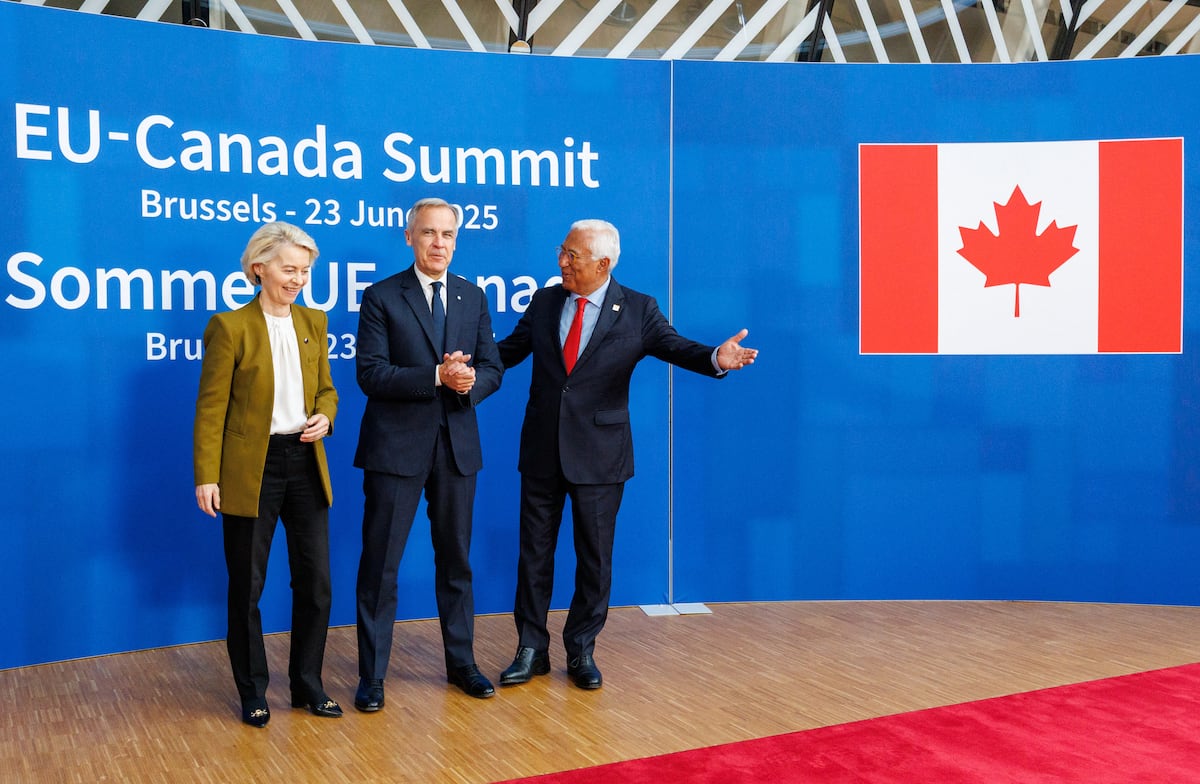
MILAN — Canada and the European Union have signed an ambitious defense pact involving deeper cooperation on cyber, maritime, and space security, paving the way for joint weapon procurement between the two allies.
European Council President António Costa and Canadian Prime Minister Mark Carney signed the EU-Canada Security and Defence Partnership during the first leg of the North American leader’s Europe visit this week.
The agreement lays the groundwork for increased defense procurement collaboration primarily related to the ReArm Europe Plan, a European Commission project to mobilize €800 billion in capital for greater defense spending.
“The partnership will launch work towards a bilateral agreement related to the Security Action for Europe (SAFE) instrument [a €150 billion loan mechanism dedicated to joint procurement] and explore the possibility of establishing an administrative arrangement between Canada and the European Defense Agency,” a joint statement said .
The document also made specific mention of enhanced coordinated naval activities as a key priority as well as boosting industrial cooperation.
In recent months, Canada has been working to bolster its role in the international maritime security domain with a special focus on Arctic defense , cybersecurity and increased work with international allies.
The European Union is Canada’s second-largest trading partner, with bilateral trade of goods growing by 64% between 2017-2024, after the implementation of the Comprehensive Economic and Trade Agreement abolished almost all tariffs between the two allies.
Ten EU member states have yet to ratify the CETA deal, including France, Italy, and Poland, indicating that it is not enforced to its full capacity.
The EU-Canada security pact also highlighted that Canada will appoint its defense representative to the EU.
However, for Canadian defense companies to be able to bid on the bloc’s military projects, further negotiations will be required and a second trade deal will have to be signed.
Since being elected in March, Carney has focused a lot of his efforts on adopting new policies that seek to distance Ottawa from the United States and pivot to Europe instead. The move aims to diversify the country’s portfolio of suppliers.
In a recent interview on the Canadian television show Power Politics, Carney said “75 cents of every [Canadian] dollar of capital spending for defense goes to the United States. That’s not smart.”
The Canadian prime minister will continue his European tour by attending the NATO Summit in The Hague on June 24, during which allies are expected to commit 3.5% of their GDP to be spent on weapons and personnel and an additional 1.5% on other related investments.
Canada has been one of the biggest laggards in reaching NATO’s 2% target, ranking 27th out of the 31 members in 2024, by spending 1.37% of its GDP on defense.
Elisabeth Gosselin-Malo was a Europe correspondent for Defense News. She covers a wide range of topics related to military procurement and international security, and specializes in reporting on the aviation sector. She is based in Milan, Italy.
米兰——加拿大和欧盟签署了一项雄心勃勃的防务协议,涉及在网络、海上和太空安全方面更深入的合作,为这两个盟国联合采购武器铺平了道路。
欧洲理事会主席安东尼奥·科斯塔和加拿大总理马克·卡尼在本周北美领导人欧洲之行的第一站签署了欧盟-加拿大安全与防务伙伴关系协议。
该协议为加强国防采购合作奠定了基础,主要与“重整欧洲计划”有关,该计划是欧盟委员会的一个项目,旨在调动 8000 亿欧元资金,用于增加国防开支。
一份联合声明称:“此次合作将着手制定与欧洲安全行动(SAFE)工具(一项专门用于联合采购的1500亿欧元贷款机制)相关的双边协议,并探讨在加拿大和欧洲防务局之间建立行政安排的可能性。”
该文件还特别提到,加强海军协调行动是关键优先事项,同时还要促进产业合作。
近几个月来,加拿大一直致力于加强其在国际海上安全领域的作用,尤其关注北极防御、网络安全以及加强与国际盟友的合作。
欧盟是加拿大的第二大贸易伙伴,在《全面经济贸易协定》实施后,两国货物双边贸易额在 2017 年至 2024 年间增长了 64%,该协定取消了两国之间几乎所有的关税。
包括法国、意大利和波兰在内的十个欧盟成员国尚未批准CETA协议,这表明该协议尚未得到充分执行。
欧盟与加拿大签署的安全协议还强调,加拿大将向欧盟派遣国防代表。
然而,加拿大国防公司要想参与欧盟军事项目的竞标,还需要进行进一步的谈判,并签署第二份贸易协议。
自三月当选以来,卡尼将大量精力投入到推行新政策上,旨在疏远渥太华与美国的联系,转而转向欧洲。此举旨在实现加拿大供应商组合的多元化。
卡尼最近在加拿大电视节目《权力政治》的一次采访中表示:“加拿大每投入一加元用于国防的资本支出中,就有 75 美分流向了美国。这很不明智。”
加拿大总理将继续他的欧洲之行,于6月24日出席在海牙举行的北约峰会。预计盟国将在峰会上承诺将国内生产总值的3.5%用于武器和人员,并将另外1.5%用于其他相关投资。
加拿大在实现北约 2% 的目标方面一直落后于其他国家,2024 年在 31 个成员国中排名第 27 位,国防开支占其 GDP 的 1.37%。
伊丽莎白·戈斯林-马洛曾任《防务新闻》欧洲通讯员。她的报道涵盖军事采购和国际安全等广泛领域,尤其擅长航空领域的报道。她常驻意大利米兰。