Trump wraps a NATO summit far chummier than those of his first term特朗普结束的北约峰会比他第一任期内的峰会气氛要友好得多。
President Donald Trump on Wednesday wrapped up participation in the annual NATO summit facing an alliance that had largely bent to his will.
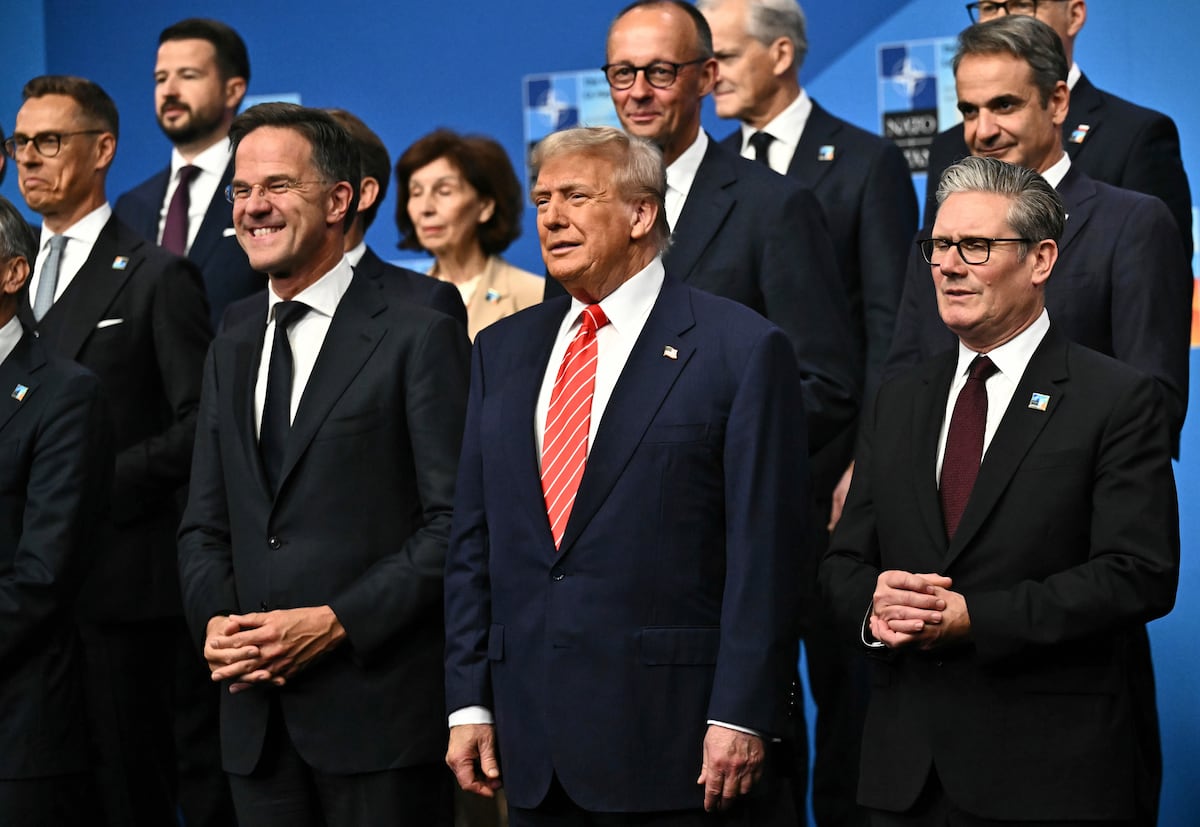
THE HAGUE, Netherlands — U.S. President Donald Trump on Wednesday wrapped up participation in the annual NATO summit facing an alliance that had largely bent to his will.
Far from the tense meetings of Trump’s first term, much of the annual summit in The Hague seemed catered to the impulses and worldviews of the Republican president whose “America First” foreign policy ethos downplays the importance and influence of multilateral coalitions.
After less than 24 hours on the ground in the Netherlands, Trump headed back to Washington having secured a major policy change he’s pushed for since 2017: a significant boost in defense spending by other NATO countries whom the president has for years accused of freeloading off the United States. The focus on Ukraine was scaled back dramatically, with its invasion by Russia earning only a passing mention in the summit’s official statement, and Ukrainian President Volodymyr Zelenskyy’s profile at the gathering diminished.
Trump also sent NATO scattering for reassurances that the United States would remain committed to the alliance’s mutual defense pledge, affirming on Wednesday that he would abide by Article 5 of the NATO treaty just a day after he rattled the 32-nation alliance by being equivocal about the pact.
“I stand with it. That’s why I’m here,” Trump said when asked to clarify his stance on Article 5. ”If I didn’t stand with it, I wouldn’t be here.”
Trump shifts his tone on NATO
At a news conference later Wednesday, Trump sounded reflective as he described feeling inspired by other NATO countries that were motivated to provide for their own defense by bolstering their own spending.
“They want to protect their country, and they need the United States, and without the United States, it’s not going to be the same,” Trump said, later adding: “I left here differently. I -- I left here saying, ‘These people really love their countries. It’s not a rip-off.’ And we are here to help them protect their country.”
He had mused just a day earlier that whether he abides by the treaty “depends on your definition” of Article 5.
The mutual praise in The Hague on Wednesday stands in stark contrast to Trump’s previous harsh words for the alliance, whose value he had long questioned. It also reflects the efforts made by other world leaders during the early months of Trump’s second term to approach the mercurial president using his own language of superlatives and flattery.
British Prime Minister Keir Starmer showed up to the Oval Office in February to hand-deliver an invitation from King Charles III for a second state visit, which Starmer called “unprecedented.” Italy’s Giorgia Meloni has promised to “make the West great again,” echoing Trump’s campaign slogan. NATO Secretary-General Mark Rutte wrote in a message to “Mr. President, dear Donald” that his push for increased alliance defense spending would help “achieve something NO American president in decades could get done.”
Trump gets a win on spending increase
The 32 leaders endorsed a final summit statement saying: “Allies commit to invest 5% of GDP annually on core defense requirements as well as defense- and security-related spending by 2035 to ensure our individual and collective obligations.”
“I’ve been asking them to go up to 5% for a number of years,” Trump said earlier in the day as he met with Rutte, whose private message of praise the U.S. president posted on his Truth Social account.
Spain had already officially announced that it cannot meet the target, and others have voiced reservations. Trump sounded peeved by Spain’s decision and said he’d have the country make up for it by paying higher tariffs to the United States as part of a trade deal.
Spain belongs to the European Union, the world’s largest trading bloc, which negotiates trade deals on behalf of all 27 member countries. They are not meant to negotiate trade deals individually.
NATO members took pains to be solicitous of Trump
Trump’s turn at this year’s summit came eight years after his NATO debut in 2017, a gathering that was perhaps most remembered by his shove of Dusko Markovic, the prime minister of Montenegro, as the U.S. president jostled toward the front of the pack of world leaders during a NATO headquarters tour.
But the atmosphere around Trump this week seemed far chummier than in past years.
The president was offered — and accepted — the chance to sleep Tuesday night at the Dutch royal palace. King Willem-Alexander and Queen Maxima, Trump said, were “beautiful people, great people, big, beautiful heart.”
Meanwhile, Rutte referred to Trump as a “daddy” who “has to sometimes use strong language” to stop a conflict between two warring entities — an analogy that the secretary-general used on the war between Israel and Iran.
“Doesn’t he deserve some praise?” Rutte said later at his own news conference when asked whether his use of “daddy” for Trump made him appear weak.
Few may have gone as far as Rutte, who has maintained a good relationship with Trump since the U.S. president returned to office, but other world leaders have found different ways to flatter Trump.
Lithuanian President Gitanas Nausėda, as he advocated for the increase in defense spending by NATO allies, riffed on Trump’s campaign rally cry. “We should choose a motto: ‘Make NATO great again,’” he said.
Asked about Rutte’s behavior toward Trump, German Chancellor Friedrich Merz said, “I didn’t find it obsequious.”
“I expressed it a bit more soberly in my words, but of course it is and remains true that it was only this U.S. administration — in combination with the war in Ukraine — that prompted us to decide what we decided today," said Merz.
Trump administration lashes out at reporting on strike effectiveness
The Israel-Iran war and the recent U.S. strikes against three Iranian nuclear facilities hung heavily over this year’s gathering. After Trump arrived in the Netherlands on Tuesday, The Associated Press and other news outlets reported that a U.S. intelligence report suggested in an early assessment that Iran’s nuclear program had been set back only a few months by weekend strikes and was not “completely and fully obliterated,” as Trump had said.
But on Wednesday morning, Trump and other senior Cabinet officials vigorously pushed back on the assessment, and Defense Secretary Pete Hegseth said the administration was launching an investigation into who disclosed those findings to reporters.
Superville reported from Washington. Associated Press writers Laurie Kellman in London, Geir Moulson in Berlin and Mike Corder in The Hague contributed to this report.
荷兰海牙——美国总统唐纳德·特朗普周三结束了参加年度北约峰会的活动,而北约在很大程度上已经屈服于他的意志。
与特朗普第一任期内紧张的会议截然不同,海牙年度峰会的许多内容似乎都迎合了这位共和党总统的冲动和世界观,他的“美国优先”外交政策理念淡化了多边联盟的重要性和影响力。
在荷兰停留不到24小时后,特朗普返回华盛顿,并成功推动了一项自2017年以来他一直力主的重大政策变革:大幅增加其他北约国家的国防开支。多年来,特朗普一直指责这些国家搭美国的便车。此次峰会对乌克兰的关注度大幅下降,俄罗斯入侵乌克兰一事在峰会官方声明中仅被一笔带过,乌克兰总统泽连斯基在峰会上的曝光度也显著降低。
特朗普还让北约成员国四处寻求保证,以确保美国继续履行联盟的共同防御承诺。周三,他重申将遵守北约条约第五条,而就在一天前,他对该条约的态度含糊不清,令这个由32个国家组成的联盟感到不安。
当被问及对第五条的立场时,特朗普说:“我支持它。这就是我来这里的原因。如果我不支持它,我就不会在这里。”
特朗普对北约的态度转变
周三晚些时候的新闻发布会上,特朗普在描述自己受到其他北约国家鼓舞时,语气中带着反思,这些国家通过增加自身开支来保障自身安全。
“他们想要保护自己的国家,他们需要美国,没有美国,一切都会不一样,”特朗普说道,随后又补充道:“我离开这里时,感觉不一样了。我离开时说,‘这些人真的很爱他们的国家。这不是骗局。’我们来这里是为了帮助他们保护自己的国家。”
就在前一天,他还曾思考过,他是否遵守该条约“取决于你对第五条的定义”。
周三在海牙举行的会晤中,双方互相赞扬,这与特朗普此前对美伊联盟的严厉批评形成鲜明对比,他长期以来一直质疑美伊联盟的价值。这也反映出,在特朗普第二个任期的最初几个月里,其他世界领导人努力用特朗普惯用的溢美之词和奉承之语来接近这位反复无常的总统。
今年二月,英国首相基尔·斯塔默亲自前往椭圆形办公室,递交了查理三世国王的邀请函,邀请他进行第二次国事访问。斯塔默称此举“史无前例”。意大利总理乔治娅·梅洛尼承诺“让西方再次伟大”,这与特朗普的竞选口号遥相呼应。北约秘书长马克·吕特在给“总统先生,亲爱的唐纳德”的贺信中写道,他推动增加联盟国防开支的举措将有助于“实现几十年来任何一位美国总统都未能完成的事情”。
特朗普在增加支出方面取得胜利
32 位领导人签署了一份最终峰会声明,声明中指出:“盟国承诺到 2035 年每年将国内生产总值的 5% 用于核心国防需求以及与国防和安全相关的支出,以确保我们履行各自的义务和集体义务。”
“我多年来一直要求他们将税率提高到 5%。”特朗普当天早些时候在与吕特会面时说道。美国总统随后将对吕特的赞扬之词发布在了自己的 Truth Social 账户上。
西班牙此前已正式宣布无法达到目标,其他国家也表达了保留意见。特朗普对西班牙的决定感到不满,并表示将要求西班牙通过向美国缴纳更高的关税来弥补,作为贸易协议的一部分。
西班牙是欧盟成员国,欧盟是世界上最大的贸易集团,代表所有27个成员国进行贸易谈判。它们不应单独进行贸易谈判。
北约成员国竭力讨好特朗普。
特朗普今年出席峰会,距离他 2017 年首次亮相北约峰会已经过去了八年。那次峰会最令人印象深刻的或许是,在参观北约总部期间,这位美国总统为了挤到世界领导人队伍的最前面,推搡了黑山总理杜什科·马尔科维奇。
但本周围绕特朗普的气氛似乎比往年要友好得多。
总统接受了在荷兰王宫过夜的邀请,并表示愿意留宿。特朗普说,威廉-亚历山大国王和马克西玛王后是“美好的人,伟大的人,心地善良”。
与此同时,吕特称特朗普为“爸爸”,并表示他“有时不得不使用强硬的语言”来阻止两个交战实体之间的冲突——秘书长曾用这个比喻来形容以色列和伊朗之间的战争。
“难道他不值得一些赞扬吗?”当被问及他称呼特朗普为“爸爸”是否显得软弱时,吕特后来在自己的新闻发布会上这样说道。
可能很少有人像吕特那样,自美国总统特朗普重返执政以来就与他保持着良好的关系,但其他世界领导人也找到了不同的方法来奉承特朗普。
立陶宛总统吉塔纳斯·瑙塞达在呼吁北约盟国增加国防开支时,借用了特朗普竞选时的口号。他说:“我们应该选择一个口号:‘让北约再次伟大’。”
当被问及吕特对特朗普的态度时,德国总理弗里德里希·默茨表示:“我并不认为这是谄媚。”
“我的措辞可能更冷静一些,但当然,事实仍然是,正是本届美国政府——再加上乌克兰战争——促使我们做出了今天我们所做出的决定,”梅尔茨说道。
特朗普政府猛烈抨击有关罢工效果的报道
以色列与伊朗之间的战争以及美国近期对伊朗三处核设施的袭击,给今年的会议蒙上了一层阴影。特朗普周二抵达荷兰后,美联社和其他新闻媒体报道称,一份美国情报报告的初步评估显示,周末的袭击仅仅使伊朗的核计划倒退了几个月,并没有像特朗普所说的那样“彻底摧毁”。
但周三上午,特朗普和其他内阁高级官员强烈反驳了这一评估,国防部长皮特·赫格塞斯表示,政府正在对是谁向记者泄露了这些调查结果展开调查。
Superville从华盛顿报道。美联社记者Laurie Kellman(伦敦)、Geir Moulson(柏林)和Mike Corder(海牙)对本报道亦有贡献。