Commentary: Ministers can be paid more, but link their salary to performance评论:部长们可以获得更高的薪酬,但应将其薪酬与绩效挂钩。
Linking pay to performance will become more important if the current difficulty with getting top people in the private and public sector continues, says veteran newspaper editor Han Fook Kwang.
新闻视频
Linking pay to performance will become more important if the current difficulty with getting top people in the private and public sector continues, says veteran newspaper editor Han Fook Kwang.
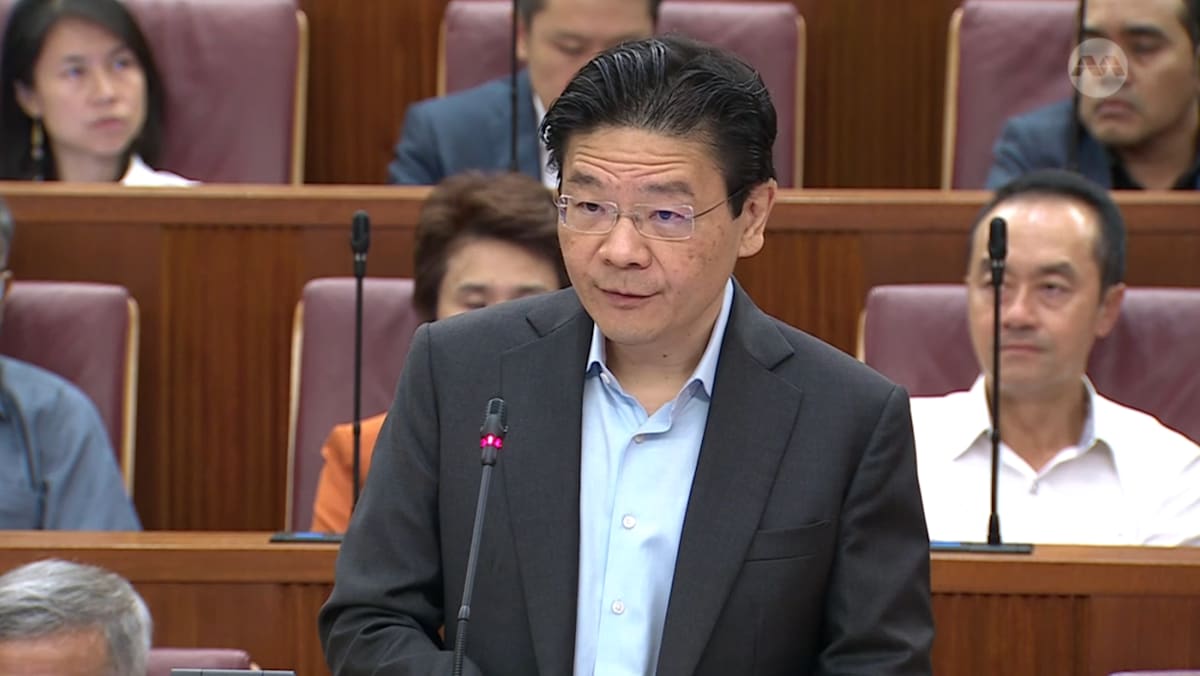
Prime Minister Lawrence Wong speaking in parliament at the close of the three-day Budget debate on Feb 26, 2026.
This audio is generated by an AI tool.
SINGAPORE: The debate over ministerial salaries in parliament last week can sound like a broken record player, repeatedly playing the same line in a song.
I heard no new arguments for or against.
It isn’t surprising since this discussion is more than 30 years old, starting when a White Paper on the issue was introduced in parliament and debated in 1994. It is an unusually long time for the merits or otherwise of a policy to be still so actively in play even as the world, and Singapore, have changed substantially.
All the usual questions have been asked and re-asked over the last three decades: Will increased pay actually result in quality candidates stepping forward ? Will it not entice the wrong people, motivated by money? Isn’t a million dollars a year more than enough when Singapore ministers are already the best paid in the world?
CNA Games Guess Word Crack the word, one row at a time Buzzword Create words using the given letters Mini Sudoku Tiny puzzle, mighty brain teaser Mini Crossword Small grid, big challenge Word Search Spot as many words as you can Show More Show Less
But there is something new every time these questions are raised: New data points emerge from the accumulated experience of implementing the pay formula which should help answer some of these questions.
We now know more about the outcome of this controversial policy than we ever did.
With 30 odd years behind it, what have been the results and how have they measured against the objectives?
That is the best way to assess whether supporters or critics were right in their arguments, and that is what every new debate on this old issue should revolve around.
Alas, I did not hear much of it in this round.
So, has it worked to attract capable people to enter politics?
By its own admission, the ruling party has found it increasingly difficult to do so, especially from those in the private sector.
Prime Minister Lawrence Wong in his speech on Thursday (Sep 10) admitted as much, recounting how he approached several chief executive officers and senior business leaders who could have made a real contribution and were earning several times a minister’s salary. None were prepared to make the move into politics.
Even senior permanent secretaries were not keen. Of the several whom the prime minister asked, not a single one stepped forward.
STILL A POLITICAL HOT POTATO
I wrote in a commentary last month that the prime minister’s hands were tied in the recent changes to the Cabinet line-up because he had too few candidates to choose from.
He had inherited the problem which stemmed from the previous two general elections in 2015 and 2020 when the pipeline for minister-calibre material slowed down considerably.
You could argue that it was precisely why ministerial salaries, which had not been changed since 2011, needed adjustment.
This brings me to the second point which is that what the last 30 years have shown is that no prime minister has wanted to tackle the issue if they could help it. It was a political hot potato and it still is, very much so.
When I first heard that there might be revisions to these salaries, I thought that Mr Wong had finally decided to take the political bull by the horn and make a decisive change to help solve the talent shortage problem.
I suppose he tried, but the increases he announced were somewhat incremental and unlikely to move the needle much.
Even though the so-called MR-4 benchmark for junior ministers will go up from S$1.1 million to S$1.8 million, the actual salaries will increase more gradually, moving up to S$1.2 million in October and to an expected maximum of S$1.35 million by the end of this government’s term in 2030.
The new salary of S$1.2 million translates to over 60 per cent discount from the formula to accommodate a public service element , much higher than the 40 per cent that the review committee had recommended.
In effect, the prime minister was even more cautious than the committee and clearly had one eye on ground sentiment over an issue that still rankles many.
Having decided he had to make some adjustments, the prime minister opted for the least politically objectionable way.
To be fair, he said that the People’s Action Party (PAP) did not believe in using higher pay to draw people into politics .
Rather it was to ensure they did not have to make too great a financial sacrifice on top of all the other drawbacks that a political life demanded, including loss of privacy and being publicly scrutinised 24/7.
“Entering politics would already involve considerable disruption and sacrifice. We should not require them to completely upend the financial responsibilities that they have legitimately taken up for their families,” he said.
This is fair enough but his incremental approach also reduces the impact of the pay increase.
Will any one of the CEOs or permanent secretaries whom he had approached now say yes with these latest adjustments?
In a way, it is like Singapore’s birth rate problem, when no amount of baby bonuses has moved the fertility needle which instead has plummeted to record levels.
Will the number of minister-level candidates too fall below the replacement rate?
Perhaps the issue needs a reset in the same way the government says it is tackling the baby problem.
What should it start with?
The Sep 10 parliamentary debate hinted at one possible way which is about linking pay to performance .
I believe it is absolutely the right thing to do.
There are already targets which the government has set that determine to some extent the final pay: gross domestic product growth rate, the unemployment rate, income growth for the 50th percentile (the middle group of income earners), and for the 20th percentile consisting of those at the bottom.
Nominated Member of Parliament (NMP) Haresh Singaraju asked about setting quality of life indicators based on how well Singaporeans live, instead of focusing on how the country was performing economically.
NMP Kenneth Goh proposed longer-term targets such as “demographic sustainability, social mobility, climate adaptation and social cohesion” and suggested a three- to five-year timeframe for these key performance indicators (KPIs).
These suggestions are worth considering, as the government looks into the review committee’s recommendation of a quality of life measure be included in the national bonus framework.
Indeed, I believe that the public will pay greater attention in the future to individual minister’s performance as their salaries increase over the years.
There is nothing wrong with this demand and the government should respond to it by devising meaningful performance indicators and implementing it in a transparent and rigorous way.
Mr Wong himself acknowledged this saying: “So beyond what we have already shared, I will consider whether more information can be disclosed,” he said. “But we should also be careful not to turn ministerial assessment into a public popularity contest – and then start comparing and ranking individuals year by year.
“That is not going to be productive, and that's not how I want the Cabinet to operate.”
In fact, revamping the targets is an opportunity to reset.
If ever it decides to act decisively to up ministerial salaries that might produce concrete results, and not do so incrementally, it should accompany the move with an equally bold plan to tie these increases to a more challenging set of KPIs that is directly related to a minister’s performance.
This should be paid as a variable bonus.
Linking pay to performance will become more important if the current difficulty with getting top people in the private and public sector continues.
If the ruling party ends up missing out on the best candidates, the quality of leadership will suffer and there will be questions raised about whether those who answer the call deserve their remuneration.
Linking pay with performance is the best way to answer detractors.
Han Fook Kwang was a veteran newspaper editor and is Senior Fellow at the S Rajaratnam School of International Studies, Nanyang Technological University.
Get our pick of top stories and thought-provoking articles in your inbox
Stay updated with notifications for breaking news and our best stories
Join our channel for the top reads for the day on your preferred chat app
资深报社编辑韩福光表示,如果目前私营和公共部门难以吸引顶尖人才的局面持续下去,那么将薪酬与绩效挂钩将变得更加重要。
2026年2月26日,在为期三天的预算辩论结束时,总理黄循财在国会发表讲话。
这段音频由人工智能工具生成。
新加坡:上周国会就部长薪酬问题展开的辩论,听起来就像一台坏掉的唱片机,一遍又一遍地播放着同一句歌词。
我没有听到任何新的赞成或反对论点。
这并不奇怪,因为这场讨论已经持续了30多年,最早可以追溯到1994年,当时一份关于此问题的白皮书被提交国会进行辩论。一项政策的优劣问题能够持续如此之久,即使世界和新加坡都发生了巨大的变化,这确实不同寻常。
过去三十年来,所有老生常谈的问题都被反复提及:提高薪酬真的能吸引优秀人才吗?会不会反而招来一些唯利是图的人?新加坡部长们的年薪已经是全球最高的了,一百万美元难道还不够吗?
CNA游戏 猜词游戏 逐行破解单词 流行词游戏 用给定的字母组成单词 迷你数独 小小谜题,挑战你的大脑 迷你填字游戏 小方格,大挑战 单词搜索 尽可能多地找出单词 显示更多 显示更少
但每次提出这些问题时,都会出现新的情况:在实施薪酬方案的过程中积累的经验中,会出现新的数据点,这应该有助于回答其中的一些问题。
我们现在比以往任何时候都更了解这项备受争议的政策的后果。
三十多年过去了,取得了哪些成果?这些成果与预期目标相比如何?
这是评估支持者或批评者论点是否正确的最佳方法,也是围绕这一老问题展开的每一次新辩论都应该围绕这一点展开的。
可惜,这一轮我没怎么听到这方面的内容。
那么,这种做法是否有效地吸引了有能力的人才投身政界?
执政党自己也承认,他们发现越来越难以做到这一点,尤其是难以从私营部门争取到支持。
黄循财总理在周四(9月10日)的演讲中承认了这一点,他回顾了自己如何接触多位首席执行官和高级商界领袖,这些人本可以为政界做出真正贡献,而且收入是部长薪水的数倍。但他们都不愿意从政。
就连一些资深常务秘书也兴致缺缺。首相询问了好几位常务秘书,但没有一个人站出来。
仍然是个政治烫手山芋
我在上个月的一篇评论文章中写道,由于可供选择的候选人太少,首相在最近对内阁阵容进行调整时束手无策。
他继承了2015年和2020年两次大选遗留下来的问题,当时部长级人才的输送渠道大幅放缓。
可以说,这正是部长级薪酬需要调整的原因,因为部长级薪酬自 2011 年以来一直没有改变。
这就引出了我的第二点,那就是过去30年的经验表明,没有一位首相愿意主动解决这个问题。这在当时是一个棘手的政治难题,现在依然如此。
当我第一次听说这些薪酬可能会有所调整时,我以为黄先生终于决定在政治上迎难而上,做出果断的改变来帮助解决人才短缺问题。
我想他肯定尽力了,但他宣布的增幅比较缓慢,不太可能产生太大影响。
尽管初级部长的所谓 MR-4 基准工资将从 110 万新元提高到 180 万新元,但实际工资的增长速度会更慢,10 月份将达到 120 万新元,预计到本届政府 2030 年任期结束时将达到最高 135 万新元。
新薪酬为 120 万新元,这意味着根据公共服务要素计算出的薪酬将减少 60% 以上,远高于审查委员会建议的 40%。
实际上,首相比委员会更加谨慎,显然密切关注着民众对这一至今仍令许多人耿耿于怀的问题的看法。
首相意识到必须做出一些调整,于是选择了政治上最不具争议的方式。
平心而论,他表示人民行动党(PAP)不相信用更高的薪酬来吸引人们从政。
相反,这是为了确保他们不必在政治生活带来的所有其他弊端(包括失去隐私和 24/7 全天候受到公众审查)之外,还要做出太大的经济牺牲。
他说:“投身政界本身就意味着相当大的生活变动和牺牲。我们不应该要求他们彻底颠覆他们合法承担起来的家庭经济责任。”
这固然公平,但他的渐进式加薪方式也降低了加薪带来的影响。
在他接触过的那些首席执行官或常务秘书中,现在会有谁会同意这些最新的调整吗?
从某种意义上说,这就像新加坡的出生率问题,无论政府发放多少生育奖金,生育率都没有下降,反而跌至历史新低。
部长级候选人数是否也会低于更替率?
或许这个问题需要重新审视,就像政府声称正在解决婴儿问题一样。
它应该从哪里开始?
9 月 10 日的议会辩论暗示了一种可能的方法,那就是将薪酬与绩效挂钩。
我认为这样做绝对是正确的。
政府已经设定了一些目标,这些目标在一定程度上决定了最终工资:国内生产总值增长率、失业率、收入处于中间水平(第 50 百分位)和收入处于最低水平(第 20 百分位)的人群的收入增长率。
委任国会议员哈雷什·辛加拉朱询问,是否应该根据新加坡人的生活质量来设定生活质量指标,而不是关注国家的经济表现。
国家议员吴庆祥提出了“人口可持续性、社会流动性、气候适应和社会凝聚力”等长期目标,并建议这些关键绩效指标(KPI)的期限为三到五年。
这些建议值得考虑,因为政府正在研究审查委员会关于在国家奖金框架中纳入生活质量指标的建议。
的确,我认为随着部长们薪水逐年增长,公众未来会更加关注每位部长的表现。
这一要求并没有错,政府应该通过制定有意义的绩效指标并以透明、严格的方式实施来回应这一要求。
黄先生本人也承认这一点,他说:“因此,除了我们已经分享的信息之外,我会考虑是否可以披露更多信息。” “但我们也应该注意,不要把部长评估变成一场公众人气竞赛——然后开始逐年比较和排名个人。”
“那样做不会有任何成效,我也不希望内阁那样运作。”
事实上,重新调整目标是一个重新开始的机会。
如果政府决定采取果断行动提高部长薪酬,以期取得切实成效,而不是循序渐进地提高,那么就应该同时制定一项同样大胆的计划,将这些增长与一套更具挑战性的KPI挂钩,这些KPI应与部长的绩效直接相关。
这笔款项应以浮动奖金的形式支付。
如果目前私营和公共部门难以吸引顶尖人才的局面持续下去,那么将薪酬与绩效挂钩将变得更加重要。
如果执政党最终错失了最优秀的候选人,领导层的质量就会受到影响,人们也会质疑那些响应号召的人是否配得上他们的报酬。
将薪酬与绩效挂钩是回应批评者的最佳方式。
韩福光是一位资深的报纸编辑,现任南洋理工大学拉惹勒南国际研究院高级研究员。
订阅我们的邮件,即可获取精选热点新闻和引人深思的文章。
订阅通知,第一时间获取突发新闻和精彩报道。
加入我们的频道,即可在您常用的聊天应用上获取当日热门文章。