Her education business started from a 4-room HDB flat at age 24她24岁时,在组屋的一间四房式公寓里开始了她的教育事业。
Nicolette Ng grew Write Edge from a small flat to 14 centres, sharing insights on leadership, investing, and disciplined business growth in Singapore. Read more at straitstimes.com.
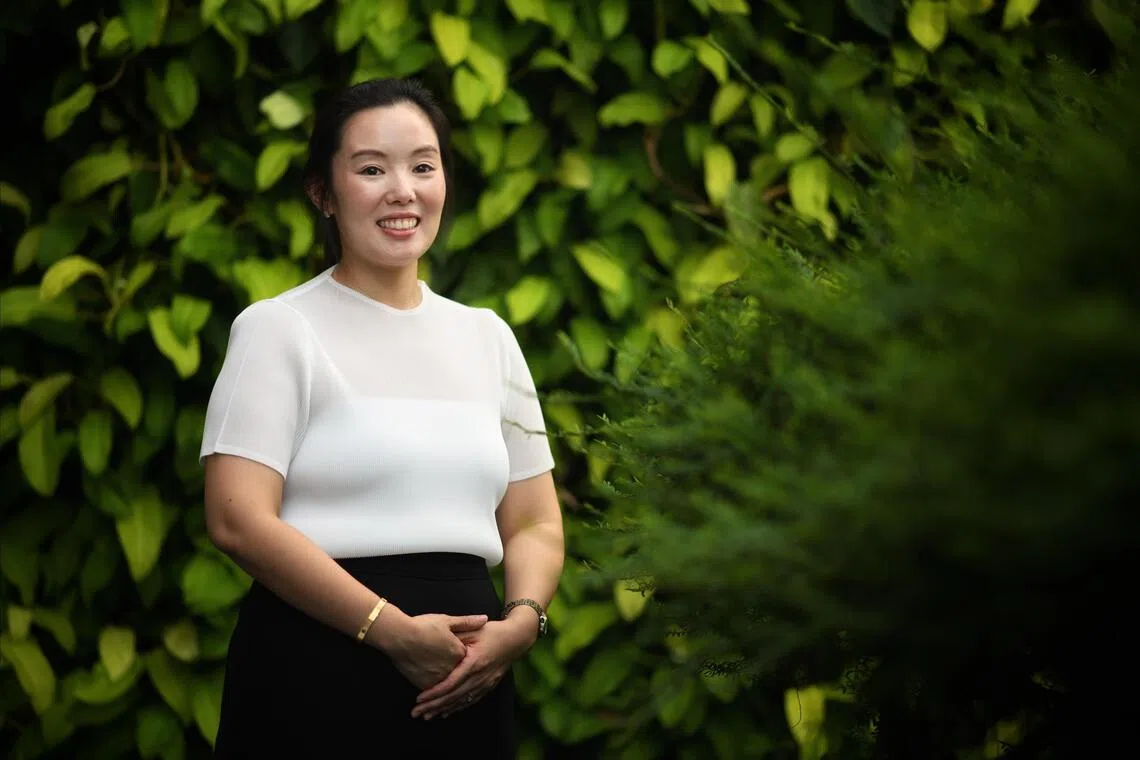
Nicolette Ng started giving tuition at 24 and now runs the Write Edge chain of education centres.
ST PHOTO: CHONG JUN LIANG
Published Sep 27, 2026, 05:00 AM
Updated Sep 27, 2026, 05:00 AM
SINGAPORE – Nicolette Ng runs 12 education centres in Singapore, providing English writing enrichment to students.
Her business, Write Edge, had humble beginnings, operating out of a four-room HDB flat when Ng was 24 years old.
Ng, 36, recalled the early days when she had just 12 students in 2014.
“My mother encouraged me to move to a small 130 sq ft shop unit, and from there, we grew to 60 students in a span of six months,” she said.
She was then joined by co-founder Eileen Chin, and the business expanded by one shop a year over the next 12 years. By February 2027, she will have opened two more centres, taking the total to 14.
Ng said: “In the early years, I thought success came just from working hard and moving fast. But as the company grew, I learnt that leadership also requires emotional resilience, self-awareness and the ability to navigate uncertainty, criticism and change.”
She added that growth amplifies both her strengths and her blind spots. “I had to learn how to delegate, trust people, communicate more clearly and build systems that could scale beyond me,” Ng said.
Ng also worked in communications and media, including at Singapore Press Holdings and Weber Shandwick. She handled media monitoring and content development, and supported regional projects.
Ng holds a master’s degree in education (English language) from the National Institute of Education and a bachelor’s degree in English literature from Nanyang Technological University.
She is married to a senior product manager in a technology company and they have a five-year-old child.
Do you invest in anything?
I invest in the business itself – whether it is building stronger teams, improving our curriculum, or putting resources into systems that allow us to scale well.
I also invest in my own development – through structured programmes, mentorship, retreats, workshops or any exposure that helps me become a better professional and leader.
Financially, I take a longer-term view and focus on stability rather than chasing quick returns. Over time, I have found that these are the investments that compound.
What was your first exposure to investing?
My first investment was in an SGX-listed exchange-traded fund. I chose it because it offered diversification and was a straightforward way to start investing without needing to pick individual stocks.
What has been your biggest financial mistake?
In the early years of running the business, I made decisions in hiring and expansion that were more optimistic than disciplined.
My biggest financial mistake was waiting too long to close an underperforming branch. More recently, we closed our Woodlands branch after investing about $300,000 in it. We kept looking for ways to turn it around, but in hindsight, I should have made the decision earlier.
It is a costly reminder that a good programme does not automatically succeed in every location. We still believe in taking calculated risks, but we look more closely at parent demand, pricing and location fit before committing capital to a new centre.
What has been your best financial decision?
I think some of my better financial decisions have come from staying disciplined and taking a longer-term view.
About three years ago, I bought a home ahead of a period when the property market strengthened, and it has since appreciated by about 15 per cent. On hindsight, the timing worked out.
I also bought a brand-new car for around $75,000 when certificate of entitlement prices were relatively low. While it is not an investment, it turned out to be a sensible decision.
I also set up automated savings plans early on, which help me invest consistently without needing to actively manage it.
Lastly, investing in the business has been the most meaningful decision. What started small has grown steadily over time, and it has reinforced for me the value of patience, consistency and focusing on what compounds.
Moneywise, what were your growing-up years like?
When I was growing up, we were quite a “financially average” family. My mum was a hairdresser and my dad was a hawker, and there were years when we had to make do with less.
What I remember most is how hard they worked. My dad woke up at 2am every day to go to Pasir Panjang Market, and my mum worked long hours before eventually starting her own salon.
Growing up watching my father run his hawker business shaped me in many ways. He taught me the importance of hard work and being a good person. He was always kind-natured, even-tempered and very, very hardworking.
These experiences shaped how I think about money. I do not take income for granted and I value discipline and consistency. At the same time, my mum was quite entrepreneurial and she was the one who encouraged me to start my tuition business.
What was your childhood dream?
I wanted to be a singer. I even made it to the top 10 in my secondary school singing competition. That was probably wishful thinking, and I think the judges were being kind.
Did you do any part-time jobs?
My first jobs were a mix of part-time roles. I did everything from distributing fliers to selling clothes at Robinsons Singapore.
What was your most memorable encounter with money?
One of my most memorable encounters with money was when I first started earning through my business. For the first time, I had customers paying me on a monthly and termly basis, and there was suddenly a lot more money coming in than I was used to. That was when I realised money is not just about earning, but about managing it well.
Where’s home for you?
I live in a freehold private condominium in the Kovan area.
I drive a Tesla Model Y Juniper. It is my husband’s dream car.
What would your perfect day look like?
My perfect day would be a mix of meaningful work and time with family.
I would start the day unhurried, maybe with a bit of quiet time, then spend a few focused hours on work. The rest of the day would be with my family doing something simple together, and having the space to slow down.
What would you do if you suddenly had a windfall of $1 million?
I would invest most of it.
At this stage of my life, I think more about long-term stability. I might set aside a small portion for family or experiences but the bulk would go towards growing it over time.
If you suddenly only had $100 to your name, what would you do with it?
I would be very careful with how I use it and, if possible, I would use it to get back to earning as quickly as possible.
Sue-Ann Tan is a business correspondent at The Straits Times, covering capital markets and sustainable finance.
Nicolette Ng 从 24 岁开始做家教,现在经营着 Write Edge 连锁教育中心。
《海峡时报》照片:梁崇俊
发布于 2026 年 9 月 27 日上午 5:00
更新于2026年9月27日上午5:00
新加坡——Nicolette Ng在新加坡经营着12家教育中心,为学生提供英语写作强化课程。
她的公司 Write Edge 起步很简陋,24 岁时,公司还在一套四房式组屋里运营。
36岁的吴女士回忆起2014年她刚开始教书时只有12名学生的情景。
“我母亲鼓励我搬到一个130平方英尺的小店面,从那以后,我们在短短六个月内就发展到了60名学生,”她说。
随后,联合创始人艾琳·陈(Eileen Chin)加入,在接下来的12年里,公司每年新增一家门店。到2027年2月,她将再开设两家中心,使门店总数达到14家。
吴先生说:“创业初期,我以为成功只需要努力工作、快速行动。但随着公司的发展,我逐渐意识到,领导力还需要情绪韧性、自我认知以及应对不确定性、批评和变革的能力。”
她补充说,成长既放大了她的优势,也暴露了她的盲点。“我必须学会如何授权、信任他人、更清晰地沟通,并建立能够超越我自身规模的系统,”吴女士说道。
吴女士也曾在通讯和媒体行业工作,包括新加坡报业控股和伟达公关公司。她负责媒体监测和内容开发,并为区域项目提供支持。
吴先生拥有国立教育学院英语语言教育硕士学位和南洋理工大学英语文学学士学位。
她嫁给了一家科技公司的高级产品经理,他们有一个五岁的孩子。
你进行过投资吗?
我投资于企业本身——无论是组建更强大的团队、改进我们的课程,还是投入资源到能够让我们良好扩展的系统中。
我也注重自我提升——通过系统化的课程、导师指导、静修、研讨会或任何能帮助我成为更优秀的专业人士和领导者的机会。
在财务方面,我采取长远眼光,注重稳健而非追求短期收益。随着时间的推移,我发现这些投资才能带来复利增长。
你第一次接触投资是什么时候?
我的第一笔投资是购买一只在新加坡交易所上市的交易所交易基金(ETF)。我选择它是因为它能分散风险,而且是一种简单的投资入门方式,无需挑选个股。
你犯过的最大的财务错误是什么?
在公司运营初期,我在招聘和扩张方面做出的决策更多是乐观而非严谨。
我犯过的最大财务错误就是拖延关闭业绩不佳的分行。最近,我们关闭了位于伍德兰兹的分行,此前我们已在该分行投资了约30万美元。我们一直在想方设法扭转局面,但现在回想起来,我应该更早做出关闭的决定。
这给我们敲响了警钟:好的项目并非在每个地方都能成功。我们仍然相信应该承担经过深思熟虑的风险,但在投入资金建设新中心之前,我们会更加仔细地考察家长需求、价格以及选址是否合适。
你做过的最明智的财务决定是什么?
我认为我一些比较好的财务决策都来自于保持自律和采取长远的眼光。
大约三年前,我在房地产市场走强之前买了一套房子,此后房价上涨了约15%。事后看来,时机把握得很好。
当时车辆登记证价格相对较低,我花了大约7.5万美元买了一辆全新的车。虽然这算不上投资,但事实证明这是个明智的决定。
我还很早就设立了自动储蓄计划,这可以帮助我持续投资,而无需主动管理。
最后,投资这家企业是我做过的最有意义的决定。它起步虽小,但随着时间的推移稳步发展,这让我更加深刻地体会到耐心、坚持和专注于那些能够带来收益的事情的价值。
从金钱角度来看,你的成长岁月是怎样的?
我小时候,我们家境很一般。我妈妈是理发师,我爸爸是小贩,有好几年我们家都过得很拮据。
我印象最深的是他们工作有多辛苦。我爸爸每天凌晨两点就起床去巴西班让市场,我妈妈在最终开办自己的美发沙龙之前,也长时间工作。
从小看着父亲经营小贩生意,对我的影响非常深远。他教会了我努力工作和做人的重要性。他为人善良,性情温和,而且非常非常勤奋。
这些经历塑造了我对金钱的看法。我不再把收入视为理所当然,我珍视自律和坚持。同时,我的母亲很有创业精神,正是她鼓励我创办了自己的家教事业。
你小时候的梦想是什么?
我曾经想当歌手。我甚至在中学歌唱比赛中进入了前十名。那可能只是我的一厢情愿,我觉得评委们已经很宽容了。
你做过兼职吗?
我最初的工作是各种兼职,从派发传单到在新加坡罗宾逊百货公司卖衣服,什么都做过。
你印象最深刻的与金钱相关的经历是什么?
我印象最深刻的一次与金钱的经历,是我开始通过自己的生意赚钱的时候。我第一次有了按月或按季度付款的客户,收入突然比我以往习惯的多得多。那时我才意识到,金钱不仅仅是赚钱,更重要的是如何有效地管理它。
你的家在哪里?
我住在高文地区的一栋永久产权私人公寓里。
我开的是一辆特斯拉Model Y Juniper,这是我丈夫梦寐以求的车。
你理想中的一天是什么样的?
我理想中的一天是既能完成有意义的工作,又能陪伴家人。
我会悠闲地开始新的一天,或许会享受一段安静的时光,然后集中几个小时工作。剩下的时间会和家人一起做些简单的事情,享受慢节奏的生活。
如果你突然获得100万美元的意外之财,你会怎么做?
我会把大部分钱投资出去。
在我人生的这个阶段,我更注重长远的稳定。我可能会留出一小部分用于家庭或体验,但大部分会用于财富的长期增长。
如果你突然发现自己只有100美元,你会怎么花?
我会非常谨慎地使用它,如果可能的话,我会利用它尽快恢复收入。
Sue-Ann Tan 是《海峡时报》的商业记者,负责报道资本市场和可持续金融。