Lockheed refines bid to modernize the Greek frigate fleet. Here’s what it’s offering.洛克希德公司完善了其为希腊护卫舰舰队进行现代化改造的方案。以下是其具体内容。
The Hellenic Navy wants to buy four new frigates, modernize existing ones and receive an interim capability during the entire process.
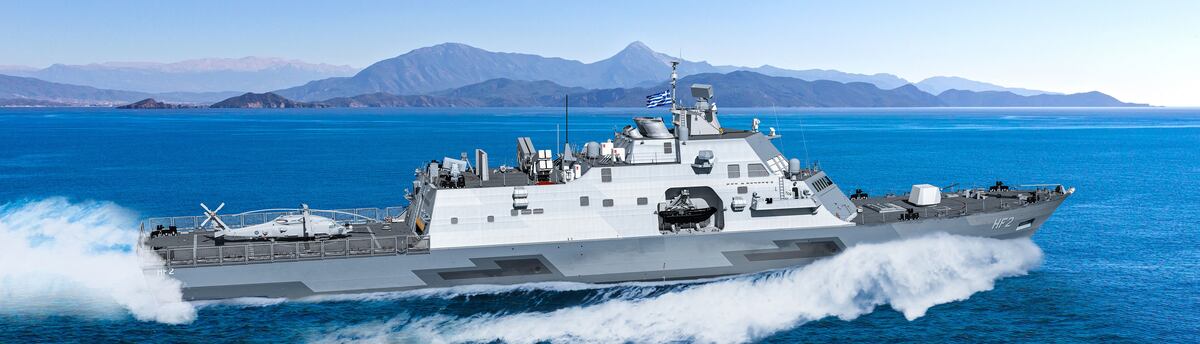
WASHINGTON — American defense company Lockheed Martin is continuing to update its bid to build the Hellenic Navy’s new frigates and modernize its current ones, with Greece set to choose a path forward for its surface fleet by the end of the year.
Greece has asked for a three-part solution to modernize its surface fleet amid increases in Russian submarine presence in the Mediterranean Sea, migration from Africa across the sea and tension with neighboring Turkey. The Hellenic Navy wants to buy four new frigates, modernize the combat capability of its four current Hydra-class MEKO 200 frigates and receive some kind of interim capability to operate while the MEKOs undergo their upgrade process.
Lockheed Martin — alongside the U.S. Navy, with which the firm is paired for the official United States bid in the competition — thinks it has a winning solution due to the way its Aegis Combat System would link these frigates with the rest of the Hellenic fleet across a network, and due to the company’s promise to send the bulk of construction work to Greek companies.
Additionally, “one of the big benefits of the U.S. offer, as compared to all the other offers, is that this is being done through the U.S. government Foreign Military Sales process. Greece has transacted somewhere near 2,000 Foreign Military Sales cases with the U.S. It’s a very well-established process, it’s a very transparent process,” Jon Rambeau, Lockheed’s vice president and general manager for the Integrated Warfare Systems and Sensors business line, told Defense News in a Sept. 10 phone interview.
Five other bids from European shipbuilders appear to be still in contention, but he said Lockheed’s proposal is the only one that is part of an official Foreign Military Sales program, and that therefore comes with all the cost and schedule guarantees the U.S. Navy would expect if it were spending its own money.
In June, Naval News reported that Greece named the six bids on its short list: the Netherland’s Damen (SIGMA 11515 HN); France’s Naval Group (FDI-HN); Italy’s Fincantieri (FREMM); the United Kingdom’s Babcock (Arrowhead 140); Germany’s Blohm+Voss (MEKO A-200); and the United States’ Lockheed Martin.
Rambeau said those bids were given an initial ranking by Greek officials, but that order was not shared with industry.
Rambeau also said that if the American pitch wins, the U.S. Navy would act as “the custodian of Greece’s money” and “will contract with Lockheed Martin, and they will negotiate with us just as hard as if they were procuring this for the U.S. government. And at the end of the day, if there’s money left over in that case, by law the United States will have to return that money back to Greece.”
He’s hoping Greece’s familiarity with the FMS process and with Lockheed Martin, with which the Greek military has worked for more than 50 years, will give the bid an extra boost this fall. Bids are due in November, with a decision expected by the end of the year.
What is Lockheed offering?
Joe DePietro, Lockheed Martin’s vice president and general manager for naval combat and missile defense systems, told Defense News in a June interview that Greece’s requirements are based on a need for improved anti-submarine warfare and expanded-area air defense capabilities.
The new construction portion of the U.S. pitch is based on Lockheed’s Freedom-variant littoral combat ship for the U.S. Navy. The LCS was also used as the starting point for the Saudi multimission small combatant currently under construction.
This new frigate, dubbed Hellenic Future Frigate, would be centered around the COMBATSS-21 version of the Aegis Combat System and would be armed with eight Naval Strike Missiles, a 76mm Strales gun, 11 Mk 41 Vertical Launching System tubes and 21 RIM-116 Rolling Airframe Missiles. The ship would include Link 16, Link 22 and Tactical Common Data Link connectivity, enabling it to connect across a network to the rest of the Hellenic military, DePietro told Defense News.
The ship would also come ready to accept the Common Anti-air Modular Missile Extended Range, which features two-way communication between the ship and the missile for better targeting and in-flight updates.
The ship would also be optimized for anti-submarine warfare with many of the systems that are included in the LCS anti-sub warfare mission package, DePietro explained. The SQQ-89 combat suite would help the frigate make sense of the whole operating area by combining information from the frigate’s variable-depth sonar — from dipping sonars employed by MH-60R helicopters and from hull-mounted sonars on other ships in the fleet. That information would inform the firing of anti-submarine rockets either from the frigate or its helicopters.
When it comes to modernizing the MEKO frigates, Lockheed is offering to install an Aegis-based combat system that would integrate these 1990s-era ships with the new frigates, the fleet of MH-60R helicopters, the Hellenic Air Force’s F-16s and more.
DePietro said the MEKO hulls are in decent shape but would need upgrades to their generators and turbines. But the top modernization priorities are to add a common combat system as well as Link 16 and Link 22 compatibility.
Rambeau said the ability to create a link across a network with the rest of Greece’s existing and future aircraft and weapons systems “has been a consistent theme as we think about the upgrades.”
The U.S. Navy would be the one offering the interim solution — likely a few decommissioned ships from the service that could temporarily be given to Greece — until the MEKO upgrades are complete.
A source familiar with the bid but not authorized to talk about the ongoing negotiations between the two countries told Defense News that if the U.S. Navy retires some of its Aegis cruisers or Freedom-class LCSs in fiscal 2022, as it asked Congress to do, then those ships could be the ones sent to Greece for the interim capability.
The Ticonderoga-class cruisers sport the Aegis Combat System that Lockheed is pitching in the new-build and MEKO-upgrade portions of the bid, and the Freedom-variant LCSs would be very similar in design to the new frigates; both are 118 meters in length, with largely the same hull, mechanical and electrical systems and with some of the same combat systems. However, much of the power for anti-submarine warfare capabilities on the LCS comes in an optional mission package, rather than built into the hull.
Industrial base considerations
Lockheed’s Hellenic Future Frigate design is nearly complete, and the company is in varying stages of talks with companies in Greece and throughout Europe to discuss their involvement in construction and in supplying weapons and sensors that Greece requested in its technical specifications.
Last month, Lockheed announced a list of key industry partners on the frigate modernization side of the bid. Companies who have signed formal agreements with Lockheed include Oceanking Technical and Trading, Intracom Defense Electronics, Endeavor Integrated Solutions, Akmon, Metka, Aeroservices, and ALS Naval Ship Designs.
An MH-60S Seahawk helicopter attached to the “Snowmen” of Helicopter Sea Combat Squadron (HSC) 28, Detachment 5, transfers suspected contraband from the Freedom-variant littoral combat ship USS Billings (LCS 15) to Freedom LCS USS Sioux City (LCS 11), July 23, 2021. (MC2 Marianne Guemo/US Navy)
Lockheed has been talking to the Skaramangas, Greece, shipyard about working together to build some of the four new frigates there; about what investments would be made to facilities there for this frigate program; and more potential work it could take on.
DePietro said Lockheed previously partnered with shipyards in Spain, Canada, Japan and South Korea, as well as in the U.S. when it paired with Fincantieri’s Marinette Marine Shipyard in Wisconsin for the LCS program. Lockheed helped modernize the foreign yards to build ships to American standards, he added.
The ongoing dialogue with the Skaramangas shipyard “very much reminds me of Marinette circa 2006, and a big part of this program is being able to revitalize and recapitalize Greek shipbuilding and its defense industry, which has kind of fallen off from where they were some 20 years ago in capabilities,” he said.
Rambeau said that an analysis of Lockheed’s proposal shows about a third of the money would be spent in the U.S., a third in Greece and a third elsewhere in Europe. About 70 percent of the labor, though, would take place in Greece to “put money back into the local economy.”
According to a Lockheed document, the frigate program would create 7.7 million hours of labor across a five-year construction timeline for the Greek workforce, with 2,500 skilled jobs at the shipyard alone.
DePietro said a range of options are under discussion with the Greek shipyard regarding which ships the yard would participate in building versus fully constructing. For any ships that are not fully built in Greece, he added, the Fincantieri Marinette Marine yard would be able to take on the work without disrupting the tail end of the LCS production there, the beginning of the U.S. Navy’s Constellation-class frigate construction, or the four-ship Saudi multimission combatant program.
He added that the Hellenic frigate project would benefit the supply chain, where many but not all the companies involved will transition to the Constellation class that Fincantieri will build in Marinette. Fairbanks Morse, for example, provides the LCS engines but is not on the Constellation program. Lake Shore Systems also provides several items for the LCS hull that will not be in the Constellation design.
For companies like them, keeping their production lines hot through their work on the Greek frigate program would benefit the U.S. Navy by allowing it a longer period of time to make decisions on how many spares it wants in the inventory.
Between now and the formal bid submission in November, the U.S. government is seeking congressional approval for the FMS case, and Lockheed is shoring up industry agreements.
Megan Eckstein is the naval warfare reporter at Defense News. She has covered military news since 2009, with a focus on U.S. Navy and Marine Corps operations, acquisition programs and budgets. She has reported from four geographic fleets and is happiest when she’s filing stories from a ship. Megan is a University of Maryland alumna.
华盛顿——美国国防公司洛克希德·马丁公司正在不断更新其为希腊海军建造新型护卫舰并对其现有护卫舰进行现代化改造的竞标方案,希腊将在年底前为其水面舰队的未来发展方向做出选择。
鉴于俄罗斯潜艇在地中海的活动日益频繁、非洲移民涌入以及与邻国土耳其关系紧张,希腊已提出三管齐下的方案,以实现其水面舰队的现代化。希腊海军希望采购四艘新型护卫舰,提升其现有的四艘“九头蛇”级MEKO 200型护卫舰的作战能力,并在MEKO 200型护卫舰升级改造期间获得某种过渡性作战能力。
洛克希德·马丁公司与美国海军合作,代表美国参加此次竞标,该公司认为其解决方案必胜,因为其宙斯盾作战系统能够将这些护卫舰通过网络连接起来,并与希腊舰队的其他舰艇连接起来,而且该公司承诺将大部分建造工作交给希腊公司。
此外,洛克希德·马丁公司副总裁兼综合作战系统与传感器业务线总经理乔恩·兰博在9月10日接受《防务新闻》电话采访时表示:“与其他所有报价相比,美国报价的一大优势在于,它是通过美国政府的对外军售程序进行的。希腊已经与美国完成了近2000笔对外军售交易。这是一个非常成熟、非常透明的程序。”
另有五家欧洲造船厂的投标似乎仍在竞争中,但他表示,洛克希德公司的方案是唯一一个属于正式对外军售计划的方案,因此具备美国海军自筹资金时所期望的所有成本和进度保证。
6 月,《海军新闻》报道,希腊公布了其六家入围竞标公司的名单:荷兰达门集团(SIGMA 11515 HN);法国海军集团(FDI-HN);意大利芬坎蒂尼集团(FREMM);英国巴布科克公司(Arrowhead 140);德国布洛姆-福斯公司(MEKO A-200);以及美国洛克希德·马丁公司。
兰博表示,希腊官员对这些投标进行了初步排名,但该排名并未与业界分享。
兰博还表示,如果美国的方案胜出,美国海军将作为“希腊资金的保管人”,并“与洛克希德·马丁公司签订合同,他们会像为美国政府采购一样与我们进行谈判。最终,如果还有剩余资金,根据法律,美国必须将这笔钱返还给希腊。”
他希望希腊对对外军售流程的熟悉程度,以及与洛克希德·马丁公司(希腊军方与该公司合作超过50年)的合作关系,能够为今年秋季的竞标带来额外优势。投标截止日期为11月,预计年底前将做出决定。
洛克希德公司提供的是什么?
洛克希德·马丁公司负责海军作战和导弹防御系统的副总裁兼总经理乔·德彼得罗在 6 月份接受《防务新闻》采访时表示,希腊的要求是基于对改进反潜作战和扩大防空能力的需求。
美国方案中新建部分的设计以洛克希德·马丁公司为美国海军研制的“自由”级濒海战斗舰为基础。沙特阿拉伯目前正在建造的多用途小型作战舰艇也以该型濒海战斗舰为蓝本。
这艘名为“希腊未来护卫舰”的新型护卫舰将以COMBATSS-21型宙斯盾作战系统为核心,并配备8枚海军打击导弹、1门76毫米斯特拉莱斯舰炮、11具Mk 41垂直发射系统发射管和21枚RIM-116滚体导弹。德皮特罗告诉《防务新闻》,该舰还将配备Link 16、Link 22和战术通用数据链连接系统,使其能够通过网络连接希腊军队的其他舰艇。
该舰还将配备通用防空模块化增程导弹,该导弹具有舰船与导弹之间的双向通信功能,可实现更精确的目标定位和飞行中更新。
德皮特罗解释说,这艘舰艇还将针对反潜作战进行优化,配备濒海战斗舰(LCS)反潜作战任务包中的许多系统。SQQ-89作战系统将整合来自护卫舰可变深度声呐、MH-60R直升机使用的吊放式声呐以及舰队其他舰艇舰体声呐的信息,帮助护卫舰全面掌握作战区域的情况。这些信息将指导护卫舰或其直升机发射反潜火箭。
在对 MEKO 护卫舰进行现代化改造方面,洛克希德公司提议安装基于宙斯盾的作战系统,将这些 20 世纪 90 年代的舰艇与新型护卫舰、MH-60R 直升机机队、希腊空军的 F-16 战斗机等整合起来。
德皮特罗表示,MEKO级战舰的船体状况良好,但发电机和涡轮机需要升级。不过,现代化改造的首要任务是加装通用作战系统,并使其兼容Link 16和Link 22数据链。
Rambeau 表示,在考虑升级方案时,“如何通过网络连接希腊现有的和未来的其他飞机和武器系统”一直是我们关注的重点。
美国海军将提供过渡性解决方案——可能是从海军中撤出几艘退役舰艇,暂时提供给希腊——直到 MEKO 升级完成。
一位熟悉此次竞标但未被授权谈论两国之间正在进行的谈判的消息人士告诉《防务新闻》,如果美国海军按照其要求国会的要求,在 2022 财年退役一些宙斯盾巡洋舰或自由级濒海战斗舰,那么这些舰艇可能会被派往希腊以提供过渡能力。
提康德罗加级巡洋舰配备了洛克希德公司在新造和MEKO升级竞标部分中力推的宙斯盾作战系统,而自由级濒海战斗舰的设计与新型护卫舰非常相似;两者长度均为118米,船体、机械和电气系统基本相同,部分作战系统也相同。然而,濒海战斗舰的大部分反潜作战能力并非内置于船体,而是通过可选任务包实现的。
产业基础考量
洛克希德公司的希腊未来护卫舰设计已接近完成,该公司正与希腊和欧洲各地的公司进行不同阶段的谈判,讨论他们参与建造以及提供希腊在其技术规范中要求的武器和传感器。
上个月,洛克希德公司公布了护卫舰现代化项目竞标中的主要行业合作伙伴名单。与洛克希德公司签署正式协议的公司包括:Oceanking Technical and Trading、Intracom Defense Electronics、Endeavor Integrated Solutions、Akmon、Metka、Aeroservices 和 ALS Naval Ship Designs。
2021年7月23日,隶属于第28直升机海上作战中队(HSC)第5分遣队“雪人”的MH-60S海鹰直升机,将疑似违禁品从“自由”级濒海战斗舰“比林斯”号(LCS 15)转移到“自由”级濒海战斗舰“苏城”号(LCS 11)。(二级军士长玛丽安·格莫/美国海军)
洛克希德公司一直在与希腊斯卡拉曼加斯造船厂洽谈合作建造四艘新护卫舰中的几艘;讨论将为该护卫舰项目对当地设施进行哪些投资;以及可能承担的更多潜在工作。
德皮特罗表示,洛克希德公司此前曾与西班牙、加拿大、日本和韩国的造船厂合作,也曾与美国本土的造船厂合作,例如与芬坎蒂尼集团位于威斯康星州的马里内特海事造船厂合作开展濒海战斗舰(LCS)项目。他还补充说,洛克希德公司帮助这些外国造船厂进行现代化改造,使其能够按照美国标准建造舰艇。
他说:“与斯卡拉曼加斯造船厂的持续对话让我想起了 2006 年左右的马里内特事件,而该计划的一个重要部分是能够重振和重建希腊造船业及其国防工业,这些工业的能力已经不如 20 年前了。”
兰博表示,对洛克希德公司方案的分析显示,大约三分之一的资金将用于美国,三分之一用于希腊,三分之一用于欧洲其他地区。不过,约70%的劳动力将在希腊完成,以“将资金回流到当地经济”。
根据洛克希德公司的一份文件,护卫舰项目将在五年的建造期内为希腊劳动力创造 770 万工时,仅造船厂就将提供 2500 个技术岗位。
德皮特罗表示,他们正与希腊造船厂商讨一系列方案,包括由该船厂参与建造哪些舰艇,以及由其独立完成哪些舰艇的建造。他补充说,对于任何不在希腊独立建造的舰艇,芬坎蒂尼·马里内特海事造船厂都能承担相关工作,而不会影响希腊濒海战斗舰(LCS)的后期建造、美国海军星座级护卫舰的初期建造,或是沙特阿拉伯的四艘多用途作战舰艇项目。
他补充说,希腊的护卫舰项目将惠及供应链,其中许多(但并非全部)参与公司将转而为芬坎蒂尼集团在马里内特建造的星座级护卫舰供货。例如,费尔班克斯-莫尔斯公司为濒海战斗舰提供发动机,但并未参与星座级项目。湖岸系统公司也为濒海战斗舰船体提供一些星座级设计中不会用到的部件。
对于像他们这样的公司来说,在希腊护卫舰项目期间保持生产线高速运转,将有利于美国海军,因为这将使美国海军有更长的时间来决定库存中需要多少备件。
从现在到 11 月正式提交投标书期间,美国政府正在寻求国会批准对外军售项目,而洛克希德公司正在巩固与业界的协议。
梅根·埃克斯坦是《防务新闻》的海军作战记者。自2009年以来,她一直从事军事新闻报道,主要关注美国海军和海军陆战队的行动、采购项目和预算。她曾报道过四个不同地理区域的舰队,最喜欢在舰艇上进行新闻报道。梅根毕业于马里兰大学。