Quad nations step up Indo-Pacific push with new initiatives四方安全对话机制通过新举措加强印太地区合作
The announcement to build port infrastructure in Fiji comes amid China’s deepening ties with the South Pacific island, which straddles vital sea lanes.
NEW DELHI — India, the United States, Australia and Japan have announced new initiatives on maritime security in the Indo-Pacific and unveiled plans for their first joint port infrastructure project in Fiji.
The foreign ministers of the four countries made the announcement at a meeting of the Quad, a strategic security grouping focused on the Indo-Pacific at a meeting in New Delhi this week. The move to boost cooperation comes amid concerns about China’s growing influence in this region.
U.S. Secretary of State Marco Rubio said that the maritime surveillance agreement is “going to leverage each of our country’s maritime surveillance capabilities in the Indo-Pacific to enhance information sharing.”
The aim is to integrate the four countries’ capabilities to help partner countries in the region access new maritime technologies for tracking activity in their waters, according to officials.
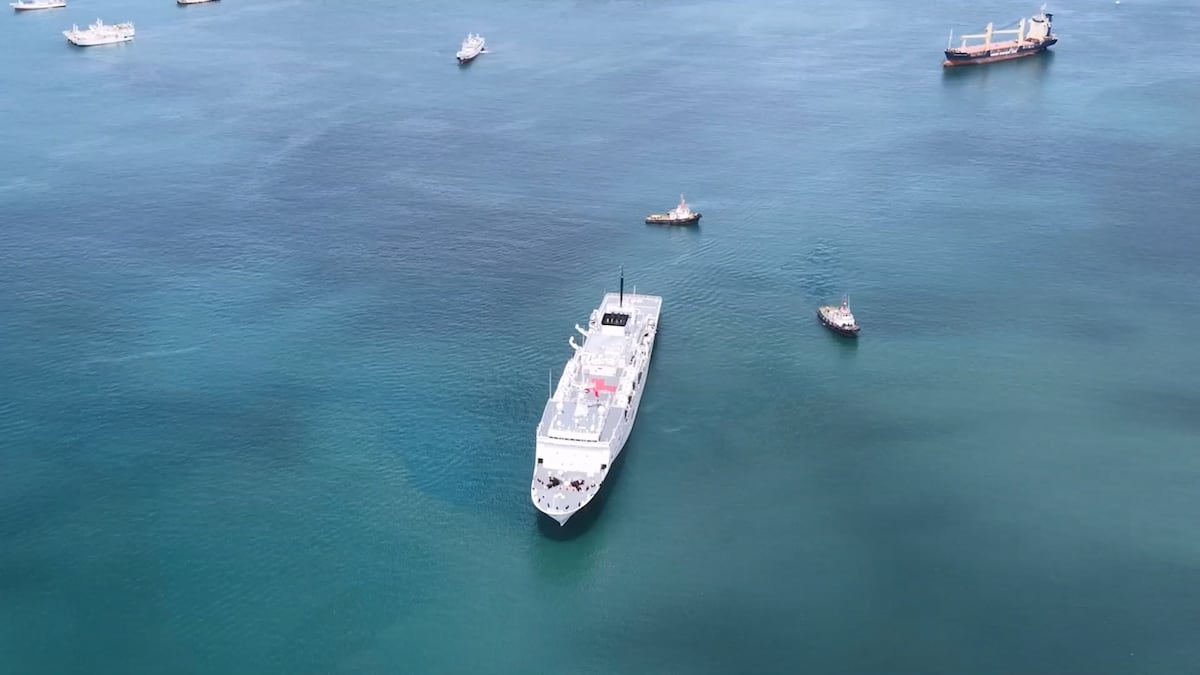
The Quad will also upgrade port infrastructure in Fiji, a South Pacific island nation, marking the group’s first joint regional infrastructure project. The partnership, according to Rubio comes in response to “insufficient port capacity in the Pacific Islands.”
Australian Foreign Minister Penny Wong called the decision to invest in port development in Fiji the strongest ever commitment from the Quad to the Pacific. “It is a practical demonstration of our collective ability to deliver high quality, resilient infrastructure in partnership with the region and in response to Pacific priorities.”
The announcement to build port infrastructure in Fiji comes amid China’s deepening ties with the South Pacific island, which straddles vital sea lanes. Beijing has become a key development partner for the small country, funding several infrastructure projects.
(L-R) Australian Foreign Minister Penny Wong, Indian External Affairs Minister S Jaishankar, Japanese Foreign Minister Toshimitsu Motegi and U.S. Secretary of State Marco Rubio address a joint press conference at the 11th Quad Foreign Ministers' Meeting in New Delhi on May 26, 2026. (Arvind Yadav/Hindustan Times via Getty Images)
“This is a good initiative because it will signal to China that it cannot take its presence in the South Pacific for granted. By deepening their engagement with Fiji and with their united presence, the Quad countries will try to blunt China’s influence which is increasing by the day and offer an alternative to Chinese investments,” according to Chintamani Mahapatra, chairman of the Kalinga Institute of Indo-Pacific Studies in New Delhi.
The group did not mention China by name, but a joint statement issued at the end of the Quad meeting said it remained “seriously concerned” about the situation in the East China Sea and the South China Sea.
“We reiterate our strong opposition to any destabilizing or unilateral actions including by force or coercion that threaten peace and stability in the region,” it said.
The statement also criticized “dangerous maneuvers by military aircraft and coast guard and maritime militia vessels” and the “ramming or blocking actions in the South China Sea.” It expressed serious concern “by the militarization of disputed features” in the waters.
The Quad partners often accuse China of flexing its military muscles and aggressively pushing its maritime territorial claims. China, which claims almost the entire South China Sea, has built military facilities on contested features and has disputes with several Southeast Asian countries such as Malaysia, the Philippines and Vietnam, who also claim parts of the waters. China and Japan have a separate dispute over territory in the East China Sea.
Analysts said the recent meeting will inject momentum into the Quad group which was seen as a counterweight to growing Chinese influence and aggression in the Asia-Pacific region, but which critics said was losing momentum.
Calling the Quad a partnership of action, Rubio said “We are beginning to show real achievements and real accomplishments. We are deeply committed to this partnership. It is a linchpin and a cornerstone of our global strategy as a nation in the United States.”
Analyst Mahapatra said the recent meeting demonstrated that the Trump administration remains invested in the grouping.
“The Quad was perceived by many as a group losing steam but this meeting in Delhi indicated that the Quad is not dead,” according to Mahapatra.
“Without confronting China, these initiatives will signal that countermeasures are being taken so that Chinese hegemony should not be established in the Indo Pacific,” he said.
China, which criticizes the Quad as a Cold War-style bloc reiterated its opposition to the group following the foreign ministers’ meeting in New Delhi.
In response to a question about the Quad initiatives, Beijing said that cooperation among countries should promote regional peace and stability and not target third parties.
“We do not support forming exclusive small groupings or bloc confrontation. Any cooperation should not undermine mutual trust and cooperation among regional countries,” Chinese Foreign Ministry spokeswoman Mao Ning said in Beijing on Tuesday.
The Quad also agreed to launch an initiative on Indo-Pacific Energy Security and a critical minerals framework.
新德里——印度、美国、澳大利亚和日本宣布了在印太地区开展海上安全新举措,并公布了在斐济开展首个联合港口基础设施项目的计划。
四国外长本周在新德里举行的“四方安全对话”(Quad)会议上宣布了这一消息。“四方安全对话”是一个专注于印太地区的战略安全机制。此举旨在加强合作,以应对人们对中国在该地区日益增长的影响力的担忧。
美国国务卿马可·卢比奥表示,这项海上监视协议“将利用我们国家在印太地区的海上监视能力,加强信息共享”。
据官员称,此举旨在整合这四个国家的能力,帮助该地区的伙伴国家获得新的海洋技术,以追踪其水域的活动。
四方安全对话机制还将升级南太平洋岛国斐济的港口基础设施,这将是该机制的首个区域性联合基础设施项目。鲁比奥表示,此次合作是为了应对“太平洋岛屿港口吞吐能力不足”的问题。
澳大利亚外交部长黄英贤称,投资斐济港口开发的决定是四方安全对话机制对太平洋地区迄今为止最强有力的承诺。“这切实展现了我们与该地区合作,响应太平洋地区优先事项,共同提供高质量、高韧性基础设施的能力。”
中国宣布将在斐济建设港口基础设施之际,正值中国与这个位于重要海上航道上的南太平洋岛国关系日益密切之时。北京已成为这个小国的重要发展伙伴,资助了多个基础设施项目。
(左起)2026年5月26日,澳大利亚外交部长黄英贤、印度外交部长苏杰生、日本外相茂木敏充和美国国务卿马可·卢比奥在新德里举行的第十一届四方安全对话外长会议上举行联合新闻发布会。(Arvind Yadav/Hindustan Times via Getty Images)
新德里卡林加印太研究所主席钦塔马尼·马哈帕特拉表示:“这是一个很好的举措,因为它将向中国发出信号,表明它不能想当然地认为自己在南太平洋的存在是理所当然的。通过深化与斐济的合作以及团结一致,四方安全对话成员国将努力削弱中国日益增长的影响力,并为中国投资提供替代方案。”
该组织没有直接提及中国,但在四方安全对话会议结束时发表的联合声明中表示,它仍然对东海和南海局势“严重关切”。
声明称:“我们重申,我们强烈反对任何破坏稳定或单方面行动,包括使用武力或胁迫手段威胁该地区的和平与稳定。”
声明还批评了“军用飞机、海警船和海上民兵船只的危险行动”以及“在南海的撞击或封锁行动”。声明对“争议水域的军事化”表示严重关切。
四方安全对话伙伴经常指责中国炫耀武力,并咄咄逼人地推进其海洋领土主张。中国声称对几乎整个南海拥有主权,并在争议岛礁上修建军事设施,同时与马来西亚、菲律宾和越南等多个东南亚国家存在争端,这些国家也对部分海域提出主权声索。此外,中国和日本在东海也存在领土争端。
分析人士表示,最近的会议将为四方安全对话机制注入动力。该机制被视为制衡中国在亚太地区日益增长的影响力和侵略性的力量,但批评人士称其正在失去动力。
鲁比奥称四方安全对话是行动伙伴关系,并表示:“我们开始展现出真正的成就和成果。我们对这一伙伴关系坚定不移。它是我们作为美国国家全球战略的关键和基石。”
分析师马哈帕特拉表示,最近的这次会议表明,特朗普政府仍然对该组织抱有浓厚的兴趣。
马哈帕特拉表示:“许多人认为四方安全对话机制正在失去动力,但德里的这次会议表明,四方安全对话机制并没有消亡。”
他说:“这些举措不会与中国对抗,但会发出一个信号,表明正在采取反制措施,以防止中国在印太地区建立霸权。”
中国批评“四方安全对话”是冷战式集团,并在新德里外长会议后重申了对该组织的反对。
针对有关四方安全对话倡议的问题,北京方面表示,国家间的合作应该促进地区和平与稳定,而不是针对第三方。
中国外交部发言人毛宁周二在北京表示:“我们不支持形成排他性的小集团或集团对抗。任何合作都不应破坏地区国家间的互信与合作。”
四方安全对话机制还同意启动一项关于印太能源安全和关键矿产框架的倡议。