Can fresh icebreakers break the ice between the US and Canada?新式破冰船能否打破美国和加拿大之间的隔阂?
The Icebreaker Collaboration Effort, or ICE Pact, between the United States, Canada and Finland is meant to pool new ship construction.
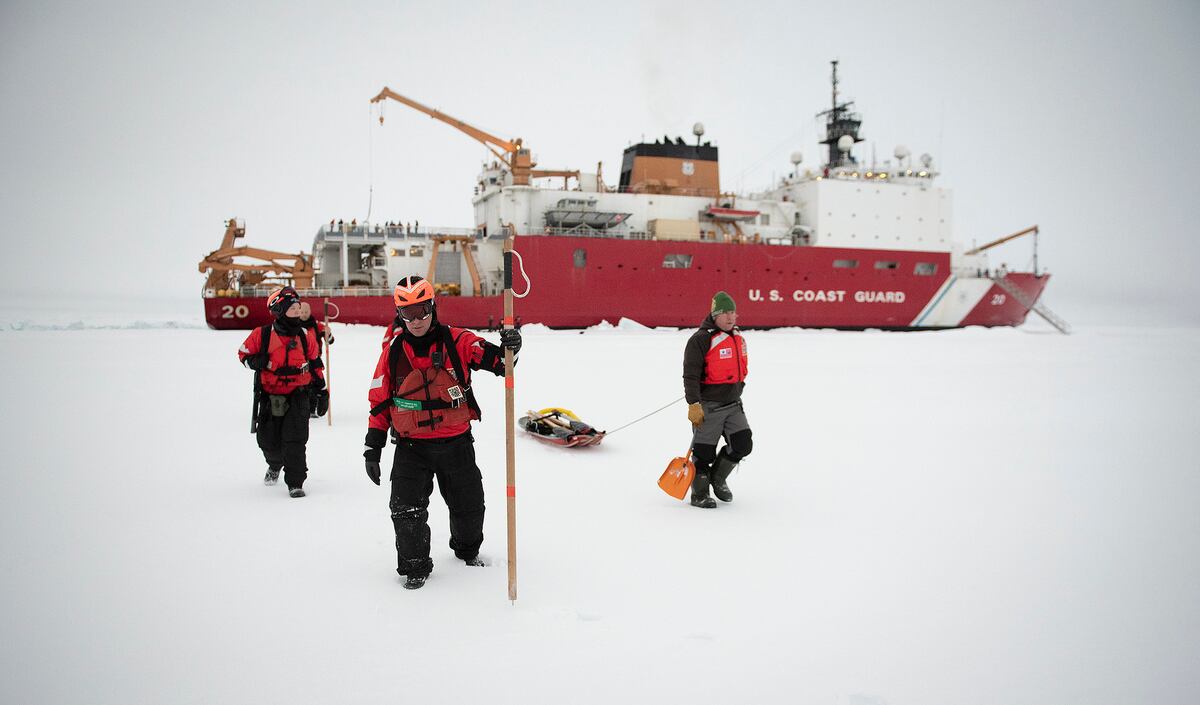
MILAN — An agreement between Finland, Canada, and the United States to jointly build icebreaker ships may hold the key to deeper cooperation between the Arctic nations, as Washington has set out to boost its fleet against Russian and Chinese efforts to ramp up their own.
The Icebreaker Collaboration Effort, or ICE Pact, was signed in July 2024 on the occasion of NATO’s 75th anniversary summit in Washington. It aims to combine the three nations’ knowledge, resources, and expertise about the Arctic region in general and polar icebreaker construction in particular.
The core ambition of the agreement is to collectively build best-in-class ice boats capable of year-round operations in Arctic waters, plowing pathways for maritime traffic in a region being transformed by climate change. Teaming up in a cluster of countries, the idea goes, will lead to better prices and speedier deliveries for the governments involved.
Officials signed an additional memorandum of understanding last November in Washington to emphasize that the strategic context of polar regions requires deeper economic and security cooperation between the three partners.
The new U.S. president, Donald Trump, who was sworn into office this month, has since made disparaging comments about fellow Arctic players Canada and Greenland, suggesting that both should become part of the United States.
The statement has prompted pushback from leaders in Canada and Denmark, of which Greenland is a district, with neither country prepared to have their territorial integrity challenged by a longstanding ally.
A spokesperson for Public Services and Procurement of Canada, which represents Ottawa’s central purchasing agent in the ICE Pact, said Trump’s combative talk has not affected the spirit of the icebreaker agreement.
“Canada remains steadfast in its commitment to the ICE Pact, our collaboration efforts with the U.S. and Finland continue as planned – there are currently no changes to our agreement or initiatives,” a representative said in a Jan. 22 email to Defense News.
The three nations have each appointed a national coordination team for the ICE Pact, which is working to formulate a plan of action through four working groups, the spokesperson added.
Among the initial priorities outlined by Trump during his first term as president was the need to bolster America’s icebreaker fleet. In 2020, he emphasized that the country needed a “ready, capable, and available fleet of polar security icebreakers that would be operationally tested and fully deployable by fiscal year 2029,” he wrote in a memo .
Washington is far from reaching this goal, then-commandant of the U.S. Coast Guard, Adm. Linda Fagan, noted during the Halifax International Security Forum last November.
“So as a nation, we have one heavy icebreaker … [Russia] has way more than one. It’s close to 40,” she said during a panel discussion , as reported by National Defense Magazine.
It is important to distinguish that even as icebreakers are a highly specific type of ship, countries have different ways of classifying them.
While the U.S. and Canada use a classification system of light, medium and heavy ships for different types of ice cover, Russia’s large fleet is typically split into categories based on their mission type and other technical characteristics.
In 2023, the Canadian shipyard Davie took over Finland’s Helsinki Shipyard, which produced over 50% of the global icebreaker fleet. The acquisition entailed a transfer of Finland’s leading expertise, designs and trained personnel into Canadian hands.
The current demand for such specialized ships is at an all-time high, a statement from Davie said, with over 80 open projects among Western countries as of last July.
Experts have argued that the U.S. defense industrial base is set to greatly benefit from the ICE Pact, as America’s naval shipbuilding industry has been beset by schedule delays and cost overruns.
Elisabeth Gosselin-Malo was a Europe correspondent for Defense News. She covers a wide range of topics related to military procurement and international security, and specializes in reporting on the aviation sector. She is based in Milan, Italy.
米兰——芬兰、加拿大和美国达成协议,共同建造破冰船,这可能是北极国家之间深化合作的关键。与此同时,华盛顿正着手增强其舰队实力,以应对俄罗斯和中国不断增强自身舰队的努力。
《破冰船合作协议》(ICE Pact)于2024年7月在华盛顿举行的北约成立75周年峰会上签署。该协议旨在整合三国在北极地区(特别是极地破冰船建造)方面的知识、资源和专业技术。
该协议的核心目标是共同建造一流的冰船,使其能够在北极水域全年作业,为受气候变化影响的北极地区的海上交通开辟通道。协议认为,多国联合起来将为相关政府带来更优惠的价格和更快的交付速度。
去年 11 月,官员们在华盛顿签署了一份补充谅解备忘录,强调极地地区的战略背景要求三方伙伴之间深化经济和安全合作。
美国新任总统唐纳德·特朗普本月宣誓就职后,发表了贬低北极伙伴加拿大和格陵兰的言论,暗示这两个国家都应该成为美国的一部分。
该声明引发了加拿大和丹麦领导人的强烈反对,格陵兰岛是丹麦的一个区,两国都不愿看到自己的领土完整受到长期盟友的挑战。
代表渥太华在ICE协议中中央采购代理机构的加拿大公共服务和采购部门发言人表示,特朗普的对抗性言论并未影响破冰船协议的精神。
一位代表在 1 月 22 日发给《防务新闻》的电子邮件中表示:“加拿大仍然坚定地致力于《ICE 条约》,我们与美国和芬兰的合作努力将继续按计划进行——目前我们的协议或倡议没有任何变化。”
发言人补充说,这三个国家各自任命了一个国家协调小组负责ICE协议,该小组正在通过四个工作组制定行动计划。
特朗普在其第一任总统任期内提出的首要任务之一是加强美国的破冰船队。他在2020年的一份备忘录中强调,美国需要一支“随时可用、能力出众且随时可用的极地安全破冰船队,这些破冰船队将在2029财年之前完成运行测试并全面部署”。
美国海岸警卫队时任司令琳达·费根海军上将在去年 11 月的哈利法克斯国际安全论坛上指出,华盛顿距离实现这一目标还很遥远。
据《国防杂志》报道,她在一次小组讨论中说:“作为一个国家,我们只有一艘重型破冰船……(俄罗斯)拥有的远不止一艘。他们有近40艘。”
需要注意的是,尽管破冰船是一种非常特殊的船舶类型,但各国对其分类方式却不尽相同。
虽然美国和加拿大使用轻型、中型和重型船舶的分类系统来区分不同类型的冰盖,但俄罗斯庞大的船队通常根据其任务类型和其他技术特性进行分类。
2023年,加拿大戴维造船厂收购了芬兰赫尔辛基造船厂,该船厂生产了全球超过50%的破冰船。此次收购意味着芬兰领先的技术、设计和训练有素的人员转移到了加拿大手中。
戴维公司在一份声明中表示,目前对这类专业船舶的需求处于历史最高水平,截至去年7月,西方国家已有超过80个在建项目。
专家认为,美国国防工业基础将从《ICE条约》中受益匪浅,因为美国的造船业一直受到工期延误和成本超支的困扰。
伊丽莎白·戈斯林-马洛曾任《防务新闻》欧洲通讯员。她的报道涵盖军事采购和国际安全等广泛领域,尤其擅长航空领域的报道。她常驻意大利米兰。