Iran says it successfully launched imaging satellite伊朗称已成功发射成像卫星
The U.S.has alleged that Iran’s satellite launches defy a UN Security Council resolution.
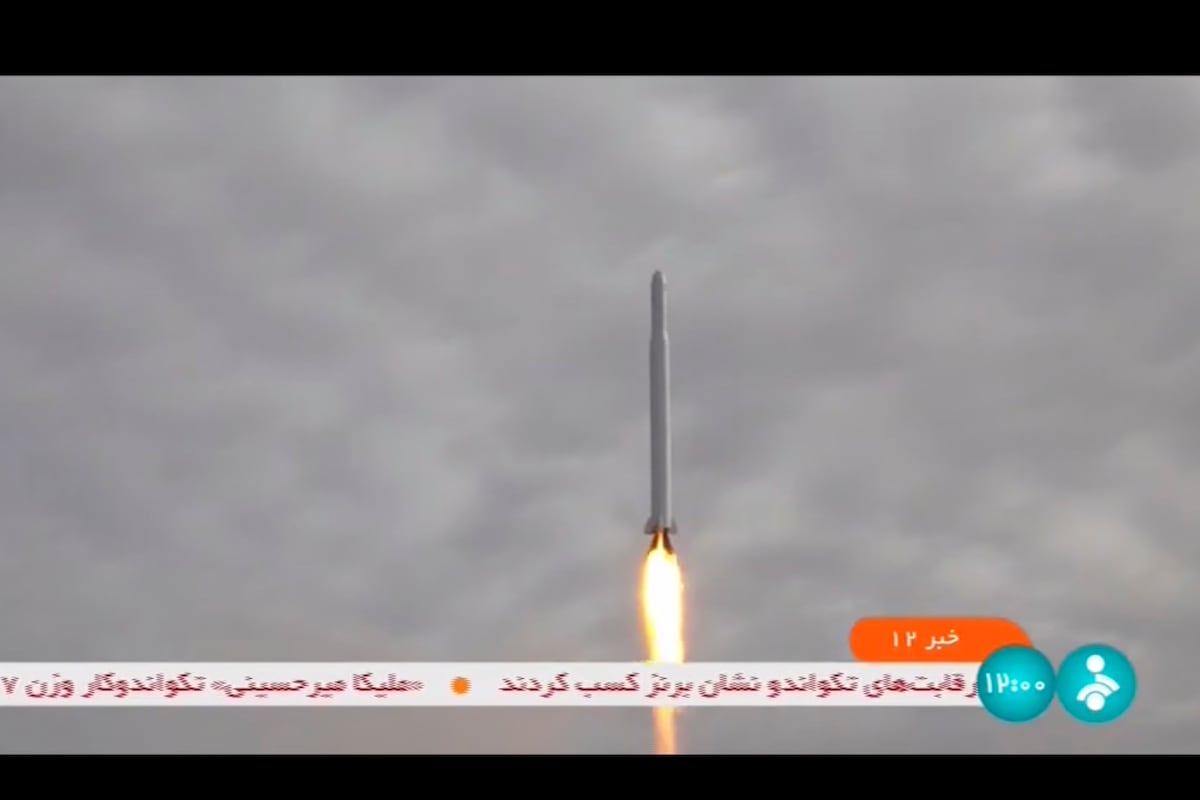
Iran claimed on Wednesday that it successfully launched an imaging satellite into space, a move that could further ratchet up tensions with Western nations that fear its space technology could be used to develop nuclear weapons.
Iran’s Communication Minister Isa Zarepour said the Noor-3 satellite had been put in an orbit 450 kilometers (280 miles) above the Earth’s surface, the state-run IRNA news agency reported. It was not clear when exactly the launch took place.
There was no immediate acknowledgment from Western officials of the launch or of the satellite being put into orbit. The U.S. military did not immediately respond to a request for comment. Iran has had a series of failed launches in recent years.
The most recent launch was carried out by Iran’s paramilitary Revolutionary Guard, which has had more success. Gen. Hossein Salami, the top commander of the Guard, told state TV that the launch had been a “victory” and that the satellite will collect data and images.
Authorities released footage of a rocket taking off from a mobile launcher without saying where the launch occurred. Details in the video corresponded with a Guard base near Shahroud, some 330 kilometers northeast of the capital, Tehran. The base is in Semnan province, which hosts the Imam Khomeini Spaceport from which Iran’s civilian space program operates.
The Guard operates its own space program and military infrastructure parallel to Iran’s regular armed forces and answers only to Supreme Leader Ayatollah Ali Khamenei.
It launched its first satellite into space in April 2020. But the head of the U.S. Space Command later dismissed it as a “tumbling webcam in space” that would not provide vital intelligence. Western sanctions bar Iran from importing advanced spying technology.
The United States has alleged that Iran’s satellite launches defy a U.N. Security Council resolution and has called on Tehran to undertake no activity related to ballistic missiles capable of delivering nuclear weapons.
The U.S. intelligence community’s 2022 threat assessment claims the development of satellite launch vehicles “shortens the timeline” for Iran to develop an intercontinental ballistic missile because it uses similar technology.
This frame grab from video aired by Iranian state television on Wednesday, Sept. 27, 2023, shows what Iran's Communication Minister Isa Zarepour said is a Noor-3 satellite being launched from an undisclosed location, in Iran. Iran claimed on Wednesday that it successfully launched an imaging satellite into space, a move that could further ratchet up tensions with Western nations that fear its space technology could be used to develop nuclear weapons. (IRIB via AP)
Iran has always denied seeking nuclear weapons, and says its space program, like its nuclear activities, is for purely civilian purposes. U.S. intelligence agencies and the International Atomic Energy Agency say Iran abandoned an organized military nuclear program in 2003.
Over the past decade, Iran has sent several short-lived satellites into orbit and in 2013 launched a monkey into space. The program has seen recent troubles, however. There have been five failed launches in a row for the Simorgh program , another satellite-carrying rocket.
A fire at the Imam Khomeini Spaceport in February 2019 killed three researchers, authorities said at the time. A launchpad rocket explosion later that year drew the attention of then-President Donald Trump, who taunted Iran with a tweet showing what appeared to be a U.S. surveillance photo of the site.
Tensions are already high with Western nations over Iran’s nuclear program, which has steadily advanced since Trump five years ago withdrew the U.S. from the 2015 nuclear agreement with world powers and restored crippling sanctions on Iran.
Efforts to revive the agreement reached an impasse more than a year ago. Since then, the IAEA has said Iran has enough uranium enriched to near-weapons grade levels to build “several” nuclear weapons if it chooses to do so. Iran is also building a new underground nuclear facility that would likely be impervious to U.S. or Israeli airstrikes. Both countries have said they would take military action if necessary to prevent Iran from developing a nuclear weapon.
Iran has expressed willingness to return to the 2015 nuclear deal, but says the U.S. should first ease the sanctions .
伊朗周三声称已成功将一颗成像卫星送入太空,此举可能会进一步加剧与西方国家的紧张关系,西方国家担心伊朗的太空技术可能被用于发展核武器。
据伊朗国家通讯社伊通社报道,伊朗通信部长伊萨·扎雷普尔表示,努尔-3号卫星已进入距离地球表面450公里(280英里)的轨道。目前尚不清楚具体的发射时间。
西方官员尚未对此次发射或卫星入轨一事作出回应。美国军方也未立即回应置评请求。近年来,伊朗已多次发射卫星失败。
最近一次发射是由伊朗准军事部队革命卫队执行的,并且取得了更大的成功。革命卫队最高指挥官侯赛因·萨拉米将军在接受国家电视台采访时表示,此次发射是一次“胜利”,卫星将收集数据和图像。
当局公布了一段火箭从移动发射车上发射升空的视频,但并未透露发射地点。视频中的细节与位于首都德黑兰东北约330公里处的沙赫鲁德附近的一个伊朗革命卫队基地相符。该基地位于塞姆南省,伊朗民用航天计划的伊玛目霍梅尼航天中心就设在该省。
伊朗革命卫队拥有自己的太空计划和军事基础设施,与伊朗正规军并行运作,只对最高领袖阿亚图拉·阿里·哈梅内伊负责。
伊朗于2020年4月发射了首颗卫星。但美国太空司令部司令后来将其贬为“太空中的翻滚摄像头”,认为它无法提供任何重要情报。西方制裁禁止伊朗进口先进的间谍技术。
美国指责伊朗的卫星发射违反了联合国安理会决议,并呼吁德黑兰不要进行任何与能够运载核武器的弹道导弹有关的活动。
美国情报界 2022 年的威胁评估声称,卫星运载火箭的发展“缩短了”伊朗研发洲际弹道导弹的时间,因为它使用了类似的技术。
这张截图来自伊朗国家电视台于2023年9月27日(周三)播出的视频,显示伊朗通信部长伊萨·扎雷普尔所称的“努尔-3”卫星从伊朗境内一处未公开地点发射升空。伊朗周三声称已成功将一颗成像卫星送入太空,此举可能进一步加剧与西方国家的紧张关系,西方国家担心伊朗的太空技术可能被用于发展核武器。(伊朗国家广播电视台/美联社)
伊朗一直否认寻求发展核武器,并表示其太空计划和核活动一样,纯粹出于民用目的。美国情报机构和国际原子能机构称,伊朗已于2003年放弃了有组织的军事核计划。
过去十年间,伊朗曾向轨道发射了几颗寿命较短的卫星,并在2013年将一只猴子送入太空。然而,该项目近期遭遇了一些困难。另一项旨在运载卫星的火箭项目——“西莫格”(Simorgh)计划,已经连续五次发射失败。
2019年2月,伊朗伊玛目霍梅尼航天中心发生火灾,造成三名研究人员死亡,当时当局如此表示。同年晚些时候,该航天中心发射台发生火箭爆炸,引起了时任美国总统唐纳德·特朗普的关注。特朗普在推特上发布了一张疑似美国方面拍摄的该航天中心照片,以此嘲讽伊朗。
由于伊朗核计划,美国与西方国家之间的紧张关系已经很高。自特朗普五年前退出2015年与世界大国达成的核协议并恢复对伊朗的严厉制裁以来,伊朗的核计划一直在稳步推进。
重启该协议的努力在一年多前陷入僵局。此后,国际原子能机构表示,伊朗拥有足够多的接近武器级浓缩铀,如果伊朗愿意,可以制造“数枚”核武器。伊朗还在建造一座新的地下核设施,该设施很可能无法抵御美国或以色列的空袭。美以两国均表示,如有必要,将采取军事行动阻止伊朗发展核武器。
伊朗已表示愿意重返2015年核协议,但表示美国应该首先放松制裁。