No time to waste: NATO chief urges rapid industrial mobilization刻不容缓:北约秘书长敦促迅速动员工业力量
NATO countries along with the U.S. will have to move quickly to deliver capability to Europe to deter Russia, the supreme allied commander of Europe said.
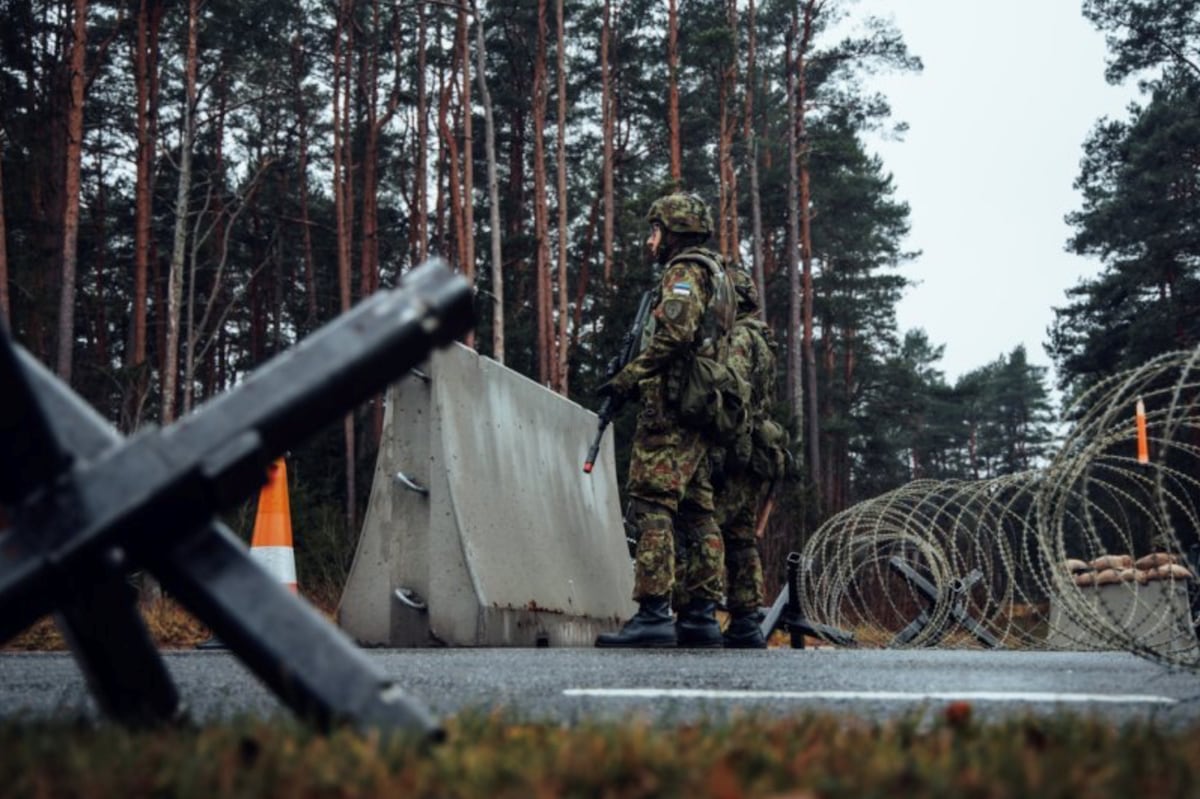
WIESBADEN, Germany − As the U.S. and its allies in Europe pledge to ramp up defense spending amid mounting global threats, the supreme allied commander of Europe is calling on industry to deliver real capabilities to the field in record time.
“We can tell industry exactly what it is that we need for all the leaders that are out there. It’s our job, I think, to hold industry accountable to deliver quickly and to hold ourselves accountable for giving industry the ability to deliver quickly through our acquisition processes,” U.S. Air Force Gen. Alexus Grynkewich said July 17 during his first public speech since taking command at the Association of the U.S. Army’s inaugural LandEuro conference in Wiesbaden, Germany.
“We’ve got to do this fast. We need real capabilities and we need them delivered as soon as possible. We can’t afford to wait, future pledges are no longer enough,” he said. “To do this, the defense industrial base on both sides of the Atlantic is going to have to become fully activated.”
Grynkewich stressed there’s plenty of work to go around, it’s not a matter of investing in one or the other. “It needs to be one seamless industrial base that can deliver capability and capacity for the alliance,” he said.
Moving quicker is easier said than done. Every country will have to contend with their own budget approval process and work through red tape across borders. U.S. Secretary of Defense Pete Hegseth made a pledge earlier this year on a trip to NATO headquarters that the U.S. would conduct major foreign military sales reform .
Even so, the U.S. military and NATO have developed solid regional plans beginning with a clear one focused on the Baltic States that will help guide government and industry in getting capabilities to units there.
The U.S. Army Europe and Africa commander, speaking a day earlier at the conference, said the “Eastern Flank Deterrence Line” plan aims to enhance ground-based capabilities and drive military-industrial interoperability across the alliance.
As part of the plan to counter Russian threats and enable scalable, global deterrence, the Army and its NATO allies are urgently developing standardized, data-driven systems, common launchers and cloud-based coordination.
The plan includes a system to share data. NATO has already procured that system – Palantir’s Maven Smart System – an artificial intelligence platform that takes a vast amount of data and rapidly analyzes information to help military commanders make decisions.
U.S. Army Europe and Africa officials have also adopted Maven at headquarters, using it for mission command and visibility across the theater. The system has completely replaced PowerPoint briefings and offers information to commanders in real-time.
On NATO’s wish list, according to Grynkewich, are capabilities that mirror a Ukrainian brigade. “How do we get our brigades to have the same level of capability where we can match what they’re able to do today?”
Additionally, Grynkewich said he wants to focus on air defense. “There’s never enough air defense. You always want more, but it’s an acute requirement, whether it’s counter-[unmanned aircraft systems] or counter-ballistic missiles,” he said.
And there will also be a continued focus on long-range fires, Grynkewich noted. “We need the capability to hold things at risk.”
Industry now has real incentives in place, Grynkewich said, with the new commitment made by NATO nations at the last summit to spend 5% of their gross domestic product on defense by 2035.
“I would ask industry folks who are here and elsewhere to realize that sustained commitment should be a powerful signal to do the things you need to do, to expand production lines, to increase [research and development] spending, etc., so that we can get where we need to go,” he said.
Leadership is now moving to deliver new and emerging technology to the battlefield along with legacy technology that is still relevant and will work to make things interoperable.
“I challenge each of the chiefs of defense, land forces commanders and every leader in here to hold themselves to account for that. There’s no time to waste,” Grynkewich said.
Jen Judson is an award-winning journalist covering land warfare for Defense News. She has also worked for Politico and Inside Defense. She holds a Master of Science degree in journalism from Boston University and a Bachelor of Arts degree from Kenyon College.
德国威斯巴登——随着美国及其欧洲盟友承诺在日益严峻的全球威胁下增加国防开支,欧洲盟军最高司令呼吁工业界以创纪录的速度向战场提供真正的能力。
“我们可以准确地告诉业界,我们需要哪些领导者。我认为,我们的职责是督促业界快速交付,同时也要督促我们自己通过采购流程赋予业界快速交付的能力,”美国空军上将亚历克西斯·格林克维奇 (Alexus Grynkewich) 于 7 月 17 日在德国威斯巴登举行的美国陆军协会首届 LandEuro 会议上发表就职以来的首次公开讲话时说道。
“我们必须迅速行动。我们需要真正的能力,而且需要尽快交付。我们不能再等了,未来的承诺已经不够了,”他说。“要做到这一点,大西洋两岸的国防工业基础都必须全面启动。”
格林克维奇强调,工作机会很多,并非要二选一。“我们需要的是一个无缝衔接的工业基地,能够为联盟提供所需的能力和产能,”他说道。
加快步伐说起来容易做起来难。每个国家都必须应对各自的预算审批流程,并克服跨境繁琐的官僚程序。美国国防部长皮特·赫格塞斯今年早些时候访问北约总部时承诺,美国将进行重大对外军售改革。
即便如此,美国军方和北约也制定了稳固的区域计划,首先制定了一项明确的计划,重点关注波罗的海国家,这将有助于指导政府和工业界向当地部队提供能力。
美国陆军欧洲和非洲司令部司令在前一天的会议上表示,“东翼威慑线”计划旨在增强地面作战能力,并推动联盟内部的军事工业互操作性。
作为应对俄罗斯威胁和实现可扩展的全球威慑计划的一部分,美国陆军及其北约盟国正在紧急开发标准化、数据驱动的系统、通用发射器和基于云的协调系统。
该计划包含一套数据共享系统。北约已经采购了这套系统——Palantir公司的Maven智能系统——这是一个人工智能平台,能够获取海量数据并快速分析信息,以帮助军事指挥官做出决策。
美国陆军欧洲和非洲司令部官员也在总部采用了Maven系统,用于任务指挥和战区态势感知。该系统已完全取代了PPT简报,并能实时向指挥官提供信息。
格林克维奇表示,北约希望拥有与乌克兰旅级部队相媲美的能力。“我们如何才能使我们的旅级部队拥有同样的作战能力,从而能够达到他们目前的能力水平?”
此外,格林克维奇表示,他希望重点加强防空。“防空永远不嫌多。你总是想要更多,但这确实是一个迫切的需求,无论是反无人机系统还是反弹道导弹,”他说。
格林克维奇指出,他们还将继续重点关注远距离火灾。“我们需要有能力控制火灾风险。”
格林克维奇表示,随着北约国家在上届峰会上做出新的承诺,到 2035 年将国内生产总值的 5% 用于国防,业界现在有了真正的激励措施。
他说:“我希望在场的业内人士以及其他地方的业内人士都能意识到,持续的投入应该是一个强有力的信号,促使你们去做你们需要做的事情,比如扩大生产线、增加研发投入等等,这样我们才能达到我们想要的目标。”
领导层现在正着手将新兴技术与仍然适用的传统技术一起引入战场,以实现互操作性。
格林克维奇说:“我要求在座的每一位国防部长、陆军司令以及所有领导人为此承担责任。时间紧迫,刻不容缓。”
珍·贾德森是一位屡获殊荣的记者,为《防务新闻》报道陆地战争。她也曾为《政治报》和《内幕防务》工作。她拥有波士顿大学新闻学硕士学位和凯尼恩学院文学学士学位。