Global panel to hear Cambodia, Thailand sea dispute in Singapore全球专家组将在新加坡听取柬埔寨和泰国海上争端的讨论。
Phnom Penh initiated a United Nations-backed conciliation process at the Permanent Court of Arbitration after Bangkok pulled out of a 2001 agreement to work towards joint offshore energy exploitation in the Gulf of Thailand.
Phnom Penh initiated a United Nations-backed conciliation process at the Permanent Court of Arbitration after Bangkok pulled out of a 2001 agreement to work towards joint offshore energy exploitation in the Gulf of Thailand.
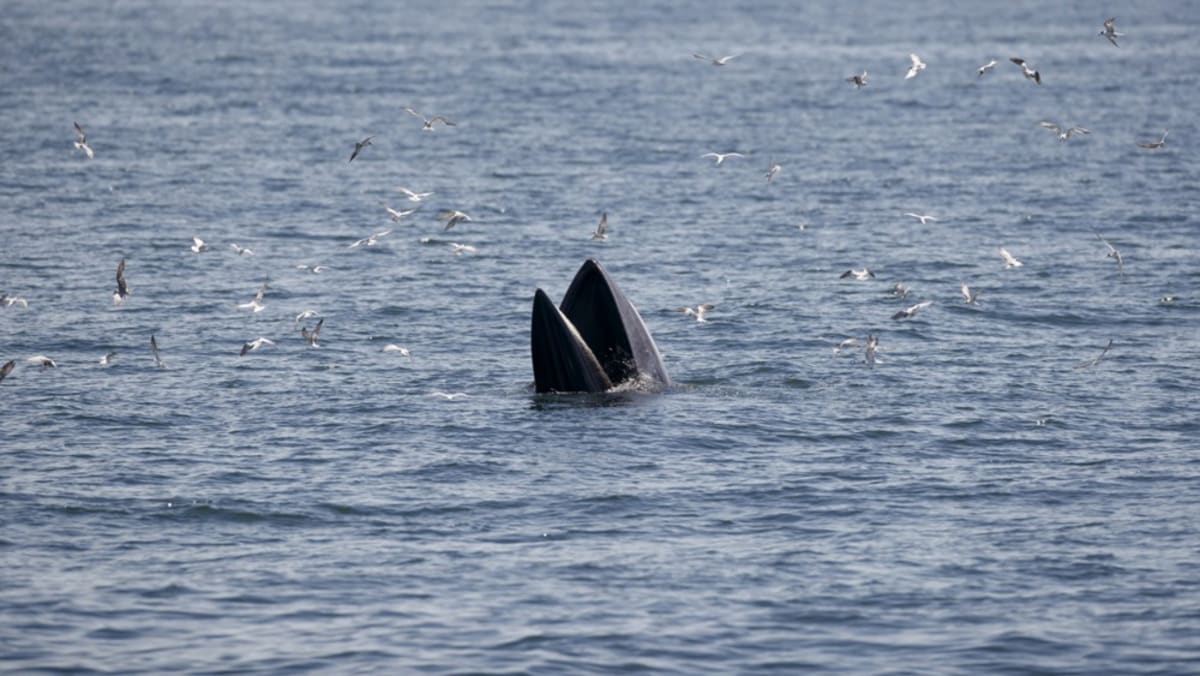
A Bryde's whale and seagulls in the Gulf of Thailand. (Photo: EPA/Rungroj Yongrit)
SINGAPORE: Cambodia and Thailand will face off before international mediators in Singapore this week in a long-standing dispute over valuable maritime resources, the latest spat between the feuding neighbours.
Phnom Penh initiated a United Nations-backed conciliation process at the Permanent Court of Arbitration (PCA) after Bangkok pulled out of an agreement to work towards joint offshore energy exploitation in the Gulf of Thailand .
The 2001 memorandum of understanding covers a vast and resource-rich territory of around 27,000 sq km to which both Cambodia and Thailand lay claim.
Bangkok in May unilaterally pulled out of the framework agreement, called "MoU 44", saying that "no progress had been made" in implementing it.
CNA Games Guess Word Crack the word, one row at a time Buzzword Create words using the given letters Mini Sudoku Tiny puzzle, mighty brain teaser Mini Crossword Small grid, big challenge Word Search Spot as many words as you can Show More Show Less Prime Minister Anutin Charnvirakul denied it was linked to the simmering border conflict with its Southeast Asian neighbour, which erupted into two rounds of clashes last year that left dozens of people dead, and displaced more than a million before a truce was agreed. Cambodia said last week that it resorted to the conciliation process "after Thailand unilaterally terminated the agreed bilateral framework" through which the two nations had "negotiated their overlapping maritime claims for more than two decades". Cambodian Prime Minister Hun Manet said in June that the move was also to "protect Cambodia's sovereignty and maritime rights in accordance with international law". The two countries' representatives are set to give their opening statements on Tuesday (Sep 15) before a five-member conciliation panel of international law experts at the world's oldest arbitration court's offices, in Singapore. Cambodia's Foreign Minister Prak Sokhonn is expected to open the floor, followed by his Thai counterpart Sihasak Phuangketkeow. Set up in 1899, the PCA is the world's oldest intergovernmental dispute-resolution body and resolves disputes between countries and private parties through referring to contracts, special agreements and various treaties, such as the UN Convention on the Law of the Sea (UNCLOS). The PCA office in Singapore is the Hague-based court's first in Asia. The commission's recommendations are not binding and will take about a year to be decided. "LASTING RESOLUTION" Both Cambodia and Thailand have welcomed the opportunity to put their points across. "The meeting marks another important milestone in the peaceful process initiated by Cambodia to resolve the countries' maritime differences," Cambodia's foreign ministry said in a statement. Phnom Penh said it hopes the process can help Cambodia and Thailand reach a "fair and lasting resolution of their maritime differences" and open a pathway to explore significant oil and gas resources. Thailand's energy ministry has estimated future revenues from oil and natural gas in the nations' overlapping claims area to be worth around US$300 billion. The Thai foreign ministry said it was "ready to cooperate fully with and support the work of the Conciliation Commission" and remained committed to "safeguarding" its national interests. An analyst, however, said both Thailand's withdrawal and Cambodia's conciliation case were closely linked with domestic politics and the recent conflict. "It was intended to project strength and to signal to voters that the legacy of former Prime Minister Thaksin Shinawatra, under whose administration the 2001 MoU was originally drafted, was officially over," wrote William Jones, an international politics expert at Thailand's Mahidol University International College. Meanwhile, Cambodia's case was a "shrewd political move" on Hun Manet's part, Jones wrote in current affairs magazine, The Diplomat. "Having suffered a military defeat on the land border and remaining in an inferior position to its Thai counterpart," Hun Manet was choosing a legal avenue that "promised low cost and high potential reward", Jones said.
Prime Minister Anutin Charnvirakul denied it was linked to the simmering border conflict with its Southeast Asian neighbour, which erupted into two rounds of clashes last year that left dozens of people dead, and displaced more than a million before a truce was agreed.
Cambodia said last week that it resorted to the conciliation process "after Thailand unilaterally terminated the agreed bilateral framework" through which the two nations had "negotiated their overlapping maritime claims for more than two decades".
Cambodian Prime Minister Hun Manet said in June that the move was also to "protect Cambodia's sovereignty and maritime rights in accordance with international law".
The two countries' representatives are set to give their opening statements on Tuesday (Sep 15) before a five-member conciliation panel of international law experts at the world's oldest arbitration court's offices, in Singapore.
Cambodia's Foreign Minister Prak Sokhonn is expected to open the floor, followed by his Thai counterpart Sihasak Phuangketkeow.
Set up in 1899, the PCA is the world's oldest intergovernmental dispute-resolution body and resolves disputes between countries and private parties through referring to contracts, special agreements and various treaties, such as the UN Convention on the Law of the Sea (UNCLOS).
The PCA office in Singapore is the Hague-based court's first in Asia.
The commission's recommendations are not binding and will take about a year to be decided.
"LASTING RESOLUTION"
Both Cambodia and Thailand have welcomed the opportunity to put their points across.
"The meeting marks another important milestone in the peaceful process initiated by Cambodia to resolve the countries' maritime differences," Cambodia's foreign ministry said in a statement.
Phnom Penh said it hopes the process can help Cambodia and Thailand reach a "fair and lasting resolution of their maritime differences" and open a pathway to explore significant oil and gas resources.
Thailand's energy ministry has estimated future revenues from oil and natural gas in the nations' overlapping claims area to be worth around US$300 billion.
The Thai foreign ministry said it was "ready to cooperate fully with and support the work of the Conciliation Commission" and remained committed to "safeguarding" its national interests.
An analyst, however, said both Thailand's withdrawal and Cambodia's conciliation case were closely linked with domestic politics and the recent conflict.
"It was intended to project strength and to signal to voters that the legacy of former Prime Minister Thaksin Shinawatra, under whose administration the 2001 MoU was originally drafted, was officially over," wrote William Jones, an international politics expert at Thailand's Mahidol University International College.
Meanwhile, Cambodia's case was a "shrewd political move" on Hun Manet's part, Jones wrote in current affairs magazine, The Diplomat.
"Having suffered a military defeat on the land border and remaining in an inferior position to its Thai counterpart," Hun Manet was choosing a legal avenue that "promised low cost and high potential reward", Jones said.
An automated curation of our top stories to start your day.
Get our pick of top stories and thought-provoking articles in your inbox
Stay updated with notifications for breaking news and our best stories
Join our channel for the top reads for the day on your preferred chat app
在曼谷退出 2001 年一项旨在共同开发泰国湾海上能源的协议后,金边在联合国支持的常设仲裁法院启动了调解程序。
泰国湾的一头布氏鲸和海鸥。(图片:EPA/Rungroj Yongrit)
新加坡:柬埔寨和泰国本周将在新加坡的国际调解员面前对峙,以解决两国长期以来围绕宝贵海洋资源的争端。这是这两个宿敌之间最新的一次争执。
在曼谷退出一项旨在共同开发泰国湾海上能源的协议后,金边在联合国支持的常设仲裁法院 (PCA) 启动了调解程序。
2001 年的谅解备忘录涵盖了面积约 27,000 平方公里的广袤且资源丰富的领土,柬埔寨和泰国都对该领土提出主权声索。
今年 5 月,曼谷单方面退出了名为“MoU 44”的框架协议,称该协议在执行方面“没有取得任何进展”。
CNA游戏 猜词游戏 逐行破解单词 流行词游戏 用给定的字母组成单词 迷你数独 小谜题,脑力挑战 迷你填字游戏 小方格,大挑战 单词搜索 尽可能多地找出单词 显示更多 显示更少 柬埔寨首相阿努廷·查恩维拉库尔否认此举与该国与其东南亚邻国泰国之间持续不断的边境冲突有关。去年,两国爆发了两轮冲突,造成数十人死亡,超过一百万人流离失所,最终双方达成停火协议。柬埔寨上周表示,在泰国单方面终止双方商定的双边框架后,柬埔寨才启动了调解程序。此前,两国已通过该框架就重叠的海洋权益主张进行了二十多年的谈判。柬埔寨首相洪玛奈在六月份表示,此举也是为了“根据国际法保护柬埔寨的主权和海洋权利”。两国代表将于周二(9月15日)在新加坡常设仲裁法院(PCA)办公室,向由五名国际法专家组成的调解小组作开幕陈述。柬埔寨外交部长普拉索昆预计将首先发言,随后是泰国外长西哈萨·普昂克乔。常设仲裁法院成立于1899年,是世界上历史最悠久的政府间争端解决机构,通过援引合同、特别协定和各项条约(例如《联合国海洋法公约》)来解决国家与私人之间的争端。新加坡常设仲裁法院办公室是这家总部位于海牙的法院在亚洲设立的首个办事处。委员会的建议不具有约束力,最终决定大约需要一年时间。“持久解决方案”柬埔寨和泰国都对有机会表达各自的观点表示欢迎。柬埔寨外交部在一份声明中表示:“此次会议标志着柬埔寨发起的旨在解决两国海洋争端的和平进程又迈出了重要一步。”金边方面表示,希望这一进程能够帮助柬埔寨和泰国“公平持久地解决海上争端”,并为勘探重要的油气资源开辟道路。泰国能源部估计,两国重叠海域的油气未来收益约为3000亿美元。泰国外交部表示,“愿与调解委员会充分合作并支持其工作”,并将继续致力于“维护”其国家利益。然而,一位分析人士指出,泰国的退出和柬埔寨的调解都与国内政治和近期的冲突密切相关。泰国玛希隆大学国际学院的国际政治专家威廉·琼斯写道:“此举意在展现实力,并向选民表明,前总理他信·西那瓦的政治遗产——2001年谅解备忘录最初就是在他执政期间起草的——已经正式结束。”与此同时,琼斯在时事杂志《外交官》上撰文指出,柬埔寨的这一举动是洪玛奈“精明的政治举措”。琼斯说:“在陆地边界遭受军事失败,且在与泰国的对立地位上处于劣势之后,洪玛奈选择了一条‘成本低、潜在回报高’的法律途径。”
总理阿努廷·查恩维拉库尔否认此事与东南亚邻国持续不断的边境冲突有关。去年,该冲突爆发了两轮冲突,造成数十人死亡,超过一百万人流离失所,之后双方达成停火协议。
柬埔寨上周表示,在泰国单方面终止了双方商定的双边框架后,柬埔寨诉诸和解程序。此前,两国已通过该框架就其重叠的海洋主张进行了二十多年的谈判。
柬埔寨首相洪玛奈在6月份表示,此举也是为了“根据国际法保护柬埔寨的主权和海洋权利”。
两国代表将于周二(9 月 15 日)在新加坡——世界上历史最悠久的仲裁法院——的办公室,向由五名国际法专家组成的调解小组发表开幕词。
预计柬埔寨外交部长普拉索昆将首先发言,随后是泰国外交部长西哈萨克·普昂克乔。
常设仲裁法院成立于 1899 年,是世界上历史最悠久的政府间争端解决机构,它通过参考合同、特别协议和各种条约(例如《联合国海洋法公约》)来解决国家和私人当事人之间的争端。
常设仲裁法院新加坡办事处是这家总部位于海牙的法院在亚洲设立的首个办事处。
委员会的建议不具约束力,大约需要一年时间才能做出决定。
“持久决心”
柬埔寨和泰国都乐于借此机会表达自己的观点。
柬埔寨外交部在一份声明中表示:“此次会晤标志着柬埔寨发起的旨在解决两国海上分歧的和平进程又迈出了重要一步。”
金边方面表示,希望这一进程能够帮助柬埔寨和泰国“公平、持久地解决海上分歧”,并为勘探重要的石油和天然气资源开辟道路。
泰国能源部估计,两国重叠的石油和天然气权益区域未来的收入价值约为 3000 亿美元。
泰国外交部表示,愿“全力配合和解委员会的工作并予以支持”,并将继续致力于“维护”其国家利益。
但一位分析人士表示,泰国的撤军和柬埔寨的调解案都与国内政治和最近的冲突密切相关。
“此举意在展现实力,并向选民表明,前总理他信·西那瓦的政治遗产(2001 年的谅解备忘录最初就是在他的领导下起草的)已经正式结束,”泰国玛希隆大学国际学院的国际政治专家威廉·琼斯写道。
与此同时,琼斯在时事杂志《外交官》上写道,柬埔寨的案例是洪玛奈的“精明政治举动”。
琼斯说,洪玛奈“在陆地边界遭受军事失败,并且仍然处于劣势,不如泰国同行”,因此选择了一条“成本低、潜在回报高”的法律途径。
每天清晨,我们都会自动为您推送最热门的新闻资讯,助您开启美好的一天。
订阅我们的邮件,即可获取精选热点新闻和引人深思的文章。
订阅通知,第一时间获取突发新闻和精彩报道。
加入我们的频道,即可在您常用的聊天应用上获取当日热门文章。