Law to safeguard social cohesion to take effect on Sept 15维护社会凝聚力的法律将于9月15日生效
The Maintenance of Racial Harmony Act consolidates laws to protect racial harmony, introduces restraining orders and a community remedial initiative. Read more at straitstimes.com.
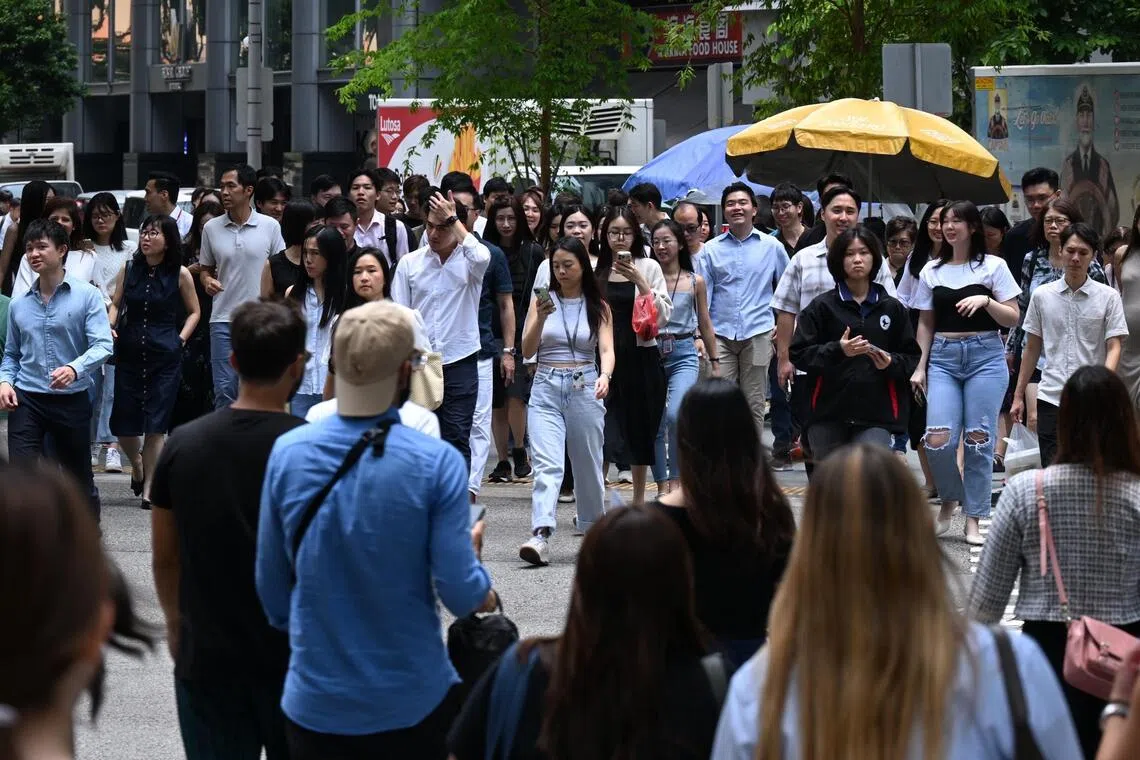
The new law grants the Government powers to issue restraining orders, and introduces foreign influence disclosures, and remedial options for minor offenders.
Published Sep 14, 2026, 05:00 PM
Updated Sep 14, 2026, 05:00 PM
The Maintenance of Racial Harmony Act will take effect on Sept 15, consolidating laws to protect racial harmony and introducing restraining orders and a community remedial initiative.
The law requires about 300 race-based entities to disclose foreign affiliations and funding, enhancing safeguards against foreign influence of clan and business associations.
A new Presidential Council for Racial and Religious Harmony, with 12 members from major communities, will advise on racial harmony issues and review restraining orders under the law.
SINGAPORE – A law that consolidates existing statutes to preserve racial harmony while providing for additional safeguards will come into operation on Sept 15.
At the same time, a new Presidential Council for Racial and Religious Harmony (PCRRH) will begin its inaugural three-year term, replacing the previous Presidential Council for Religious Harmony.
The Maintenance of Racial Harmony Act was passed by Parliament on Feb 4, 2025, and empowers the Government to issue restraining orders (ROs) against individuals involved in making content that prejudices Singapore’s racial harmony.
It also introduces a community remedial initiative, which gives those who have committed less egregious race-related offences a chance to mend community ties in lieu of prosecution.
In a statement on Sept 14, the Ministry of Home Affairs (MHA) said the new law strengthens Singapore’s ability to preserve racial harmony, respond effectively to emerging threats, and safeguards the city-state’s multicultural society against malicious foreign influence.
The Act takes close reference from the existing Maintenance of Religious Harmony Act (MRHA) which, besides providing for powers to issue ROs, requires religious groups here to comply with leadership restrictions and to declare foreign funding and affiliations with foreign groups.
The racial harmony law means that some 300 clan and business associations here that have been designated as “race-based entities” are subjected to similar disclosures. MHA said it will guide designated entities on their reporting requirements ahead of their first reporting obligation in April 2028.
At the Feb 2025 debate over the law, then-Law and Home Affairs Minister K. Shanmugam told Parliament that the best evidence for how the authorities are likely to use the new powers is to look at its use of the MRHA, which was enacted in 1990.
Shanmugam noted that no orders have been issued under the MRHA to date, but the legal framework means everyone understands what is not allowed in Singapore.
“That gives you an indication of how the Government approaches these powers. The important thing is to have the powers, but also to be very, very careful and judicious in how you use them,” he said then.
Under the new law, the Minister for Home Affairs can issue ROs against individuals who produce, distribute, or communicate content that prejudices racial harmony.
A person issued an RO could be prohibited from from communicating or distributing specified material and to take all reasonably practicable steps to ensure that such material is no longer available to the general public in Singapore, among other things.
After an RO is issued, it must be sent to the PCRRH for review, and any persons subject to an RO may make representations to the council.
The PCRRH’s independent recommendation on the RO will thereafter be sent to the President, followed by the Cabinet’s advice to the President.
The President must then consider the council’s recommendation, along with Cabinet’s advice, before deciding whether to cancel, confirm or vary the RO. The President must act in accordance with Cabinet’s advice, but he has discretion if the Cabinet disagrees with the PCRRH.
On Sept 14, the President’s Office announced that President Tharman Shanmugaratnam had appointed the PCRRH, which will comprise of 12 representatives.
The council will be chaired by retired Supreme Court judge Choo Han Teck, and its members are:
Seck Kwang Phing, president of the Singapore Buddhist Federation
K. Sengkuttuvan, chairman of the Hindu Advisory Board and president of the Inter-Religious Organisation
Nazirudin Mohd Nasir, Mufti of Singapore
Philip Lim Kian Leong, president of the National Council of Churches of Singapore
William Goh, Archbishop of the Roman Catholic Church in Singapore
Sarbjit Singh, president of Defence Aerospace, ST Engineering
Lee Cheuk Yin, academic adviser of the Taoist Federation and Taoist Mission
Thomas Chua Kee Seng, president of the Singapore Federation of Chinese Clan Associations
Ishak Ismail, Singapore’s Non-Resident High Commissioner to Pakistan
Bala Reddy, former deputy chairman of the Hindu Endowments Board
Sandra Theseira, former president of the Eurasian Association
The President’s Office said the PCRRH comprises representatives from Singapore’s major racial and religious communities, and persons who have distinguished themselves in public service or community relations in Singapore.
“Once appointed, their responsibility is to exercise independent judgment and work collectively with other members in advising on matters affecting the maintenance of racial and religious harmony in Singapore,” it added.
There are four returning members from the previous Presidential Council for Religious Harmony: Seck, Nazirudin, Goh and Lee.
A 2024 study by the Institute of Policy Studies and racial harmony advocacy group OnePeople.sg found that more people here rated the the nation’s state of harmony as high or very high. Levels of trust among people of different races had also risen compared to the previous study in 2019.
However, minorities continued to experience more incidents of racial discrimination at work. There were also more respondents in the 2024 study who felt that there should be greater government involvement in managing issues of race and religion here.
At the Feb 2025 parliamentary debate, Shanmugam said the law was important to provide a framework and to help entrench a set of values into society over time.
But racial harmony cannot be achieved by the law alone, which is why the Republic has a multi-faceted programme of policies and community activities where people can celebrate each other’s festivals and interact with each other frequently.
“That is one of the secret sauces that make Singapore successful,” said the minister.
Anjali Raguraman is a correspondent at The Straits Times. She covers politics, as well as consumer stories spanning tourism, retail and F&B.
Ministry of Home Affairs
新法律赋予政府发布限制令的权力,并引入了外国影响披露机制,以及针对轻微违法者的补救措施。
发布于2026年9月14日下午5:00
更新于2026年9月14日下午5:00
《维护种族和谐法案》将于9月15日生效,该法案整合了保护种族和谐的法律,并引入了限制令以及社区补救计划。
该法律要求约 300 个以种族为基础的实体披露其外国关联和资金来源,从而加强对氏族和商业协会外国影响的防范。
一个新的总统种族和宗教和谐委员会成立,由来自主要社区的 12 名成员组成,将就种族和谐问题提供建议,并根据法律审查限制令。
新加坡——一项旨在维护种族和谐并提供额外保障措施的现行法规将于9月15日生效。
与此同时,新的总统种族与宗教和谐委员会(PCRRH)将开始其首个三年任期,取代之前的总统宗教和谐委员会。
《维护种族和谐法》于 2025 年 2 月 4 日由国会通过,该法授权政府对参与制作损害新加坡种族和谐的内容的个人发出限制令。
它还引入了一项社区补救计划,让那些犯下较轻微的种族相关罪行的人有机会修复社区关系,而不是受到起诉。
9月14日,新加坡内政部发表声明称,新法律加强了新加坡维护种族和谐、有效应对新出现的威胁以及保护这个城市国家的多元文化社会免受恶意外国影响的能力。
该法案密切参考了现行的《维护宗教和谐法案》(MRHA),该法案除了规定颁发宗教法令的权力外,还要求本地宗教团体遵守领导层限制,并申报外国资金和与外国团体的联系。
种族和谐法意味着,本地约300个被认定为“种族实体”的宗族和商业协会也需进行类似的信息披露。内政部表示,将在这些实体于2028年4月首次履行信息披露义务之前,指导它们了解相关要求。
在 2025 年 2 月就该法律进行的辩论中,时任律政兼内政部长尚穆根告诉国会,要了解当局可能如何使用新权力,最好的证据是看看它如何使用 1990 年颁布的《马哈拉施特拉邦农村住房法》。
尚穆根指出,迄今为止尚未根据《精神健康和住宅法》发布任何命令,但该法律框架意味着每个人都明白在新加坡什么是不允许的。
“这可以让你了解政府是如何看待这些权力的。重要的是拥有这些权力,但同时也要非常非常谨慎、明智地使用这些权力,”他当时说道。
根据新法律,内政部长可以对制作、传播或散播有损种族和谐的内容的个人发出限制令。
除其他事项外,收到限制令的人可能被禁止传播或分发特定材料,并被要求采取一切合理可行的措施,确保此类材料不再向新加坡公众开放。
RO 发出后,必须将其送交 PCRRH 进行审查,任何受 RO 约束的人都可以向理事会提出申诉。
PCRRH 对 RO 的独立建议随后将提交给总统,之后内阁将向总统提出建议。
总统必须考虑委员会的建议以及内阁的意见,才能决定是否取消、确认或修改总统令。总统必须按照内阁的建议行事,但如果内阁不同意总统令,总统有权酌情决定。
9月14日,总统府宣布,总统尚达曼已任命总统人权委员会(PCRRH),该委员会将由12名代表组成。
该委员会将由退休最高法院法官朱汉德担任主席,其成员包括:
新加坡佛教总会会长锡光平
K. Sengkuttuvan,印度教咨询委员会主席兼跨宗教组织主席
纳齐鲁丁·莫哈德·纳西尔,新加坡穆夫提
新加坡全国教会理事会主席林建良
新加坡罗马天主教大主教吴诚才
萨尔比吉特·辛格,国防航空航天公司ST工程总裁
李卓贤,道教联合会及道教使团学术顾问
新加坡宗亲总会会长蔡启胜
新加坡驻巴基斯坦非常驻高级专员伊沙克·伊斯梅尔
巴拉·雷迪,印度教捐赠委员会前副主席
桑德拉·特塞拉,欧亚协会前主席
总统府表示,PCRRH 由新加坡主要种族和宗教社群的代表,以及在新加坡公共服务或社群关系领域做出杰出贡献的人士组成。
“一旦被任命,他们的职责是行使独立判断,并与其他成员共同合作,就影响新加坡种族和宗教和谐维护的事项提供建议,”声明补充道。
上届总统宗教和谐委员会中有四名成员再次当选:Seck、Nazirudin、Goh 和 Lee。
新加坡政策研究所和种族和谐倡导组织OnePeople.sg于2024年联合开展的一项研究发现,更多新加坡人认为国家的和谐程度高或非常高。与2019年的研究相比,不同种族之间的信任度也有所提高。
然而,少数族裔在工作中仍然面临更多种族歧视事件。2024年的调查中,也有更多受访者认为政府应该更多地参与处理当地的种族和宗教问题。
在 2025 年 2 月的国会辩论中,尚穆根表示,该法律对于提供一个框架并帮助随着时间的推移将一套价值观巩固到社会中至关重要。
但仅靠法律无法实现种族和谐,因此共和国制定了多方面的政策和社区活动计划,让人们可以庆祝彼此的节日并经常互动。
“这是新加坡成功的秘诀之一,”部长说。
安贾莉·拉古拉曼是《海峡时报》的记者。她的报道领域包括政治,以及涵盖旅游、零售和餐饮等领域的消费新闻。
内政部