Russia fears complicate NATO’s new China focus俄罗斯的担忧使北约新的对华战略复杂化。
Some Eastern European allies are saying the U.S.-China rivalry must not overshadow the alliance’s original focus: Russia.
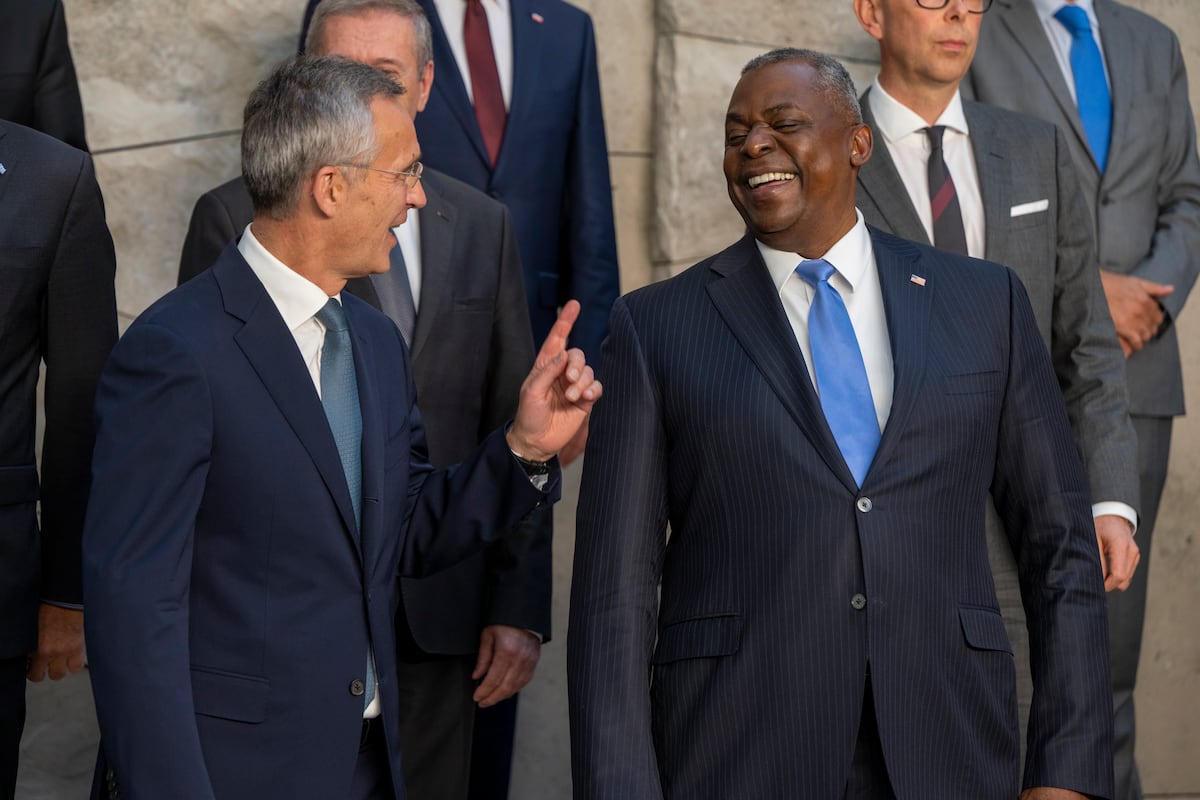
BRUSSELS ― One of U.S. Defense Secretary Lloyd Austin’s top jobs at the NATO ministerial conference this week was to keep steering the 30-member alliance’s focus to China, but some Eastern European allies say the U.S.-China rivalry must not overshadow concerns about Russia.
The two-day meeting between defense chiefs yielded new agreements on tech investments and policies, mirroring the Pentagon’s focus on technological competition with China. When asked by reporters about China, Austin made clear the U.S. sees NATO as its ace.
“Regarding China, let me just say that ... alliances like NATO are one of our greatest strengths. No other country enjoys the kinds of alliances and partnerships like we do,” Austin said Friday, adding, “We see an increasing interest in our allies and partners [in the Indo-Pacific] to ensure the region remains free and open, and the rules-based international order remains in place.”
But far from going away, the West’s problems with Russia are intensifying.
Among other flash points in the relationship, Russia massed troops on Ukraine’s border in the spring, and Russia claimed it fired warning shots at a UK destroyer in an incident this summer. Russia ended diplomatic ties with NATO after it expelled eight accused Russian spies, prompting NATO Secretary General Jens Stoltenberg to say this week the relationship has “not been more difficult since the end of the Cold War.”
Rattled, some Eastern European allies want the United States to deploy more troops on their soil, fearing the Pentagon could cut its military presence on NATO’s eastern flank.
“Russia, of course, wants that the U.S. attention is somewhere away, in the Pacific, and not in our region,” Estonian Defense Minister Kalle Laanet said at the Warsaw Security Forum in Poland a week before the ministerial. “We have to talk about what kind of message we are sending [to Russia] and our message should be common and strong, united.”
As Eastern European states have been calling on the Biden administration not to lose sight of the threat posed by Russia, Austin visited Black Sea nations Romania , Ukraine and Georgia to reassure them of American’s continued support before he attended the ministerial.
In Ukraine, which has been in conflict with Russia since Moscow seized Crimea in 2014, Austin offered his sharpest words about Russia of the trip. At a press conference with Ukrainian Defense Minister Andriy Taran, Austin expressed resolute support for Ukraine’s independence and territorial integrity.
“We call on Russia to end its occupation of Crimea, to stop perpetuating the war in eastern Ukraine and to end its destabilizing activities along Ukraine’s borders, and to halt its persistent cyber attacks and other malign activities against the United States and its partners,” Austin said.
“Let’s be clear: Russia has started this war. And Russia is the obstacle to peaceful resolution,” he added.
Taran said Ukraine had “no doubt” of America’s support for Ukraine in its fight.
“The U.S. understands clearly that Ukraine is on the forward lines of combat with Russian expansion in their desire to restore their imperial ambitions and thus to create a threat for the whole European continent,” Taran said through an interpreter.
But the U.S. has no immediate plans to increase its permanent troop presence in Europe. When Austin was asked by reporters in Romania, which hosts U.S. troops on a rotational basis, whether the Pentagon would be seeking a permanent presence there, Austin said he had nothing to announce.
“Not only are we not increasing troop levels, but there are also no plans for permanent basing in Romania at this time,” a senior U.S. defense official said in a statement afterwards.
Paratroopers assigned to 3rd Brigade Combat Team, 82nd Airborne Division wait to exit C-17 Globemaster III bound for Estonia during Exercise Swift Response 21, May 7, 2021. Swift Response 21 is a joint, multinational Airborne exercise involving more than 7,000 Paratroopers from 10 NATO nations.
America’s allies will have to wait for the Pentagon’s months-long “ global posture review ,” aimed at repositioning troops, ships and aircraft to focus more on China and Russia without retreating from longstanding Mideast threats — and to make this shift with potentially leaner Pentagon budgets.
The review, which Austin ordered just after taking office, could lead to significant shifts in the U.S. military footprint in the Middle East, Europe and the Asia-Pacific. Then-President Donald Trump ordered the withdrawal of 12,000 troops from Germany last year, but President Joe Biden in April rejected that action and expanded the troop count by 500, to 35,500.
As Germany and France have stopped short of calling China an adversary, the Biden administration has tried to rally allies to speak in a more unified voice about China’s military aggression in the Pacific and its human rights record. Biden scored a win when NATO leaders at their summit in June declared that China poses a constant security challenge and is working to undermine global order.
Though none of the ministerial sessions this week were dedicated to discussing China, senior Pentagon officials said Austin would be raising those concerns and that they would be “marbled” into planning sessions, especially in talks to advance NATO’s strategic concept.
This week, Stoltenberg has said the alliance’s new agreements on artificial intelligence policy and to pursue more technologically advanced weapon systems, “is also relevant to the challenges posed by the rise of China.
“What we have seen in NATO is a fundamental shift where we are now focusing our efforts on collective defense to respond to a more competitive world, state-on-state rivalry. And that of course includes the rise of China, which is fundamentally changing the global balance of power,” Stoltenberg said.
Defense ministers from several Baltic countries ― which sit on the West’s front line with Russia ― told Newsweek that U.S. and its NATO allies must stay alert to challenges from both Moscow and Beijing or risk encouraging fresh aggression.
Jüri Luik, Estonia’s former defense minister and now its permanent representative to NATO, said Russia’s status as a threat is evident by its “continuous flow of provocative actions,” like its troop buildup on the Ukrainian border, its internal repression and its assassinations of enemies around the globe.
“Of course, it’s very important for us that while the United States is pivoting to Asia, the United States would maintain ― as they have said they will ― their focus on the European arena,” Luik told Defense News.
“We’re not looking for any dramatic moves, but we are certainly looking for a steady increase of the current power of the alliance. Presence of allied troops on our soil is vital. We also always emphasize the importance of exercises, especially reinforcement exercises,” Luik said. “It’s evident that to defend Poland and the Baltic states you need a sophisticated, powerful system of reinforcing in times of crisis, and this can only be developed via exercises.”
With reporting by the Associated Press.
Joe Gould was the senior Pentagon reporter for Defense News, covering the intersection of national security policy, politics and the defense industry. He had previously served as Congress reporter.
布鲁塞尔——本周在北约部长级会议上,美国国防部长劳埃德·奥斯汀的首要任务之一是继续引导这个拥有30个成员国的联盟将注意力集中在中国身上,但一些东欧盟友表示,美中竞争不应掩盖对俄罗斯的担忧。
为期两天的国防部长会议就技术投资和政策达成了新的协议,这反映了五角大楼关注与中国的技术竞争。当记者问及中国问题时,奥斯汀明确表示,美国视北约为王牌。
“关于中国,我只想说……像北约这样的联盟是我们最大的优势之一。没有其他国家像我们一样拥有如此广泛的联盟和伙伴关系,”奥斯汀周五表示,并补充道,“我们看到,我们在印太地区的盟友和伙伴越来越重视确保该地区保持自由开放,以及基于规则的国际秩序得以维持。”
但西方与俄罗斯的问题不仅没有消失,反而愈演愈烈。
两国关系中还存在其他一些冲突点,例如今年春天俄罗斯在乌克兰边境集结军队,以及今年夏天俄罗斯声称向一艘英国驱逐舰鸣枪示警。北约驱逐了八名被指控的俄罗斯间谍后,俄罗斯终止了与北约的外交关系,这促使北约秘书长延斯·斯托尔滕贝格本周表示,两国关系“自冷战结束以来从未如此艰难”。
一些东欧盟友感到不安,希望美国向其领土部署更多军队,他们担心五角大楼可能会削减其在北约东翼的军事存在。
“俄罗斯当然希望美国的注意力转移到太平洋地区,而不是我们这个地区,”爱沙尼亚国防部长卡勒·拉内特在部长级会议前一周于波兰华沙安全论坛上表示。“我们必须讨论我们正在向俄罗斯传递什么样的信息,而我们的信息应该是共同的、强有力的、团结一致的。”
在东欧各国呼吁拜登政府不要忽视俄罗斯构成的威胁之际,奥斯汀在出席部长级会议之前访问了黑海沿岸国家罗马尼亚、乌克兰和格鲁吉亚,以向他们保证美国将继续提供支持。
自2014年莫斯科吞并克里米亚以来,乌克兰一直与俄罗斯处于冲突状态。在乌克兰,奥斯汀发表了此行中对俄罗斯最为尖锐的言论。在与乌克兰国防部长安德烈·塔兰举行的联合新闻发布会上,奥斯汀表达了对乌克兰独立和领土完整的坚定支持。
奥斯汀说:“我们呼吁俄罗斯结束对克里米亚的占领,停止在乌克兰东部延续战争,停止在乌克兰边境沿线的破坏稳定活动,并停止其持续不断的网络攻击和其他针对美国及其伙伴的恶意活动。”
“必须明确一点:是俄罗斯挑起了这场战争。而且,俄罗斯是和平解决问题的障碍,”他补充道。
塔兰表示,乌克兰“毫不怀疑”美国会支持乌克兰的斗争。
“美国清楚地认识到,乌克兰正处于俄罗斯扩张的前线,俄罗斯企图恢复其帝国野心,从而对整个欧洲大陆构成威胁,”塔兰通过翻译说道。
但美国目前没有增加在欧洲常驻部队的计划。当记者在罗马尼亚(美军轮换驻扎于此)询问奥斯汀,五角大楼是否会寻求在罗马尼亚设立永久驻军时,奥斯汀表示他无可奉告。
“我们不仅没有增加驻军人数,而且目前也没有在罗马尼亚永久驻军的计划,”一位美国高级国防官员事后在一份声明中表示。
2021 年 5 月 7 日,在“快速反应 21”演习期间,隶属于第 82 空降师第 3 旅战斗队的伞兵们正等待从前往爱沙尼亚的 C-17“环球霸王 III”运输机上下来。“快速反应 21”是一项联合多国空降演习,共有来自 10 个北约国家的 7000 多名伞兵参加。
美国的盟友将不得不等待五角大楼长达数月的“全球态势评估”,该评估旨在重新部署部队、舰艇和飞机,以便更加关注中国和俄罗斯,同时又不放弃长期以来的中东威胁——而且这一转变可能需要在五角大楼预算缩减的情况下进行。
奥斯汀上任伊始便下令进行这项审查,这可能导致美国在中东、欧洲和亚太地区的军事部署发生重大变化。时任总统唐纳德·特朗普去年下令从德国撤出12000名士兵,但乔·拜登总统在今年4月否决了这一行动,并将驻德美军人数增加了500人,达到35500人。
由于德国和法国尚未将中国视为对手,拜登政府试图团结盟友,就中国在太平洋地区的军事侵略及其人权记录发出更加统一的声音。6月北约领导人峰会上宣布中国构成持续的安全挑战,并正试图破坏全球秩序,拜登的这一努力取得了胜利。
尽管本周的部长级会议没有专门讨论中国问题,但五角大楼高级官员表示,奥斯汀将提出这些关切,并将这些问题“纳入”规划会议,尤其是在推进北约战略概念的谈判中。
本周,斯托尔滕贝格表示,联盟在人工智能政策和追求更先进的武器系统方面达成的新协议,“也与中国崛起带来的挑战有关”。
斯托尔滕贝格表示:“北约已经发生了根本性的转变,我们现在将精力集中在集体防御上,以应对竞争日益激烈的世界和国家间的对抗。这当然也包括中国的崛起,它正在从根本上改变全球力量平衡。”
几个位于西方与俄罗斯对峙前线的波罗的海国家的国防部长告诉《新闻周刊》,美国及其北约盟国必须对来自莫斯科和北京的挑战保持警惕,否则将有助长新的侵略行为的风险。
爱沙尼亚前国防部长、现任爱沙尼亚常驻北约代表尤里·卢伊克表示,俄罗斯的威胁地位从其“不断挑衅的行为”中可见一斑,例如在乌克兰边境集结军队、进行内部镇压以及在全球范围内暗杀敌人。
“当然,对我们来说,非常重要的一点是,尽管美国正在向亚洲转型,但美国仍将像他们所说的那样,继续关注欧洲战场,”卢伊克告诉《防务新闻》。
“我们并不寻求任何激进的举措,但我们确实希望稳步提升联盟的现有实力。盟军驻扎在我们领土上至关重要。我们也始终强调演习的重要性,尤其是增援演习,”卢伊克说道。“显而易见,保卫波兰和波罗的海国家需要一套完善而强大的危机时期增援体系,而这只能通过演习来建立。”
美联社报道。
乔·古尔德是《防务新闻》的资深五角大楼记者,负责报道国家安全政策、政治和国防工业的交汇点。他此前曾担任国会记者。