Everything We Just Learned About The Vectis Collaborative Combat Aircraft From The Skunk Works我们刚刚了解到的关于臭鼬工厂研发的Vectis协同作战飞机的全部信息
We have new details on Lockheed's tailless CCA, including about its exotic "submerged" air inlet and how its design puts a premium on survivability.
新闻视频
By Joseph Trevithick
Published Sep 14, 2026 6:01 AM EDT
Lockheed Martin Skunk Works
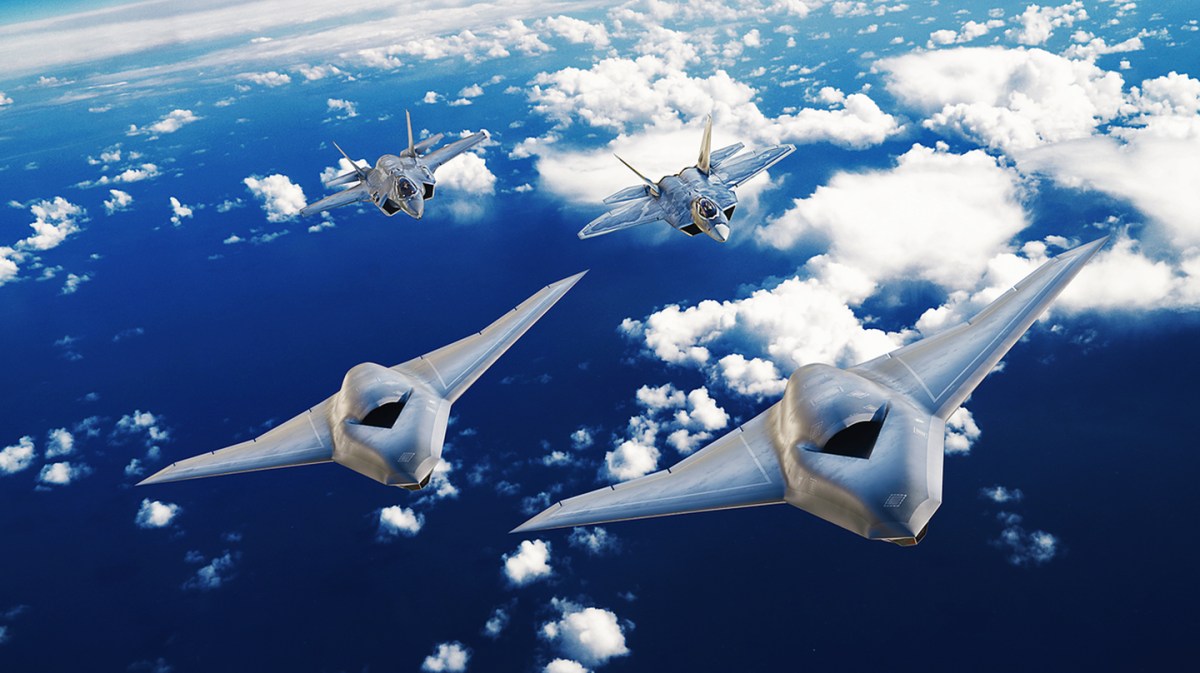
Lockheed Martin’s Skunk Works advanced projects division has shared all new information about its stealthy Collaborative Combat Aircraft (CCA) type drone design named Vectis. which it first unveiled a year ago . One of the most intriguing details is the true nature of its air inlet configuration, pointing to the premium on survivability the Skunk Works has placed on its CCA offering, especially when compared to other CCA designs .
Vectis has a far more exotic, deeply recessed “submerged” top-mounted air intake than was originally disclosed when Vectis first came out of the shadows. This further underscores the heavy emphasis Skunk Works says it has been placing on its CCA’s ability to stay undetected and live to fight another day. Vectis is also the first tailless CCA design we have seen from a U.S. manufacturer.
An updated view of Vectis. Lockheed Martin Skunk Works Lockheed Martin
Ron Fehlen, Lockheed Martin Vice President and General Manager of Skunk Works, gave TWZ and other outlets an update on Vectis last week ahead of today’s start of the Air & Space Force’s Associations’ 2026 Air, Space & Cyber Conference. Skunk Works says work on constructing the first prototype of Vectis – a word that means lever or pole in Latin, and that Lockheed Martin has said reflects the ‘leverage’ the drone offers – is underway now. The goal is to have it flying by the end of next year. There are already plans to build four more prototypes using internal funding.
Check out the Skunk Works’ new Vectis video below:
Source: Lockheed Martin
“It is designed, as you can likely see, to be both survivable and affordable and flexible across the range of missions that our customers need, have needed, and continue to need into the future,” Fehlen said by way of introduction. “The technical specs, as you can imagine, are designed to meet and, in some cases, exceed the customer sets that we are working with and their requirements and their mission needs.”
The basic core of the single-engine Vectis that we have seen now is largely unchanged from what had been shown at the time of the unveiling last year. It is still a tailless drone that has a lambda wing planform and air intake mounted on top of the central part of the fuselage, as well as a prominent chine line around the forward end and a shovel-like shape to its nose. New renderings do show revised positions for various conformal antennas and/or sensor apertures around the central fuselage. These are all established features of low-observable (stealthy) aircraft designs.
Skunk Works’ Fehlen also shared last week that Vectis is approximately 34 feet long and has a wingspan of around 38 feet. As a comparison, the Navy’s two-seat primary jet trainer, the T-45 Goshawk , is roughly 39 feet long by 30 feet wide.
The biggest new detail, as mentioned, is the shaping and position of Vectis’ air inlet. Fehlen stressed that this is actually not a new feature, and has “been a part of the design since the beginning,” but was not reflected in previously released renderings and scale models.
Another newly released rendering of Vecti showing the submerged intake. Lockheed Martin Skunk Works
The intake was depicted in the past as having a relatively straightforward configuration. It did appear to have a saw-tooth leading edge, another indication of stealthy design considerations. The visuals we have now show the intake is deeply recessed into the top of the fuselage, sitting behind a downward-sloping v-shaped channel.
A rendering of Vectis that Lockheed Martin released last year that did not depict the submerged intake. Lockheed Martin
Vectis doesn’t have a fully flush-mounted inlet, like what is found on Boeing’s MQ-25 Stingray tanker drone , among other designs , but it is close to it, very loosely similar to what’s found on the B-21 . The rear is slightly raised above the v-like pocket where air flows down into the intake. Flush or near-flush intakes offer particular benefits when it comes to low-observability (stealthiness) and aerodynamic efficiency, but are also notoriously problematic, especially in certain flight regimes, as you can read more about here . This is even worse for high-performance aircraft that have a wide operating envelope and have to maneuver at higher angles of attack. The CCA would likely fit into this category, at least to a degree.
When it comes to Vectis, “there’s a lot of different reasons behind it [choosing this submerged intake configuration, but I’ll pick up on a couple here for you,” Skunk Works’ Fehlen explained. “The first is it reduces that frontal drag. So, anything sticking out in the wind, as many – as all of you know, I’m sure, creates drag on the aircraft itself. So, if you want better performance from a range, et cetera, then you need to be able to reduce that drag, and that’s an example.”
“It’s also interesting to me, particularly as the Air Force speaks about Agile Combat Employment, the ACE concept, as you’re aware. There is an advantage to having an inlet on the top of the aircraft if you’re out in more austere environments and you’re concerned about FOD [foreign object debris] pickup off of a runway,” he added.
Another newly released rendering offering a different perspective on the submerged intake. Lockheed Martin Skunk Works
ACE refers to a set of U.S. Air Force concepts of operations focused primarily on relatively rapid and irregular deployments, particularly to far-flung, austere operating locations, and with the expectation that logistics support could be very limited. The ACE construction is at the very core of the Air Force’s CCA program requirements and its plans for operating those drones in the future .
Fehlen also confirmed that the inlet’s design has to do with survivability, but did not elaborate in any detail, which is unsurprising considering the sensitivities of such design elements. The original Vectis promotional video Lockheed Martin put out last year, seen below, showed an S-shaped duct behind the air intake and exhaust shrouding, which are features designed to further reduce a platform’s signature.
In terms of performance, Lockheed Martin has yet to share any hard specifications it is targeting for Vectis, or disclose details about the engine the design will use. Fehlen did also highlight the drag-reducing performance advantages of the drone’s tailless design, including for maximizing range.
Details about what other capabilities Vectis might have are still limited. Fehlen noted that the design is expected to be capable of both air-to-air and air-to-ground mission sets. In a new computer-generated promotional video, seen earlier in this story, the drones are depicted launching what look to be AIM-120 Advanced Medium Range Air-to-Air Missiles (AMRAAM) and GBU-53/B Small Diameter Bomb II (SDB II) glide bombs, also known as StormBreakers. The AIM-120 has already emerged as something of a default initial weapon for Western CCA-type drones . The video also confirms Vectis has an internal bay that is able to accommodate at least two munitions, likely the size to accommodate medium-range air-to-air missiles.
Captures from Lockheed Martin’s new Vectis promotional video depicting the drones launching what looks to be an AIM-120 missile, at left, and a pair of GBU-53/B SDB IIs, at right. Lockheed Martin captures
A rendering of Vectis with its elongated internal bay open from the new promotional video. Note the AIM-120 in the background. Lockheed Martin c apture
Another screen capture from the new Vectis promotional video showing two munitions loaded inside the drone’s internal bay. Lockheed Martin capture
In addition, the video shows Vectis as having a traditional electro-optical/infrared sensor turret behind a stealthy faceted enclosure under the nose. When the drone was first unveiled last year, TWZ noted that it could carry a variety of sensors, including compact radars and/or infrared search and track (IRST) systems, which would be particularly relevant in the air-to-air role.
The sensor turret inside the stealthy faceted enclosure as seen in the new Vectis promotional video. Lockheed Martin capture
During the press call, Skunk Works’ Fehlen reiterated that Vectis is being designed with an eye toward modularity and open-architecture systems. This, in turn, will make it easier to integrate new and improved capabilities and functionality down the line. Open architecture is at the heart of every CCA offering we are aware of at this time.
Fehlen further highlighted Lockheed Martin’s extensive work to date on advanced autonomy packages and crewed-uncrewed teaming capabilities . This includes the development of the Multi Domain Combat System (MDCX), an “autonomy platform” that is already central to the U.S. Navy’s plans for the carrier-based MQ-25 Stingray. The head of Skunk Works also explicitly called attention to autonomous air intercept testing conducted in cooperation with the Air Force earlier this year using the unique X-62A test jet , and said that work is feeding into Vectis’ development.
The X-62A test jet seen during the autonomous air intercept testing earlier this year. USAF
On top of all this, Lockheed Martin is already actively laying the groundwork for U.S. Air Force’s F-22 and F-35 fighters to control future CCA drones, via in-cockpit touchscreen-type user interfaces, likely involving tablets , at least at first.
The new Vectis promotional video also shows a traditional ground control station being used to direct the drones, but with the phrase “managed from anywhere” on the screens, as seen below. Fehlen did say that any specific requirements for autonomy, command and control, and other operational capabilities would be up to individual customers, and that third-party vendors could be involved.
Beyond Vectis’ design and expected capacities, Fehlen touted the speed at which work on the first physical prototype is progressing, and highlighted the use of digital design techniques and advanced manufacturing processes.
“This team, when kicked off, took a design on a napkin, which we will likely frame one day in my office … two months later, they were in the wind tunnel validating the design,” he said. “So, in under two months, we’re already getting in the wind tunnel straight from off of a napkin. We had the first digital build in six months, and the first part release in eight months. So it gives you a touch of a sense for exactly how fast we’re moving.”
“This aircraft was designed in a fully integrated digital environment,” he added. “Really, it’s creating that unbroken digital thread from the design all the way through sustainment.”
There has been much talk over the years about whether the promised benefits of digital engineering have lived up to expectations, with former Secretary of the Air Force Frank Kendall having been particularly critical of the technology being at least over-hyped in the past. At the same time, the use of digital design tools has become increasingly commonplace, including on top-priority U.S. military aerospace projects , and not just at Skunk Works .
“We’ve used advanced design and manufacturing processes developed for many years under our own internal investment … for other Skunk Works programs, we’ve pulled that into this, of course, to continue to advance our manufacturing as well as the advanced design capability,” Fehlen continued. “They’re using real production processes.”
A central fuselage part of the first Vectis prototype now under construction. Lockheed Martin Skunk Works
The Skunk Works boss stressed that this approach offers advantages not just for accelerating development and prototype, but also for reducing costs and positioning Vectis to enter full-scale production.
“It gives you the reliance and the confidence as you continue to move forward that you’re ready to off and build these things because you’re using those real production processes,” he explained. “An example of that is a technique that we call minimal tooling determinant assembly. It’s a technique that really enables an increased level of affordability and speed through really reducing the amount of touch labor required and increasing the first pass yield. We’ve seen, in many cases, an 80 percent reduction in labor hours to build up the aircraft itself.”
Part of one of the wings for the first Vectis prototype. Lockheed Martin Skunk Works
Fehlen made an indirect reference to flat-pack furniture from IKEA to provide additional context, in extremely general layman’s terms, about what this technique offers.
“That’s what we’re talking about, that idea that it can come together very quickly, limited touch, and limited error. We constrain that to reduce the number of labor hours, which is not just a cost implication, but also buoys the speed and how fast we’re going to be able to produce them,” he said. “You can imagine, as well, there’s a lot of simplification that goes into this. We have significantly reduced the part count. Again, back to simplify the build so that you can have a positive impact on speed and affordability, not new techniques, but we’ve applied them here with vigor to ensure that we are getting to the cost point that the services and our customers need in order to make this system effective.”
Another element of the first Vectis prototype, which is now being built. Lockheed Martin Skunk Works
In terms of actual unit cost, “we’re always looking at, and, of course, we’re targeting to be [at] the CCA competitive price, so we’re very cognizant of it and make trades associated with that,” according to Fehlen. Vectis is “focused more on the CCA side of the house, and obviously the price points that are highly relevant in that regime, and then, of course, making trades along the way, and to make sure that we can meet it.”
The head of Skunk Works was responding here specifically to a question that mentioned the Air Force’s target of a roughly $20 million unit price for drones acquired under the first phase, or Increment 1, of its CCA program once full-scale production is achieved. The service announced in June that it was ordering fleets of both of the Increment 1 designs now in development, General Atomics’ FQ-42A Dark Merlin and Anduril’s FQ-44A Fury . The Air Force has plans for at least one more increment to this program, and has said in the past that it could pursue lower-cost (and less exquisite) designs .
A trio of YFQ-42A Dark Merlin prototypes. GA-ASI
A YFQ-44A Fury prototype with an inert AIM-120 missile under its wing. USAF
“While not discussing suppliers, you can imagine we are ensuring that all of the decisions we make in the development and then the build out of these aircraft are designed around achieving that competitive cost point, while at the same time maximizing the amount of capability,” Fehlen added. “Those are the things that our customers are looking for, and we put it in a survivable solution.”
“There are some [companies] that are really going down the attritable [route], which defines a different price point than the CCA community has been targeting,” he also noted. Attritable designs are “quite a bit less from a cost point perspective and often from a capability perspective.”
With this in mind, there are still larger questions about where exactly Vectis may fit into U.S. military CCA plans, as well as those emerging from allied and partner air arms globally. Skunk Works has said in the past that it was eliminated from the Air Force’s CCA Increment 1 competition because it put forward a very stealthy “gold-plated” design that was not what the service wanted. Lockheed Martin had also indicated that its view of the capability/cost balance on new CCA-type designs had subsequently shifted very much in the opposite direction. Though it is still not entirely clear, what we’ve learned about Vectis in the past year would seem to signal that the pendulum at Skunk Works has swung back the other way again, at least to a degree.
As an interesting point of comparison, Northrop Grumman had also entered a higher-end design for the Increment 1 competition. In the wake of that loss, the company produced a much more familiar CCA design with a more traditional planfrom, which is now known as the YFQ-48A Talon Blue .
It’s also worth noting here that Skunk Works had publicly shared a future crewed-uncrewed teaming vision that included multiple tiers of drones back in 2022. This ranged from a cruise missile-like design the company now calls the Common Multi-Mission Truck (CMMT) all the way up to a concept for what could have been a very low-observable (stealthy) and highly autonomous flying wing uncrewed combat air vehicle (UCAV).
“We listen closely to our customers to deeply understand the operational environment and use those insights and our own analysis to inform the diverse solutions we develop for different mission sets,” Lockheed Martin told TWZ directly after the press call last week in response to a follow-up question about whether the 2022 vision was still relevant and if Vectis had supplanted the upper-tier concept shown at that time. “We continue to evaluate a range of crewed and uncrewed concepts against evolving customer needs.”
“Lockheed Martin Vectis addresses a warfighter need for a survivable, flexible and multi-mission capability, both domestically and internationally,” the company added in its statement. “We’re leaning into that demand, making strategic investments to accelerate Vectis’ progress and maturity and to deliver the capabilities our nation and allies need.”
A screen capture from a more recent Lockheed Martin video showing renderings of various different drone designs, including Vectis (at lower left), the CMMT (at upper right), and the stealthy flying-wing (at lower right). Lockheed Martin capture
Publicly, the Air Force continues to eschew any new plans to acquire and field UCAVs in favor of or even in addition to far less exquisite CCAs. The U.S. Marine Corps has so far put forward a similar CCA vision . However, just at the end of last month, the U.S. Navy released new target requirements for what it called a CCA-type drone, but that described something that sounded much more like a UCAV.
Lockheed Martin and a host of other companies globally are being presented with a clearly expanding CCA market, but there is also still obvious interest in higher-tier UCAVs. China, in particular, has positioned itself as the current leader in the stealthy flying wing UCAV space , as well as a dominant actor in advanced combat drone developments more generally speaking. Russia , India , Turkey , and France continue to pursue flying wing UCAVs, as well. That being said, Skunk Works’ Vectis is arguably the closest we have seen to a low-observable UCAV to come out of recent CCA developments.
Regardless, Skunk Works is confident that there is a place for Vectis, together with autonomy and other capabilities it is developing, domestically and internationally, in this future uncrewed air combat ecosystem. It “is a survivable autonomous multi-mission platform, which we believe is the solution needed within today’s operational environment and into the future,” Fehlen said last week.
Skunk Works is committed to “delivering what’s next across … airframes, open architectures, to include artificial intelligence and autonomy, and then crewed-uncrewed integration,” he added. “Make no mistake, it will take advancements across all these areas to get to where our customers are going. We look at the full picture. Vectis is a holistic weapon system from our perspective.”
Altogether, “it’s an urgent need. We know that. We can hear it.”
Contact the author: joe@twz.com
Comments couldn’t be loaded. Please refresh the page.
作者:约瑟夫·特雷维西克
发布于美国东部时间2026年9月14日上午6:01
洛克希德·马丁臭鼬工厂
洛克希德·马丁公司臭鼬工厂先进项目部门公布了其名为“Vectis”的隐形协同作战飞机(CCA)无人机设计的最新信息,该设计于一年前首次亮相。其中最引人注目的细节之一是其进气口的真实结构,这表明臭鼬工厂对这款CCA的生存能力给予了极高的重视,尤其是在与其他CCA设计进行比较时。
Vectis 的顶部进气口设计比最初亮相时公布的更为独特,采用更深邃的“潜入式”设计。这进一步凸显了臭鼬工厂对其 CCA 系统隐蔽性和持久作战能力的高度重视。Vectis 也是我们见过的首款由美国制造商设计的无尾 CCA 系统。
Vectis的最新视图。洛克希德·马丁公司臭鼬工厂
洛克希德·马丁公司副总裁兼臭鼬工厂总经理罗恩·费伦上周向TWZ和其他媒体介绍了Vectis无人机的最新进展,当时正值美国空军与太空部队协会2026年航空航天网络大会开幕之际。臭鼬工厂表示,Vectis首个原型机的建造工作正在进行中。Vectis一词在拉丁语中意为杠杆或杆,洛克希德·马丁公司称其名称体现了这款无人机所提供的“杠杆效应”。目标是在明年年底前完成试飞。此外,公司已计划利用内部资金再建造四个原型机。
请观看下方臭鼬工厂发布的全新Vectis视频:
资料来源:洛克希德·马丁公司
“正如您所见,它的设计兼顾了生存能力、经济性和灵活性,能够满足我们客户过去、现在和未来各种任务的需求,”费伦在介绍中说道。“正如您所想,其技术规格旨在满足,甚至在某些情况下超越我们所服务的客户及其任务需求。”
我们现在看到的单引擎Vectis无人机的基本结构与去年发布时展示的相比基本没有变化。它仍然是一款无尾无人机,采用λ翼平面布局,进气口位于机身中部上方,机头周围有一条明显的折线,机头呈铲形。新的渲染图显示,机身中部周围的各种共形天线和/或传感器孔的位置有所调整。这些都是低可探测性(隐身)飞机设计的典型特征。
臭鼬工厂的费伦上周也透露,Vectis 的长度约为 34 英尺,翼展约为 38 英尺。作为对比,海军的双座初级喷气教练机 T-45“苍鹰”的长度约为 39 英尺,宽度约为 30 英尺。
正如前文所述,最大的新细节在于Vectis进气口的形状和位置。费伦强调,这实际上并非一项新功能,而是“从一开始就在设计之中”,只是之前发布的渲染图和比例模型中并未体现。
Vecti 最新发布的渲染图展示了其水下进气口。洛克希德·马丁公司臭鼬工厂
过去对进气口的描述相对简单,其前缘呈锯齿状,这似乎也体现了隐身设计方面的考虑。而我们现在看到的图像显示,进气口深嵌于机身顶部,位于一个向下倾斜的V形通道后方。
洛克希德·马丁公司去年发布的Vectis效果图并未显示水下进水口。
Vectis 的进气口并非像波音 MQ-25“黄貂鱼”空中加油无人机等机型那样完全齐平,但与之非常接近,与 B-21 轰炸机的进气口设计颇为相似。其后部略高于 V 形凹槽,空气由此向下流入进气口。齐平或近乎齐平的进气口在低可探测性(隐身性)和气动效率方面具有显著优势,但也存在一些众所周知的问题,尤其是在某些飞行状态下,您可以点击此处了解更多信息。对于拥有宽广飞行包线且需要以较大迎角进行机动的高性能飞机而言,这个问题更为严重。CCA 很可能就属于此类,至少在某种程度上是如此。
谈到Vectis发动机,臭鼬工厂的费伦解释说:“选择这种浸没式进气口设计有很多不同的原因,但我在这里只提几点。首先,它可以减少正面阻力。正如大家所知,任何暴露在风中的物体都会对飞机本身产生阻力。因此,如果你想要获得更好的性能,例如更远的航程等等,那么你就需要减少这种阻力,这就是一个例子。”
“我也对此很感兴趣,特别是考虑到空军正在谈论敏捷作战部署(ACE)概念,正如您所知。如果您在较为艰苦的环境中作战,并且担心跑道上的外来物碎片(FOD)会进入机舱,那么在飞机顶部设置进气口就具有优势,”他补充道。
另一张新发布的渲染图从不同的角度展示了水下进气口。洛克希德·马丁公司臭鼬工厂
ACE指的是美国空军的一系列作战概念,主要侧重于相对快速且不规则的部署,尤其是在偏远、条件艰苦的作战地点,并预期后勤保障可能非常有限。ACE的构建是美国空军CCA项目要求及其未来无人机作战计划的核心。
费伦也证实,进气口的设计与生存能力有关,但他并未详细说明,考虑到此类设计元素的敏感性,这并不令人意外。洛克希德·马丁公司去年发布的Vectis宣传视频(如下所示)展示了进气口和排气罩后方的S形管道,这些设计旨在进一步降低平台的特征信号。
在性能方面,洛克希德·马丁公司尚未公布Vectis无人机的具体性能指标,也未透露该无人机将使用的发动机细节。费伦还强调了该无人机无尾设计在降低阻力方面的性能优势,包括最大限度提升航程。
关于Vectis可能具备的其他能力,目前细节仍然有限。费伦指出,该设计预计能够执行空对空和空对地任务。在本文前面提到的一段新的电脑合成宣传视频中,无人机发射了疑似AIM-120先进中程空空导弹(AMRAAM)和GBU-53/B小直径炸弹II(SDB II)滑翔炸弹(又称“风暴破坏者”)。AIM-120已成为西方CCA型无人机的默认初始武器之一。该视频还证实,Vectis拥有一个内部弹舱,至少可以容纳两枚弹药,其尺寸可能足以容纳中程空空导弹。
洛克希德·马丁公司最新发布的Vectis无人机宣传视频截图显示,无人机发射了一枚疑似AIM-120导弹(左图)和两枚GBU-53/B SDB II炸弹(右图)。
这是最新宣传视频中展示的Vectis导弹渲染图,图中可见其细长的内部舱门打开。请注意背景中的AIM-120导弹。图片由洛克希德·马丁公司提供。
这是Vectis无人机最新宣传视频的另一张截图,显示了无人机内部弹舱内装载的两枚弹药。洛克希德·马丁公司截图
此外,视频显示,Vectis无人机机头下方隐蔽的多面体外壳内装有传统的光电/红外传感器炮塔。去年该无人机首次亮相时,TWZ曾指出,它可以搭载多种传感器,包括小型雷达和/或红外搜索跟踪(IRST)系统,这些系统在空对空作战中尤为重要。
在最新的Vectis宣传视频中可以看到,隐蔽的多面外壳内装有传感器炮塔。洛克希德·马丁公司拍摄
在新闻发布会上,臭鼬工厂的费伦重申,Vectis 的设计着眼于模块化和开放式架构系统。这反过来将使未来更容易集成新的和改进的功能。目前我们所知的 CCA 产品的核心都是开放式架构。
费伦进一步强调了洛克希德·马丁公司迄今为止在先进自主系统和有人/无人协同作战能力方面所做的广泛工作。这包括多域作战系统(MDCX)的研发,该系统是一个“自主平台”,已成为美国海军舰载MQ-25“黄貂鱼”无人机计划的核心。臭鼬工厂负责人还特别提到了今年早些时候与美国空军合作,使用独特的X-62A测试机进行的自主空中拦截测试,并表示这项工作正在为Vectis系统的研发提供数据支持。
今年早些时候,X-62A 测试机在自主空中拦截测试中亮相。美国空军
除此之外,洛克希德·马丁公司已经在积极地为美国空军的 F-22 和 F-35 战斗机控制未来的 CCA 无人机奠定基础,通过驾驶舱内的触摸屏式用户界面,很可能至少在初期会使用平板电脑。
Vectis 最新发布的宣传视频也展示了使用传统地面控制站来操控无人机,但屏幕上显示着“随时随地操控”的字样,如下所示。Fehlen 表示,任何关于自主性、指挥控制和其他操作能力的具体要求都将由客户自行决定,并且可能会有第三方供应商参与。
除了 Vectis 的设计和预期产能之外,Fehlen 还称赞了第一个物理原型的研发进展速度,并重点介绍了数字设计技术和先进制造工艺的应用。
“这个团队刚成立的时候,只是在一张餐巾纸上画了个设计图,我们以后很可能会把它裱起来挂在我办公室里……两个月后,他们就进风洞验证设计了,”他说。“所以,不到两个月,我们就直接从餐巾纸上的设计图进入风洞进行测试。我们用了六个月完成了第一个数字模型,八个月就发布了第一个零件。这足以让你感受到我们推进速度有多快。”
他补充说:“这架飞机是在一个完全集成的数字化环境下设计的。实际上,它打造了一条从设计到维护的完整数字化流程。”
多年来,人们一直在讨论数字工程所承诺的益处是否达到了预期,前空军部长弗兰克·肯德尔尤其批评这项技术过去至少被过度炒作。与此同时,数字设计工具的使用已变得越来越普遍,包括在美国最高优先级的军用航空航天项目中,而不仅仅是在臭鼬工厂。
费伦继续说道:“我们运用了多年来自主研发的先进设计和制造工艺……当然,我们也把这些工艺运用到了臭鼬工厂的其他项目中,以持续提升我们的制造能力和先进设计能力。他们使用的是真正的生产流程。”
这是正在建造中的首架Vectis原型机的中央机身部分。洛克希德·马丁公司臭鼬工厂
臭鼬工厂的负责人强调,这种方法不仅有利于加快开发和原型制作,还有利于降低成本,并使 Vectis 进入全面生产阶段。
他解释说:“这让你更有信心和信任,能够继续前进,因为你运用的是真正的生产流程,所以你已经准备好着手制造这些东西了。例如,我们称之为最小工装确定性装配的技术。这项技术通过大幅减少所需的人工操作,提高一次合格率,从而显著提升了成本效益和生产速度。在很多情况下,我们已经看到,飞机本身的组装工时减少了80%。”
这是第一架Vectis原型机机翼的一部分。洛克希德·马丁公司臭鼬工厂
费伦间接提到了宜家的平板包装家具,用极其通俗易懂的语言,为这种技术提供了更多背景信息。
“这就是我们所说的,即快速组装、减少人工干预和降低出错率。我们限制工时是为了减少人工成本,这不仅能降低成本,还能提高生产速度,”他说道。“你也可以想象,这其中也包含了很多简化措施。我们大幅减少了零件数量。再次强调,简化组装流程是为了提高速度和降低成本,这并非什么新技术,但我们在这里大力应用了这些技术,以确保成本能够满足服务和客户的需求,从而使这套系统高效运行。”
这是正在建造中的首架Vectis原型机的另一个组成部分。洛克希德·马丁公司臭鼬工厂
费伦表示,就实际单位成本而言,“我们始终关注,当然,我们的目标是达到CCA(加拿大煤炭协会)的竞争价格,所以我们对此非常重视,并会据此进行相应的交易。” Vectis“更专注于CCA业务,以及在该领域至关重要的价格点,当然,我们也会在此过程中进行各种交易,以确保我们能够满足目标。”
臭鼬工厂负责人此次回应的问题,正是关于美国空军在其CCA项目第一阶段(即第一阶段增量)全面投产后,计划将无人机单价控制在2000万美元左右。空军于今年6月宣布,将订购目前正在研发的第一阶段增量中的两款无人机:通用原子公司的FQ-42A“暗梅林”和安杜里尔公司的FQ-44A“狂怒”。空军计划至少再推进一个阶段,并且此前曾表示,可能会选择成本更低(但性能稍逊)的设计方案。
三架YFQ-42A“暗黑梅林”原型机。通用航空工业公司
一架YFQ-44A“狂怒”原型机,机翼下挂载一枚惰性AIM-120导弹。美国空军
费伦补充道:“虽然我们不打算讨论供应商,但您可以想象,我们正在确保在飞机研发和制造过程中所做的所有决策,都是围绕着实现具有竞争力的成本点而设计的,同时最大限度地提高性能。这些都是我们的客户所追求的,而我们将其融入到一个可靠的解决方案中。”
他还指出:“有些公司确实在走可消耗型产品路线,这定义了一个与CCA(成本控制架构)领域一直以来所追求的价格点不同的目标。”可消耗型设计“从成本角度来看要低得多,而且通常从功能角度来看也是如此。”
鉴于此,关于Vectis究竟将如何融入美国军方CCA计划,以及盟国和伙伴国空军在全球CCA计划中的定位,仍然存在一些更大的疑问。臭鼬工厂此前曾表示,他们之所以在空军CCA第一阶段竞标中被淘汰,是因为他们提交的是一款高度隐蔽的“镀金”设计,而这并非空军所需要的。洛克希德·马丁公司也曾表示,他们对新型CCA设计的性能/成本平衡的看法随后发生了巨大的转变。尽管目前尚不完全清楚,但过去一年我们对Vectis的了解似乎表明,臭鼬工厂的态度至少在某种程度上已经再次转变。
作为对比,诺斯罗普·格鲁曼公司也曾提交过一款高端设计方案参与第一阶段竞标。在那次竞标失败后,该公司推出了一款更为人熟知的CCA设计方案,其平面布局更为传统,也就是现在为人熟知的YFQ-48A“鹰爪蓝”。
值得一提的是,臭鼬工厂早在 2022 年就公开分享了未来有人-无人协同作战的愿景,其中包括多个层级的无人机。这涵盖了从该公司现在称之为通用多任务卡车 (CMMT) 的类似巡航导弹的设计,到一种可能非常低可探测性(隐形)和高度自主的飞翼无人作战飞行器 (UCAV) 的概念。
洛克希德·马丁公司在上周的媒体电话会议后直接告诉TWZ,针对2022年的愿景是否仍然适用,以及Vectis是否已经取代当时展示的高端概念,洛克希德·马丁公司表示:“我们密切倾听客户的意见,深入了解运营环境,并将这些洞察和我们自身的分析应用于为不同任务类型开发的各种解决方案。我们将继续根据不断变化的客户需求,评估一系列有人和无人概念。”
洛克希德·马丁公司在声明中补充道:“Vectis系统满足了国内外作战人员对高生存能力、高灵活性和多任务能力的需求。我们正积极响应这一需求,进行战略投资,以加速Vectis系统的研发和成熟,并交付我们国家和盟友所需的能力。”
这是洛克希德·马丁公司最近发布的一段视频的屏幕截图,展示了各种不同的无人机设计效果图,包括Vectis(左下角)、CMMT(右上角)和隐形飞翼(右下角)。(洛克希德·马丁公司截图)
公开场合,空军仍然拒绝任何采购和部署无人作战飞行器(UCAV)的新计划,而是倾向于或甚至在性能远逊于UCAV的协同作战飞机(CCA)之外,继续推进相关项目。美国海军陆战队迄今为止也提出了类似的CCA愿景。然而,就在上月底,美国海军发布了新的目标需求,称之为CCA型无人机,但其描述听起来更像是UCAV。
洛克希德·马丁公司和全球众多其他公司正面临着一个明显不断扩大的CCA市场,但人们对更高端的无人作战飞行器(UCAV)的兴趣依然浓厚。尤其值得一提的是,中国已将自身定位为隐形飞翼UCAV领域的领军者,并且在更广泛意义上的先进作战无人机研发领域也占据主导地位。俄罗斯、印度、土耳其和法国也仍在继续研发飞翼UCAV。尽管如此,就近期CCA领域的发展而言,臭鼬工厂的Vectis可以说是最接近低可探测性UCAV的产品。
尽管如此,臭鼬工厂仍然坚信,Vectis 以及其正在国内外研发的自主系统和其他能力,在未来的无人空中作战生态系统中将占有一席之地。费伦上周表示:“Vectis 是一个具有生存能力的自主多任务平台,我们相信它是当今作战环境乃至未来所需的解决方案。”
臭鼬工厂致力于“在机身、开放式架构(包括人工智能和自主系统)以及有人/无人驾驶一体化等方面实现未来发展”,他补充道。“毫无疑问,要达到客户的目标,所有这些领域的进步都必不可少。我们着眼于全局。在我们看来,Vectis 是一个整体性的武器系统。”
总而言之,“这是一个迫切的需求。我们知道这一点。我们能感受到这一点。”
联系作者:joe@twz.com
评论加载失败,请刷新页面。