Lockheed’s Skunk Works plans to build four more of its multirole combat drones洛克希德·马丁公司的臭鼬工厂计划再建造四架多用途作战无人机。
The firm’s top secret research arm shared new Vectis images, but few key details.
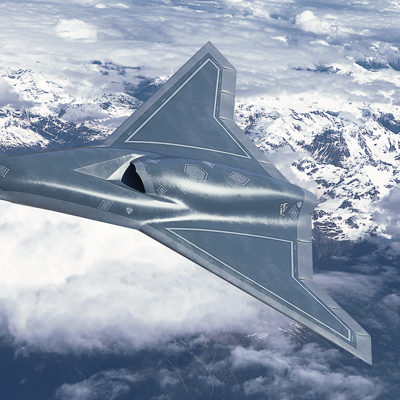
Rendering of a Vectis drone. Courtesy / Lockheed Martin
The firm’s top secret research arm shared new Vectis images, but few key details.
Air, Space & Cyber Conference
Skunk Works, Lockheed Martin’s secretive research arm, plans to build four more of its experimental, multipurpose drones as the firm attempts to sell its futuristic platform to the U.S. military.
Last year, Skunk Works unveiled Vectis—a concept for a group 5 drone that’s capable of a wide range of missions. Now, on the first day of the Air & Space Force Association’s defense conference near Washington, D.C., company officials announced they’re making significant progress on the prototype and are already planning to expand the fleet for more tests.
“We are moving forward with a plan to build an additional four vehicles, bringing a total of five to include the original prototype,” said Ron Fehlen, Skunk Works’ vice president and general manager. “Development work on those additional aircraft is already underway, and we'll have more specifics to share soon.”
Company officials shared new images of the Skunk Works combat drone with reporters ahead of this week’s Air, Space and Cyber Conference. Vectis will be roughly 34 feet long and have a 38-foot wingspan, and will feature a submerged engine inlet and a tail-less body to reduce drag and mission flexibility,” Fehlen said. While Lockheed was eager to talk about the aircraft’s design, the Skunk Works vice president was tight-lipped about who the specific customer for the new aircraft could be, and didn’t provide details on the weapons loadout, propulsion system, or estimated cost of the platform. The Air Force, Marine Corps, and Navy are all aiming to field collaborative combat aircraft.
“From an affordability standpoint, which we're always looking at, and, of course, are targeting to be the CCA competitive price. So we're very cognizant of it and make trades associated with that, Fehlen said. “It's obviously, I think, focused more on the CCA side of the house, and obviously the price points that are highly relevant in that regime.”
Fehlen said the company remains on track to fly Vectis by “the end of 2027.” He said Skunk Works feels confident in that timeline, due in part, to the use of digital designs and “minimal tooling determinant assembly”—which the Skunk Works vice president likened to ready-to-assemble furniture with pre-drilled holes.
“It's a technique that really enables an increased level of affordability and speed through really reducing the amount of touch labor required and increasing the first pass yield,” Fehlen said. “We've seen in many cases an 80 percent reduction in labor hours to build up the aircraft itself.”
While Fehlen wouldn’t specify one specific U.S. program or customer Vectis is geared toward, he did say it could work with any of Lockheed Martin’s fighter jets, which are also flown by other nation’s militaries.
“I'll point to the fact that we have a long history in crewed tactical systems that, you know, Vectus is going to need to integrate with, in addition to other fighter aircraft that are produced around the world,” Fehlen said. “So, from our perspective, this is in line with our heritage and what we're producing today and delivering to the field. It has incredible capability, and now we're going to be able to add this to it.”
NEXT STORY: Defense Business Brief: AI manufacturing; Skilled trades; Arms transfer oversight
Vectis无人机渲染图。图片由洛克希德·马丁公司提供。
该公司最高机密的研究部门公布了新的 Vectis 图像,但很少透露关键细节。
航空航天网络会议
洛克希德·马丁公司旗下的秘密研究部门“臭鼬工厂”计划再建造四架实验性的多用途无人机,该公司正试图将其未来主义平台出售给美国军方。
去年,臭鼬工厂发布了Vectis——一款能够执行多种任务的第五类无人机概念机。如今,在华盛顿特区附近举行的美国空军与太空部队协会防务会议首日,该公司官员宣布,原型机的研发取得了重大进展,并已计划扩大机队规模以进行更多测试。
“我们正在推进一项计划,将再制造四架飞行器,加上最初的原型机,总数将达到五架,”臭鼬工厂副总裁兼总经理罗恩·费伦表示。“这些新增飞行器的研发工作已经展开,我们将很快公布更多细节。”
在本周的航空航天与网络会议召开前夕,公司官员向记者展示了臭鼬工厂(Skunk Works)新型作战无人机的最新图片。费伦表示:“Vectis无人机长约34英尺(约10.4米),翼展38英尺(约11.6米),采用水下发动机进气口和无尾机身设计,以降低阻力并提高任务灵活性。” 尽管洛克希德·马丁公司急于谈论该机的设计,但臭鼬工厂副总裁对这款新飞机的具体客户守口如瓶,也没有透露武器配置、推进系统或平台预估成本等细节。美国空军、海军陆战队和海军都在致力于部署协同作战飞机。
“从价格承受能力的角度来看,我们一直在关注这一点,当然,我们的目标是使价格在CCA(加拿大消费者协会)中具有竞争力。所以我们非常清楚这一点,并会据此进行交易,”费伦说道。“显然,我认为,我们的重点更多地放在CCA方面,以及在该体系中高度相关的价格点上。”
费伦表示,公司仍有望在“2027 年底”之前完成 Vectis 的试飞。他表示,臭鼬工厂对这一时间表充满信心,部分原因是采用了数字化设计和“最小工具决定组装”——臭鼬工厂副总裁将其比作带有预钻孔的组装家具。
费伦表示:“这项技术确实能够大幅降低成本并加快速度,因为它能显著减少所需的人工操作,并提高一次通过率。在很多情况下,我们已经看到飞机组装所需的人工时间减少了80%。”
费伦没有具体说明 Vectis 针对的是哪个美国项目或客户,但他表示,它可以与洛克希德·马丁公司的任何战斗机配合使用,而其他国家的军队也在使用这些战斗机。
费伦说:“我想指出的是,我们在有人驾驶战术系统领域有着悠久的历史,Vectus系统除了要与世界各地生产的其他战斗机进行整合之外,还需要与这些系统进行整合。因此,从我们的角度来看,这与我们的传统以及我们目前正在生产和交付给一线的产品是一致的。它拥有强大的性能,现在我们将能够在此基础上增加这项功能。”
下一篇报道:国防商业简报:人工智能制造;技术工人;武器转让监管