Patriot air defense interception is costly: Here’s how it works爱国者防空系统拦截成本高昂:其工作原理如下
The system has become a key tool for protecting bases and infrastructure from aerial attacks, but at a high cost.
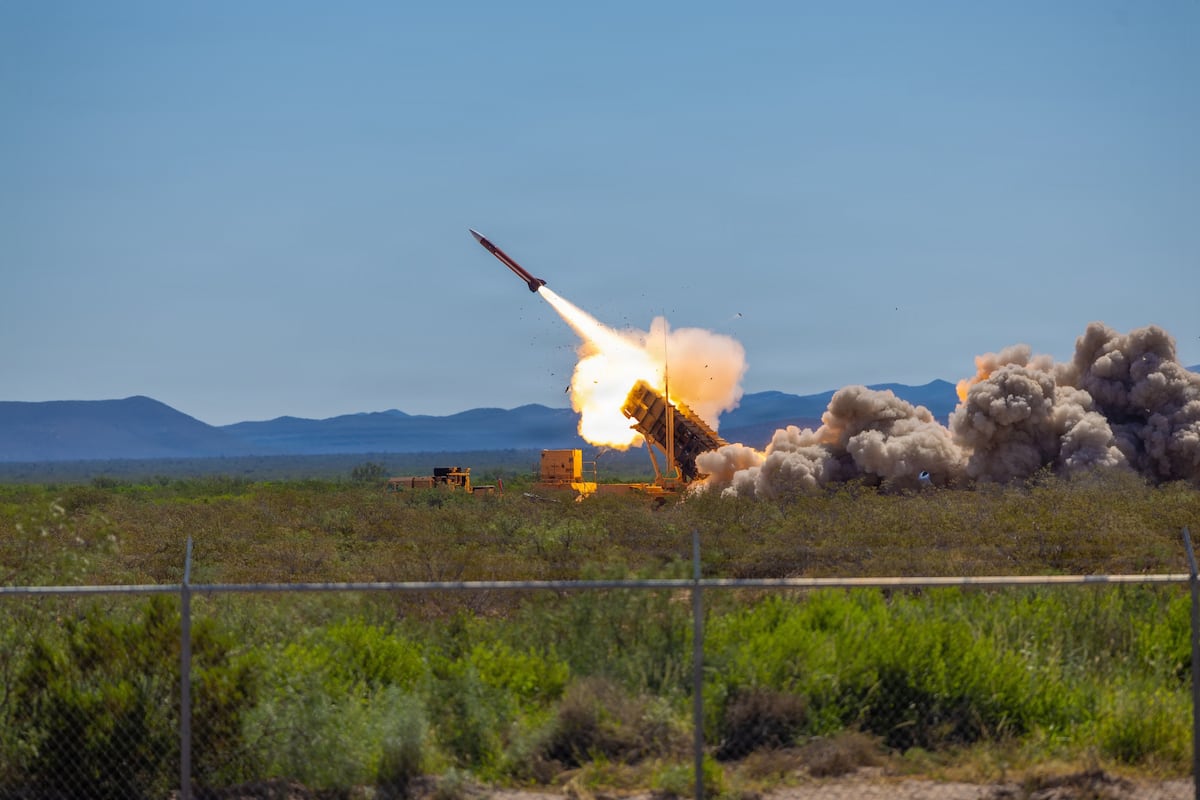
As missile and drone attacks intensify across the Middle East, U.S. forces are leaning heavily on air defense systems like the Patriot missile battery to intercept incoming threats.
The Patriot system is widely used to defend against incoming missiles and drones using radar and interceptor missiles — such as the Patriot Advanced Capability-3, or PAC-3, interceptor — to engage incoming threats.
The system has become a key tool for protecting bases and infrastructure from aerial attacks, but at a high cost. PAC-3 interceptor missiles cost millions of dollars each, making them especially expensive when used against cheaper threats like drones.
The tradeoff has put new focus on how the system is used in practice. Here’s how it works from detection to interception.
A radar sweeps the sky, scanning for anything out of place. Within a Patriot battery, that radar is designed to track aircraft, missiles and drones across a wide swath of the horizon to build a picture of the airspace in real time.
When an object appears in the airspace, the system locks in and begins calculating its speed, altitude and trajectory as it moves. Using that data, the system works to identify the object and discern if it is a threat.
It computes where the object is heading, and if it seems likely to hit a protected area, like a base or population center. That assessment sets the stage for what comes next: a decision on whether or not to engage.
Once a battery is ordered to engage, a Patriot launcher fires an interceptor missile toward the predicted intercept point. The PAC-3 speeds up after it is fired, shooting into the air and then turning toward a target based on data from the radar.
As the missile soars, it keeps receiving updates and can adjust its path as it closes in on an object.
In its final moments, a PAC-3 interceptor missile rams directly into its target.
Instead of exploding nearby, the PAC-3 uses a hit-to-kill method, destroying the incoming threat by colliding with it at a high speed. That makes this particular interceptor missile critical for ballistic missile defense, where precision is crucial.
Patriot systems are one part of a layered air defense. Terminal High Altitude Area Defense, or THAAD, systems, also manufactured by Lockheed Martin, are designed to intercept ballistic missiles inside or outside the atmosphere and earlier in flight, while the Patriot operates closer to the ground.
Like the Patriot system, THAAD uses a hit-to-kill method and relies on radar and interceptor missiles. Because THAAD can operate at higher altitudes and over a wider area, one THAAD battery can cover larger regions.
Each PAC-3 interceptor cost millions of dollars, making it an incredibly expensive tool to use against drones that cost a fraction of that price to manufacture. Though Lockheed Martin, the interceptor’s manufacturer, is poised to ramp up production under a January agreement with the Pentagon, as it stands, the U.S. has a finite number of PAC-3 interceptor missiles and production takes time.
As interceptors are consumed in the Middle East, experts warn supply may not keep up with high — and expensive — demand.
Eve Sampson is a reporter and former Army officer. She has covered conflict across the world, writing for The New York Times, The Washington Post and The Associated Press.
随着中东地区导弹和无人机袭击的加剧,美军正大力依靠爱国者导弹系统等防空系统来拦截来袭威胁。
爱国者系统广泛用于防御来袭导弹和无人机,它使用雷达和拦截导弹(例如爱国者先进能力-3,或 PAC-3 拦截器)来拦截来袭威胁。
该系统已成为保护基地和基础设施免受空中袭击的关键工具,但成本高昂。PAC-3拦截导弹每枚造价数百万美元,因此在对抗无人机等成本较低的威胁时,其代价尤为高昂。
这种权衡取舍使得人们更加关注系统在实践中的应用。以下是该系统从检测到拦截的工作原理。
雷达扫射天空,扫描任何异常物体。在“爱国者”导弹防御系统中,该雷达旨在追踪地平线上广阔区域内的飞机、导弹和无人机,从而实时构建空域图像。
当空域中出现物体时,系统会锁定目标并开始计算其速度、高度和轨迹。利用这些数据,系统可以识别物体并判断其是否构成威胁。
它会计算目标的飞行方向,以及它是否有可能击中受保护区域,例如基地或人口中心。这一评估为下一步行动奠定了基础:决定是否进行交战。
一旦接到交战命令,爱国者导弹发射装置就会向预定拦截点发射一枚拦截导弹。PAC-3导弹发射后会加速,先向空中飞行,然后根据雷达数据转向目标。
导弹在飞行过程中不断接收更新信息,并在接近目标时调整飞行路径。
在生命的最后时刻,PAC-3拦截导弹直接撞向目标。
PAC-3 导弹并非在附近爆炸,而是采用碰撞摧毁的方式,高速撞击来袭目标将其摧毁。这使得这种拦截导弹在弹道导弹防御中至关重要,因为弹道导弹防御对精确度要求极高。
爱国者导弹系统是多层防空体系的一部分。末段高空区域防御系统(THAAD)同样由洛克希德·马丁公司制造,其设计目的是在大气层内外更早阶段拦截弹道导弹,而爱国者导弹则在更接近地面的位置作战。
与“爱国者”系统类似,“萨德”系统也采用直接命中摧毁的方式,依靠雷达和拦截导弹。由于“萨德”系统能够在更高的高度和更广阔的区域内运行,因此一套“萨德”系统就能覆盖更大的区域。
每枚PAC-3拦截导弹造价数百万美元,对于制造成本仅为其几分之一的无人机而言,用它来对抗无人机无疑是一种极其昂贵的武器。尽管拦截导弹的制造商洛克希德·马丁公司已根据1月份与五角大楼达成的协议,准备提高产量,但就目前而言,美国拥有的PAC-3拦截导弹数量有限,而且生产需要时间。
专家警告称,随着拦截器在中东地区的消耗,供应可能无法满足高昂且昂贵的需求。
伊芙·桑普森是一名记者,也是一名前陆军军官。她曾报道过世界各地的冲突,为《纽约时报》、《华盛顿邮报》和美联社撰稿。