Marines, Air Force on track for 2024 recruiting; Navy projected to miss海军陆战队和空军2024年征兵计划按计划进行;海军预计将无法完成征兵。
Here's where each of the services stand.
With three full months left in the fiscal year for military recruiting , the services already are developing a sense of whether they’ll make their target recruiting mission or end up short.
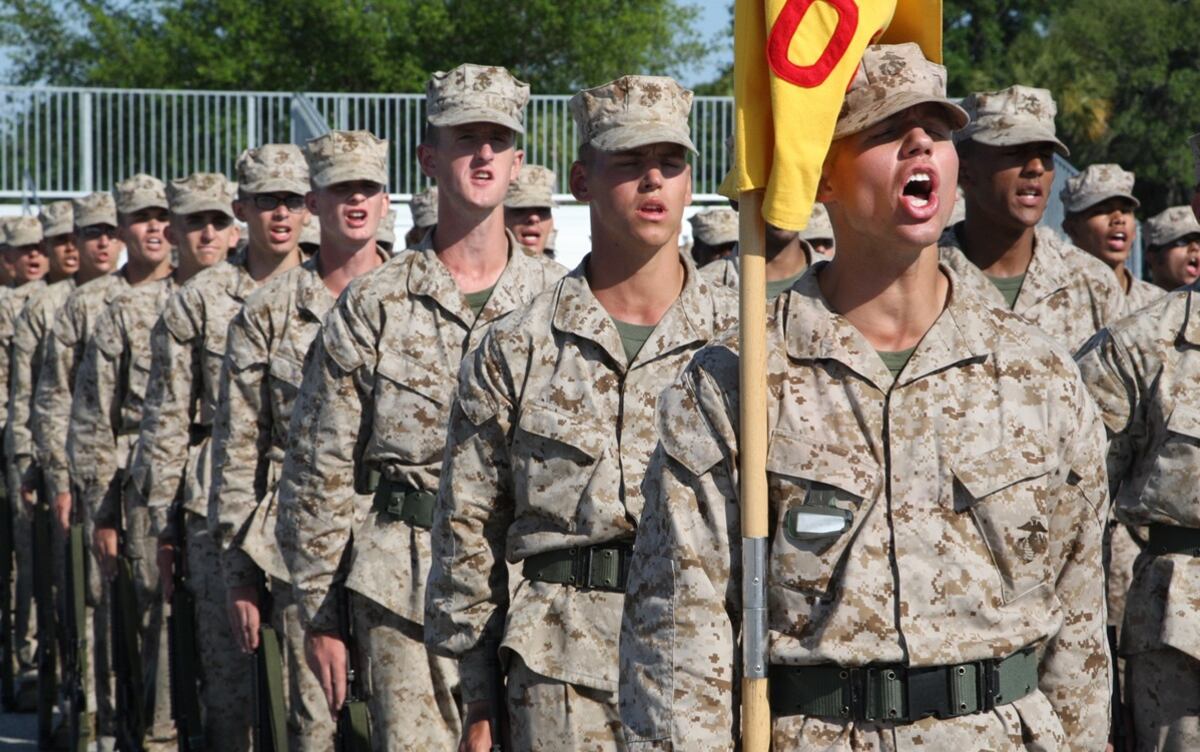
The Marine Corps has brought in more than 101% of its recruiting target for the year to date, up from 100% this time in 2023, and officials anticipate meeting annual recruiting goals once again.
The Navy, on the other hand, already is expecting to fall short of its target for a second consecutive year.
That’s according to military officials who testified before the Defense Advisory Committee on Women in the Services during the committee’s quarterly meeting on June 25 in Arlington, Virginia.
The Air Force and the Army, which have struggled in the past two years to meet recruiting goals, have indicated they’re on track to make mission.
While well-documented challenges remain, including lower propensity to serve, fewer qualified young people and a recently implemented health records system that has ramped up denials and delays, the services reported improvements in recruiting performance from 2023′s numbers as they work to adapt to new realities.
The Marine Corps already has brought in 12,924 contracts, above its year-to-date goal of 12,751, according to documents presented by Sgt. Maj. Allen Goodyear, the senior enlisted adviser for Marine Corps Recruiting Command.
This time in 2023, it was roughly even with its goal, having brought in 14,632 contracts in line with a goal of 14,632. The service finished fiscal 2023 with 33,223 enlisted accessions ― 21 contracts above its mission.
The Corps’ projected ability to meet or outpace its goal once again “is a result of planning factors allowing for a preponderance of accessions to occur during the summer shipping period which historically has higher quality recruits and mission success,” according to slides Goodyear shared with the committee.
The Navy, which has a higher enlisted accessions goal in 2024 than in 2023, also is making healthy progress.
The service has brought in 30,067 contracts of the 40,600 enlisted contracts it needs in 2024, or 74% of the total, according to data shared by the service’s chief recruiter, Master Chief Gerald Allchin.
This time in 2023 it had just secured 25,039 contracts of the 37,700 contracts it needed, or 66%, according to data shared at the meeting. The service ultimately missed its goal by 7,450 contracts .
The 5,000-person year-over-year increase puts the Navy in a more bullish position than it was in even earlier this spring, when Defense Department numbers showed it lagging behind the other services for the first half of the year.
Nonetheless, the Navy still projects it won’t be enough to meet this year’s goal.
“We are seeing significant increases year over year as you saw,” Allchin said. “Right now, we’re projecting a miss of around 4,200 for our active enlisted mission of about 40,600.”
The Air Force appears on pace to make its goal, with 19,321 enlisted accessions putting it just above the year-to-date goal of 19,262.
The Air Force Reserve also is on track to hit its target, said Chief Master Sgt. W. Frank Rawls, the Recruiting Service’s operations superintendent.
The service missed its accessions goal by 10% in 2023 in the first such shortfall since 1999.
Rawls credits the service’s 2024 success in part to a $100 million congressional plus-up in recruitment budgeting.
“And we seek to continue the momentum,” Rawls said, citing plans to increase enlistment bonuses and add nearly 200 more recruiters.
The Air Force, he said, also has requested $52 million in marketing funds for lead generation and outreach.
The Army, which in response to two years of missed accessions goals has overhauled its recruiting enterprise and slimmed down its targets, is nonetheless up year-over-year in raw numbers.
As of the end of April the Army had brought in 24,038 total new contracts, or 43.7%, of its goal of 55,000, according to Sgt. Maj. Danny Basham, the service’s sergeant major for analytics and production. In the same time in 2023 it had secured just 21,917 contracts, or 33.7%, of that year’s goal of 65,000.
“So production is increasing, and we’re figuring out the process,” Basham said.
While the most recent numbers show substantial ground that still needs to be made up, Basham maintained the service could meet this year’s lowered target.
“Our projections are showing that we will make our enlistment mission with a level of depth for the next fiscal year,” he said.
Even services with consistent recruiting performance like the Marine Corps, however, cited the difficulty of overcoming new challenges posed by MHS Genesis, the military’s new electronic health record.
The system’s seven-year rollout was completed in March. Because the system meticulously documents military applicants’ medical histories , it has necessitated a massive increase in waiver requests for conditions that otherwise might have gone unmentioned or ignored by recruiters.
Before the health system rollout, Goodyear said, getting 100 new Marine Corps contracts took 154 applicants; now it takes 181 applicants.
The number of medical waivers being submitted for applicants has more than doubled, creating processing delays.
The average time in military entry processing for recruits has increased from 10 days to 35 days, he said. And that means less time in the delayed entry program, where recruits get physical training and preparation ahead of shipping to boot camp.
With an average of 120 days in the delayed entry program compared with 162 days before MHS Genesis, the boot camp dropout rate has increased, he said, from 11% to 12%.
Other military representatives at the meeting, who were asked to present data about the impact of MHS Genesis, offered similar perspectives, even as they said they’re learning to work with the system and implementing staffing changes and policy updates designed to cut down on unnecessary delays and improve throughput.
Rawls emphasized that delays in initial processing can cause prospective recruits to second-guess their desire to serve. Amid ramped-up efforts to make recruiting mission in the Air Force, he said, service officials estimate between 3,000 would-be recruits and 4,000 would-be recruits in 2023 simply walked away from service amid long medical processing wait times.
Goodyear cited a similar effect.
“When delays and initial disqualifications occur, young Americans who want to serve are faced with uncertainty about their future,” Goodyear said. “Often, extended delays require these individuals to pursue a different career path based on the financial realities of life.”
Hope Hodge Seck is an award-winning investigative and enterprise reporter covering the U.S. military and national defense. The former managing editor of Military.com, her work has also appeared in the Washington Post, Politico Magazine, USA Today and Popular Mechanics.
距离本财政年度的征兵结束还有整整三个月,各军种已经开始判断他们能否完成征兵目标,还是最终会招不到足够的兵员。
截至目前,海军陆战队今年的征兵目标完成率已超过 101%,高于 2023 年同期的 100%,官员们预计今年将再次实现年度征兵目标。
另一方面,海军预计连续第二年将无法完成目标。
这是军方官员在6月25日于弗吉尼亚州阿灵顿举行的国防部妇女军人咨询委员会季度会议上作证时透露的消息。
过去两年,空军和陆军在征兵方面一直举步维艰,但他们都表示,他们有望完成任务。
尽管仍然存在一些有据可查的挑战,包括服务意愿降低、合格的年轻人减少以及最近实施的健康记录系统加剧了拒绝和延误,但随着他们努力适应新的现实,这些服务机构报告称,与 2023 年的数据相比,招聘绩效有所改善。
根据海军陆战队征兵司令部高级士官顾问艾伦·古德伊尔军士长提交的文件,海军陆战队已经签订了 12924 份合同,超过了今年迄今为止 12751 份的目标。
2023 年同期,该部门基本达到了目标,签订了 14,632 份合同,与 14,632 份的目标相符。该部门在 2023 财年结束时,新兵入伍人数为 33,223 人,比任务目标多签了 21 份合同。
根据固特异公司向委员会提供的幻灯片,该军团预计能够再次达到或超过其目标,“是由于规划因素使得大部分新兵入伍发生在夏季运输期,而夏季运输期历来是招募高质量新兵和任务成功率更高的时期”。
海军在 2024 年的入伍目标比 2023 年更高,目前也取得了良好的进展。
根据该军种首席征兵官杰拉尔德·奥尔钦总士官长分享的数据,该军种已获得 2024 年所需的 40,600 份入伍合同中的 30,067 份,即总数的 74%。
根据会议上公布的数据,到2023年这个时候,该机构已获得所需37,700份合同中的25,039份,完成率为66%。但最终,该机构仍以7,450份合同的差距未能达成目标。
与去年同期相比,海军人数增加了 5000 人,这使得海军的处境比今年春季早些时候更加乐观。当时国防部的数据显示,海军在今年上半年的人员数量落后于其他军种。
尽管如此,海军方面仍然预计这不足以实现今年的目标。
“正如你所看到的,我们看到每年都有显著增长,”奥尔钦说。“目前,我们预计现役士兵人数将比40600人的目标少4200人左右。”
空军似乎有望实现其目标,目前已招募 19,321 名士兵,略高于今年迄今为止 19,262 人的目标。
空军预备役部队也正按计划实现其目标,招募服务部门的作战主管首席军士长 W·弗兰克·罗尔斯表示。
2023 年,该机构的入伍人数未达到目标的 10%,这是自 1999 年以来首次出现这种情况。
罗尔斯认为,该机构在 2024 年取得成功的部分原因是国会增加了 1 亿美元的招募预算。
“我们希望继续保持这种势头,”罗尔斯说,并提到了增加入伍奖金和增加近 200 名征兵人员的计划。
他说,空军还申请了 5200 万美元的营销资金,用于潜在客户开发和推广。
由于连续两年未能实现征兵目标,陆军对其征兵体系进行了全面改革,并缩减了征兵目标,但即便如此,其征兵人数仍然比上一年有所增长。
据陆军分析与生产总军士长丹尼·巴沙姆称,截至4月底,陆军共签订了24038份新合同,完成55000份目标的43.7%。而2023年同期,陆军仅签订了21917份合同,完成当年65000份目标的33.7%。
“所以产量正在增加,我们正在摸索出正确的生产流程,”巴沙姆说。
尽管最新数据显示仍有相当大的差距需要弥补,但巴沙姆坚称,该服务能够达到今年下调后的目标。
他说:“我们的预测显示,我们将在下一个财政年度实现我们预期的征兵目标。”
即使是像海军陆战队这样招募业绩稳定的军种,也指出克服 MHS Genesis(军方新的电子健康记录)带来的新挑战非常困难。
该系统历时七年的推广工作已于三月份完成。由于该系统会详细记录军人申请者的病史,因此需要大幅增加豁免申请的数量,这些申请涉及的疾病原本可能被征兵人员忽略或遗漏。
古德伊尔表示,在医疗系统推广之前,获得 100 份新的海军陆战队合同需要 154 名申请者;现在需要 181 名申请者。
申请人提交的医疗豁免申请数量增加了一倍多,导致处理延误。
他说,新兵入伍的平均处理时间已从10天增加到35天。这意味着新兵在延迟入伍计划中的时间会减少,该计划旨在让新兵在前往新兵训练营之前接受体能训练和准备。
他表示,与 MHS Genesis 之前的 162 天相比,延迟入学计划的平均时间为 120 天,新兵训练营的辍学率从 11% 上升到 12%。
会议上其他被要求介绍 MHS Genesis 影响数据的军方代表也提出了类似的观点,尽管他们表示正在学习如何使用该系统,并实施旨在减少不必要的延误和提高效率的人员配备变化和政策更新。
罗尔斯强调,初步审查流程的延误会导致潜在新兵动摇参军的决心。他表示,尽管空军加大了招募力度,但据军方官员估计,2023年将有3000至4000名潜在新兵因漫长的体检等待时间而放弃参军。
固特异公司也提到了类似的影响。
古德伊尔说:“当出现延误和最初资格不符的情况时,想要参军的美国年轻人就会面临未来的不确定性。通常情况下,长时间的延误会迫使这些人根据现实的经济状况选择其他职业道路。”
霍普·霍奇·塞克是一位屡获殊荣的调查记者和深度报道记者,主要报道美国军事和国防新闻。她曾任Military.com网站的执行主编,作品也曾发表在《华盛顿邮报》、《政治杂志》、《今日美国》和《大众机械》等媒体上。