US, South Korean officials to broach thorny Hormuz mission at talks this week美韩官员本周将在会谈中讨论棘手的霍尔木兹海峡任务。
The meeting comes at a tense time in the U.S.-South Korean alliance, with Seoul in no position to turn down a U.S. request for help, according to analysts.
MANILA, Philippines — The U.S. and South Korean governments will hold high-level security talks this week, with officials expected to discuss several issues that have strained ties between the two countries, including a possible South Korean deployment to the Strait of Hormuz.
The Ministry of National Defense said Monday that the Korea-U.S. Integrated Defense Dialogue will cover wartime operational control transition, the countries’ joint defense posture and shipbuilding cooperation.
Experts believe the dialogue will also cover the deployment of a South Korean contingency to the Middle East, the prospect of which which has triggered demonstrations in Seoul.
The talks come as tensions between Seoul and Washington escalate over security and trade amid a heated domestic debate in South Korea over troops serving outside the peninsula.
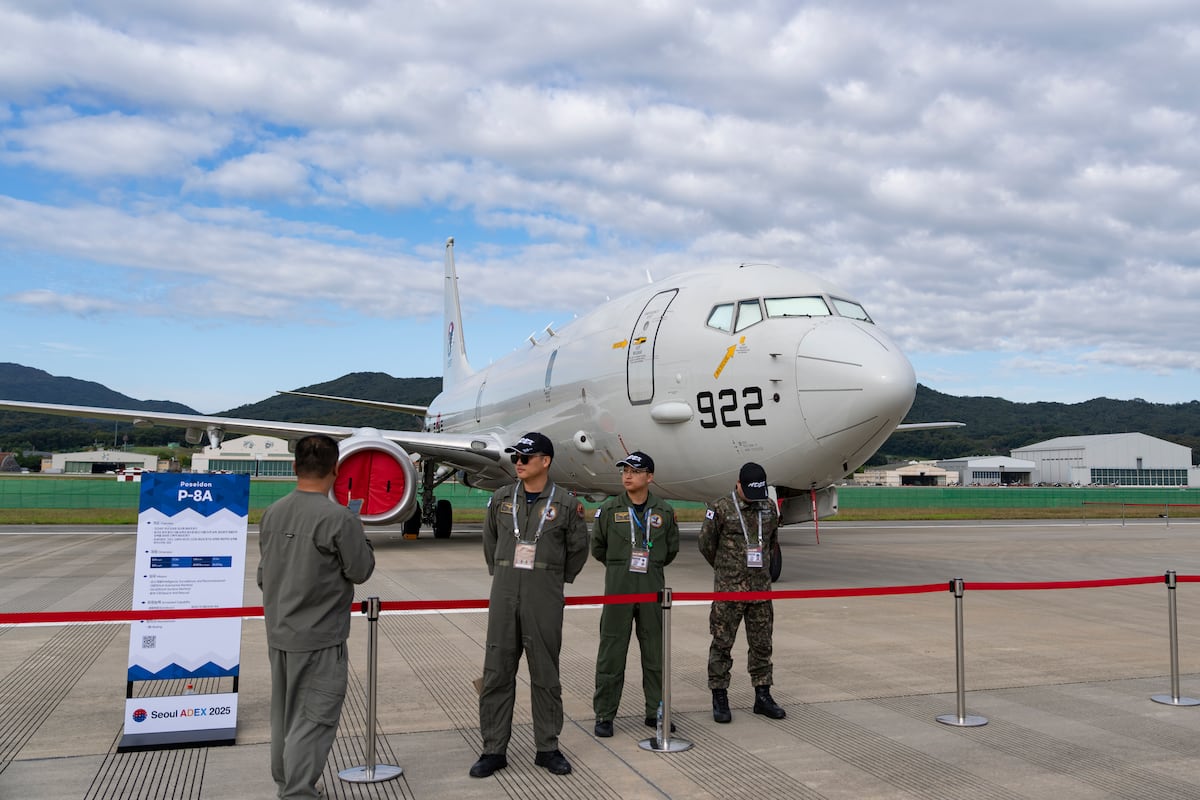
According to local media reports, the government is considering deploying a P-8 Poseidon maritime patrol and reconnaissance aircraft, a naval logistics support vessel and about 150 personnel.
The government has reiterated that no decision has been made, and any troop deployment would require final approval from the National Assembly, South Korea’s parliament.
Last week, the Foreign Ministry sent an inspection team to the United Arab Emirates to assess the situation. Findings are expected to be released Thursday.
Some form of military dispatch is highly likely at this point, according to Ju Hyung Kim, president of the Security Management Institute, a Seoul-based defense policy think tank affiliated with the National Assembly.
While support assets would not change the military balance with Iran, Kim said the move shows that “the United States is capable of mobilizing allied support beyond its traditional partners in Europe and the Middle East.”
South Korea, on one hand, had little wiggle room to deny a military contingent even as Washington’s growing demands leave officials increasingly frustrated.
Washington has pressed Seoul to spend more on defense, pay more for U.S. troops on the peninsula, and, last month, downscaled a joint training exercise without advance notice.
“Seoul is in a difficult position because it has limited room to reject a U.S. request outright at a time when several sensitive alliance issues are already under discussion,” Kim told Defense News.
A deployment to the Middle East could help alleviate some U.S. concerns, Kim said, and it might also ease Washington’s wariness over the timing of wartime operational transfer (Opcon), which the Lee Jae Myung government hopes to accomplish as early as 2027.
Seoul could use the Iran deployment to show that pushing ahead with the Opcon transition does not make South Korea less committed to the alliance, Kim said. On one hand, while it could portray Seoul as a more active U.S. ally, it could also reduce Seoul’s pragmatic relations in the Middle East.
Military officials have been discussing a deployment that could parallel the Zaytun Division contingent, which was sent out to carry out humanitarian, peacekeeping and medical missions in 2003 to support U.S. military campaigns during the Iraq War.
In the end, the military dispatch may be limited to maritime surveillance, logistics, escort, intelligence or other support missions rather than troop deployment, but the actual size, role, and location will be difficult to determine, Kim said.
U.S. and South Korean officials are also expected to discuss concerns relating to the Opcon transition. Washington has opted for a “conditions-based” system for the transfer and asked South Korea to meet significant command, air defense and strike capabilities first.
American military officials have estimated the transition to begin in 2029, later than Lee’s 2027-2030 timeline target.
“Washington has reasons to be cautious about moving too quickly, particularly as North Korea continues to expand its nuclear capabilities, incorporates lessons from the war in Ukraine … and as concerns over a potential Taiwan contingency continue to grow,” Kim said.
The South has flagged the North as a primary security focus and has held back commitments relating to Taiwan.
In recent years, the North has deepened military ties with Russia, deploying troops and supplying weapons to support Moscow’s war in Ukraine while receiving substantial economic and trade support from China.
“North Korean capabilities are advancing rapidly — their nuclear capabilities, their missile capabilities,” Victor Cha, Korea Chair at the Center for Strategic and International Studies, told Defense News at the sidelines of the Manila Strategy Forum last week.
This year alone, Pyongyang has launched eight ballistic missiles and added new warships, cruise missiles and drones. Experts worry that North Korea’s Ukraine experience might make them capable of applying sophisticated drone tactics on the peninsula.
Cha said it is difficult to predict how the U.S.-South Korea relationship will evolve after recent frictions, but he said it might lead to an unexpected result: America’s pressures against Seoul might compel Pyongyang to return to the negotiating table.
North Korea has declined to revive peace talks with Seoul and downplayed Washington’s calls for a meeting.
The United States has “very few tools to disrupt” North Korea and Russia’s relationship, Cha said, but an interaction between President Trump and Kim Jong Un could be a good way “to distract the North Koreans from what they’re doing with the Russians.”
“President Trump has made very clear his desire to resume summit diplomacy. So I think that there is a pretty good chance that these two leaders will meet at some point,” Cha said.
Leilani Chavez is an Asia correspondent for Defense News. Her reporting expertise is in East Asian politics, development projects, environmental issues and security.
菲律宾马尼拉——美国和韩国政府本周将举行高级别安全会谈,预计双方官员将讨论一些导致两国关系紧张的问题,包括韩国可能向霍尔木兹海峡部署军队。
韩国国防部周一表示,韩美联合防务对话将涵盖战时作战指挥权交接、两国联合防御态势和造船合作等议题。
专家认为,此次对话还将涉及向中东部署韩国特遣部队的问题,这一前景已在首尔引发示威活动。
此次会谈正值首尔和华盛顿之间因安全和贸易问题而关系紧张升级之际,与此同时,韩国国内也正就驻韩美军问题展开激烈辩论。
据当地媒体报道,政府正在考虑部署一架 P-8 海神海上巡逻侦察机、一艘海军后勤支援舰和约 150 名人员。
政府重申,尚未做出任何决定,任何军队部署都需要得到韩国国会(韩国最高行政法院)的最终批准。
上周,外交部派遣了一个调查小组前往阿联酋评估局势。调查结果预计将于周四公布。
据隶属于韩国国会的首尔国防政策智库——安全管理研究所所长金柱亨表示,目前极有可能采取某种形式的军事行动。
金表示,虽然支援力量不会改变与伊朗的军事平衡,但此举表明“美国有能力动员其在欧洲和中东等传统伙伴之外的盟友提供支持”。
一方面,韩国几乎没有回旋余地拒绝派遣军事人员,但另一方面,华盛顿日益增长的要求却让韩国官员越来越感到沮丧。
华盛顿一直敦促首尔增加国防开支,增加驻韩美军的费用,并且上个月在没有事先通知的情况下缩减了联合训练演习的规模。
金告诉《防务新闻》:“首尔处境艰难,因为在几个敏感的联盟问题正在讨论之际,首尔几乎没有空间直接拒绝美国的要求。”
金表示,向中东部署兵力或许能缓解美国的一些担忧,也可能减轻华盛顿对战时作战移交(Opcon)时间的担忧,李在明政府希望最早在 2027 年完成战时作战移交。
金表示,首尔可以利用伊朗部署行动来表明,推进作战控制权交接并不会让韩国对美同盟的承诺有所减弱。一方面,这或许能将首尔塑造成美国更积极的盟友形象;但另一方面,也可能削弱首尔在中东的务实外交关系。
军方官员一直在讨论一项部署计划,该计划可能与 2003 年派往伊拉克执行人道主义、维和及医疗任务以支持美国军事行动的“扎伊顿师”特遣队类似。
金表示,最终军事派遣可能仅限于海上监视、后勤、护航、情报或其他支援任务,而不是部队部署,但实际规模、作用和地点将很难确定。
预计美韩官员还将讨论与作战指挥权交接相关的担忧。华盛顿方面选择了一种“基于条件”的移交方式,并要求韩国首先具备重要的指挥、防空和打击能力。
美国军方官员估计过渡工作将于 2029 年开始,比李将军设定的 2027-2030 年时间表目标要晚。
金说:“华盛顿有理由谨慎行事,不要操之过急,尤其是在朝鲜继续扩大其核能力、吸取乌克兰战争的教训……以及对台湾可能出现的突发事件的担忧日益加剧的情况下。”
南方将北方视为首要安全重点,并因此推迟了与台湾相关的承诺。
近年来,朝鲜加深了与俄罗斯的军事联系,向俄罗斯部署军队并提供武器以支持莫斯科在乌克兰的战争,同时还从中国获得了大量的经济和贸易支持。
“朝鲜的能力正在迅速发展——他们的核能力、导弹能力,”战略与国际研究中心韩国问题主席维克多·查上周在马尼拉战略论坛间隙告诉《防务新闻》。
仅今年一年,平壤就发射了八枚弹道导弹,并增添了新的军舰、巡航导弹和无人机。专家担心,朝鲜在乌克兰的经验可能使其有能力在朝鲜半岛运用先进的无人机战术。
车先生表示,很难预测美韩关系在最近的摩擦之后将如何发展,但他认为这可能会导致意想不到的结果:美国对首尔的压力可能会迫使平壤重返谈判桌。
朝鲜拒绝重启与首尔的和平谈判,并淡化了华盛顿提出的会晤呼吁。
车先生表示,美国“几乎没有办法破坏”朝鲜和俄罗斯的关系,但特朗普总统和金正恩之间的互动可能是“转移朝鲜人注意力,让他们不再关注与俄罗斯人所做的事情”的好方法。
“特朗普总统已经非常明确地表达了恢复峰会外交的意愿。所以我认为这两位领导人很有可能在某个时候会面,”查说道。
莱拉尼·查韦斯是《防务新闻》的亚洲记者。她的报道专长是东亚政治、发展项目、环境问题和安全。