Fleet Of At Least 500 Collaborative Combat Aircraft By 2032 Now In USAF’s Plans美国空军计划到2032年建成至少500架协同作战飞机。
500 CCAs is a step up from recently stated USAF plans, and the service also now wants 500 more new drones to succeed its MQ-9s.
By Joseph Trevithick
Published Sep 14, 2026 12:36 PM EDT
USAF/Senior Airman Renee Blundon
The U.S. Air Force is now aiming to have at least 500 Collaborative Combat Aircraft (CCA) in service by 2032. The service also wants to have an equal number of Massed Modular Aircraft (MMA) drones to succeed its MQ-9 Reapers by that time. In terms of stated CCA force structure plans, this is a substantial step up, with the service having most recently talked about acquiring “over” 150 of these drones by the end of the decade.
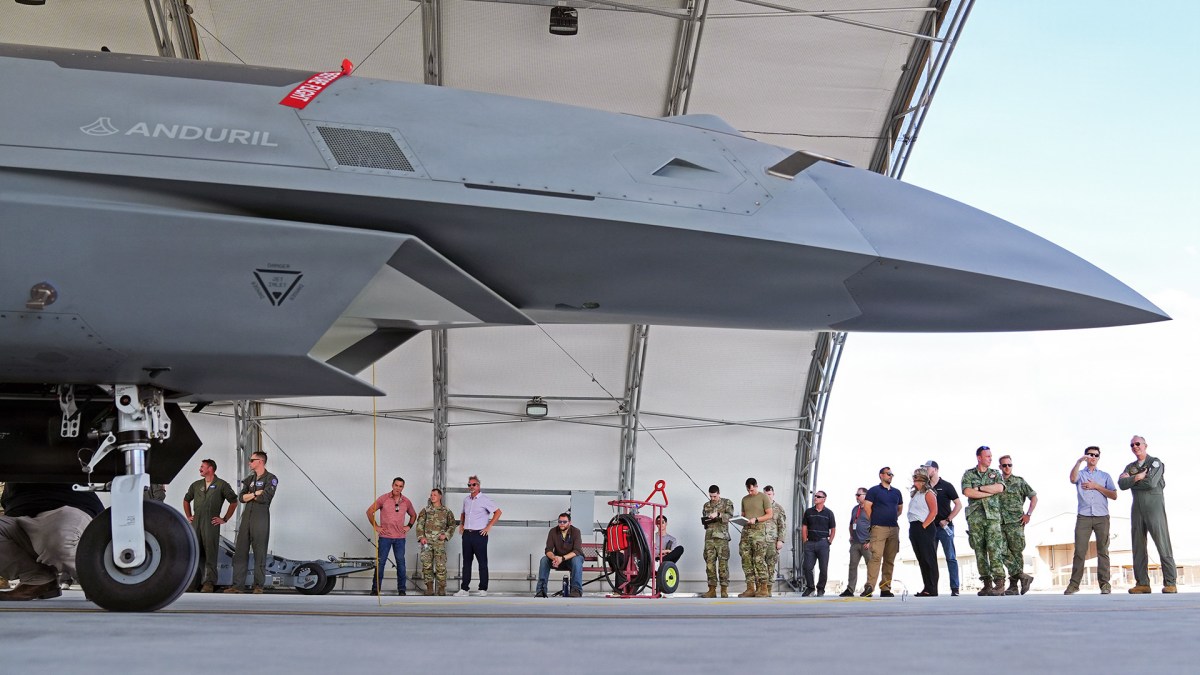
Secretary of the Air Force Troy Meink shared updates on the CCA program during a keynote speech at the Air & Space Forces Association’s 2026 Air, Space & Cyber Conference , at which TWZ is in attendance. The service’s top civilian also announced that General Atomics’ FQ-42 and Anduril’s FQ-44 drones have now received official nicknames: Vengeance and Fury . This only represents a change for the General Atomics design, which the company had previously named Dark Merlin . In June, the Air Force announced that it was ordering both types into production.
A composite image showing the FQ-42 and FQ-44 designs together with their new official nicknames. USAF
“We will have autonomous fighters like the Collaborative Combat Aircraft, or CCA. We intend to have at least 500 of these in service by 2032,” Meink said in his speech. “Our intent is to field 100 MMAs in 2029 at even a lower cost than the CCAs and a fraction of [the] cost of manned aircraft we build today. Then by 2032, 500 of these [MMA] platforms will join our force.”
When it comes to CCAs, “today, the first FQ-42 and FQ-44 increments are already rolling off the assembly line,” Meink added. “They’ll be performing many of the same missions that we do with manned fighters today.”
A row of YFQ-42A prototypes. General Atomics previously gave the company name Dark Merlin to this design. GA-ASI
The Air Force’s stated CCA force structure targets have fluctuated significantly in recent years. In 2023, then-Secretary of the Air Force Frank Kendall outlined plans to acquire at least 1,000 CCAs , if not more, across the life of the entire program. However, Kendall and other Air Force officials subsequently talked about a far smaller initial fleet of between 100 and 150 drones .
“These contracts reaffirm our confidence in the strategic path forward for the program to procure over 150 combat capable CCA by the end of the decade,” Meink himself said in a statement in June when the production orders for the FQ-42 and FQ-44 were announced.
A YFQ-44A prototype, with an inert AIM-120 air-to-air missile under its wing, seen during a test. USAF
The FQ-42 and FQ-44 are also being acquired under the first phase, or Increment 1, of the CCA program. At least one additional increment is planned, and could lead to orders for one or more additional types of CCA . Though it is not immediately clear, it is possible, if not probable that Increment 2 CCAs are factored into the latest 500 drone figure.
“We talk about 500 by 2032, [but] we could actually build more of them than that,” Secretary Meink also said today during a question-and-answer session immediately following his speech. The goal of the CCA program “from the get-go” was “simple aircraft that you could build fast and at a lower cost,” he continued.
“So now we’re in a situation to [sic] where we could actually build more than we can actually afford to buy,” he added.
It is unclear what the unit costs of the FQ-42 or FQ-44 are currently. The Air Force has said previously that it is targeting a price point of around $20 million apiece once full-rate production gets underway.
Beyond any fleet size target, the Air Force is still very much in the process of figuring out how future CCAs will be deployed, launched, recovered, supported, and otherwise operated on a day-to-day basis, as well as employed tactically. During today’s question-and-answer session today, Meink drew attention to a dedicated Experimental Operations Unit (EOU) the service has established to lead the process of laying the groundwork for future CCA operations. The EOU notably led a significant new round of operational testing of YFQ-42 and YFQ-44 prototypes at Creech Air Force Base in Nevada back in July, which TWZ first to report on . The EOU supported another similar test exercise at Edwards Air Force Base in California in April.
A YFQ-44A at Edwards Air Force Base during a test exercise in April 2026. USAF
“Getting them [CCAs] into these developmental kind of operational units, so they can start experimenting with that – familiarity breeds confidence, right?” Meink said.
The Air Force continues to make it clear that it sees its future CCA fleets as essential for providing capabilities and operational capacity necessary to succeed in future conflicts, especially a potential high-end fight against a near-peer opponent like China.
“Collaborative Combat Aircraft change how we project power and generate mass in highly contested environments,” Air Force Chief of Staff Gen. Ken Wilsbach said in a statement when the FQ-42 and FQ-44 production contracts were announced. “Delivering this capability to our warfighters faster ensures our forces maintain the tactical edge required to deter and, if necessary, defeat any adversary.”
As mentioned, the Air Force also now has plans to acquire 500 very different combat drones under the MMA program, and at a unit cost of approximately $10 million . This is also a notable increase in total planned fleet size for this effort, with a target of at least 180 airframes having been previously shared publicly.
The MMA drones are expected to conduct the same general strike and intelligence, surveillance, and reconnaissance (ISR) mission sets the service’s MQ-9A Reapers perform today. Major Reaper losses in the course of operations against Iran , compounded by significant additional attrition and deliberate divestments in recent years, are key drivers behind the MMA effort, which officially kicked off in July.
A US Air Force MQ-9A Reaper drone. USAF
“As we saw in Epic Fury [the nickname for major combat operations against Iran earlier this year], ISR/strike platforms have been essential. We have used MQ-9 and even now the ULTRA aircraft to great effect,” Meink said during his speech today. The MMA program is “building on these lessons” and “will provide affordable, attributable, long-range strike, and we will be able to field them at scale.”
“MMA is designed to deliver the results our combat commanders need,” Chief of Staff Wilsbach said during his own separate keynote at the Air, Space & Cyber Conference today. “That’s how we stay ahead by moving quickly, investing in new tech, and delivering to our warfighters what they need to win.”
If the Air Force can meet its target of having a fleet of at least 500 MMA drones by 2032, this will be another significant boost to the service’s overall uncrewed capabilities. As of May, the Air Force had 135 MQ-9s left in inventory, and there have been more reported losses since then.
General Atomics, which developed the Reaper, has already put forward a new design called Wildfire as a potential successor. Many other companies are already lining up to submit their own proposals to meet the Air Force’s MMA needs.
Between the latest CCA force structure plans and the new MMA program, the Air Force’s fleets of combat drones are on track to look very different by 2032.
Contact the author: joe@twz.com
Comments couldn’t be loaded. Please refresh the page.
作者:约瑟夫·特雷维西克
发布于美国东部时间2026年9月14日下午12:36
美国空军高级飞行员蕾妮·布伦登
美国空军目前的目标是到2032年至少拥有500架协同作战飞机(CCA)。同时,空军还希望届时拥有同等数量的模块化无人机(MMA),以取代其MQ-9“死神”无人机。就其既定的CCA部队结构计划而言,这是一个显著的进步,因为空军最近曾表示,将在本十年末之前采购“超过”150架此类无人机。
美国空军部长特洛伊·梅因克在空军与航天部队协会2026年空天网络大会上发表主旨演讲,介绍了CCA项目的最新进展。TWZ也出席了此次大会。这位空军最高文职官员还宣布,通用原子公司(General Atomics)的FQ-42和安杜里尔公司(Anduril)的FQ-44无人机正式更名为“复仇”(Vengeance)和“狂怒”(Fury)。此次更名仅针对通用原子公司此前命名为“黑暗梅林”(Dark Merlin)的FQ-42无人机。今年6月,美国空军宣布已订购这两款无人机投入生产。
一张合成图,展示了FQ-42和FQ-44的设计图及其新的官方昵称。美国空军
“我们将拥有类似协同作战飞机(CCA)的自主战斗机。我们计划到2032年至少有500架CCA服役,”梅因克在演讲中说道。“我们的目标是在2029年部署100架多用途战斗机(MMA),其成本甚至低于CCA,仅为我们目前建造的有人驾驶飞机成本的一小部分。到2032年,将有500架MMA平台加入我们的部队。”
谈到CCA(协同作战飞机),梅因克补充说:“目前,首批FQ-42和FQ-44型飞机已经下线。它们将执行许多与我们今天有人驾驶战斗机相同的任务。”
一排YFQ-42A原型机。通用原子公司之前曾将此设计命名为“暗黑梅林”(Dark Merlin)。GA-ASI
近年来,空军公布的CCA(协同作战无人机)部队结构目标波动较大。2023年,时任空军部长弗兰克·肯德尔概述了在整个项目周期内采购至少1000架CCA的计划,甚至可能更多。然而,肯德尔和其他空军官员随后又谈到,最初的机队规模要小得多,仅为100至150架无人机。
“这些合同再次印证了我们对该计划战略前进方向的信心,即到本十年末采购超过 150 架具备作战能力的 CCA,”梅因克本人在 6 月份 FQ-42 和 FQ-44 生产订单宣布时发表声明说。
一架YFQ-44A原型机正在进行测试,机翼下挂载了一枚惰性AIM-120空空导弹。(美国空军)
FQ-42 和 FQ-44 也正在 CCA 项目的第一阶段(或称第一阶段增量)中采购。至少还有一个增量计划,并可能导致订购一种或多种其他类型的 CCA。虽然目前尚不明确,但第二阶段增量的 CCA 很可能(甚至极有可能)已计入最新的 500 架无人机订单中。
“我们谈到到2032年建造500架,但实际上我们可以建造更多,”梅因克部长今天在演讲后的问答环节中说道。他继续说道,CCA项目“从一开始”的目标就是“建造结构简单、成本低廉且建造速度快的飞机”。
“所以现在我们面临的情况是,我们实际能建造的房屋数量超过了我们实际能购买的房屋数量,”他补充道。
目前尚不清楚FQ-42或FQ-44的单价。空军此前曾表示,一旦全面投产,其目标单价约为2000万美元。
除了任何机队规模目标之外,空军仍在积极探索未来CCA的部署、发射、回收、保障以及日常运行和战术运用方式。在今天的问答环节中,梅因克重点介绍了空军为未来CCA作战奠定基础而设立的专门实验作战单位(EOU)。值得一提的是,该EOU于今年7月在内华达州克里奇空军基地主导了YFQ-42和YFQ-44原型机的重要新一轮作战测试,TWZ率先报道了此事。此外,该EOU还于今年4月在加利福尼亚州爱德华兹空军基地支持了另一次类似的测试演习。
2026年4月,一架YFQ-44A型飞机在爱德华兹空军基地进行测试演习。(美国空军)
“让他们(社区服务助理)进入这些发展型运营单位,这样他们就可以开始尝试——熟悉会带来信心,对吧?”梅因克说。
空军不断明确表示,它认为未来的CCA机队对于在未来的冲突中取得成功至关重要,尤其是在与中国这样的近乎势均力敌的对手进行潜在的高端战争中。
“协同作战飞机改变了我们在高度对抗的环境中投射力量和形成规模的方式,”空军参谋长肯·威尔斯巴赫将军在宣布FQ-42和FQ-44生产合同时发表声明说。“更快地将这种能力交付给我们的作战人员,可以确保我们的部队保持必要的战术优势,从而威慑并在必要时击败任何对手。”
如前所述,空军目前还计划根据MMA项目采购500架各具特色的作战无人机,单价约为1000万美元。这也标志着该项目计划的总机队规模显著增加,此前公开的目标是至少采购180架。
MMA无人机预计将执行与目前军方MQ-9A“死神”无人机相同的通用打击和情报、监视与侦察(ISR)任务。在对伊朗的军事行动中,“死神”无人机损失惨重,加上近年来其他无人机的大量损耗和有意撤出,是促成MMA项目的关键因素,该项目于7月正式启动。
美国空军MQ-9A“死神”无人机。
“正如我们在‘史诗狂怒’行动(今年早些时候针对伊朗的大规模作战行动的代号)中所看到的,情报、监视与侦察(ISR)/打击平台至关重要。我们已经有效地使用了MQ-9无人机,甚至现在也使用了ULTRA无人机,”梅因克在今天的演讲中说道。MMA项目“正是基于这些经验教训”,并且“将提供价格合理、可追溯的远程打击能力,我们将能够大规模部署这些能力。”
“MMA旨在为我们的作战指挥官提供他们所需的结果,”参谋长威尔斯巴赫在今天举行的航空航天网络会议上发表的另一场主题演讲中说道。“这就是我们保持领先地位的方式:快速行动,投资新技术,并为我们的作战人员提供他们赢得胜利所需的一切。”
如果空军能够实现到2032年拥有至少500架MMA无人机的目标,这将极大地提升空军的整体无人作战能力。截至5月,空军库存中仍有135架MQ-9无人机,此后又有报道称损失数量更多。
通用原子公司(General Atomics)是“死神”(Reaper)无人机的研发者,该公司已经提出了一款名为“野火”(Wildfire)的新设计方案,作为其潜在的继任者。许多其他公司也纷纷提交各自的方案,以满足空军的MMA(多用途导弹)需求。
根据最新的 CCA 部队结构计划和新的 MMA 计划,到 2032 年,空军的作战无人机机队将发生很大的变化。
联系作者:joe@twz.com
评论加载失败,请刷新页面。