Airmen Under Fire: Stories From Iranian Barrages On U.S. Bases空军士兵遭受炮火袭击:来自伊朗炮击美军基地的故事
Air Force Chief Of Staff Gen. Wilsbach offered vignettes of airmen performing under punishing Iranian attacks.
Published Sep 14, 2026 2:53 PM EDT
Master Sgt. Nathan Lipscomb
Air Force Chief of Staff Gen. Kenneth S. Wilsbach offered some new insights on Monday into the challenges faced by airmen during Operation Epic Fury as Iranian missiles and drones rained down on them. His comments came during a keynote speech at the Air & Space Forces Air, Space and Cyber Symposium that TWZ is attending.
“Since becoming the chief, I’ve had the privilege of spending time with airmen throughout CENTCOM [U.S. Central Command],” said Wilsbach, who assumed the position in November. “I have walked flight lines, visited maintenance hangars, and stood inside operations centers where young Americans were managing missions overhead. Let me tell you about a few courageous airmen I met on my recent trip to the Middle East. They told me about their experience on the flight line during an attack.”
“As missiles were inbound, airmen sprinted toward bunkers,” the service chief said, without providing details about which base. “Moments later, a missile struck nearby in a hangar, and the aircraft inside burst into flames. The bunker withstood the blast, but the force of the impact damaged the door so badly it wouldn’t open, trapping the airmen inside.”
“Picture the scene,” Wilsbach explained. “Fire was spreading, an aircraft was burning only feet away, their teammates were trapped inside, and they had no way out. Despite the danger, airmen ran toward the flames.”
“A security forces NCO grabbed a pry bar and forced the door open,” he continued. “Calmly communicated with the airmen trapped inside. Seconds later, the ejection seat on the burning aircraft ignited, sending glass and metal fragments through the air. Finally, the door gave way, and the airmen escaped and ran for cover.”
“Wherever I went, I saw airmen with that steely-eyed look of warriors, determined to get the mission done and protect their fellow airmen,” the chief noted. “More than 30,000 airmen deployed in support of Epic Fury to a dozen locations. They served alongside soldiers, sailors, Marines, Guardians, and Coalition partners.”
Launching F-15Es Under Fire
“Operation Epic Fury will be studied for its scale, precision, and speed,” said Wilsbach. “Over 38 days of combat operations, the Joint Force struck more than 13,000 military objectives. Five hundred aircraft executed 10,000 sorties, an average of more than 250 sorties every day. Our airmen accomplished this through 1,200 alarm reds while executing 48 airfield repairs and completing more than 420 reportable explosive ordnance disposal, long lonely walks.”
“That walk is exactly what the name suggests,” Wilsbach proffered. “EOD technician leaving a place of relative safety and approaching a suspected bomb or unexploded munition to render it safe for everyone else.”
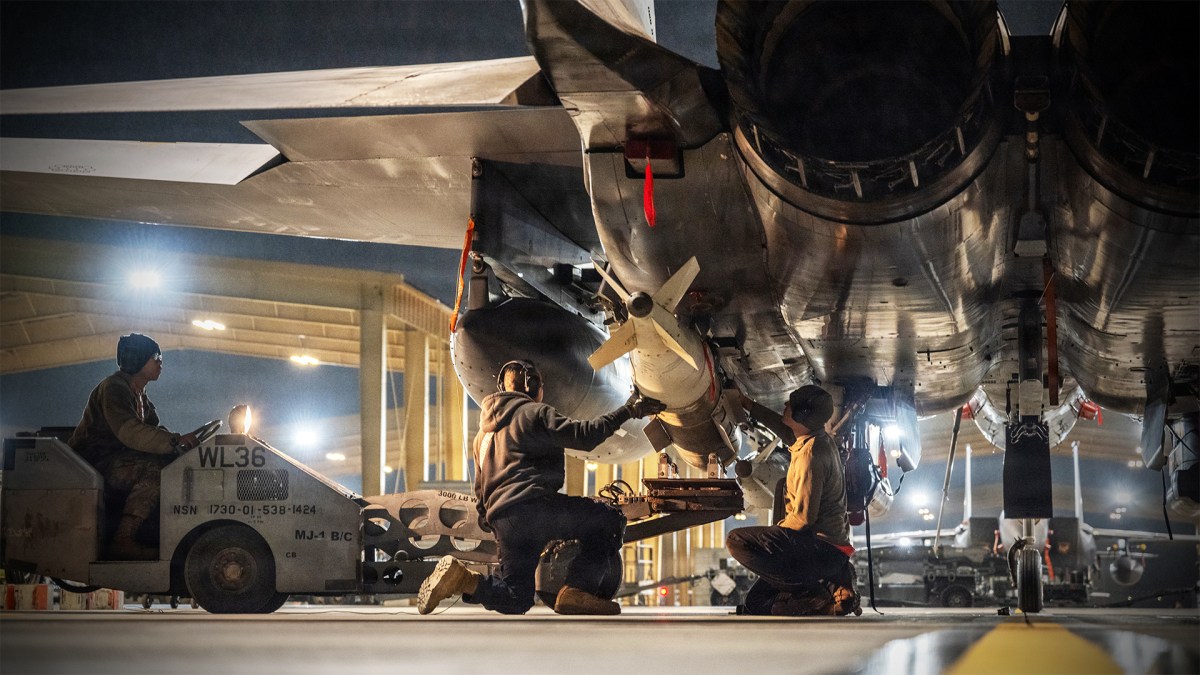
“Behind those numbers were thousands of decisions made by airmen who had to keep the mission moving while the enemy was actively trying to stop them,” Wilsbach stated. “One was Garrett, a staff sergeant F-15E crew chief from East Texas. He joined the Air Force to travel and see the world. We sure allowed him to achieve that goal, but I’m not sure the Middle East was exactly what he had in mind. On the second day of Epic Fury, Garrett was on the flight line launching four Strike Eagles when alarm red sounded. Airmen around him started running for shelter. Garrett’s adrenaline spiked. He knew exactly what that alarm meant. Danger was inbound, but his launch was not complete.”
A U.S. Air Force F-15E Strike Eagle in the CENTCOM region. (U.S. Air Force photo by Staff Sgt. Gerald R. Willis) Tech. Sgt. Gerald Willis
“A young airman was working with him, and Garrett sent him to the bunker,” the service chief continued. “Garrett stayed. The rest of the team was separated, so he armed the weapons and cleared the jet. Proceed… While everyone else ran for cover, he decided to stay. Garrett understood why those Strike Eagles were in theater. He knew they were one of their best lines of defense, so he stayed until the job was done. Only after the last fighter taxied out, Garrett finally took cover. Later, when someone asked why, his answer was simple: his fellow airmen needed those airplanes in the air.”
Swatting Down Drones Under Fire
“Hundreds of miles away, two senior airmen, Shanae and Nolan, tracked a swarm of enemy drones headed toward their base,” Wilsbach pointed out. “Shanae joined the Air Force to provide for her family. During the opening days of Epic Fury, she found herself protecting another family – the hundreds of airmen depending on her.”
“People sprinted for shelter as alarm red announced an incoming attack, but Shanae and Nolan stayed focused on the screens in front of them because every inbound track could be a weapon aimed at their teammates,” the general said. “Shanae is 27 years old, and Nolan is 21. Think about the responsibility we placed on these two airmen. Hundreds of lives depended on them to identify the threats and employ countermeasures. Every second mattered. The stakes were life and death. Together, Shanae and Nolan achieved more than 10 surface-to-air kills that night, defeating threat after threat before it could reach the airmen they were protecting. There were moments when they were afraid, and most people would be, but courage is not the absence of fear. Courage is overcoming it. They stayed locked on, trusted their training, and did the job everyone around them was counting on.”
Picking Up The Pieces After An Attack
“Peter is a senior airman from New York who spent nine months in the Middle East as an air transportation airman,” Wilsbach said. “With his team, he moved heavy ordnance, prepared missile systems, and downloaded Patriot equipment, while ballistic missiles and attack drones repeatedly target their airfield.”
“One of those attacks became very personal,” the service chief noted. “Enemy fire destroyed Peter’s living quarters and nearly everything he had brought from home. Imagine coming back after a 12-hour shift to find the wreckage of your hooch. The few pieces of home he carried halfway around the world were gone. Peter’s response told me everything I needed to know about him. He said that his possessions could be replaced, but the mission could not.”
Keeping The Reapers Flying
“More than 4,000 dynamic targets had to be found, identified, validated, and engaged,” Wilsbach said. “Remotely piloted aircraft, airborne ISR platforms, cyber operators, space professionals, and countless others turn enormous amounts of data into intelligence commanders could use.”
“Suit is a first lieutenant with a family tradition of excellence,” Wilsbach said of one MQ-9 Reaper pilot. “Both of his grandfathers served in the Army. I’m sure they wanted a better life for their kids, which is why his parents chose the Air Force. Today, Suit flies the MQ-9 and carries his family tradition forward. He also scored a perfect 100 on its physical assessment this year, so apparently excellence runs in the family.”
“MQ-9s flown by pilots like Suit supplied critical ISR and kinetic strike capabilities, launching them from bases within range of enemy fires,” said Wilsbach. “Suit planned and launched an MQ-9 combat sortie during an active attack. While missiles hit the airfield, Suit taxied out and got his Reaper airborne. He handed off control to another crew, then switched to the ground control station to recover a different MQ-9. His crew destroyed a priority target and then turned their sensors back toward their own airfield to inspect the runway for damage and determine whether operations could continue.”
“The MQ-9 was a workhorse for combatant commanders during Epic Fury. It provided real-time intelligence, struck 860 targets, and gave our forces the edge while denying the enemy freedom of movement. Airman-like suit made sure this asset stayed in the fight and maximized its impact. The MQ-9 success demonstrates the need for a capable follow-on aircraft that achieves the same effects with greater survivability, adaptability, and at a lower cost.”
Rescuing An F-15E Crew Shot Down Over Iran
“Peaches is an air battle manager from Texas,” the chief stated. “During Epic Fury, she found herself in the middle of a story of her own her family will be telling for generations. Peaches led 134 joint and coalition operators responsible for command and control across a complex battle space. Her team supported operations involving more than 1,000 one-way attack drones and 1,200 enemy ballistic missile threats. Those numbers are difficult to comprehend, but for Peaches, command and control was not a collection of symbols moving across the screen.”
“Every symbol represented something real: an aircraft, a threat, a crew, an airman,” he explained. “It was during this time two of those airmen became isolated inside of Iran. What followed became one of the defining moments of the operation. Over 50 hours, Peaches was one of the many who coordinated the combat search and rescue effort , leading her team to integrate 176 aircraft, fighters, bombers, tankers, intelligence platforms, and Air Force Special Operations Command forces that converged on one objective: bringing those Americans home.”
MUST WATCH: The extended @60Minutes interview with DUDE 44 Bravo https://t.co/HZUr7D4Svk pic.twitter.com/OUrlK072XP — Rapid Response 47 (@RapidResponse47) September 14, 2026
MUST WATCH: The extended @60Minutes interview with DUDE 44 Bravo https://t.co/HZUr7D4Svk pic.twitter.com/OUrlK072XP
“Think about the complexity of that problem,” Wilsbach noted. “Aircraft operating at different speeds, altitudes, fuel states, with different sensors, weapons, and responsibilities, while an adversary was actively trying to stop them. Maintenance teams generated additional fighters. Tanker crews extended the range and endurance of the force, intelligence professionals track the threats. AFSOC [Air Force Special Operations Command] airmen brought specialized capabilities need to reach out to our isolated teammates and get them out. Every one of those airmen was doing something different, yet all were contributing to the same mission.”
“The Dude 44 rescue demonstrates why integration matters,” Wilsbach added. “To someone outside of our profession, committing that much combat power to recover two people might appear extraordinary. To an airman, the reason is simple: we make a promise to one another in our Airmen’s Creed . I will never leave an airman behind. If you are isolated, injured, or trapped behind enemy lines, we are coming to get you. The courage and performance displayed during that mission was so impressive that 10 airmen received battlefield promotions. I had the distinct honor of promoting six of those heroes, ranging from staff sergeant to chief master sergeant during a recent trip. Everyone understood that their success depended on someone else doing their job. That is how our air and space forces fight.”
Contact the author: howard@twz.com
Comments couldn’t be loaded. Please refresh the page.
发布于美国东部时间2026年9月14日下午2:53
一级军士长内森·利普斯科姆
空军参谋长肯尼斯·S·威尔斯巴赫上将周一就“史诗狂怒行动”期间空军人员面临的挑战发表了新的见解,当时伊朗的导弹和无人机正向他们倾泻而下。他的这番言论是在TWZ正在参加的空军与太空部队空天网络研讨会上发表的主题演讲中作出的。
“自从担任司令以来,我有幸与中央司令部(美国中央司令部)各地的空军官兵共度时光,”威尔斯巴赫说道,他于去年11月就任该职位。“我走遍了飞行跑道,参观了维修机库,也曾站在作战中心里,亲眼目睹年轻的美国空军官兵指挥着头顶上空的作战任务。让我来给大家讲讲我最近在中东之行中遇到的几位勇敢的空军官兵的故事。他们向我讲述了在一次袭击中,他们在飞行跑道上的经历。”
“导弹来袭时,空军人员纷纷冲向掩体,”这位军种负责人说道,但没有透露具体是哪个基地。“片刻之后,一枚导弹击中了附近的一个机库,里面的飞机瞬间燃起熊熊大火。掩体经受住了爆炸的冲击,但冲击力过大导致舱门无法打开,空军人员被困在里面。”
“想象一下当时的场景,”威尔斯巴赫解释说,“火势蔓延,一架飞机就在几英尺外燃烧,他们的队友被困在里面,他们无路可逃。尽管危险重重,飞行员们还是冲向了火焰。”
“一名安保部队士官拿起撬棍,强行打开了舱门,”他继续说道,“冷静地与被困在里面的空军人员沟通。几秒钟后,燃烧的飞机上的弹射座椅起火,玻璃和金属碎片四处飞溅。最终,舱门被撞开,空军人员逃生并寻找掩护。”
“无论我走到哪里,都能看到空军官兵们目光如炬,斗志昂扬,决心完成任务,保护战友,”这位指挥官指出。“超过3万名空军官兵部署到十几个地点,支援‘史诗狂怒’行动。他们与陆军、海军、海军陆战队、国民警卫队以及盟军伙伴并肩作战。”
在炮火下发射F-15E
“‘史诗狂怒行动’的规模、精准度和速度都值得研究,”威尔斯巴赫说。“在38天的作战行动中,联合部队打击了超过13000个军事目标。500架飞机执行了10000架次飞行任务,平均每天超过250架次。我们的空军人员在完成这些任务的同时,还经历了1200次警报,执行了48次机场维修任务,并完成了超过420次需要上报的爆炸物处理——这些工作都是漫长而孤独的跋涉。”
“这种行动正如其名,”威尔斯巴赫解释道,“爆炸物处理技术人员离开相对安全的地方,接近疑似炸弹或未爆炸弹药,以确保其他人的安全。”
“这些数字背后是成千上万名空军官兵做出的决定,他们必须在敌人积极阻挠的情况下,确保任务顺利进行,”威尔斯巴赫说道。“其中一位是加勒特,一位来自德克萨斯州东部的F-15E战斗机机组长,军士长。他加入空军是为了环游世界。我们当然让他实现了这个目标,但我不太确定中东是否是他心目中的理想之地。在‘史诗狂怒’演习的第二天,加勒特正在跑道上准备起飞四架F-15E攻击鹰战斗机,这时警报响起。他周围的官兵开始四处奔逃寻找掩体。加勒特的肾上腺素飙升。他非常清楚警报意味着什么。危险正在逼近,但他的飞机还没有起飞。”
美国空军中央司令部辖区内的一架F-15E“攻击鹰”战斗机。(美国空军照片,由参谋军士杰拉尔德·R·威利斯拍摄)技术军士杰拉尔德·威利斯
“当时有个年轻的空军士兵和他一起工作,加勒特派他去掩体里,”这位军士长继续说道。“加勒特留了下来。其他队员分散开来,于是他装填武器,清空了战机。继续……当其他人都跑去寻找掩体时,他决定留下来。加勒特明白那些‘攻击鹰’战斗机为什么会出现在战区。他知道它们是他们最好的防线之一,所以他一直待到任务完成。直到最后一架战斗机滑行离开后,加勒特才最终找到掩体。后来,当有人问他为什么时,他的回答很简单:他的战友们需要这些飞机在空中作战。”
在枪林弹雨中击落无人机
“数百英里之外,两名高级空军士兵莎娜和诺兰正在追踪一群正朝他们基地飞来的敌方无人机,”威尔斯巴赫指出。“莎娜加入空军是为了养家糊口。在‘史诗狂怒’行动开始的几天里,她发现自己肩负着保护另一个家庭的重任——数百名依赖她的空军士兵。”
“警报响起,人们纷纷寻找掩体,但沙奈和诺兰却始终专注于眼前的屏幕,因为每一个来袭目标都可能是瞄准他们队友的武器,”将军说道。“沙奈27岁,诺兰21岁。想想我们赋予这两位空军士兵的重任。数百人的生命都系于他们,他们必须识别威胁并采取应对措施。每一秒都至关重要。事关生死。当晚,沙奈和诺兰联手击落了十余架地对空敌机,在威胁抵达他们保护的空军士兵之前就将其逐一击溃。他们也曾感到恐惧,换作大多数人都会如此,但勇气并非没有恐惧,而是战胜恐惧。他们始终保持专注,相信自己的训练,完成了周围所有人寄予厚望的任务。”
袭击后的重建工作
威尔斯巴赫说:“彼得是来自纽约的一名高级空军士兵,他曾在中东担任空运兵士九个月。他和他的团队负责搬运重型弹药、准备导弹系统和卸载爱国者导弹设备,同时还要应对弹道导弹和攻击无人机的反复袭击。”
“其中一次袭击对他来说意义非凡,”这位军士长说道。“敌人的炮火摧毁了彼得的住所,以及他从家乡带来的几乎所有东西。想象一下,连续工作12个小时后回到住处,却发现自己的营房只剩残骸。他从地球另一端带来的仅有的几件家当也荡然无存。彼得的反应让我彻底了解了他。他说,他的财物可以再添置,但任务却无法挽回。”
让死神继续飞翔
威尔斯巴赫说:“我们需要发现、识别、验证并打击超过4000个动态目标。遥控飞机、机载情报监视侦察平台、网络操作员、太空专家以及无数其他人员将海量数据转化为指挥官可以使用的情报。”
“苏伊特是一名空军中尉,他的家族素有追求卓越的传统,”威尔斯巴赫在谈到一位MQ-9“死神”无人机飞行员时说道。“他的两位祖父都曾在陆军服役。我相信他们都希望子女能过上更好的生活,所以他的父母才选择了空军。如今,苏伊特驾驶着MQ-9无人机,传承着家族的传统。他今年的体能测试也取得了满分100分,看来卓越确实是家族的优良基因。”
“像苏伊特这样的飞行员驾驶的MQ-9无人机提供了至关重要的情报、监视与侦察(ISR)和动能打击能力,它们从敌方火力射程内的基地起飞,”威尔斯巴赫说。“苏伊特在一次敌方攻击期间计划并执行了一次MQ-9作战任务。导弹袭击机场时,苏伊特滑行起飞,驾驶他的‘死神’无人机升空。他将控制权移交给另一组机组人员,然后切换到地面控制站,回收另一架MQ-9无人机。他的机组摧毁了一个优先目标,然后将传感器转向己方机场,检查跑道受损情况,并确定作战行动是否可以继续进行。”
“在‘史诗狂怒’行动中,MQ-9无人机是作战指挥官的主力战机。它提供实时情报,打击了860个目标,使我方部队占据优势,并限制了敌方的行动自由。飞行员使用的类似宇航服确保了这架无人机能够持续作战并最大限度地发挥其作用。MQ-9的成功表明,我们需要一种性能卓越的后续机型,它能够以更低的成本实现相同的作战效果,同时具备更高的生存能力、更强的适应性。”
营救在伊朗上空被击落的F-15E机组人员
“皮奇斯是来自德克萨斯州的一名空中作战指挥官,”这位指挥官说道。“在‘史诗狂怒’演习期间,她亲身经历了一段足以传世的传奇故事。皮奇斯领导着134名联合部队和盟军作战人员,负责在复杂的战场环境中进行指挥和控制。她的团队支援了涉及1000多架单向攻击无人机和1200枚敌方弹道导弹的作战行动。这些数字令人难以置信,但对皮奇斯来说,指挥和控制并非仅仅是屏幕上移动的一堆符号。”
“每个符号都代表着真实存在的事物:一架飞机、一个威胁、一个机组人员、一名飞行员,”他解释说。“正是在这段时间里,其中两名飞行员被困在伊朗境内。接下来发生的事情成为了这次行动的关键时刻之一。在超过50个小时的时间里,皮奇斯是众多协调战斗搜救行动的人员之一,她带领团队整合了176架飞机,包括战斗机、轰炸机、加油机、情报平台和空军特种作战司令部部队,所有力量汇聚于一个共同的目标:将这些美国人带回家。”
必看:@60Minutes 对 DUDE 44 Bravo 的加长版采访 https://t.co/HZUr7D4Svk pic.twitter.com/OUrlK072XP — Rapid Response 47 (@RapidResponse47) September 14, 2026
必看:@60Minutes 对 DUDE 44 Bravo 的加长版采访 https://t.co/HZUr7D4Svk pic.twitter.com/OUrlK072XP
“想想这个问题有多复杂,”威尔斯巴赫指出,“不同的飞机以不同的速度、高度、燃油状态飞行,配备不同的传感器、武器,承担不同的任务,而敌方则积极试图阻止它们。维护团队增派了战斗机。加油机组延长了部队的航程和续航时间,情报人员追踪威胁。空军特种作战司令部(AFSOC)的空军人员带来了与被困战友取得联系并营救他们所需的专业能力。每一位空军人员都在做不同的事情,但所有人都在为同一个任务做出贡献。”
“‘老兄44号’救援行动充分展现了协同作战的重要性,”威尔斯巴赫补充道。“对于我们这个行业之外的人来说,投入如此强大的战斗力去营救两个人或许显得匪夷所思。但对于一名空军官兵来说,原因很简单:我们在《空军信条》中彼此承诺:我绝不会抛弃任何一名战友。如果你被孤立、受伤或被困敌后,我们一定会前来营救。那次任务中展现出的勇气和表现令人印象深刻,共有10名空军官兵获得了战场晋升。在最近的一次访问中,我有幸为其中六位英雄举行了晋升仪式,他们的军衔从参谋军士到总军士长不等。每个人都明白,他们的成功取决于其他人的尽职尽责。这就是我们空军和太空部队的作战方式。”
联系作者:howard@twz.com
评论加载失败,请刷新页面。