Naval Group launches robotic boat featuring lessons from Ukraine法国海军集团推出借鉴乌克兰经验的无人船
The Seaquest S vessel is currently undergoing sea trials in France.
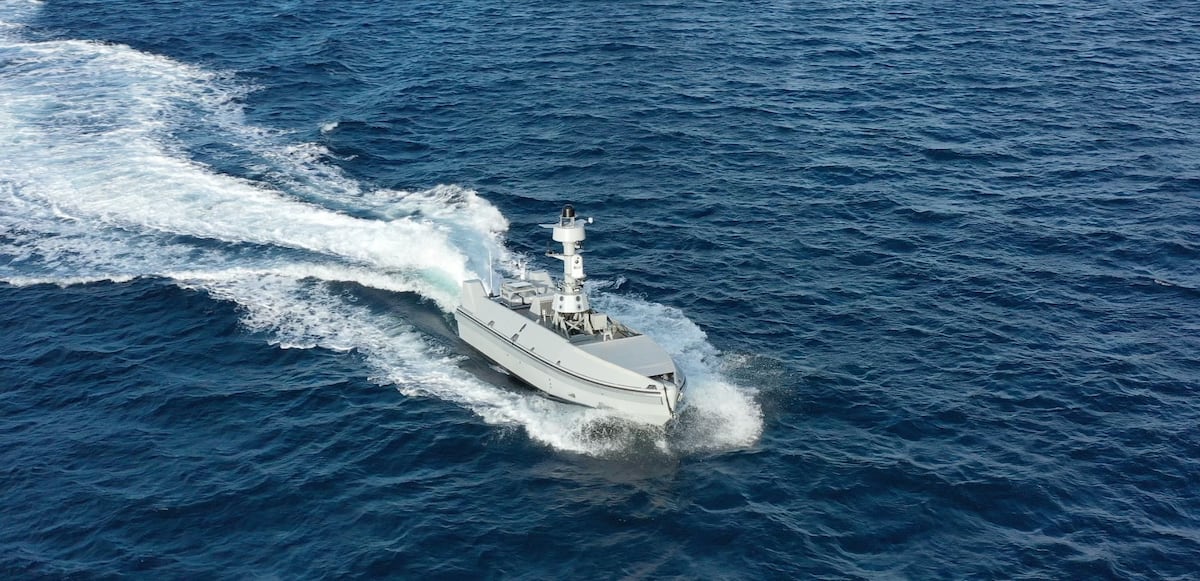
LORIENT, France — Naval Group subsidiary Sirehna has launched an unmanned surface vessel that incorporates lessons learned from Ukraine’s deployment of robotic boats against Russian targets in the Black Sea, according to company officials.
The craft, measuring just under 10 meters in length, is named the Seaquest S and has an endurance of 24 hours. Sirehna plans to offer the vessel optimized for surveillance, electronic-warfare, strike and anti-submarine missions, executives said here during a press trip ahead of the Euronaval naval confab in Paris next month.
Speaking about some lessons Naval Group has taken from Ukraine’s widespread use of naval drones, Pierre-Antoine Fliche, head of drones and autonomous systems product lines, highlighted the speed at which these types of systems need to be upgraded.
“One of the things we’ve learned is the cycle of development in Ukraine, where they go from one version to another every six months, and it’s not only because they are super fast but also because the adversary puts up defenses,” Fliche told Defense News. “That is one of the reasons we purposely built the SeaQuest as a highly modular platform and that we want to develop machine tactics with end-users because we know they will evolve on a six- to nine-month cycle.”
USV technologies have grown increasingly sophisticated, and Ukrainian forces have used a multitude of different systems, most recently arming them with multiple-launch rocket systems, to strike a greater number of small surface, air and coastal targets.
In May, the Ukrainian intelligence chief, Kyrylo Budanov, said that the country has relied on them to a greater extent recently due to their consistent effectiveness.
“This equipment works — that’s the important thing, it gives results ... a third of the destroyed combat potential of the Russian Black Sea Fleet is the most decent indicator,” Budanov said in an interview with RBC-Ukraine.
According to Naval Group, SeaQuest is currently the only small USV designed to be able to embark onboard frigates and warships.
While the naval drone, which is undergoing sea trials in France, does not yet possess swarming capabilities, Fliche said those could be added later.
Ukrainian officials have predicted that as these types of robotic maritime platforms undergo improvements, they are poised to dominate conventional combat vessels in the future, at least in closed or semi-closed water bodies.
Elisabeth Gosselin-Malo was a Europe correspondent for Defense News. She covers a wide range of topics related to military procurement and international security, and specializes in reporting on the aviation sector. She is based in Milan, Italy.
法国洛里昂——据公司官员称,海军集团子公司 Sirehna 推出了一款无人水面舰艇,该舰艇吸取了乌克兰在黑海部署机器人船攻击俄罗斯目标的经验教训。
这艘长度略小于10米的艇名为“海探S”(Seaquest S),续航时间为24小时。Sirehna公司的高管在下个月巴黎欧洲海军大会召开前的媒体见面会上表示,该公司计划推出这款针对监视、电子战、打击和反潜任务进行优化的艇型。
谈到法国海军集团从乌克兰广泛使用海军无人机中汲取的一些经验教训时,无人机和自主系统产品线负责人皮埃尔-安托万·弗利什强调了这些类型系统需要快速升级。
“我们了解到,乌克兰的无人机研发周期非常长,每六个月就会从一个版本升级到另一个版本,这不仅是因为他们的研发速度极快,还因为对手会不断部署防御措施,”弗利切告诉《防务新闻》。“这也是我们特意将‘海神’无人机设计成高度模块化平台的原因之一,我们希望与最终用户共同开发无人机战术,因为我们知道无人机的改进周期为六到九个月。”
无人水面艇技术日趋复杂,乌克兰军队使用了多种不同的系统,最近还为其配备了多管火箭炮系统,以打击更多小型水面、空中和沿海目标。
今年5月,乌克兰情报局长基里洛·布达诺夫表示,由于情报机构持续高效运作,该国最近更加依赖情报机构。
布达诺夫在接受 RBC-Ukraine 采访时表示:“这套装备确实有效——这才是最重要的,它能带来成效……俄罗斯黑海舰队三分之一的战斗力被摧毁,这是最可靠的指标。”
据法国海军集团称,SeaQuest是目前唯一一款设计用于登上护卫舰和军舰的小型无人水面艇。
弗利什表示,虽然这款正在法国进行海上试验的海军无人机目前还不具备集群作战能力,但以后可以添加这些能力。
乌克兰官员预测,随着这类机器人海上平台不断改进,它们未来将有望在封闭或半封闭水域中取代传统的作战舰艇。
伊丽莎白·戈斯林-马洛曾任《防务新闻》欧洲通讯员。她的报道涵盖军事采购和国际安全等广泛领域,尤其擅长航空领域的报道。她常驻意大利米兰。