Why the US Air Force should keep Next Generation Air Dominance alive为什么美国空军应该保留下一代空中优势战略
Opinion: It's time to explore alternative design and acquisition strategies to significantly reduce the cost of NGAD and expedite its delivery.
As a former secretary of the Air Force , I’ve “been there and done that” when it comes to budget trade-offs, making hard choices and doing my best to work collaboratively within the halls of the Pentagon and on Capitol Hill to reach the best decisions possible for our military’s current and future readiness. So I understand the challenges that current Air Force Secretary Frank Kendall and Air Force Chief of Staff Gen. David Allvin are facing as they consider programmatic alternatives for the fiscal 2026 budget and beyond. However, I am deeply troubled by recent reports suggesting the possible termination of the Next Generation Air Dominance system due to budgetary constraints.
I strongly argue that the administration and Congress must unite to fund the Air Force to ensure the continuity of this vital program. They also need to explore alternative design and acquisition strategies to significantly reduce the cost of NGAD and expedite the delivery of this critical capability.
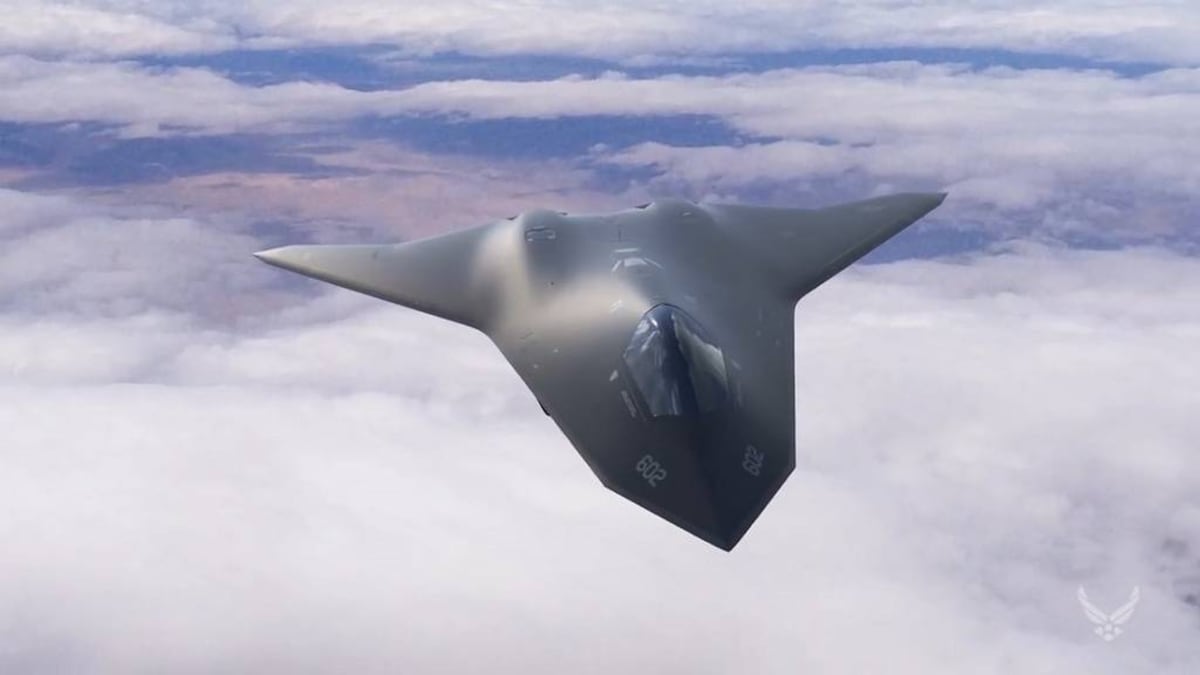
By way of background, the family of systems known as NGAD — which includes a manned, penetrating, counter-air platform and unmanned collaborative combat aircraft — is the result of extensive Air Force and Department of Defense research, which began in 2014. This research concluded that America’s current air dominance assets would not remain sufficiently competitive against the systems of potential adversaries ( especially China ) into the 2030s.
Then-acquisition chief Frank Kendall was instrumental in this analysis and program from the start. He even made it the linchpin of one of his seven operational imperatives after becoming secretary of the Air Force. With China confirming that it is working on a sixth-generation fighter system to be completed by 2035, the importance of the NGAD program for the Air Force has become all the more apparent.
Enter the Fiscal Responsibility Act and its caps on defense spending; deficit concerns; and the bow-wave effect of must-pay bills for programs like the B-21 bomber, the Sentinel intercontinental ballistic missile program and rising personnel costs; the Air Force now finds itself on the horns of a dilemma for FY26 and beyond.
There’s not enough money to pay for all of it.
Moreover, the manned portion of NGAD is predicted to be even more expensive than the F-35 fighter, which, if true, does not bode well for America’s ability to eventually procure an adequate number of fighters. If the program encounters significant delays, the U.S. may once again find itself delivering a capability that has not kept pace with where the threat has advanced.
What, then, should we do?
First, I urge Congress and the DOD to provide adequate funds to the Air Force so that all these important programs remain on track.
Second, I urge the Air Force to consider innovative design and acquisition strategies — perhaps along the lines of the “century series” approach that former Air Force acquisition chief Will Roper once spoke of. This approach would involve less-expensive and quicker-to-produce fighters with iterative designs that could change every few years if necessary. Engaging in discussions with industry on such an approach is crucial, as it represents a very different way of doing business and we need to ensure its feasibility.
It’s time for us to come together, think outside the box and find new ways to support our military’s needs.
The only thing we can say for sure is that China is ruthlessly advancing its NGAD equivalent and does not appear to be slowing down due to budgetary concerns. Moreover, China is continuing aggressive actions in the South China Sea and has stepped up military drills that simulate a blockade and possible invasion of Taiwan.
The 2030s will be upon us in an instant, so we can’t afford to delay NGAD. Doing so would mean risking loss in a future conflict.
Deborah Lee James is a former secretary of the U.S. Air Force. She serves as chair of the Defense Business Board and is affiliated with several organizations and businesses .
作为前空军部长,我深知预算权衡之道,也明白做出艰难抉择的重要性,更明白我曾竭尽全力在五角大楼和国会山与各方协作,力求为我军当前及未来的战备做出最佳决策。因此,我理解现任空军部长弗兰克·肯德尔和空军参谋长戴维·奥尔文将军在考虑2026财年及以后的预算方案时所面临的挑战。然而,近期有报道称,由于预算限制,下一代空中优势系统可能被终止,这令我深感担忧。
我强烈认为,政府和国会必须携手合作,为空军提供充足的资金,以确保这项至关重要的项目得以持续进行。他们还需要探索替代的设计和采购策略,以大幅降低下一代空中导航系统(NGAD)的成本,并加快这项关键能力的交付。
作为背景介绍,被称为 NGAD 的系统系列——包括有人驾驶的穿透式反空战平台和无人协同作战飞机——是美国空军和国防部自 2014 年开始进行广泛研究的成果。这项研究得出结论,到 2030 年代,美国目前的空中优势资产将不足以与潜在对手(尤其是中国)的系统竞争。
时任采购主管弗兰克·肯德尔从一开始就对这项分析和计划起到了关键作用。他甚至在担任空军部长后,将其列为七项作战要务之一的核心内容。随着中国确认正在研发将于2035年完成的第六代战斗机系统,下一代空中防御系统(NGAD)计划对空军的重要性变得更加显而易见。
《财政责任法案》及其对国防开支的限制;赤字问题;以及B-21轰炸机、哨兵洲际弹道导弹计划等项目必须支付的账单和不断上涨的人员成本所带来的连锁反应;空军现在发现自己在2026财年及以后面临着进退两难的境地。
钱不够支付所有费用。
此外,NGAD的有人驾驶部分预计比F-35战斗机还要昂贵,如果属实,这对美国最终采购足够数量的战斗机来说并非好兆头。如果该项目遭遇重大延误,美国可能再次发现自己提供的能力未能跟上威胁发展的步伐。
那么,我们应该怎么办?
首先,我敦促国会和国防部向空军提供充足的资金,以便所有这些重要项目都能继续按计划进行。
其次,我敦促空军考虑采用创新的设计和采购策略——或许可以借鉴前空军采购主管威尔·罗珀曾提出的“世纪系列”方案。该方案旨在以更低的成本和更快的速度生产战斗机,并采用迭代设计,必要时可每隔几年进行改进。与业界就此方案展开讨论至关重要,因为它代表了一种截然不同的运作方式,我们需要确保其可行性。
现在是我们团结起来,跳出固有思维模式,寻找新方法来支持我们军队需求的时候了。
我们唯一可以肯定的是,中国正在不遗余力地推进其类似“国家间发展协议”(NGAD)的计划,而且似乎并未因预算问题而放慢脚步。此外,中国在南海的行动持续升级,并加强了模拟封锁和入侵台湾的军事演习。
2030年代转眼即至,我们不能再拖延国家防务与发展联盟(NGAD)的建设。否则,我们将面临在未来冲突中遭受损失的风险。
黛博拉·李·詹姆斯曾任美国空军部长。她现任国防商业委员会主席,并与多家组织和企业有关联。