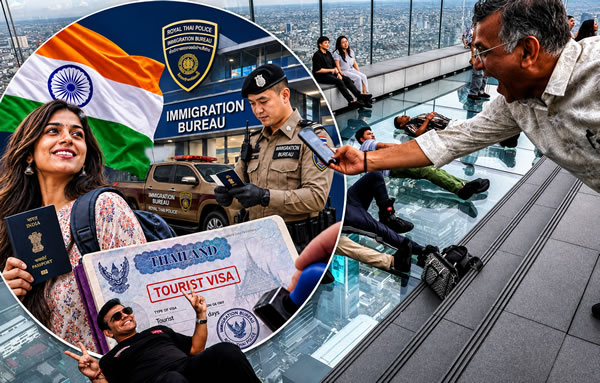
Blunder over Indian visa policy saw Thailand lose tourists in August. Quick volte face to a 30 day visa由于印度签证政策失误,泰国8月份流失了大量游客。迅速调整政策,改为30天签证。
Thailand’s Indian tourism boom slams into reverse after visa confusion and fewer flights drive arrivals down 12%. The setback threatens billions in spending and one… Read More ›
新闻视频
September 4, 2026 at 1:41 am
in Economy , Living , Media , Politics , Thailand
Thailand’s vital Indian tourism market has suddenly slammed into reverse after government visa confusion and reduced airline capacity hit advance bookings. Arrivals fell about 12% year-on-year during August’s first 22 days, making India Thailand’s only declining top-four source market. The Cabinet first proposed replacing visa-free entry with a 15-day, ฿2,000 visa on arrival, before reversing course in July. However, the retreat came too late for cancelled holidays, weddings and corporate groups. India delivered a record 2.48 million visitors and ฿90.43 billion during 2025, partly replacing subdued Chinese demand. Now, Thailand’s 2.7 million target is under pressure. The Bank of Thailand has questioned whether August brought a temporary booking shock or whether lasting damage to a crucial source of tourism income and economic growth has been inflicted.
Indian arrivals fell 12% after Thailand’s visa confusion and fewer flights hit bookings. The Bank of Thailand now questions whether damage to this vital market will endure. ( Source: Bank of Thailand/ Straits Times )
Indian tourist arrivals to Thailand fell about 12% year-on-year between August 1 and 22. India was the only declining market among Thailand’s four largest tourism sources. The reversal followed confusion over Thailand’s changing entry rules. Notably, India had been expected to drive tourism growth during 2026.
The disruption began with a Cabinet proposal on May 19. Ministers proposed removing Indian nationals from Thailand’s visa-free entry scheme. Instead, Indians would receive a 15-day visa on arrival and pay ฿2,000. Almost immediately, travel agents reported cancellations and weaker advance bookings.
Indian holidays are commonly arranged weeks or months before departure. Group tours, weddings and corporate events require even longer preparation. As a result, uncertainty during May affected travel planned for July and August. Families, companies and tour groups began reconsidering confirmed or proposed trips.
Cabinet visa reversal came too late as cancellations cut Indian arrivals and erased earlier growth
The Cabinet reversed course on July 14. Indian nationals received 30-day visa-free entry instead of the proposed paid visa. However, the decision came too late for many August travellers. Bookings had already been cancelled, postponed or transferred elsewhere.
Thailand never enforced the proposed restriction. Yet the announcement alone disrupted the market. In effect, the country lost bookings because travellers expected new costs and shorter stays. The later reversal could not restore holidays already reorganised.
Tourism and Sports Minister Surasak Phancharoenworakul previously linked the confusion to a booking decline approaching 20%. Actual arrivals then fell about 12% during August’s first 22 days. Thus, the arrival figures confirmed damage already visible among travel companies. Reduced airline capacity also restricted arrivals during parts of the period.
The decline marked a sharp reversal from India’s 2025 performance. Thailand received approximately 2.48 million Indian visitors that year. Arrivals increased 16.82%, setting a record for the market. In addition, those visitors generated about ฿90.43 billion in tourism revenue.
India had become Thailand’s strongest-performing large tourism market. It also helped compensate for the prolonged weakness of Chinese arrivals. Previously, China supplied enormous visitor numbers and supported tourism businesses nationwide. Against that background, India’s rapid growth became increasingly important.
Strong Indian demand, rising incomes and direct flights had put another annual record within reach
Indian travel demand also appeared supported by durable commercial factors. Rising incomes enabled more middle-class Indians to travel internationally. Direct flights provided comparatively short journeys between both countries. Likewise, competitive fares made Thailand affordable against many alternative foreign destinations.
The market extended far beyond ordinary package holidays. Indian visitors travelled for weddings, corporate events, nightlife, shopping and short breaks. Wedding parties produced concentrated spending across hotels, restaurants, transport and entertainment. Meanwhile, corporate groups supported conference venues, accommodation providers and local service companies.
Thailand originally targeted approximately 2.7 million Indian visitors during 2026. Reaching that total would have established another annual record. At first, the target appeared achievable after a positive opening half. Indian arrivals increased 3.06% year-on-year between January and June.
By August 1, Thailand had welcomed 1,376,433 Indian visitors during 2026. India remained the third-largest source market behind China and Malaysia. Nevertheless, the first-half increase was modest compared with the later 12% decline. Several weak months could erase the remaining cumulative advantage.
Thailand’s Indian visitor target comes under pressure as August’s sharp reversal cuts earlier gains
Full-year arrivals cannot yet be described as exceeding 2025. Thailand must receive more than 2.48 million Indian visitors to establish another record. Consequently, the 2.7 million target now faces substantial pressure. A recovery during the remaining months has become essential.
The Bank of Thailand considers the August reversal significant for several reasons. India was expected to produce growth rather than contraction. Moreover, it was Thailand’s strongest large tourism market during 2025. Its expansion partly replaced demand lost through subdued Chinese tourism.
India was also the only declining market among Thailand’s four principal sources. Accordingly, the fall cannot be attributed entirely to Thailand’s general seasonal pattern. A broad seasonal downturn should have weakened several major markets. Instead, the contraction was concentrated within India.
That contrast points towards factors affecting Indian travellers directly. Visa uncertainty dominated those factors during the booking period. Separately, reduced airline capacity limited available seats during parts of the period. Together, both pressures weakened demand and restricted supply.
Policy reversal failed to restore lost bookings as cancelled Indian groups drained tourism income
The policy sequence exposed the speed of international travel decisions. Travellers reacted to the May proposal before ministers reached a final position. Many customers would not risk further changes before departure. By the time the Cabinet reversed course, their money had moved elsewhere.
Holiday planning also follows fixed commercial timetables. Airlines publish schedules and allocate capacity before departure dates. Hotels reserve room blocks for tours, weddings and corporate events. Similarly, travel companies sell packages long before customers arrive at airports.
A July policy correction could not immediately repair August business. Carriers could not instantly restore removed capacity or fill weak services. Hotels could not recover every cancelled reservation at comparable prices. For that reason, the disruption continued after visa-free entry was confirmed.
Each lost visitor also removed spending from several domestic industries. Hotels lost room income, while restaurants lost food and beverage sales. Transport operators missed airport transfers, regional journeys and organised tours. Furthermore, retailers and entertainment businesses lost additional customer expenditure.
The effect becomes larger when group travel is involved. One cancelled wedding can remove hundreds of room nights and banquet purchases. It can also eliminate transport, restaurant, shopping and entertainment spending. On another front, cancelled corporate events can reduce conference and business-travel revenue.
Indian visitors spend less per trip but deliver strong daily income across major tourism sectors
Thailand earned ฿90.43 billion from Indian visitors during 2025. Based on 2.48 million arrivals, average spending reached approximately ฿36,400 per person. Some tourism reports place expenditure nearer ฿38,000–฿40,000 per trip. The difference reflects timing, methodology and included spending categories.
Indian visitors spend less per trip than the average international traveller. Overall foreign visitor spending is approximately ฿47,000 per trip. That average reflects stays exceeding nine days. By comparison, Indian travellers usually take shorter regional holidays.
American travellers spend roughly ฿80,000–฿96,000 per Thailand trip. European visitors frequently spend between ฿70,000 and ฿90,000. A Tourism Council survey placed American spending at ฿96,269 per visit. It valued average European spending at US$2,684, then roughly ฿89,000.
Importantly, that survey dates from late 2022. Its figures should not be presented as current official 2026 averages. Even so, they illustrate the effect of longer stays. American and European travellers often remain for 12 to 15 days.
Total trip expenditure and daily spending measure different things. Long-haul tourists accumulate more accommodation and food costs over longer visits. In contrast, Indians may spend heavily each day during shorter holidays. Wedding, corporate, nightlife and luxury groups can produce particularly high daily expenditure.
Falling Indian arrivals threaten tourism receipts, consumption and Thailand’s wider economic growth
India’s lower per-trip average therefore tells only part of the story. The market provides volume, repeat travel and substantial daily spending. Beyond that, its money circulates widely across the domestic economy. Hotels, restaurants, shops, transport companies and entertainment venues all benefit.
Tourism remains one of Thailand’s few major economic supports. Household consumption is restricted by high debt. Private investment also remains uneven across sectors. Under these conditions, a sustained tourism decline would directly weaken service-sector income.
Lower Indian arrivals could reduce tourism receipts and private consumption. They could also weaken Thailand’s current-account balance. In turn, reduced service activity could affect national growth forecasts. The central bank therefore needs to distinguish temporary disruption from lasting market damage.
A quick recovery would indicate an isolated booking shock. Travellers would have returned after receiving clear entry conditions. Conversely, continued weakness would suggest longer damage to demand and airline capacity. Thailand would then lose momentum within a previously dependable market.
Affordable fares and short flights made India vital as subdued Chinese tourism left a widening gap
The position becomes more serious because Chinese tourism remains subdued. India had partly filled the gap left by missing Chinese visitors. Without that expansion, Thailand has fewer large markets capable of delivering substantial additional volume. Hence, India’s decline carries more weight than an ordinary monthly movement.
Air fares are central to India’s tourism performance. Thailand remains comparatively affordable for middle-class Indian travellers. Promotional economy return fares during 2026 ranged from ₹18,000 to ₹25,000. That equalled approximately ฿6,700–฿9,300.
Normal advance return fares generally cost ₹25,000–₹35,000. In baht, that represented approximately ฿9,300–฿13,000. During peak holidays, late bookings reached ₹35,000–₹50,000 or more. Additionally, luggage, meals and seat selection raised many advertised low-cost prices.
Delhi–Bangkok fares normally began around ₹8,000–₹15,000 one way. Mumbai–Bangkok tickets commonly cost ₹10,000–₹18,000 one way. Direct flying time from Delhi was approximately four hours. From Mumbai, the journey took about four-and-a-half hours.
These fares made Bangkok comparable with some long domestic Indian journeys. The calculation became stronger when full-service fares and accommodation were considered. Crucially, short flying times made Thailand suitable for brief holidays. Travellers could reach Bangkok without surrendering an entire day to travel.
Capacity cuts and visa confusion combined to raise fares, weaken demand and prolong market damage
Connectivity between India and Thailand was extensive but uneven. Major cities benefited from more direct services and greater fare competition. Other locations depended on fewer routes or less convenient schedules. Therefore, capacity cuts could disproportionately affect travellers outside the largest Indian centres.
Reduced capacity creates several immediate pressures. Fewer seats can raise fares and remove convenient departure times. At the same time, connecting journeys reduce Thailand’s attraction for short-stay travellers. A four-day holiday becomes less practical when connections consume substantial time.
The market therefore faced pressure from both policy and aviation changes. Visa confusion weakened advance demand during the planning period. In parallel, reduced airline capacity limited affordable and convenient travel. Those forces turned expected growth into a double-digit decline.
Weak bookings can also encourage airlines to reduce capacity further. Fewer services then increase fares or make travel less convenient. Subsequently, higher costs can suppress demand beyond the original policy disruption. This commercial cycle can outlast the announcement that first triggered it.
The Cabinet’s July decision protected visa-free entry for Indian nationals. A 30-day stay also covers most Indian holidays comfortably. Accordingly, the permitted duration was not the central commercial issue. Timing, uncertainty and changing official messages caused the immediate damage.
Lost Indian bookings put the annual record and ฿2.7 million visitor target under mounting pressure
Travellers needed clear conditions before paying airlines and hotels. Tour operators needed stable rules before advertising and confirming packages. Equally, wedding organisers needed certainty before committing large groups. The May proposal interrupted those decisions during a critical booking period.
The figures also challenge any assumption that the entire 2026 market remained above 2025. Indian arrivals were slightly higher during the first half. Yet August was substantially below the same period during 2025. For now, the full-year result remains unresolved.
Thailand needs more than 2.48 million Indian arrivals to achieve another record. It needs approximately 2.7 million to reach its original target. On current evidence, August reduced the margin for further weakness. Stronger later months must now compensate for the lost arrivals.
The spending figures add scale to the risk. At approximately ฿36,400 per visitor, every 100,000 missing Indians represents about ฿3.64 billion. That calculation applies the 2025 average without adjusting for visitor type. Nonetheless, it shows how arrival losses can quickly affect tourism revenue.
Indian tourism spreads income nationwide while repeat visits reduce reliance on Western winter demand
The impact would not remain confined to Bangkok or major hotels. Indian travellers spend across restaurants, retail, local transport and entertainment. Wedding and corporate groups also purchase specialised services. As part of this, their expenditure supports numerous suppliers beyond the tourism industry’s largest companies.
India differs from the American and European markets in another important way. Western visitors spend more per trip because they usually remain longer. Indians travel more quickly and can return more easily. Thus, Thailand gains shorter visits but stronger opportunities for repeat business.
India also provides limited seasonality compared with some Western markets. Weddings, corporate trips and short holidays occur throughout the year. This pattern gives hotels and airlines business outside traditional long-haul winter demand. In practical terms, India supplies volume when other markets may slow.
The Bank of Thailand will now watch incoming arrival and receipt data. Recovery would support the view that August reflected temporary booking disruption. Alternatively, continuing weakness would force a reassessment of tourism income expectations. It could also affect forecasts for consumption, the current account and growth.
Thailand’s weak economy raises the stakes as Indian tourism shifts from strong growth to contraction
Thailand’s wider economy increases the importance of that assessment. High household debt continues to restrict domestic spending. Investment remains inconsistent, while tourism supports businesses across several regions. Against this economic picture, losing a major growth market carries immediate consequences.
No final full-year conclusion is yet possible. The first half remained slightly above 2025, while August recorded a sharp reversal. Even so, the direction changed quickly after the visa announcement. India moved from dependable expansion to the only decline among Thailand’s four largest markets.
The central issue is therefore clear. Thailand expected India to strengthen visitor numbers during 2026. Instead, policy uncertainty damaged bookings before the proposed restriction even took effect. Reduced airline capacity then added further pressure.
A later recovery could contain the losses. Still, cancelled August holidays cannot be restored after their travel dates pass. Hotels, airlines and service businesses have already missed that revenue. The 2.7 million visitor target now requires a stronger finish.
India supplied Thailand with record arrivals, broad spending and sustained growth during 2025. It also partly replaced weaker Chinese demand. Now, the August contraction has placed that progress at risk. The next arrival figures will show whether the damage was temporary or continuing.
Tourism bosses in the South ask Minister to improve planned visa regime for Indian arrivals to Thailand
India may be biggest loser in new get tough foreign tourism visa policy approved by cabinet on Tuesday
Hardline foreign tourism confirmed by new minster. More charges, shorter visas and mandatory insurance
Visa entry period to go from 60 to 30 days. Agreement in principle as foreign tourism numbers fall by 10%
60-day visa regime to be ended confirms Minister responding to rising industry security concerns
Tourism boss warns Thailand it is facing a Chinese blacklist if another security controversy erupts
Ung Ing finally gives the order. Thailand pulls the plug on scam centre electricity in Burma. Cut at 9 am
PM on a mission to China to ask President Xi Jinping to help rein in heavy online criticism of the kingdom
PM Paetongtarn to speak Chinese with AI to address security fears in China as foreign tourism suffers over scam farms
Visa waiver scheme questioned with another China Crisis for foreign tourism driven by security fears
฿13 million swindled and robbed in Chinese criminal exploits in central Bangkok on Thursday afternoon
Tourism cryptocurrency sandbox payment plan is bound to face stiff opposition from the central bank
Joseph Anthony is an expat from Ireland who has lived in Thailand for the last decade. He has worked extensively in the media including editorial positions in Ireland and Thailand. He is focused on economic and business stories in Thailand as well as the expat lifestyle.
All posts by Joseph O' Connor
Travel Blogger claims he was accosted by cocaine hucksters in broad daylight on Bangkok’s Sukhumvit August 31, 2026 Sukhumvit’s cocaine hucksters approach a travel
Business tenants of Bangkok’s Khlong Thom Centre wiped out after decades of work went up in flames August 31, 2026 Generations of family enterprise go up in flames as
Thailand wins Asian Women’s Volleyball title for the third time in a thrilling win over China on Sunday August 30, 2026 Thailand’s volleyball queens conquer China 3-2 on
PM Anutin raises questions about Tuesday’s Songkhla cabinet meeting after renewed insurgency violence August 30, 2026 Pattani gunmen storm Global House, clear shoppers,
Underage woman ran up 60,000 baht tab at host bar after pursuing a man. Bill paid by shaving her hair August 30, 2026 A Bangkok host-bar manager shaves an 18-year-old
Thai government pushes AI in two programmes one aimed at the public and the other aimed at startups August 29, 2026 Yotsanan brings OpenAI’s first official Asian
Nationalist group meets Minister urging probes into illegal activity linked to foreigners on Koh Samui August 29, 2026 Polpeera receives Thai Mai Thon’s dossier on
Norway’s King Haakon VIII ascends the throne in Oslo after death on Friday of much loved King Harald V August 29, 2026 King Harald V dies peacefully at 89 as Haakon VIII
Israeli Embassy urges the media to be accurate about reporting nationalities after Phuket dine and dash August 29, 2026 Israel’s embassy demands false reports be removed
Police probing Chinese woman’s kidnapping on the trail of human trafficking gang. More victims feared August 28, 2026 Photos of bound Chinese people found on a suspect’s
Anutin as Interior Minister assigns himself sweeping powers to deport foreigners under new regulations August 28, 2026 Anutin unleashes fast-track deportations against
Thailand’s evil serial killer of women Somkid was released in 2019 and murdered a woman in months August 27, 2026 Death and life sentences collapsed into early freedom
Police launch investigation into leaked DSI files thought to be linked to opposition Senate revelations August 27, 2026 Thailand’s Senate scandal deepens as authentic
Mae Hong Son governor highlights a transport policy failure as a small airline shelves short flights to popular spots August 27, 2026 Northern flight plans collapse as Ezy Airline faces a
As pressure mounts Prime Minister Anutin says he’ll fight Senate election collusion allegations in court August 26, 2026 Anutin tells iLaw director Yingcheep Atchanon to fight
US sanctions on Iran must be taken seriously in Bangkok. Time to cut exposure to the Islamic Republic August 26, 2026 Scott Bessent’s “Operation Economic Outcast”
Am Cyanide sentenced to death for fourth time as judges convict her of poisoning a friend and creditor August 26, 2026 Serial poisoner “Am Cyanide” receives her fourth
Anutin begins week with twin economic headaches as car makers and rail consortium threaten to walk August 31, 2026
American man arrested in Phuket on US state and federal warrants relating to sexual abuse of minors at home August 31, 2026
Bangkok storm’s nightlife charts to be crowned the World’s number one and the most visited city on earth August 30, 2026
Pattaya police operation targets street sex workers ahead of expected arrival of US sailors on Wednesday August 30, 2026
Thailand approaches a seminal moment in politics as Senate collusion case decision set for September 14 August 30, 2026
Thailand’s America’s Got Talent star returned home on Friday ahead of her September date with destiny August 30, 2026
Myanmar authorities remain tight lipped over death of US diplomat in May and his jailed Thai partner August 29, 2026
New face of Thailand’s Tourism Police. Minister visits HQ and speaks of a new era of high tech security August 29, 2026
Police respond within 10 minutes to drunk foreign tourist attacking and breaking into ATM for lost card August 29, 2026
Huge fire in central Bangkok at a major electronics retail centre. Governor Chadchart was on the scene August 29, 2026
Pheu Thai leader Julapun insists coalition government is ‘very strong’ at Government House on Friday August 28, 2026
Police cordon off mountain area to manhunt for man who murdered his lover’s husband after affair ended August 28, 2026
Tourism Authority of Thailand (TAT) turns to railway to boost the appeal of Thailand to foreign tourists August 27, 2026
Koh Samui zoo dispute morphs into wider protest at Israelis and foreigners misbehaving in Thailand August 27, 2026
Tourism chiefs monitor Chinese media after rescue of young woman by Kamphaeng Phet police. 4 arrested August 27, 2026
Central bank holds interest rate steady at 1% as real economy strains and investment targets technology August 26, 2026
Immigration Koh Tao raids see UK and Spanish diving instructors arrested for working on DTV visas August 26, 2026
US Navy Aircraft carrier group to descend on Pattaya after taking part in ‘Epic Fury’ and blockading Iran August 26, 2026
Tourists to be briefed on Thai laws before departure. Minister says Israeli man’s visa has been revoked August 25, 2026
Opposition alleging a potential whitewash by Election Commission on Friday over Senate election case August 25, 2026
Thaksin back at centre of politics as Pheu Thai power play with the Kla Tham Party is speculated upon August 25, 2026
Two men arrested after Chinese tourist is abducted, tied up and taken to Mae Sot near the Thai Burmese border August 24, 2026
© 2026 Thai Examiner. All rights reserved.
2026年9月4日凌晨1点41分
经济、生活、媒体、政治、泰国
由于政府签证政策混乱和航空公司运力下降,泰国至关重要的印度旅游市场突然遭遇重挫,预订量锐减。8月前22天,印度游客到访量同比下降约12%,成为泰国四大客源市场中唯一出现下滑的市场。泰国政府最初提议以落地签取代免签入境,并要求游客在落地签时支付2000泰铢,停留15天,但随后在7月改变了主意。然而,这一政策调整为时已晚,许多假期、婚礼和企业团体预订已被取消。印度曾预计在2025年为泰国带来创纪录的248万游客和904.3亿泰铢的旅游收入,部分弥补了中国游客需求的疲软。如今,泰国270万游客的目标面临压力。泰国央行质疑,8月份的预订量下滑究竟是暂时的,还是对这一关键旅游收入和经济增长来源造成了持久损害。
受泰国签证政策混乱和航班减少的影响,印度赴泰游客数量下降了12%,预订量也随之减少。泰国央行目前质疑,这一重要市场受到的冲击是否会持续。(来源:泰国央行/《海峡时报》)
8月1日至22日期间,印度赴泰游客人数同比下降约12%。在泰国四大客源国中,印度是唯一出现下滑的市场。这一逆转源于泰国入境政策变化带来的混乱。值得注意的是,印度曾被寄予厚望,有望在2026年成为泰国旅游业增长的主要动力。
这场混乱始于5月19日内阁的一项提案。部长们提议将印度公民从泰国的免签入境政策中移除。取而代之的是,印度公民将在抵达泰国时获得15天的落地签证,并支付2000泰铢。提案通过后,旅行社几乎立即报告了订单取消和预订量下降的情况。
印度人的假期通常提前数周甚至数月安排。团体旅游、婚礼和公司活动则需要更长时间的准备。因此,五月份的不确定性影响了七八月份的旅行计划。家庭、公司和旅行团开始重新考虑已确认或拟定的行程。
内阁撤销签证的决定为时已晚,取消签证导致印度游客入境人数锐减,抹去了此前的增长势头。
7月14日,内阁改变了之前的决定。印度公民将获得30天免签入境,取代了原先的付费签证。然而,对于许多计划8月出行的旅客来说,这一决定来得太晚了。他们的预订早已被取消、延期或改签。
泰国从未真正执行过这项限制措施。然而,仅仅是这项公告就扰乱了市场。实际上,由于游客预期会有新的成本和更短的停留时间,泰国损失了大量预订。即使后来政策有所调整,也无法挽回已经重新安排好的假期。
旅游与体育部长素拉萨·潘查伦沃拉库尔此前将混乱局面归咎于预订量下降近20%。8月前22天的实际入境人数下降了约12%。因此,入境人数数据证实了旅游公司此前已显现的损失。航空公司运力下降也限制了部分时段的入境人数。
这一下滑与印度2025年的预期表现截然相反。当年,泰国接待了约248万印度游客,入境人数增长16.82%,创下该市场历史新高。此外,这些游客为泰国带来了约904.3亿泰铢的旅游收入。
印度已成为泰国表现最强劲的大型旅游市场,也弥补了中国游客数量长期疲软的局面。此前,中国游客数量庞大,为泰国全国各地的旅游业提供了重要支撑。在此背景下,印度的快速增长显得愈发重要。
印度强劲的需求、不断增长的收入以及直航的开通,使得又一个年度纪录指日可待。
印度旅游需求似乎也受到一些长期商业因素的支撑。收入的增长使更多印度中产阶级能够出国旅行。直飞航班使得两国之间的旅程相对较短。同样,具有竞争力的票价也使得泰国旅游相比许多其他国外目的地更具价格优势。
市场远不止于普通的旅游套餐。印度游客的出行目的还包括参加婚礼、公司活动、体验夜生活、购物和短途旅行。婚礼派对带动了酒店、餐饮、交通和娱乐等方面的集中消费。与此同时,公司团体也为会议场地、住宿提供商和当地服务公司提供了支持。
泰国最初的目标是在2026年吸引约270万印度游客。如果达到这个目标,将再创年度纪录。上半年形势良好,起初看来这个目标似乎可以实现。今年1月至6月,印度游客入境人数同比增长3.06%。
截至8月1日,泰国2026年已接待1,376,433名印度游客。印度仍然是泰国第三大客源市场,仅次于中国和马来西亚。然而,与下半年12%的降幅相比,上半年的增长幅度较为温和。未来几个月的疲软客流可能会抹去剩余的累计优势。
泰国吸引印度游客的目标面临压力,8月份的急剧逆转抵消了此前的涨幅。
全年入境游客人数尚无法超过2025年。泰国必须接待超过248万印度游客才能再创佳绩。因此,270万的目标如今面临巨大压力。剩余几个月的复苏势头至关重要。
泰国央行认为8月份的逆转意义重大,原因有几点。首先,市场预期印度市场将带来增长而非萎缩。其次,印度是泰国2025年最大的大型旅游客源市场。其增长在一定程度上弥补了中国游客数量低迷造成的损失。
印度也是泰国四大主要客源市场中唯一出现下滑的市场。因此,此次下滑不能完全归因于泰国整体的季节性波动。通常情况下,普遍的季节性衰退应该会削弱多个主要市场,但实际情况却是,下滑主要集中在印度市场。
这种对比凸显了直接影响印度旅客的因素。在预订期间,签证的不确定性是主要影响因素。此外,航空公司运力下降也导致部分时段的座位供应有限。这两种压力共同作用,削弱了需求并限制了供应。
政策逆转未能挽回损失的预订量,因为取消的印度旅行团消耗了大量旅游收入。
这一政策演变过程暴露了国际旅行决策的迅速性。在部长们最终定稿之前,旅客们就对五月份的提案做出了反应。许多旅客不愿在出发前冒着行程再次变动的风险。等到内阁改变主意时,他们的钱早已转移到其他地方。
假日计划也遵循固定的商业时间表。航空公司会在出发日期前公布航班时刻表并分配座位。酒店会为旅游团、婚礼和公司活动预留房间。同样,旅行社也会在顾客抵达机场前很久就开始销售旅游套餐。
7月份的政策调整未能立即恢复8月份的业务。航空公司无法立即恢复被削减的运力或填补服务缺口。酒店也无法以同等价格收回所有被取消的预订。因此,即使免签入境政策得到确认,业务中断的情况依然持续。
每失去一位游客,国内多个行业的消费也会随之减少。酒店客房收入下降,餐厅餐饮销售额减少,交通运输企业损失了机场接送、区域内旅行和团体旅游业务,零售商和娱乐企业也因此失去了更多顾客消费。
团体旅行的影响更为显著。一场婚礼的取消可能导致数百晚酒店住宿和宴会预订的损失,并可能造成交通、餐饮、购物和娱乐支出的减少。另一方面,公司活动的取消也会降低会议和商务旅行的收入。
印度游客每次旅行的消费较低,但却为主要旅游业带来了可观的每日收入。
2025年,泰国从印度游客身上获得了904.3亿泰铢的收入。根据248万印度游客的到访量计算,人均消费约为36,400泰铢。一些旅游报告显示,人均消费接近38,000至40,000泰铢。这种差异反映了旅游时间、统计方法和消费类别的不同。
印度游客每次旅行的平均花费低于国际游客的平均水平。外国游客每次旅行的平均花费约为47,000泰铢,这一平均值反映的是超过九天的停留时间。相比之下,印度游客通常选择较短的地区性假期。
美国游客每次泰国之旅的平均花费约为8万至9.6万泰铢。欧洲游客的花费通常在7万至9万泰铢之间。泰国旅游理事会的一项调查显示,美国游客每次泰国之旅的平均花费为96,269泰铢。该调查还估计,欧洲游客的平均花费为2,684美元,约合8.9万泰铢。
值得注意的是,该调查的数据来自2022年末,因此不应将其作为2026年的官方平均值。即便如此,这些数据仍然能够反映出延长停留时间的影响。美国和欧洲的游客通常会停留12到15天。
旅行总支出和每日支出衡量的是不同的方面。长途游客在较长的行程中会累积更多的住宿和餐饮费用。相比之下,印度游客在较短的假期中可能每天都花费不菲。婚礼、公司活动、夜生活和高端消费群体往往会带来特别高的每日支出。
印度游客数量下降威胁到泰国的旅游收入、消费以及更广泛的经济增长。
因此,印度较低的单次旅行平均消费额仅仅反映了部分情况。该市场提供了庞大的客流量、重复旅行和可观的日常消费。除此之外,资金还在国内经济中广泛流通。酒店、餐厅、商店、运输公司和娱乐场所都从中受益。
旅游业仍然是泰国为数不多的主要经济支柱之一。高额债务限制了家庭消费。私人投资在各领域之间也存在不平衡。在这种情况下,旅游业的持续下滑将直接削弱服务业收入。
印度游客数量减少可能导致旅游收入和私人消费下降,并可能削弱泰国的经常账户平衡。反过来,服务业活动的减少可能会影响国家经济增长预期。因此,泰国央行需要区分暂时性的市场波动和持久性的市场损害。
快速复苏表明预订量仅受到一次冲击。旅客在获得明确的入境条件后便会回归。相反,持续疲软则表明需求和航空运力遭受了更长期的损害。泰国旅游业原本可靠的市场也将因此失去增长动力。
由于中国旅游业低迷,印度的市场需求日益增长,而低廉的票价和短途飞行使得印度成为重要的旅游目的地。
由于中国游客数量持续低迷,泰国的处境变得更加严峻。印度曾部分填补了中国游客缺席造成的空缺。但随着印度游客数量的减少,泰国能够带来可观新增客流量的大型市场也随之减少。因此,印度游客数量的下降比普通的月度波动更为重要。
机票价格对印度旅游业的业绩至关重要。对于印度中产阶级游客来说,泰国旅游仍然相对实惠。2026 年的促销经济舱往返机票价格在 18,000 至 25,000 印度卢比之间,约合 6,700 至 9,300 泰铢。
正常情况下,提前预订的往返机票价格一般在25,000至35,000卢比之间。换算成泰铢,大约为9,300至13,000泰铢。节假日高峰期,临时预订的价格甚至高达35,000至50,000卢比或更高。此外,行李、餐食和选座等费用也会推高许多原本宣传的低价机票价格。
德里至曼谷的单程机票价格通常在 8,000 至 15,000 卢比之间。孟买至曼谷的单程机票价格通常在 10,000 至 18,000 卢比之间。从德里直飞曼谷大约需要四个小时。从孟买出发,航程大约需要四个半小时。
这些票价使得曼谷之旅与印度国内一些长途旅行的价格相当。如果将全包服务票价和住宿考虑在内,这种优势就更加明显了。至关重要的是,较短的飞行时间使泰国成为短途旅行的理想选择。旅客无需花费一整天的时间在旅途上即可抵达曼谷。
运力削减和签证混乱叠加,导致票价上涨、需求疲软,并延长了市场损害。
印度和泰国之间的交通连接虽然广泛,但并不均衡。主要城市受益于更多直飞航班和更激烈的票价竞争。其他地区则依赖于较少的航线或不太方便的航班时刻表。因此,运力削减可能会对印度主要城市以外地区的旅客造成不成比例的影响。
运力下降会带来诸多直接压力。座位减少会导致票价上涨,并影响便捷的出发时间。同时,中转行程也会降低泰国对短期游客的吸引力。如果中转耗时过长,原本计划的四天假期就变得不太现实了。
因此,市场面临着政策和航空业变化带来的双重压力。签证政策的混乱削弱了规划期内的提前预订需求。与此同时,航空公司运力的下降限制了经济便捷的旅行。这些因素导致预期增长转为两位数下滑。
预订量疲软也可能促使航空公司进一步削减运力。航班减少会导致票价上涨或出行不便。随后,成本上升可能会在最初的政策冲击之后继续抑制需求。这种商业周期可能会持续到最初引发它的政策公告发布之后。
内阁7月份的决定保障了印度公民的免签入境。30天的停留期限也足以涵盖印度的大部分节假日。因此,允许停留的时间长短并非主要的商业问题。真正造成直接损失的是时机、不确定性以及官方信息的反复无常。
印度游客预订量的减少,使年度游客数量纪录和270万游客的目标面临越来越大的压力。
旅客在支付机票和酒店费用前需要明确的条款。旅行社在宣传和确认旅游套餐前需要稳定的规则。同样,婚礼策划者在安排大型团体活动前也需要确定性。五月份的提案在关键的预订期打乱了这些决策。
这些数据也对2026年整个市场将高于2025年的任何假设提出了挑战。上半年印度游客入境人数略有上升,但8月份的入境人数远低于2025年同期水平。目前,全年业绩仍未可知。
泰国需要超过248万印度游客才能再创佳绩。而要达到原定目标,则需要约270万印度游客。根据目前的情况来看,8月份的游客数量已经缩小了进一步下滑的空间。接下来几个月的强劲增长必须弥补游客数量的损失。
消费数据进一步凸显了风险的规模。按每位游客约36,400泰铢计算,每减少10万名印度游客,就意味着旅游收入将减少约36.4亿泰铢。该计算采用的是2025年的平均水平,并未根据游客类型进行调整。尽管如此,它仍然表明游客数量的减少会如何迅速影响旅游收入。
印度旅游业使收入惠及全国,而重复旅游则降低了对西方冬季旅游需求的依赖。
影响不会仅限于曼谷或大型酒店。印度游客的消费遍及餐饮、零售、当地交通和娱乐等各个领域。婚礼和企业团体也会购买一些特色服务。他们的消费也惠及了众多供应商,而不仅仅是旅游业的大型企业。
印度市场与欧美市场还有另一个重要的区别。西方游客每次旅行的消费更高,因为他们通常停留时间更长。而印度游客的旅行速度更快,也更容易再次前往。因此,泰国虽然游客每次到访时间较短,但却拥有更强的回头客潜力。
与一些西方市场相比,印度的季节性波动较小。婚礼、商务旅行和短途假期全年都有发生。这种模式为酒店和航空公司提供了传统长途冬季需求之外的业务。实际上,当其他市场可能放缓时,印度却能提供充足的客流量。
泰国央行将密切关注入境游客人数和收入数据。如果数据回升,则支持8月份反映的是暂时的预订中断的观点。反之,如果数据持续疲软,则将迫使央行重新评估旅游收入预期,并可能影响消费、经常账户和经济增长的预测。
泰国经济疲软加剧了印度旅游业从强劲增长转为萎缩的风险。
泰国整体经济状况凸显了这一评估的重要性。高企的家庭债务持续抑制着国内消费。投资依然不稳定,而旅游业则支撑着多个地区的商业发展。在此经济背景下,失去一个重要的增长市场将带来立竿见影的后果。
目前尚无法得出全年最终结论。上半年略高于2025年的平均水平,但8月份出现急剧下滑。即便如此,签证政策公布后,市场走向迅速转变。印度市场从持续增长转为泰国四大市场中唯一出现下滑的市场。
因此,核心问题很明确。泰国原本预期印度游客数量在2026年会有所增长。然而,政策的不确定性在拟议的限制措施生效前就已经损害了预订量。随后,航空公司运力的下降又进一步加剧了这一压力。
后期复苏或许能控制损失。然而,取消的八月假期一旦过了旅行日期就无法挽回。酒店、航空公司和服务业已经损失了这部分收入。要实现270万游客的目标,现在需要更强劲的收官表现。
印度曾为泰国带来创纪录的入境游客、广泛的消费以及2025年的持续增长,并在一定程度上弥补了中国需求的疲软。然而,8月份的入境游客数量下降使这些增长势头面临风险。下一轮入境游客人数统计将显示,这种损害是暂时的还是会持续下去。
泰国南部旅游业负责人请求部长改进针对印度游客赴泰签证的计划。
印度可能是周二内阁批准的新的、更加严格的外国旅游签证政策的最大输家。
新任部长确认将对外国旅游采取强硬措施。增加收费、缩短签证期限并强制购买保险。
签证入境期限由60天缩短至30天。鉴于外国游客数量下降10%,该提议已原则上达成一致。
部长确认将取消60天签证制度,以回应日益增长的行业安全担忧
泰国旅游业负责人警告称,如果再次爆发安全争议,泰国将面临被中国列入黑名单的风险。
翁英终于下达了命令。泰国切断了缅甸诈骗中心的电力供应。上午9点结束
首相奉命访问中国,请求习近平主席帮助遏制网络上对沙特阿拉伯王国的猛烈批评。
为应对中国境内非法农场问题导致外国旅游业遭受重创,泰国总理白东腾将与人工智能进行中文对话,以消除人们对中国安全的担忧。
签证豁免计划因另一场以安全担忧为驱动的中国危机而受到质疑,这场危机阻碍了外国游客的旅游。
周四下午,一群中国犯罪分子在曼谷市中心行骗,诈骗和抢劫了1300万泰铢。
旅游业加密货币沙盒支付计划势必会遭到央行的强烈反对。
约瑟夫·安东尼是一位来自爱尔兰的侨民,过去十年一直居住在泰国。他曾在爱尔兰和泰国的媒体行业担任过编辑职务,拥有丰富的媒体从业经验。他主要关注泰国的经济和商业新闻,以及侨民的生活方式。
约瑟夫·奥康纳的所有帖子
一位旅游博主声称,2026年8月31日,他在曼谷素坤逸路光天化日之下遭到可卡因兜售者的骚扰。
2026年8月31日,曼谷空通中心的一家商户在一场大火中损失惨重,数十年的心血付之一炬。几代人的家族企业化为灰烬。
2026年8月30日星期日,泰国女排在与中国队的比赛中以3比2的比分险胜,第三次夺得亚洲女子排球锦标赛冠军。
2026年8月30日,在叛乱暴力事件再次爆发后,阿努廷总理对周二的宋卡府内阁会议提出质疑。北大年武装分子冲进环球大厦,清空购物者。
2026年8月30日,一名未成年女子在一家男招待酒吧消费6万泰铢,因追求一名男子而被酒吧经理剃光头发以支付账单。
泰国政府推出两项人工智能计划,一项面向公众,另一项面向初创企业。2026年8月29日,Yotsanan 出席了 OpenAI 的首个亚洲官方会议。
民族主义团体会见部长,敦促调查与外国人在苏梅岛有关的非法活动(2026年8月29日);Polpeera收到泰国Mai Thon提交的档案。
挪威国王哈康八世于2026年8月29日星期五在奥斯陆登基,此前深受爱戴的哈拉尔五世国王去世。哈拉尔五世国王安详辞世,享年89岁,哈康八世继位。
以色列大使馆敦促媒体在报道普吉岛“吃霸王餐”事件后准确描述涉事人员的国籍(2026年8月29日)。以色列大使馆要求删除不实报道。
警方正在调查一起中国女子被绑架案,并追踪人口贩卖团伙。担心会有更多受害者。2026年8月28日,在一名嫌疑人身上发现了被捆绑的中国人的照片。
阿努廷就任内政部长后,根据新规赋予自己广泛的权力驱逐外国人(2026年8月28日) 阿努廷启动快速驱逐程序
泰国连环杀人犯颂基(Somkid)于2019年获释,几个月后,他于2026年8月27日再次杀害一名女性。此前,他被判处死刑和终身监禁,但最终却提前获释。
警方对泄露的DSI文件展开调查,这些文件被认为与反对派在参议院的爆料有关(2026年8月27日)。随着真实性调查的展开,泰国参议院丑闻进一步加深。
湄宏顺府府尹指出交通政策失误,一家小型航空公司取消了飞往热门景点的短途航班(2026年8月27日)。由于易捷航空面临困境,北部航线计划搁浅。
随着压力不断增加,总理阿努廷表示,他将在2026年8月26日就参议院选举舞弊指控提起诉讼。阿努廷指示iLaw主任英奇普·阿查农进行抗争。
曼谷必须认真对待美国对伊朗的制裁。是时候减少对伊朗伊斯兰共和国的投资了。2026年8月26日,斯科特·贝森特的《经济弃儿行动》
“氰化物”阿姆第四次被判处死刑,法官认定她毒害了一位朋友和债主。2026年8月26日,连环投毒犯“氰化物”阿姆第四次被判处死刑。
阿努廷本周伊始就面临双重经济难题:汽车制造商和铁路财团威胁要退出合作。2026年8月31日
2026年8月31日,一名美国男子在普吉岛被捕,他因涉嫌在家中性侵未成年人而被美国州和联邦政府通缉。
曼谷夜生活风靡全球,有望在2026年8月30日荣膺世界第一和全球游客最多的城市。
芭堤雅警方在美军预计于2026年8月30日星期三抵达前夕,针对街头性工作者展开行动。
泰国政治即将迎来一个关键时刻,参议院串谋案的判决将于9月14日公布(2026年8月30日)。
这位来自泰国的《美国达人秀》明星于周五返回家乡,准备迎接她9月份的命运之约(2026年8月30日)。
缅甸当局对5月份美国外交官的死亡及其被监禁的泰国同伴的事件(2026年8月29日)保持沉默。
泰国旅游警察迎来新面貌。部长视察总部,谈及高科技安保新时代(2026年8月29日)
2026年8月29日,一名醉酒的外国游客袭击并撬开自动取款机寻找丢失的银行卡,警方在10分钟内赶到现场。
曼谷市中心一家大型电子产品零售中心发生大火。查查特府于2026年8月29日赶赴现场。
为泰党领袖朱拉蓬于2026年8月28日星期五在总理府坚称联合政府“非常强大”。
2026年8月28日,警方封锁山区,追捕一名男子,该男子在与情人分手后谋杀了情人的丈夫。
泰国旅游局(TAT)转向铁路以提升泰国对外国游客的吸引力 2026年8月27日
苏梅岛动物园纠纷演变为针对以色列人和外国人在泰国不当行为的更大规模抗议活动 2026年8月27日
旅游部门负责人密切关注中国媒体,此前甘烹碧府警方解救了一名年轻女子。4人于2026年8月27日被捕。
央行维持利率在1%不变,实体经济承压,投资重点转向科技领域 2026年8月26日
2026年8月26日,移民局突击检查了涛岛,逮捕了多名持DTV签证在岛上工作的英国和西班牙潜水教练。
美国海军航母战斗群在参与“史诗狂怒”演习并封锁伊朗后,将于2026年8月26日进驻芭堤雅。
游客出发前将接受泰国法律简报。部长称,一名以色列男子的签证已于2026年8月25日被吊销。
反对派指责选举委员会周五可能对2026年8月25日举行的参议院选举案进行粉饰。
他信重回政治中心,为泰党与克拉探党之间的权力博弈引发猜测(2026年8月25日)
2026年8月24日,两名男子因绑架、捆绑并带走一名中国游客至泰缅边境附近的湄索而被捕。
© 2026 Thai Examiner。版权所有。