The Cultural Differences Between Serving On America’s Three Types Of Nuclear Submarines美国三种核潜艇服役经历的文化差异
A veteran submariner explains how the experience of serving aboard a U.S. Navy submarine varies greatly based on the sub’s mission set.
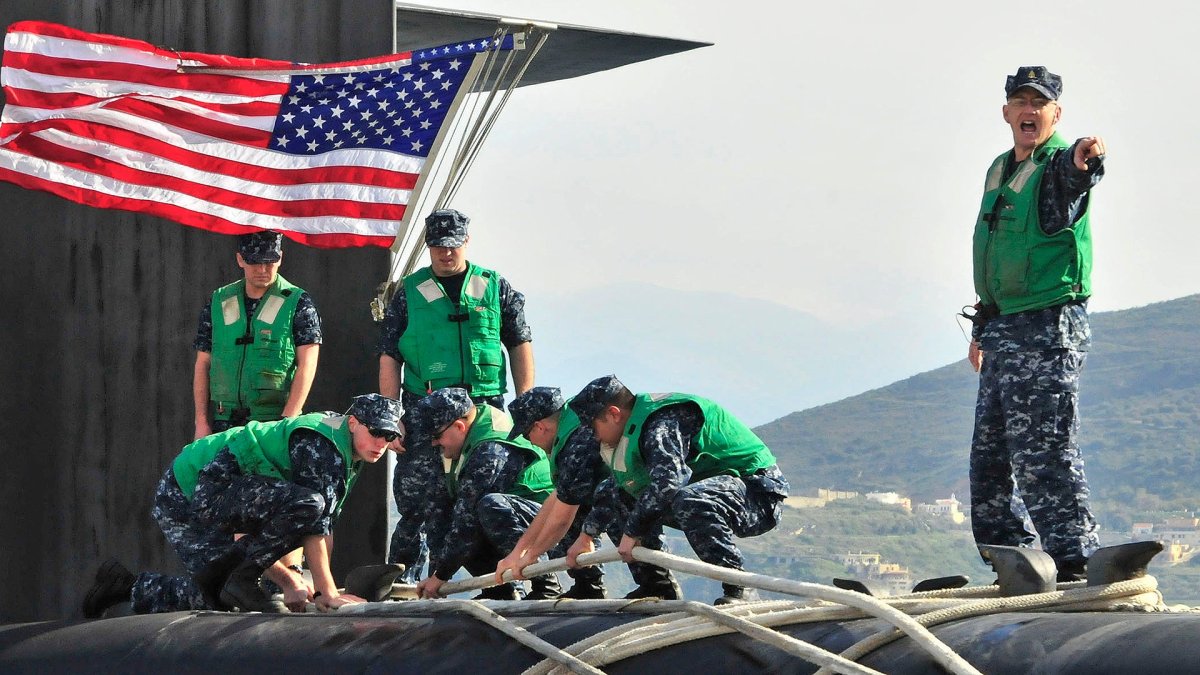
Published Jun 30, 2020 6:46 PM EDT
When most people think of America’s nuclear submarine fleet, they imagine something of a monolithic force, but that’s not the case. Three general mission sets define the fleet and the experience of the crews that man it. As such, the experience of serving on a boat that services one mission set can vary drastically from doing so on one that services another. There is a unique culture, esprit de corps, and tempo to each that isn’t often referenced or explained, but it is visceral to anyone who has been part of America’s modern ‘silent service.’
In a follow-up to our recent look into the eccentric characters you will find aboard a U.S. Navy nuclear submarine and the culture that permeates such a unique profession, here are the cultural differences between serving aboard SSNs, SSBNs, and the rare and elite SSGN.
The Nuclear Fast Attack Submarine (SSN): Chaotic Readiness
The fast-paced world of the nuclear attack submarine is the most rewarding for a sailor who wants to travel the world and likes a rush. If something needs to happen quietly, the U.S. Navy sends in the ‘attack’ nuclear submarine, the SSN, a force that is currently made up of Virginia , Seawolf , and Los Angeles class boats.
A Los Angeles attack class submarine pulls into port. , USN
For instance, during the collapse of the Soviet Union, the White House needed real-time reports on the deployments of Russian ballistic missile submarines . It was too provocative to send a destroyer squadron into the Barents Sea or park a carrier group off the Kamchatka Peninsula . Beneath the waves, American nuclear submarines watched their adversary transit in and out of port, counting ship movements and reporting daily activity back to the Pentagon, who briefed the president every morning.
This kind of rapid response platform has a culture centered around readiness. The SSN is always on the firing line in port, at sea, and on the station. It can receive mission tasking at any time and it must respond. On the attack boats I was on, mission tasking kicked up the adrenaline level a little and an extra bit of excitement moved throughout the officers and enlisted crew when time-sensitive orders came.
Loading torpedoes on the Los Angeles class attack submarine USS Albany ., USN
The SSN schedule is dynamic. Long term milestones, such as drydock refit and nuclear refueling, are planned out years in advance and generally are not changed. Mid-term goals, like nuclear safety inspections and tactical readiness evaluations, are on an annual rotation, but they are a little flexible as to when they begin. Short term events, such as weapons loading and diesel maintenance, are crammed into availability slots during brief in-port periods.
As an example, in 1992, we had pulled into port on a Friday afternoon and had a Monday morning underway planned. The submarine’s diesel engine needed critical maintenance that required ripping it apart. A nuclear submarine cannot go to sea without a backup mode of power, the diesel engine. With the Captain’s blessing, the A-gangers began tearing down the Fairbanks-Morse diesel engine shortly after we secured the mooring lines.
They worked around the clock all weekend. By the time I returned with a fresh sea bag over my shoulder that Monday, from the parking lot I could see the thick white exhaust of a diesel engine running. That is the level of hard work and service I witnessed in the American fast attack submarine community. The crew sacrificed what little time they had in port to ensure we could go to sea if called upon to do so.
A Los Angeles class attack submarine crewman surveys a carrier strike group with binoculars. , USN
This forces division leaders to communicate both up and down the chain of command to ensure maintenance and evolutions don’t conflict. The young petty officer in sonar needs to test the sonar . The weapons officer needs torpedoes loaded . The engineering officer needs a pure water truck on the pier. The radio room needs a communication mast pulled and taken to the shop. Meanwhile, divers are working over the side. This is just another day in port for the SSN crew. Understanding what evolutions have priority and supporting the goal of getting the boat ready for sea as a crew instead of just as an individual who needs to complete his or her maintenance tasks adds to the comradery of the unit. When all the evolutions are complete and department heads can report to the Captain their sub is mission-ready, there is a great sense of pride and accomplishment because that doesn’t just happen on its own. The crew worked together to make it happen.
Within the SSN community, there are special operations boats . These commands are specially trained and outfitted with unique equipment to conduct high-risk missions. Their deployments are highly sensitive and important to America’s senior military leaders. Diplomatic and military actions are determined by the success of special operation submarine commands.
The highly secretive and extensively modified USS Jimmy Carter , the last of the Seawolf class, flying a jolly roger after completing a high-stakes mission., USN
When the SSN sailor does get some time off, they tend to get a little wild in liberty ports. Most sailors will spend the day visiting whatever tourist trap and restaurant is near the pier. But after hours, it’s game on. Nightclub hopping and drinking with your watch section is common in a port where you don’t speak the language.
I have shared many an evening with the Fire Control Technician from my watch section. Underway, we were steely-eyed hunters of the deep. In port, we generously over tipped the dancing girls and drained pitchers of beer to German-techno music. Most important, we made sure we both made it back to the boat for underway the next morning.
In the control room of the Virginia class attack submarine USS Colorado. , USN
SSN sailors take great pride in what they do. They have a ‘work hard, play hard’ culture . With long times away from homeport and always being pushed to the front of the firing line, attack boat sailors have an elevated sense of self-worth. With mottos like, ”ain’t no slack in a fast attack” and “fast attack, don’t come back (to homeport),” and “ain’t no pride in a Trident (SSBN) ride,” the sense of being part of something elite is certainly there.
Nuclear Ballistic Missile Submarine (SSBN): A Routine Lifestyle
Schedule and routine are the order of the day in the nuclear ballistic missile submarine (SSBN) world. We don’t like surprises when dealing with nuclear weapons. This makes SSBN culture the polar opposite of SSN culture. It is very top-down coordinated from the squadron level.
When a sailor reports to their first SSBN command, they know every underway, refit, dry dock, nuclear, and tactical inspection scheduled for the next four years. Divisions can work much more autonomously in regards to routine maintenance because everyone knows the days and times when they can’t do something. So, it’s just a matter of filling in the blanks with evolutions you can do.
USS Pennsylvania pulls into her home port. , USN
A typical SSN deployment will last six or seven months and visit a port every few weeks, but the underway time between port visits are usually longer on the SSBN, 70 to 80 days. However, the in-port time is much higher for SSN crews because you share the SSBN submarine with a second crew!
Each United States Navy SSBN has a Blue and a Gold crew. While one crew is underway for 70 or more days, the other crew is shore-based, training. This kind of rotation gives the sailor a more routine lifestyle that is better for a family than any other command in the U.S. Navy. An SSBN sailor has more opportunity to spend time with loved ones and attend college. In fact, many SSBN commands have extracurricular events only seen in commands ashore, like softball and bowling teams.
While the benefits are great, they come at a cost. An SSBN patrol is about three months of mundane routine and order. A typical day for a sailor on an SSBN is to wake up, shower, and eat whatever meal is served. They spend the next six hours standing their watch. For some, that is watching the missile tubes, checking temperatures, and pressures. For others, it’s making sure the reactor power is the same as it was the last watch because you’ve been going five knots to nowhere for weeks and you lost track of what month it is.
“Sherwood Forest,” the space containing the Ohio class’s 24 Trident SLBMs. , DoD
After your watch, you eat again. Then there is usually one hour of cleaning in the spaces that you are responsible for and general areas like passageways. Sometimes there is formal training, but there is always a qualification to work on and studying to do during this time. After the watch, cleaning, drills, a shower, and training, it is time for a workout, burn a flick (watch a movie), and sleep.
That routine is repeated every 18 hours for months on end. The SSBN is endlessly punching holes in the ocean day after day in some of the most remote places on earth, away from all prying eyes, satellites, shipping lanes, and most importantly, far from other submarines.
The SSBN crew is tactically passive by nature. They have an enormous responsibility in shepherding potentially hundreds of nuclear warheads away from detection while maintaining a high state of readiness. Their retaliatory nuclear strike mission is a mental burden.
Trident D5 missile launch from an Ohio class SSBN. , USN
Every SSBN sailor is aware of the awesome responsibility they have but it is rarely discussed. Having the nation’s nuclear trigger within arm’s reach is a surreal experience and it will change your perspective on war forever. SSBN crews train very hard to do a mission they hope to never have to execute. They simply prowl the quiet corners of the ocean receiving continuous communications to be ready to launch.
Nuclear Guided Missile Submarine (SSGN): The Admiral’s New Toy
After 1994’s Nuclear Posture Review and the years of experimentation and testing that followed, four Ohio class nuclear ballistic missile submarines began conversion to nuclear guided-missile submarines (SSGNs) . These multi-role boats could sling 154 tomahawk missiles, carry 66 SEAL team members, and have enough communications equipment for a command ship. They became the hottest boats to be on in the submarine service.
The guided-missile submarine USS Florida (SSGN 728) departs Naval Support Activity Souda Bay, Greece, May 24, 2013, following a routine port visit. The Florida was underway in the U.S. 6th Fleet area of responsibility conducting maritime security operations and theater security cooperation efforts., USN
The American SSGN boats stay forward-deployed in Guam and Diego Garcia, but have as much underway time as the SSBNs. The SSGN combines the stealth capability of a ballistic missile submarine, because that is what they were originally, with the capacity for a massive tactical weapons strike, covert SEAL team insertion and extraction, and signals intelligence gathering. These versatile submarines receive a lot of attention from above the squadron level and their presence in a theatre impacts both diplomatic and military maneuvers. A single SSGN will typically have about half the tactical missile strike capability of the entire naval task force. She is like being the queen of the naval chessboard.
She is rare, precious, and powerful.
The SSGN’s top-down, action-oriented command style breeds a strong sense of self-worth in the crew. Her complement of sailors and officers have an immense amount of pride in the mission and the ability to complete the most challenging tasks that come out of the Pentagon. Because the staffing orders to an SSGN are in high demand, they are filled with some of the best graduates out of the naval academy, nuclear power school, and other enlisted training pipelines. Even the new junior sailors have already proven themselves to the best among their peers before stepping on board.
USS Ohio during her conversion from SSBN to SSGN in the mid-2000s., USN
The rewards are two-fold: exciting tactical missions like launching 100 Tomahawk missiles into Libya in 2011 during Operation Odyssey Dawn , intelligence gathering near the coast of unsuspecting nations like an SSN, delivering and extracting special forces teams. They also have two crews, Blue and Gold, each with an off-crew training period like the SSBN.
The SSGN crew makes an attack boat sailor look humble. SSGNs have the spotlight on them all time from senior Navy staff because of their mission and capability. They are expected to perform and succeed in critical areas around the globe. This leads to aggressive confidence bordering on hubris, but that is exactly the mentality required to execute the mission.
All said, the SSGNs enjoy the best of all other submarine benefits in one command.
At the conn aboard the SSGN USS Florida . , USN
The United States submarine force has something for anyone wanting to serve. If you are looking to do some of the most exciting things you will ever do in your life, but never talk about, volunteer for SSGN or SSN duty. If you want to go to college for free and start a family, SSBN life is your ticket.
No matter what style of submarine service you prefer, being a submariner will be the most challenging and rewarding thing you will ever do.
Aaron Amick is a retired U.S. Navy submarine sonarman. He served in both Atlantic and Pacific Oceans on 688 Los Angles class fast attack and Ohio class ballistic missile submarines. He has published two audiobooks on Cold War-era submarines, Akula SSN Project 971 Sub Brief and USS Nautilus SSN-571 Sub Brief . Now, Aaron manages a small Patreon page and contributes to The War Zone.
Contact the editor: Tyler@thedrive.com
Comments couldn’t be loaded. Please refresh the page.
发布于美国东部时间2020年6月30日下午6:46
大多数人想到美国的核潜艇舰队时,都会想象它是一支庞大的整体,但事实并非如此。舰队及其艇员的经历主要由三大任务类别构成。因此,在执行不同任务类别的潜艇上服役的经历可能截然不同。每艘潜艇都有其独特的文化、团队精神和工作节奏,这些往往鲜为人知或难以解释,但对于任何一位曾在美国现代“无声部队”服役的人来说,都是切身的感受。
继我们最近对美国海军核潜艇上形形色色的人物以及这种独特职业所蕴含的文化进行深入探讨之后,本文将介绍在SSN、SSBN和罕见的精英SSGN上服役的文化差异。
核动力快速攻击潜艇(SSN):混乱的战备状态
对于渴望环游世界、追求刺激的水兵来说,快节奏的核动力攻击潜艇世界最具吸引力。如果需要悄无声息地执行任务,美国海军会派出“攻击型”核潜艇(SSN),目前该部队由弗吉尼亚级、海狼级和洛杉矶级潜艇组成。
一艘洛杉矶级攻击型潜艇驶入港口。(美国海军)
例如,在苏联解体期间,白宫需要实时掌握俄罗斯弹道导弹潜艇的部署情况。向巴伦支海派遣驱逐舰中队或在堪察加半岛附近部署航母战斗群都过于挑衅。在水下,美国核潜艇监视着对手进出港口的动向,统计舰船的移动,并将每日活动报告给五角大楼,五角大楼每天早上再向总统汇报情况。
这种快速反应平台的核心文化就是战备。无论是在港口、海上还是基地,攻击型核潜艇始终处于战备状态。它随时可能接到任务指令,并且必须立即响应。在我服役的攻击艇上,任务指令的到来会让官兵们肾上腺素飙升,当接到紧急命令时,那种兴奋之情会感染到每一位军官和士兵。
美国海军洛杉矶级攻击型核潜艇“奥尔巴尼”号正在装载鱼雷。
攻击型核潜艇(SSN)的维护计划是动态的。长期里程碑,例如干船坞改装和核燃料更换,会提前数年制定计划,通常不会更改。中期目标,例如核安全检查和战术战备评估,按年度轮换进行,但开始时间有一定的灵活性。短期项目,例如武器装载和柴油机维护,则会在短暂的靠港期间集中安排。
举例来说,1992年,我们周五下午靠岸,计划周一早上出海。潜艇的柴油发动机需要进行关键维护,必须将其拆解。核潜艇没有备用动力源——柴油发动机——就无法出海。在舰长的许可下,A组工在系好缆绳后不久就开始拆卸费尔班克斯-莫尔斯柴油发动机。
他们整个周末都在昼夜不停地工作。周一我背着新买的航海包回到基地时,从停车场就能看到柴油发动机冒出的浓浓白烟。这就是我在美国快速攻击潜艇部队亲眼目睹的那种辛勤工作和服务精神。为了确保我们随时可以出海,艇员们牺牲了他们在港口仅有的宝贵时间。
一名洛杉矶级攻击型核潜艇艇员正在用双筒望远镜观察航母打击群。(美国海军)
这迫使各部门领导上下沟通,确保维护和演习不会冲突。声呐部门的年轻士官需要测试声呐;武器官需要装填鱼雷;轮机官需要码头上的纯水车;无线电室需要拆卸通信桅杆并送往维修车间。与此同时,潜水员正在舷外作业。对于核潜艇艇员来说,这只是港口里平常的一天。了解哪些演习优先,并以艇员的集体力量而非个人完成维护任务的方式来支持潜艇做好出海准备,这增强了艇员之间的战友情谊。当所有演习都完成,各部门负责人可以向艇长报告潜艇已做好任务准备时,艇员们会感到无比自豪和成就感,因为这并非自然而然就能实现的。这是艇员们共同努力的结果。
在攻击型核潜艇(SSN)部队中,存在着特种作战潜艇。这些潜艇部队经过专门训练,配备独特的装备,用于执行高风险任务。它们的部署高度敏感,对美国高级军事领导人至关重要。外交和军事行动的成败往往取决于特种作战潜艇部队的成败。
高度保密且经过大量改装的“吉米·卡特”号航空母舰,作为“海狼”级潜艇的最后一艘,在完成一项高风险任务后升起了海盗旗。(美国海军)
当SSN水兵们难得休假时,他们在休整港往往会玩得比较疯狂。大多数水兵白天会去码头附近的旅游景点和餐馆消磨时间。但到了下班时间,好戏就开始了。在语言不通的港口,和值班的同事们一起去夜店喝酒是很常见的。
我和值班组的火控技师一起度过了许多个夜晚。航行时,我们是目光如炬的深海猎手。靠岸后,我们慷慨地给舞女们小费,伴着德国电子音乐豪饮啤酒。最重要的是,我们确保第二天早上都能平安返回船上,继续出海。
在弗吉尼亚级攻击型核潜艇“科罗拉多”号的控制室里。
攻击型核潜艇(SSN)水兵们对自己的工作感到无比自豪。他们奉行“努力工作,尽情玩乐”的文化。由于长期远离母港,并且总是被推到战斗的最前线,攻击艇水兵们拥有极高的自我价值感。诸如“快速攻击中绝不松懈”、“快速攻击,永不回港”、“驾驶三叉戟(弹道导弹核潜艇)无比自豪”之类的座右铭,无疑让他们感受到自己是精英团队的一员。
核弹道导弹潜艇(SSBN):一种日常生活方式
在核动力弹道导弹潜艇(SSBN)的世界里,日程安排和日常运作至关重要。我们不喜欢在核武器领域出现任何意外。这使得SSBN的文化与攻击型核潜艇(SSN)的文化截然相反。它的协调高度自上而下,由中队层面统一负责。
当一名水兵首次到任弹道导弹核潜艇(SSBN)指挥官时,他会清楚地了解未来四年内的所有航行检查、改装、干船坞维护、核动力系统维护以及战术检查的安排。由于每个人都清楚哪些日期和时间无法进行某些工作,各部门在日常维护方面可以更加自主地开展工作。因此,他们只需根据自身能力安排其他工作即可。
宾夕法尼亚号航空母舰驶入母港。
典型的核潜艇(SSN)部署会持续六到七个月,每隔几周就会访问一个港口,但弹道导弹核潜艇(SSBN)的两次港口访问之间的航行时间通常更长,为70到80天。然而,核潜艇艇员在港口停留的时间要长得多,因为弹道导弹核潜艇需要与另一艘潜艇的艇员共用!
每艘美国海军弹道导弹核潜艇(SSBN)都配备蓝队和金队。当一支艇员出海航行70天或更长时间时,另一支艇员则在岸上进行训练。这种轮换方式使水兵的生活方式更加规律,比其他任何海军单位都更有利于家庭生活。弹道导弹核潜艇的水兵有更多时间陪伴家人,也更有机会上大学。事实上,许多弹道导弹核潜艇单位都设有只有在岸上单位才能看到的课外活动,例如垒球队和保龄球队。
虽然好处多多,但也需要付出代价。一艘弹道导弹核潜艇的巡逻任务大约需要三个月,期间充满了单调乏味的例行公事和秩序。弹道导弹核潜艇上的水兵通常每天起床、洗澡、吃顿饭,然后值班六个小时。有些人负责观察导弹发射管,检查温度和压力;而另一些人则要确保反应堆功率与上次值班时保持一致,因为他们已经连续几周以五节的速度漫无目的地航行,早已忘记了现在是几月。
“舍伍德森林”是俄亥俄级导弹发射井内24枚三叉戟潜射弹道导弹的部署地点。(美国国防部)
值班结束后,你会再吃点东西。之后通常会有一个小时的时间清洁你负责的区域以及走廊等公共区域。有时会有正式的培训,但这段时间总会有一些资格认证和学习任务需要完成。值班、清洁、演练、淋浴和培训结束后,就到了锻炼、看电影和睡觉的时间了。
这种例行操作每隔18小时重复一次,持续数月之久。这艘弹道导弹核潜艇日复一日地在地球上一些最偏远的地方,远离所有窥探的目光、卫星、航道,最重要的是,远离其他潜艇,不断地在海洋中凿洞。
弹道导弹核潜艇艇员天生具有战术被动性。他们肩负着重大的责任,既要护送数百枚核弹头避开探测,又要保持高度戒备状态。他们的核报复任务对他们来说是一种沉重的精神负担。
从俄亥俄级弹道导弹核潜艇发射三叉戟D5导弹。
每一艘弹道导弹核潜艇(SSBN)上的水兵都深知自己肩负的重任,但这种责任却鲜少被公开讨论。国家核武器的发射按钮近在咫尺,这种体验令人难以置信,它将永远改变你对战争的看法。弹道导弹核潜艇的艇员们接受着极其艰苦的训练,只为完成一项他们希望永远不必执行的任务。他们只是在静谧的海洋角落里巡逻,时刻接收着通讯信息,准备随时发射。
核制导导弹潜艇(SSGN):海军上将的新玩具
1994年核态势评估之后,经过数年的试验和测试,四艘俄亥俄级核动力弹道导弹潜艇开始改装为核动力导弹潜艇(SSGN)。这些多用途潜艇可携带154枚战斧导弹,搭载66名海豹突击队队员,并配备足以满足指挥舰通信需求的通信设备。它们成为潜艇部队中最炙手可热的舰艇。
2013年5月24日,美国海军“佛罗里达”号导弹潜艇(SSGN 728)结束例行港口访问,离开希腊苏达湾海军支援基地。“佛罗里达”号当时正在美国第六舰队责任区内执行海上安全行动和战区安全合作任务。
美国的SSGN潜艇前沿部署在关岛和迪戈加西亚岛,但其出海时间与SSBN潜艇相当。SSGN潜艇结合了弹道导弹潜艇的隐身能力(因为它们最初就是弹道导弹潜艇),以及大规模战术武器打击、秘密部署和撤离海豹突击队以及信号情报收集的能力。这些多用途潜艇备受舰队以上级别的关注,它们在战区的存在会对外交和军事行动产生影响。一艘SSGN潜艇通常拥有整个海军特遣部队一半左右的战术导弹打击能力。它就像海军棋盘上的女王。
她稀有、珍贵、强大。
SSGN(巡航导弹核潜艇)自上而下、行动导向的指挥风格,培养了艇员强烈的自我价值感。艇上的水兵和军官对任务充满自豪,并有能力完成五角大楼下达的最具挑战性的任务。由于SSGN的人员需求量很大,因此舰上人员都是海军学院、核动力学校和其他士官培训机构中最优秀的毕业生。即使是新入伍的初级水兵,在登舰之前也已经证明了自己是同龄人中的佼佼者。
俄亥俄号航空母舰在 2000 年代中期从 SSBN 转换为 SSGN 期间。, USN
奖励有两方面:一是执行激动人心的战术任务,例如在2011年的“奥德赛黎明行动”中向利比亚发射100枚战斧导弹;二是像核潜艇一样在毫无防备的国家沿海地区进行情报搜集;三是运送和撤离特种部队。它们也像弹道导弹核潜艇一样,配备两组艇员,分别称为蓝组和金组,每组艇员都需要进行非艇员训练。
SSGN(巡航导弹核潜艇)艇员的气场让攻击艇水兵都相形见绌。由于其任务和能力,SSGN始终受到海军高层的高度关注。人们期望他们在全球各地的关键区域执行任务并取得成功。这导致他们拥有近乎狂妄的自信,但这正是执行任务所必需的心态。
综上所述,SSGN 潜艇在一个指挥系统中享受到了所有其他潜艇的优势。
在 SSGN 佛罗里达号潜艇的指挥舱内。
美国潜艇部队能满足任何想为国效力的人的需求。如果你想体验人生中最激动人心却又难以启齿的经历,那就去申请加入SSGN或SSN部队吧。如果你想免费上大学并组建家庭,SSBN(弹道导弹核潜艇)就是你的最佳选择。
无论你喜欢哪种潜艇服役方式,成为一名潜艇兵都将是你做过的最具挑战性和最有意义的事情。
亚伦·阿米克是美国海军退役潜艇声纳兵。他曾在大西洋和太平洋服役,先后在洛杉矶级快速攻击潜艇(688型)和俄亥俄级弹道导弹潜艇上服役。他出版了两本关于冷战时期潜艇的有声读物:《阿库拉号核潜艇971项目简报》和《鹦鹉螺号核潜艇571项目简报》。如今,亚伦运营着一个小型Patreon页面,并为《战区》网站撰稿。
联系编辑:Tyler@thedrive.com
评论加载失败,请刷新页面。