Netherlands picks Israel’s Rafael to supply upgraded anti-tank systems荷兰选择以色列拉斐尔公司提供升级版反坦克系统
Requirements for the new system include increased targeting range and non-line-of-sight firing capability, according to the ministry.
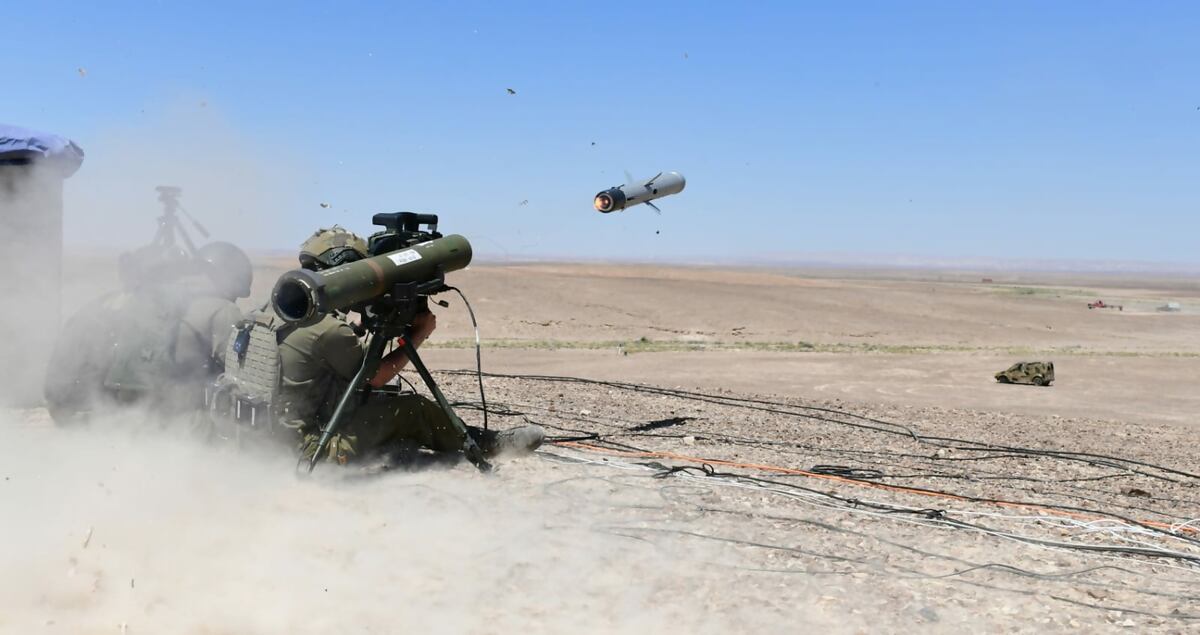
PARIS — The Netherlands picked Israeli firm Rafael Advanced Defense Systems to supply an upgrade for the country’s more than 200 medium-range anti-tank missile launchers that will boost combat range, for an investment of as much as €250 million ($277 million).
The Dutch Army and Marines plan to switch to Rafael’s Integrated Command Launch Unit, which can fire the Spike LR2 missile with a range of 5,000 meters (5,468 yards), Dutch State Secretary of Defense Gijs Tuinman said in a letter to parliament on Monday. The system is backwards-compatible with the country’s stock of older Spike missiles, Tuinman said.
The Netherlands’ medium-range anti-tank (MRAT) systems have been in use with the anti-tank units of the country’s Army combat brigades and Marines amphibious battalions since 2002 and are reaching end-of-life, with outdated targeting and guidance optics limiting the use of longer-range missiles, according to the Defence Ministry.
“Replacement of the MRAT capability is urgent, also given the rapidly deteriorating security situation in Europe,” Tuinman told parliament. “The ability to take out enemy combat vehicles at long range is essential to the safety of our military.”
The Dutch Defence Ministry is targeting contract signature in October. The ministry has a contract option through to Oct. 31, and Tuinman called on parliament to take the deadline into account in dealing with the equipment request. “Delivery times are increasingly under pressure, which means later ordering would result in a delay and higher prices.”
The deal would be for “off-the-shelf” equipment, with Rafael delivering the first launchers in 2026 and final handover expected in the first half of 2028. The investment is in the range of €50 million to €250 million, the ministry said.
Requirements for the new system include increased targeting range and non-line-of-sight firing capability, according to the ministry. The Rafael launcher is a further developed and modernized version of the system currently in use with the Dutch, and will represent a “significant” increase in the ability to target enemy tanks and other combat vehicles, Tuinman said.
The Rafael system has potential for further development to expand its combat range, and an expected near-term development is coupling the launcher with drones for target detection and beyond-visual-range engagement, according to the ministry. The Netherlands’ modernized CV90 fighting vehicles will be equipped to fire the Spike LR2, it said.
Germany has also purchased the Rafael launcher with Spike LR2 missiles, and the Dutch choosing the same system responds to a parliamentary request to consider standardization in equipment buying, the defense secretary said. The new launcher has “a very large European user group” ranging from Spain to Finland, including neighboring Belgium, Tuinman said.
The Netherlands purchased hundreds of Spike missiles in recent years to bolster stockpiles, while the new system will be able to use older-generation missiles for live firing exercises, preventing those munitions from exceeding their expiration date and having to be destroyed, the ministry said.
Dutch policy toward Israel allows for the acquisition of defense equipment from an Israeli company, in this case Rafael, the defense ministry said in a note accompanying Tuinman’s letter. The armed forces procuring “the best equipment possible” is in the interest of the security of the Netherlands, its allies and its personnel, it said.
Rafael has a German joint venture with Diehl Defence and Rheinmetall called Eurospike that is in charge of marketing the family of Spike missiles in Europe. Meanwhile, Poland said last year it was buying hundreds of Spike missiles through Rafael’s local partner Mesko.
Rudy Ruitenberg is a Europe correspondent for Defense News. He started his career at Bloomberg News and has experience reporting on technology, commodity markets and politics.
巴黎——荷兰选择以色列拉斐尔先进防御系统公司为其200多套中程反坦克导弹发射器提供升级,这将提升其作战范围,投资额高达2.5亿欧元(2.77亿美元)。
荷兰国防国务秘书吉斯·图因曼周一在致议会的一封信中表示,荷兰陆军和海军陆战队计划改用拉斐尔公司的集成指挥发射单元,该单元可发射射程达5000米(5468码)的“长钉”LR2导弹。图因曼还表示,该系统向下兼容荷兰现有的老式“长钉”导弹。
据荷兰国防部称,荷兰的中程反坦克(MRAT)系统自 2002 年以来一直在该国陆军作战旅和海军陆战队两栖营的反坦克部队中使用,但已接近使用寿命终点,过时的目标瞄准和制导光学设备限制了远程导弹的使用。
图伊曼在议会表示:“鉴于欧洲安全形势迅速恶化,更换防地雷反坦克导弹系统迫在眉睫。远程摧毁敌方作战车辆的能力对我国军队的安全至关重要。”
荷兰国防部计划在10月份签署合同。该部拥有合同选择权,有效期至10月31日。图伊曼呼吁议会在处理装备采购请求时考虑这一截止日期。“交货时间正面临越来越大的压力,这意味着延迟订购将导致延误和价格上涨。”
该交易将涉及“现成”设备,拉斐尔公司将于2026年交付首批发射器,最终交付预计将在2028年上半年完成。国防部表示,投资额在5000万欧元至2.5亿欧元之间。
据国防部称,新系统的要求包括提高瞄准距离和非视距射击能力。图伊曼表示,拉斐尔发射器是目前荷兰军队使用的系统的进一步发展和现代化版本,将显著提升打击敌方坦克和其他作战车辆的能力。
据国防部称,拉斐尔导弹系统具有进一步发展以扩大作战范围的潜力,近期预计的一项发展是将发射器与无人机结合,用于目标探测和超视距作战。国防部还表示,荷兰现代化CV90战车将配备发射“长钉”LR2导弹的设备。
德国也采购了配备“长钉”LR2导弹的“阵风”发射装置,荷兰选择同一系统是响应议会关于考虑装备采购标准化的要求,国防部长表示。图伊曼称,这种新型发射装置拥有“非常庞大的欧洲用户群体”,涵盖从西班牙到芬兰,包括邻国比利时。
荷兰国防部表示,近年来,荷兰购买了数百枚“长钉”导弹以补充库存,而新系统将能够使用老一代导弹进行实弹射击演习,从而防止这些弹药超过有效期而被销毁。
荷兰国防部在图因曼的信函附注中表示,荷兰对以色列的政策允许从以色列公司(在本例中为拉斐尔公司)采购国防装备。声明称,武装部队采购“尽可能最好的装备”符合荷兰、其盟友及其人员的安全利益。
拉斐尔公司与迪尔防务公司和莱茵金属公司成立了一家名为Eurospike的德国合资企业,负责在欧洲销售“长钉”系列导弹。与此同时,波兰去年表示,将通过拉斐尔公司的当地合作伙伴梅斯科公司购买数百枚“长钉”导弹。
鲁迪·鲁伊滕贝格是《防务新闻》的欧洲记者。他的职业生涯始于彭博新闻社,拥有报道科技、大宗商品市场和政治方面的经验。