Malaysia’s space ambitions start with changing public mindset, says Planetarium Negara director马来西亚国家天文馆馆长表示,马来西亚的太空雄心始于改变公众的观念。
KUALA LUMPUR, Sept 15 — Malaysia’s ambitions in the space sector may begin not with rockets or satellites, but with something more fundamental: changing the way Malaysians see...
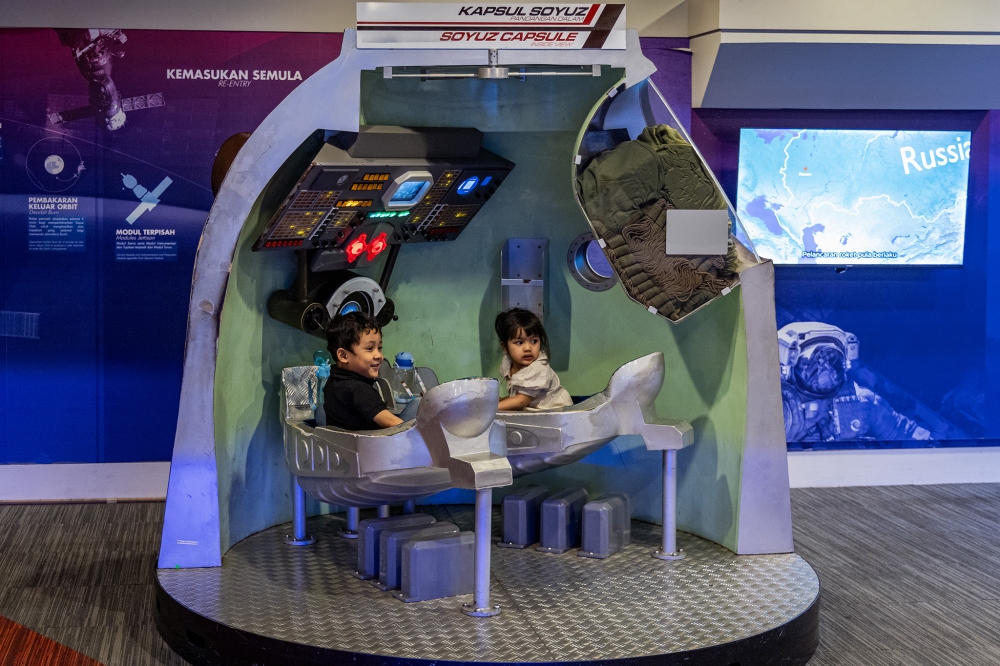
The article discusses the strategic role of Planetarium Negara, as articulated by its director Mohd Zamri Shah Mastor, in transforming Malaysians' perception of space to foster a robust space industry.
Before Malaysia can develop its space economy with infrastructure like a rocket launch pad, there is a need for public understanding and acceptance, facilitated by planetariums which also boost investor confidence.
However, challenges such as maintenance costs and content development must be navigated to stay relevant.
Ultimately, the goal is to shift mindsets to embrace space-related endeavors, positioning Malaysia for future economic growth.
KUALA LUMPUR, Sept 15 — Malaysia’s ambitions in the space sector may begin not with rockets or satellites, but with something more fundamental: changing the way Malaysians see and understand space.
Planetarium Negara director Mohd Zamri Shah Mastor said that before Malaysia can build a thriving space economy, it must first build something less tangible — a public that understands, accepts and is ready for it.
“Having a planetarium in the area is important for investors to see.
“They see that if there is a planetarium, it gives them confidence that people there know about space and have at least some knowledge of the sector,” he told Malay Mail in a recent interview here.
He recalled how plans for a rocket launch pad in Malaysia had previously faced local opposition, which he attributed in part to a lack of understanding about the concept.
Fast-forward to today, Malaysia is now poised to become South-east Asia’s first country with its own rocket launch pad by 2029, with its location along the Equator offering a distinct advantage by enabling more efficient launches and reducing fuel costs.
Mohd Zamri Shah said this is where Planetarium Negara’s role goes beyond inspiring curiosity, as the presence of planetariums can give potential investors confidence that communities understand and are more likely to embrace space-related projects.
“Investors are very confident when people know about space and they might also find people who can help them expedite their space-related programmes and therefore make the right investment here in Malaysia.
“Even though (our knowledge of the space-related field) it is not very aggressively promoted, they look at the bigger picture, so we have a role to play beyond just creating awareness,” he said.
But achieving that kind of impact comes with its own set of challenges.
“The biggest chunk of our operating expenditure goes towards maintenance. Another major pressure is content development.
“Technology may become cheaper by the day, but developing the content and coming up with ideas is the most expensive part,” Mohd Zamri Shah said, adding that incorporating the necessary technology can drive costs even higher.
When asked whether failing to keep up with evolving technology could leave Planetarium Negara behind, Mohd Zamri Shah agreed but noted the institution must also consider practical challenges such as vandalism when upgrading its exhibits.
“I agree that if we do not upgrade and keep up with the times, there is a risk that the planetarium will be left behind.
“We want to incorporate new technologies into our exhibits, but we also have to consider issues such as vandalism which is very common,” he said, adding that technology-based exhibits can be more easily damaged or worn out compared with older, more robust equipment.
When asked what success would look like for Planetarium Negara in the future and the impact he hoped it would have on the next generation, Mohd Zamri said the key was “transformation”.
He said success is not merely measured by the number of visitors walking through Planetarium Negara, but by whether their experience changes how they think about space.
“People who come here with a little knowledge about space can become more involved in the field, while those without any knowledge can develop an interest and eventually pursue it.
“That is the core reason why we built a planetarium here.
“Because we found that Malaysia is quite behind in space technology and space exploration,” he said, adding that the decision to build a planetarium was in fact aimed at preparing people’s minds to venture into space.
Despite the cost and challenges, he said the ultimate goal was for the mindset cultivated today to eventually help create a home-grown space industry and a new source of economic growth for Malaysia.
“People may not be selling cars anymore in the future. We want people in Malaysia selling satellites and rockets.
“That is the new economy. We cannot depend on today’s economy forever, so we are preparing for a new one.
“But we hope to change the mindset first, that is our ultimate goal,” he said.
‘Our tebu is still sweet’: Tun Jugah’s son reflects on Sarawak, Malaysia at 63
Croatian climber who scaled Mount Kinabalu illegally may face fine
Sabah mulls relocation of Kota Kinabalu central market
文章探讨了国家天文馆馆长莫哈末·扎姆里·沙阿·马斯托所阐述的,该天文馆在改变马来西亚人对太空的认知、促进强大的航天产业发展方面所发挥的战略作用。
马来西亚要发展太空经济,建设火箭发射台等基础设施之前,需要公众的理解和接受,而天文馆可以促进这一过程,同时也能增强投资者的信心。
然而,要保持竞争力,就必须克服维护成本和内容开发等挑战。
最终目标是转变人们的思维方式,接受与太空相关的事业,从而使马来西亚为未来的经济增长做好准备。
吉隆坡,9 月 15 日讯——马来西亚在太空领域的雄心壮志或许并非始于火箭或卫星,而是始于更根本的事情:改变马来西亚人看待和理解太空的方式。
马来西亚国家天文馆馆长莫哈末·扎姆里·沙阿·马斯托表示,马来西亚要想建立蓬勃发展的太空经济,首先必须建立一些更抽象的东西——一个理解、接受并准备好迎接太空经济的公众。
“对于投资者来说,在该地区拥有一座天文馆是一件很重要的事情。”
“他们认为,如果有一个天文馆,就能让他们相信那里的人们了解太空,至少对这个领域有一些了解,”他在最近接受《马来邮报》采访时说道。
他回忆起马来西亚此前修建火箭发射台的计划曾遭到当地民众的反对,他认为部分原因是人们对这一概念缺乏了解。
时至今日,马来西亚有望在 2029 年成为东南亚第一个拥有自己火箭发射台的国家,其位于赤道附近的地理位置使其拥有明显的优势,能够更高效地发射火箭并降低燃料成本。
莫哈末·扎姆里·沙阿表示,国家天文馆的作用不仅仅在于激发好奇心,天文馆的存在还可以让潜在投资者相信,社区了解太空相关项目,并且更有可能接受这些项目。
“投资者对了解太空的人们充满信心,他们也可能找到能够帮助他们加快太空相关计划的人,从而在马来西亚进行正确的投资。
“尽管(我们对太空相关领域的了解)并没有得到积极推广,但他们着眼于大局,所以我们除了提高公众意识之外,还有其他作用,”他说。
但要达到这种影响力,也面临着一系列挑战。
“我们运营支出中最大的一部分用于维护。另一个主要压力来自内容开发。”
“技术可能每天都在变得更便宜,但内容开发和创意构思才是最昂贵的部分,”莫哈末·扎姆里·沙阿说,并补充说,融入必要的技术可能会使成本更高。
当被问及未能跟上不断发展的技术是否会使国家天文馆落后时,莫哈末·扎姆里·沙阿表示同意,但他指出,该机构在升级展品时还必须考虑破坏等实际挑战。
“我同意,如果我们不进行升级改造,不与时俱进,天文馆就有被时代淘汰的风险。”
“我们希望将新技术融入到我们的展览中,但我们也必须考虑诸如人为破坏等非常普遍的问题,”他说道,并补充说,与较旧、更坚固的设备相比,基于技术的展览更容易损坏或磨损。
当被问及国家天文馆未来的成功是什么样子,以及他希望它对下一代产生什么影响时,莫哈末·扎姆里表示,关键在于“转型”。
他表示,衡量成功的标准不仅仅是参观国家天文馆的游客数量,而是他们的体验是否改变了他们对太空的看法。
“对太空略知一二的人来到这里后,可以更深入地参与到这个领域中来;而对太空一无所知的人,则可以培养兴趣,并最终从事相关工作。”
“这就是我们在这里建造天文馆的核心原因。”
“因为我们发现马来西亚在太空技术和太空探索方面相当落后,”他说道,并补充说,建造天文馆的决定实际上是为了让人们做好探索太空的准备。
尽管面临成本和挑战,他表示,最终目标是让今天培养的这种思维方式最终帮助马来西亚建立本土航天产业,并成为新的经济增长点。
“未来人们可能不再卖汽车了。我们希望马来西亚人卖卫星和火箭。”
这就是新经济。我们不能永远依赖今天的经济,所以我们正在为新的经济做好准备。
“但我们希望首先改变人们的观念,这才是我们的最终目标,”他说。
“我们的 Tebu 仍然很甜”:敦朱加 (Tun Jugah) 63 岁的儿子回忆马来西亚砂拉越
一名克罗地亚登山者非法攀登京那巴鲁山,或将面临罚款。
沙巴州考虑搬迁亚庇中央市场