‘Our tebu is still sweet’: Tun Jugah’s son reflects on Sarawak, Malaysia at 63“我们的 Tebu 仍然很甜”:敦朱加 (Tun Jugah) 63 岁的儿子回忆马来西亚砂拉越
KUCHING, Sept 15 — While history was being made in Kuching on September 16, 1963, a young Leonard Linggi Tun Jugah was several hundred kilometres away in his hometown Nanga...
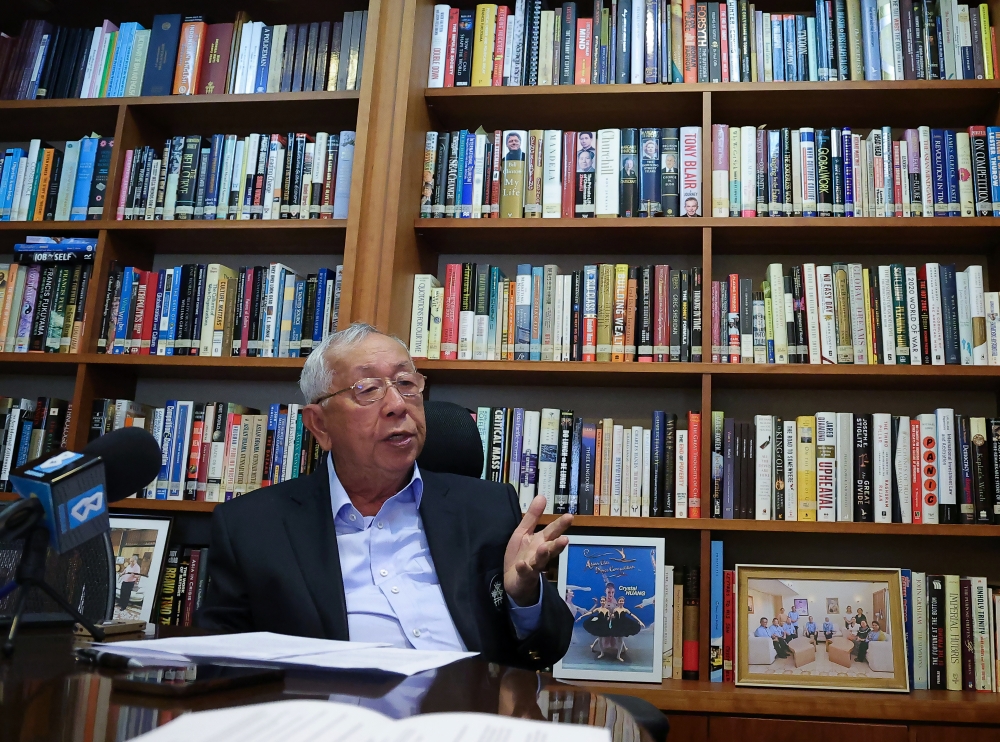
On September 16, 1963, Leonard Linggi Tun Jugah was in Nanga Gaat while his father witnessed Malaysia's proclamation in Kuching.
Tun Jugah played a crucial role in securing support for Malaysia's formation, uniting Iban leaders and promoting MA63.
Linggi reflects on Malaysia's 63-year journey, noting security progress but advocating for further development in Sarawak.
KUCHING, Sept 15 — While history was being made in Kuching on September 16, 1963, a young Leonard Linggi Tun Jugah was several hundred kilometres away in his hometown Nanga Gaat, Kapit.
He was then on a fishing and hunting expedition in the upper reaches of the Baleh River, yet he made sure he did not miss the historic moment, following the proclamation of Malaysia through radio broadcasts and newspaper reports, and hearing the views of those around him.
“At that time, I was just finishing Form 6. I listened to the radio and read the newspapers on the historic occasion,” Tan Sri Linggi, now 86, told Bernama in an interview in conjunction with Malaysia Day, which falls on September 16.
His father, the late Tun Jugah Barieng, however, was in Kuching that day.
A prominent Iban leader back then, Jugah was present at the Central Padang (now known as Padang Merdeka) to witness the proclamation of Malaysia, alongside other state leaders, including Sarawak’s first Yang Dipertua Negeri Tun Abang Openg Abang Sapiee and first chief minister Tan Sri Stephen Kalong Ningkan.
Journey towards Malaysia
Sharing his recollections of his father’s contributions to the events leading to the formation of Malaysia, Linggi — a former leader of Parti Pesaka Bumiputera Bersatu (PBB) and MP for Kapit between 1978 and 1986 — said although Jugah was widely known as one of the signatories to the Malaysia Agreement 1963 (MA63), his involvement in the journey had begun much earlier.
(MA63 is the founding legal document that united Sabah, Sarawak and Singapore with the existing states of the Federation of Malaya to form the new nation of Malaysia. The agreement was signed on July 9, 1963, and took effect on Sept 16 the same year. Singapore officially left Malaysia on August 9, 1965.)
Linggi said Jugah played a key role in building support for the formation of Malaysia, bringing together 51 Iban headmen in Kapit on February 15, 1962, where they reached an agreement to support the formation of Malaysia.
“My father worked very hard to make sure that Malaysia was a success,” he said.
“He assembled the Iban penghulu in Kapit and chaired that particular randau awam, or conference. During that conference, the Iban of the Rajang Valley decided to support (the formation of) Malaysia.”
He added that his father was convinced that without the conference’s support, the Cobbold Commission Report would have been different. (The Cobbold Commission was set up to assess the views of the people in Sabah and Sarawak regarding the proposed Federation of Malaysia.)
Linggi said Jugah was briefed on the Malaysia proposal by the then British governor of Sarawak, Sir Alexander Waddell.
He said Waddell had explained that Britain could no longer continue governing Sarawak as the global landscape was changing and colonialism was increasingly being challenged.
“Waddell told my father that it would be better for his people, in terms of security and economic progress, to go together with Malaya, Sabah and the others.
“My father also knew that the communist movement was on the rise at the time. Our neighbours, Indonesia and the Philippines, were not particularly friendly towards us either. He (Jugah) felt that (the proposal to form) Malaysia was worth supporting.
“That was his rationale at the time. But first, he needed to convince the Iban, and he succeeded,” he said.
Malaysia 63 years later
Reflecting on the 63 years since the formation of Malaysia, Linggi said the nation had largely realised the aspirations envisioned at its inception, particularly in terms of security, but more remained to be done to spur development in Sarawak.
“In terms of security, the communist movement is virtually non-existent now. Our neighbours, Indonesia and the Philippines, have also become part of Asean.
“But when it comes to development, I believe more needs to be done, particularly for Sarawak,” he said.
Commenting on MA63, Linggi said it remains relevant, describing it as the basis for the formation of Malaysia.
“I think the key thing, which is becoming an issue — some say it’s a rather hot issue now — is the implementation of MA63.
“As I said, that is because MA63 is the basis of Malaysia’s formation. And if you recall, those terms (under MA63) were already agreed through the Inter-Governmental Committee Report.
“I know nation-building is not easy. We (Malaysia) are only 63 years old, you look at America (the United States of America)… it is 250 years old and issues still exist among its people. It’s a process,” he said.
Asked what his father would say if he were still alive today, Linggi recalled Jugah’s famous ‘tebu’ principle, which used sugarcane as a metaphor for Malaysia. The analogy, Linggi explained, reflected how sugarcane is sweet at first, but its sweetness can change over time.
“If my father were to come to Sarawak today and ask me, ‘Eh anak, how is our tebu?’, I would say, ‘It is okay. The sweetness is still there, but we require a bit of fertiliser to make it better,’” he said, smiling.
For Linggi, Malaysia Day is not only about remembering how the federation came into being but also about where it is headed.
“Malaysia Day means a lot to me. Let’s say Malaysia is a person. She is 63 years old now. You don’t ask, ‘How were you born?’ Instead, you should ask, ‘How is your life now? How comfortable is your family? What is your plan to have a better life?’ These are the key things we should focus on,” he said.
Linggi, who is the chairman of Tun Jugah Foundation and managing trustee of the Dayak Cultural Foundation, said the fact that Malaysia has remained intact and endured for more than six decades since its formation is something to be proud of.
“Malaysia still exists 63 years later. Why? Because Malaysia, as a person, has a good family.
“We have good ‘parents’, especially in Sarawak. From our early leaders to Premier Tan Sri Abang Johari Tun Openg now, they have looked after us well,” he said.
He believes that Sarawak’s prosperity is closely tied to the strength of Malaysia as a whole, with a stronger Sarawak contributing to a stronger nation.
“Abang Johari’s policy is that he wants to diversify the Sarawak economy so that we can generate better revenue. And once we have better revenue, then Sarawak will be prosperous.
“And if Sarawak prospers, it will strengthen our nation as well. This is how I see it,” he said. — Bernama
Malaysia’s space ambitions start with changing public mindset, says Planetarium Negara director
Croatian climber who scaled Mount Kinabalu illegally may face fine
Sabah mulls relocation of Kota Kinabalu central market
1963 年 9 月 16 日,Leonard Linggi Tun Jugah 在 Nanga Gaat,而他的父亲则在古晋见证了马来西亚的宣告。
敦朱加在争取支持马来西亚成立、团结伊班族领导人和推动1963年马来西亚协议方面发挥了至关重要的作用。
Linggi回顾了马来西亚63年的发展历程,指出安全方面取得了进步,但也提倡在砂拉越进一步发展。
古晋,9 月 15 日讯——1963 年 9 月 16 日,当古晋发生历史性事件时,年轻的 Leonard Linggi Tun Jugah 却在几百公里外的家乡加帛县南加加特镇。
当时他正在巴勒河上游进行捕鱼狩猎之旅,但他通过广播和报纸报道关注马来西亚的成立,并听取周围人的意见,确保自己不会错过这一历史性时刻。
“当时我刚读完六年级。我听着广播,读着报纸,了解着这个历史性的时刻,”现年 86 岁的丹斯里林吉在接受马新社采访时说道。此次采访是为了庆祝 9 月 16 日的马来西亚日。
然而,他的父亲,已故的敦朱加·巴里恩,那天在古晋。
朱加是当时著名的伊班族领袖,他与其他州领导人一起,包括砂拉越州首任国家元首敦阿邦·奥邦·萨皮耶 (Yang Dipertua Negeri Tun Abang Openg Abang Sapiee) 和首席部长丹斯里史蒂芬·卡隆·宁干 (Tan Sri Stephen Kalong Ningkan) 出席巴东中央广场 (现在称为巴东独立广场),见证马来西亚的独立。
前往马来西亚的旅程
林吉(Linggi)曾是土著保守党(PBB)的领导人,并在 1978 年至 1986 年间担任加帛选区的国会议员。他回忆起父亲为马来西亚成立所做出的贡献时说,虽然朱加(Jugah)因签署 1963 年马来西亚协议(MA63)而广为人知,但他参与这一进程的时间要早得多。
(《1963年马来西亚协议》是将沙巴、砂拉越和新加坡与马来亚联合邦合并,组成新国家马来西亚的创始法律文件。该协议于1963年7月9日签署,同年9月16日生效。新加坡于1965年8月9日正式脱离马来西亚。)
林吉表示,朱加在争取支持马来西亚成立方面发挥了关键作用,他于 1962 年 2 月 15 日在加帛召集了 51 位伊班族首领,他们达成协议支持马来西亚的成立。
他说:“我父亲为确保马来西亚取得成功付出了巨大的努力。”
“他在加帛召集了伊班族首领,并主持了那次全国大会。在那次会议上,拉让谷的伊班族决定支持马来西亚的成立。”
他还补充说,他父亲坚信,如果没有这次会议的支持,科博尔德委员会的报告将会截然不同。(科博尔德委员会的设立是为了评估沙巴和砂拉越人民对拟议的马来西亚联邦的看法。)
林吉表示,朱加听取了时任英国砂拉越总督亚历山大瓦德尔爵士关于马来西亚提议的简报。
他说,瓦德尔曾解释说,随着全球格局的变化和殖民主义日益受到挑战,英国不能再继续统治沙捞越了。
“瓦德尔告诉我父亲,从安全和经济发展的角度来看,他的人民与马来亚、沙巴和其他国家一起发展会更好。
“我父亲也知道当时共产主义运动正在兴起。我们的邻国印度尼西亚和菲律宾对我们也不友好。他(朱加)觉得(成立)马来西亚的提议值得支持。”
“那是他当时的理由。但首先,他需要说服伊班族人,而他成功了,”他说。
马来西亚63年后
回顾马来西亚成立63年来的发展历程,林吉表示,国家在很大程度上实现了建国之初的愿景,尤其是在安全方面,但要促进砂拉越的发展,还有更多工作要做。
“就安全而言,共产主义运动现在实际上已经不复存在。我们的邻国印度尼西亚和菲律宾也已经加入了东盟。”
“但就发展而言,我认为还需要做更多的工作,特别是对于砂拉越而言,”他说。
林吉在评论《1963年马来西亚协议》时表示,该协议仍然具有现实意义,并称其为马来西亚成立的基础。
“我认为关键在于MA63的实施,这正在成为一个问题——有些人说这现在是一个相当热门的问题。”
正如我所说,这是因为《1963年马来西亚协议》是马来西亚成立的基础。如果你还记得的话,这些条款(在《1963年马来西亚协议》中)已经通过政府间委员会报告达成一致。
“我知道国家建设并不容易。我们(马来西亚)只有63年的历史,看看美国(美利坚合众国)……它已经有250年的历史了,但其人民之间仍然存在各种问题。这是一个过程,”他说。
当被问及如果父亲今天还活着会怎么说时,林吉回忆起朱加著名的“tebu”原则,该原则以甘蔗为喻,象征马来西亚。林吉解释说,这个比喻反映了甘蔗起初很甜,但随着时间的推移,它的甜度会发生变化。
“如果我父亲今天来到砂拉越,问我:‘孩子,我们的甜菜怎么样了?’,我会说:‘还不错。甜味还在,但我们需要施点肥让它更好吃,’”他笑着说。
对林吉来说,马来西亚日不仅是为了纪念马来西亚联邦的成立,也是为了展望它的未来发展方向。
“马来西亚日对我意义重大。假设马来西亚是一个人,她现在63岁了。你不会问‘你是怎么出生的?’,而应该问‘你现在的生活怎么样?你的家人过得舒适吗?你有什么计划来过上更好的生活?’这些才是我们应该关注的关键问题,”他说。
林吉是敦朱加基金会主席兼达雅文化基金会理事,他表示,马来西亚自成立以来六十多年来一直保持完整和稳定,这是一件值得骄傲的事情。
“马来西亚在63年后依然存在。为什么?因为马来西亚作为一个人,拥有一个美好的家庭。”
他说:“我们有很好的‘父母’,尤其是在砂拉越。从早期的领导人到现在的砂拉越州首相丹斯里阿邦佐哈里,他们都对我们照顾有加。”
他认为砂拉越的繁荣与马来西亚整体的实力息息相关,一个更强大的砂拉越将有助于一个更强大的国家。
“阿邦佐哈里的政策是希望砂拉越经济多元化,从而创造更多收入。一旦收入增加,砂拉越就会繁荣昌盛。”
“如果砂拉越繁荣昌盛,也会增强我们国家的实力。我是这么认为的。”他说道。——马新社
马来西亚国家天文馆馆长表示,马来西亚的太空雄心始于改变公众的观念。
一名克罗地亚登山者非法攀登京那巴鲁山,或将面临罚款。
沙巴州考虑搬迁亚庇中央市场