India’s MQ-9B buy from the US caps fruitless push for homemade drone印度从美国购买MQ-9B无人机,标志着其自主研发无人机的努力最终以失败告终。
Defense leaders in News Delhi believe their drone needs are too urgent to wait for domestic developments that have yet to mature.
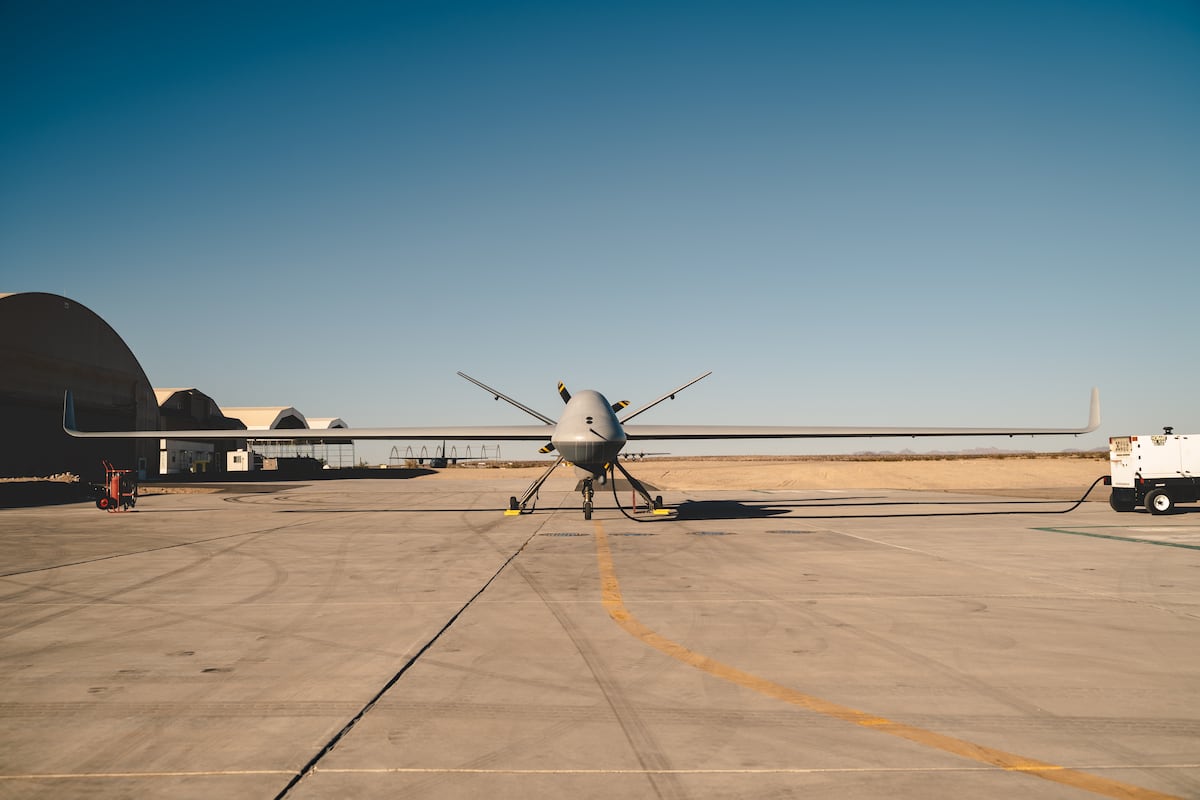
CHRISTCHURCH, New Zealand — As India struggles to develop its own medium-altitude, long-endurance drones, the government pulled the trigger this month on a purchase of 31 MQ-9Bs from General Atomics .
The tri-service buy is worth 320 billion rupees, or US$3.8 billion, with 15 SeaGuardians to be delivered to the Indian Navy (IN) and eight SkyGuardians each for the Indian Air Force and Indian Army.
Officials in New Delhi have not fully explained why they opted for expensive, U.S.-manufactured MQ-9Bs instead of domestic designs that would follow the country’s dogma of localizing arms manufacturing. India’s operational needs – including observing Chinese troops along its mountainous northern border, and monitoring Chinese and Pakistani naval activity in the Indian Ocean – are urgent.
“Our MQ-9B aircraft deliver valuable, actionable intelligence over land and over sea, and allow their operators to see, know and respond faster than ever before,” General Atomics spokesman C. Mark Brinkley said. The new order stands to make India the largest operator of MQ-9Bs.
Indian defense leaders believe they can no longer wait for government agencies to satisfactorily develop domestic drones like the TAPAS BH-201, a platform that has experienced difficulties and has yet to meet performance requirements.
The Indian Navy’s vice chief, Vice Adm. Krishna Swaminathan, told reporters on Oct. 22 that “the TAPAS drones in their current form do not entirely meet our requirements,” which was why it had sought MQ-9Bs instead.
Swaminathan added: “We hope the next version of TAPAS will be much better. We look forward to that day when we can make such drones like the MQ-9B, and maybe TAPAS is the right way to go.”
India is struggling to compete with nemeses China and Pakistan in the field of high-performance drones. The latter, for example, has procured the TB2 Bayraktar and Akinci from Turkey, as well as Wing Loong and CH-4B drones from China.
Delhi initially expressed interest in the MQ-9A in 2016. The U.S. offered the navy 22 MQ-9B SeaGuardians in 2017, before the army and air force decided to also procure the type in 2018. As negotiations continued to drag on, the Indian Navy leased two SeaGuardians in 2020, one of which fell into the Bay of Bengal in September.
India signed a contract with General Atomics Global India for performance-based logistics for the new MQ-9Bs, allowing depot-level maintenance, repair and overhaul to take place in India.
Gordon Arthur is an Asia correspondent for Defense News. After a 20-year stint working in Hong Kong, he now resides in New Zealand. He has attended military exercises and defense exhibitions in about 20 countries around the Asia-Pacific region.
新西兰基督城——由于印度正努力开发自己的中空长航时无人机,该国政府本月决定从通用原子公司购买 31 架 MQ-9B 无人机。
此次三军联合采购价值 3200 亿卢比,约合 38 亿美元,其中 15 架“海上卫士”无人机将交付给印度海军,8 架“空中卫士”无人机将分别交付给印度空军和印度陆军。
新德里官员尚未完全解释为何选择昂贵的美国制造的MQ-9B无人机,而不是遵循印度武器本土化原则的国产无人机。印度的作战需求十分迫切,包括监视其北部山区边界的中国军队,以及监控中国和巴基斯坦在印度洋的海军活动。
通用原子公司发言人C·马克·布林克利表示:“我们的MQ-9B无人机能够提供陆地和海上极具价值且可操作的情报,使操作人员能够以前所未有的速度发现、了解并做出反应。” 这份新订单有望使印度成为MQ-9B无人机的最大用户。
印度国防领导人认为,他们不能再等待政府机构令人满意地开发出像 TAPAS BH-201 这样的国产无人机了,该平台遇到了诸多困难,尚未达到性能要求。
印度海军副参谋长克里希纳·斯瓦米纳坦海军中将 10 月 22 日告诉记者,“目前 TAPAS 无人机并不完全满足我们的要求”,因此印度才寻求采购 MQ-9B 无人机。
斯瓦米纳坦补充道:“我们希望下一版本的TAPAS会更好。我们期待着有一天能够制造出像MQ-9B那样的无人机,也许TAPAS是正确的方向。”
印度在高性能无人机领域难以与宿敌中国和巴基斯坦竞争。例如,巴基斯坦已从土耳其采购了TB2 Bayraktar和Akinci无人机,并从中国采购了翼龙和CH-4B无人机。
印度德里最初于2016年对MQ-9A无人机表示出兴趣。美国于2017年向印度海军提供了22架MQ-9B“海上卫士”无人机,之后印度陆军和空军于2018年决定也采购该机型。由于谈判持续拖延,印度海军于2020年租赁了两架“海上卫士”无人机,其中一架于9月坠入孟加拉湾。
印度与通用原子全球印度公司签署了一份基于绩效的后勤合同,为新型 MQ-9B 无人机提供后勤保障,允许在印度进行基地级维护、修理和大修。
戈登·阿瑟是《防务新闻》的亚洲特派记者。在香港工作20年后,他现居新西兰。他曾到访亚太地区约20个国家,参加过军事演习和防务展览。