First woman takes helm of 130-year-old Iban longhouse in Sarawak首位女性掌管砂拉越拥有130年历史的伊班族长屋
BINTULU, Sept 14 — After more than a century of Iban settlement in Sera, Sebauh, Judy Stephen has become the first woman to take on the role of tuai rumah (longhouse chieftain),...
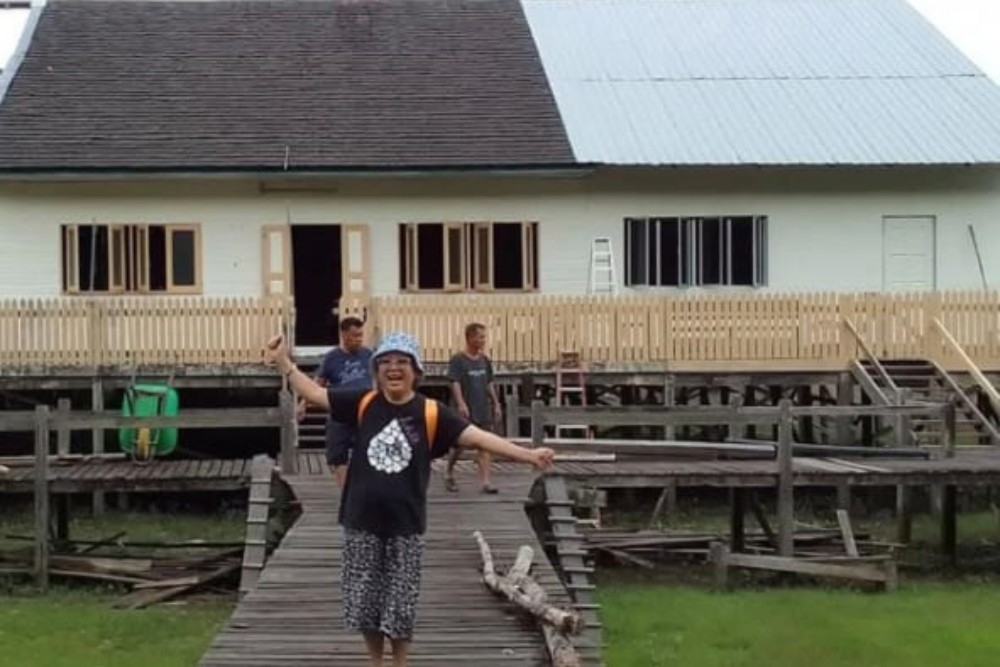
Judy Stephen became the first woman longhouse chieftain in Sera, succeeding her uncle on July 1, underlining more than a century of Iban leadership history.
The longhouse, with roots dating back to the 1860s, serves as both a historical landmark and a community hub, emphasizing the importance of land and heritage preservation.
Judy's leadership focuses on community unity, developing infrastructure like bridges for safety, integrating modern opportunities, and maintaining cultural identity and ancestral land rights.
BINTULU, Sept 14 — After more than a century of Iban settlement in Sera, Sebauh, Judy Stephen has become the first woman to take on the role of tuai rumah (longhouse chieftain), and she is the 10th to lead this community.
For her, the appointment is a special milestone.
“I feel that No 10 is a good number. I am also very grateful to be the first woman to take over the headship.
“I know it will not be easy, but I am ready to do my best.”
Judy, 60, was officially appointed the tuai rumah on July 1 this year, succeeding her uncle TR Jack Sigie.
Her appointment is significant not only because she is the first woman to lead her community, but also because her longhouse has a history stretching back more than 130 years.
A longhouse with a long history
Judy’s longhouse is located about 50km from Bintulu. It can be reached by both road and river, although the former can sometimes be a challenging journey.
Visitors travelling by car have to park near the Sera River and cross the river to reach the longhouse.
The present longhouse stands on the same general site where Judy’s ancestors settled after moving from Ulu Skrang during the time of the Second Rajah of Sarawak, Sir Charles Brooke.
According to Judy, the first settlement was established sometime in the 1860s, when her great-great-grandfather Bulan Genaya was issued the “Internal Migration Permit” by the Rajah.
From Ulu Skrang, they landed at Nanga Sebauh River, where they built their temporary longhouse.
The original longhouse was a traditional structure, with belian (ironwood) used extensively for the roof, walls and floor.
Even the ruai , the common passage where longhouse residents gather and community life takes place, was made from belian .
Like many established longhouses, Judy’s has been rebuilt several times — the last reconstruction took place in 1989.
For Judy, seeing the longhouse continue to grow is something she looks forward to.
“I have inherited 18 doors, or families. Some families are still working elsewhere. It is exciting to think about how our longhouse can grow in the future,” she said.
From Ulu Skrang to Sebauh
The story of the Sera settlement began with the early Iban pioneers who travelled from Ulu Skrang to this Bintulu area during the rule of Rajah Charles Brooke.
Judy’s family history is closely connected with this migration.
Her great-great-grandfather Bulan was among the early Iban migrants from Nanga Bunu in Ulu Skrang. The family history records that he had been involved in the struggles of the time before eventually choosing a more peaceful path.
His son, Jelani Rekan, later became a key figure of the community.
The early Iban settlers arrived in Bintulu, explored the Pandan, Ulu Kemena and Sera areas, where they sourced forest products such as rattan and wild rubber to be traded for cash.
Over time, these temporary camps became permanent settlements.
Judy said the original longhouse was much larger than it is today.
“The original longhouse had 56 bilik (household units). In those days, longhouses were really long,” she recalled.
Over the generations, some families eventually moved away and established new longhouses.
One of the closest breakaway communities is Rumah Tabor, located on the opposite bank of the Sera River.
However, not all of the Sera community joined the breakaway in 2009.
Many families, including Judy’s, continue living in the present longhouse.
For Judy, these movements are part of the natural history of Iban communities.
“It’s the people’s choice, and it cannot be prevented from happening.
“Families sometimes move away because of work, farming opportunities, or because of disputes or disagreements, or simply the desire to establish a new settlement.”
Judy’s uncle Jack was appointed the chieftain in 2009.
His predecessors were Tabor Lasah who led the longhouse from 1979 to 2009; Sigie Ugam (1971-1979); Anggot Manjan (1955-1971); Nilie Rurong (1933-1955); Akat Buja (1932-1933); Jalin Mambang (1913-1932); Bantin Apai Lingang (1896-1913); and Chaong Apai Tayok (1889-1895).
Judy now carries the responsibility of continuing that line of leadership.
Judy grew up in a family where education was highly valued.
She is the daughter of Maria Abok and Stephen Randi Sekalai, two of the early educated Ibans from the Sebauh area.
Her father was a Bintulu Town Council officer before becoming involved in private construction.
He was among the early Iban intellectuals who studied at Batu Lintang School and College in Kuching.
Her mother was the daughter of Temenggong Datuk Abok Jalin, a paramount Iban community leader.
Such upbringing encouraged Judy to look beyond the immediate present.
As a young girl, she dreamed of becoming a librarian because she loved books.
The first novel she read was Anne of Green Gables — a 1908 novel by the Canadian author, Lucy Maud Montgomery — which she borrowed from the then-Kuching State Library.
That love has never left her. Today, her home has a sizeable collection of books.
“You can see books everywhere in my home!” she said with a laugh.
Judy was educated at St Teresa’s School in Kuching and later attended Kolej Tun Haji Bujang in Miri for her Form 6 studies.
She furthered her studies in the UK, but was recalled because of the country’s economic downturn.
Nevertheless, she went on to develop a wide range of interests and skills.
She has training in banking, having worked in Bank Utama (the predecessor of today’s RHB Bank) for 10 years, but later resigned due to family commitment.
She is an artisan baker and runs FreyaCraft Bintulu, a business that reflects her interest in sewing and handicrafts.
She hopes to continue her sewing activities after having settled into her new responsibilities as tuai rumah .
Despite her busy schedule, Judy is currently studying law.
For her, learning is clearly a lifelong journey.
Life shaped by responsibility
Judy’s life has also not been without challenges.
She married Sudin Manja of Machan, Kanowit, in 1990, but he passed away in 2009.
She then raised her two daughters, Charraine and Pheonnie — both in their 30s now — on her own.
She and her daughters then relocated to Kuala Lumpur and stayed there for 15 years before returning home to take care of her elderly parents.
Her experience as a mother and widow has given her an understanding of the responsibilities that come with caring for a family.
Today, Judy brings that experience into her role as a community leader.
One of the things Judy is particularly proud of is the primary school located near her longhouse.
SK Hermanus Assan was established in 1963 after the then-Penghulu Abok Jalin appealed to the Sarawak government for a school to serve the children of the surrounding longhouses in Sera.
He then named the school after his brother, Hermanus Assan, the first Iban District Officer in Sarawak.
Before the school was built, the children had to travel to Central Upper Primary School in Sebauh, which was a difficult journey.
Some even gave up studying altogether.
The first school building was simple — a wooden structure accommodating 30 children from seven nearby longhouses.
Over the years, enrolment grew and today, the school has some 73 pupils.
For the community, the school is more than just a place of learning. It is part of the history of Sera and a reminder of the importance earlier generations placed on education.
Keeping community safe
Today, however, Judy has a grave concern — the crocodile-infested Sera River.
For families whose children have to cross the river by boat, this is a serious matter.
“Our greatest concern is the safety of our children when they cross the river. We have seen crocodiles during the day and at night,” she said.
Teachers and the security guard take precautions when the children travel by boat, but Judy believes the community should not have to live with this worrying concern.
She hopes the government would consider building a bridge across the river.
“It can be a simple bridge — a hanging bridge, a bailey bridge or even a basic wooden bridge.
“We will all feel much safer. It is never too late to build a bridge,” she said.
For Judy, this is one of the first issues she hopes to take up as a tuai rumah .
Being a longhouse chieftain is more than carrying a title.
She has to help maintain unity among the residents, ensure that the biliks are properly looked after, encourage residents to keep the longhouse safe and orderly, and ensure that the community continues to observe its adat (customary laws).
She also has to work closely with the relevant government agencies, especially the Sebauh District Office.
For Judy, good leadership means listening to people.
She wants to work together with the residents to improve the longhouse, keep proper records and strengthen communication with the district authorities.
Most importantly, she wants the people of Sera to remain united.
Protecting ancestral land
Another responsibility close to Judy’s heart is the ancestral land surrounding the longhouse and other plots belonging to the Sera communities from the time of their ancestors’ migration to Sebauh.
She regards land as “one of the greatest treasures” handed down by her ancestors.
“The early settlers were known as hardworking farmers, particularly rice growers.
“Their ability to cultivate the land was one of the reasons they were encouraged to settle in Sebauh.
“Today, the farming activities have changed with the times.
“Many families grow oil palms and rubber trees, while others maintain fish ponds, as well as pepper, fruit and vegetable farms.”
For Judy, development does not mean forgetting the land.
“It means finding ways for the community to continue benefitting from it, while ensuring that the next generation will still have something to inherit.”
Judy is particularly passionate about preserving the history of the Iban community in Sebauh.
She believes that history should not simply remain in people’s memories.
“It should also be recorded so that the young people can learn about their families and their origins.
“My family holds a remarkable connection with Sebauh: my great-grandfather was Penghulu Jalin; his sons, Hermanus Assan and my grandfather Temenggong Datuk Abok Jalin were prominent local leaders.
“Their stories are part of the wider story of how Iban communities developed in the Kemena and Sebauh areas.
“In this respect, I hope to help preserve these stories for future generations.”
Nevertheless, Judy understands that the world around the longhouse is changing rapidly.
Young people are studying, working in towns and cities across the globe, and finding opportunities far beyond their ancestral homes.
Still, she believes that embracing modern life does not mean abandoning one’s roots.
“I believe the two can go together.
“The law gives us the tools to protect our rights. Our culture reminds us who we are and where we belong.
“Still, we must embrace new opportunities and welcome changes that are beneficial to us.
“At the same time, we must keep our cultural identity and adapt to what is good for our community.”
This belief and her experience led her to pick up a course named “Adatology”, which was conducted by the Society for Rights of Indigenous People of Sarawak (SCRIPS) earlier this year, to further equip her role as tuai rumah .
New chapter for Sera
The history of Sera has never been completely still.
Longhouses have grown, families have moved, new settlements have emerged, and generations have come and gone.
That is part of the story of the Iban community.
Now a new chapter has begun, with Judy becoming the first woman longhouse chieftain of Sera.
This formidable woman knows that she has inherited a responsibility built on more than a century of history, and she also knows that she cannot do it alone.
“My success depends on the cooperation of the families in my longhouse and the support from the wider community.
“What I am sure of is that I am approaching responsibility with determination and hard work, and also I strive to embrace new opportunities and help my people to do well.” — The Borneo Post
ABBA star rewrites 'Mamma Mia' to back Swedish election candidate
South Korea steps up to help citizens left behind by digital age
How Malaysia is shielding lower-income households from the global cost squeeze
Air quality worsens across Malaysia: 38 stations in unhealthy bracket, Johor hardest hit
PM: Decision to defer Najib’s pardon petition based on law, not personal prejudice
‘Our tebu is still sweet’: Tun Jugah’s son reflects on Sarawak, Malaysia at 63
朱迪·斯蒂芬成为塞拉长屋的第一位女酋长,于 7 月 1 日接替她的叔叔,巩固了伊班族一个多世纪的领导地位。
这座长屋的历史可以追溯到 19 世纪 60 年代,它既是历史地标,也是社区中心,凸显了土地和遗产保护的重要性。
朱迪的领导重点在于社区团结、发展桥梁等安全基础设施、融入现代机遇以及维护文化认同和祖传土地权利。
民都鲁,9 月 14 日——伊班族在塞拉县塞巴乌镇定居一个多世纪后,朱迪·斯蒂芬成为第一位担任长屋酋长(tuai rumah)的女性,也是领导该社区的第十位酋长。
对她而言,这项任命是一个特殊的里程碑。
“我觉得唐宁街10号是个好数字。我也非常荣幸能成为第一位担任此职的女性。”
我知道这并不容易,但我已经准备好尽我所能。
60岁的朱迪于今年7月1日正式被任命为女管家,接替了她的叔叔TR Jack Sigie。
她的任命意义重大,不仅因为她是第一个领导她所在社区的女性,还因为她的长屋有着超过 130 年的历史。
一座历史悠久的长屋
朱迪的长屋位于距离民都鲁约 50 公里处。虽然公路和水路都可以到达,但公路有时路途艰辛。
驾车前往的游客必须将车停在色拉河附近,然后过河才能到达长屋。
现在的长屋就建在朱迪的祖先在砂拉越第二任拉者查尔斯·布鲁克爵士时期从乌鲁斯克朗迁居到此的大致位置上。
据朱迪说,第一个定居点大约在 19 世纪 60 年代建立,当时她的曾曾祖父布兰·格纳亚从拉者那里获得了“内部移民许可证”。
他们从乌鲁斯克朗登陆,到达南加塞巴乌河,并在那里建造了他们的临时长屋。
最初的长屋是一座传统建筑,屋顶、墙壁和地板大量使用铁木(belian)。
就连长屋居民聚集和进行社区生活的公共通道——ruai,也是用belian制成的。
像许多已建成的长屋一样,朱迪的长屋也重建过几次——最近一次重建是在 1989 年。
对于朱迪来说,看到长屋继续发展壮大是她所期待的事情。
“我继承了18户人家,也就是18个家庭。有些家庭还在别处工作。想到我们的长屋未来会如何发展壮大,真是令人兴奋,”她说。
从乌鲁斯克朗到塞鲍
塞拉定居点的故事始于拉惹查尔斯·布鲁克统治时期,当时伊班族先驱者从乌鲁斯克朗迁徙到民都鲁地区。
朱迪的家族史与这次移民密切相关。
她的曾曾祖父布兰是早期从乌鲁斯克朗的南加布努迁徙而来的伊班族人之一。家族史记载,他曾参与当时的斗争,最终选择了更为和平的道路。
他的儿子杰拉尼·雷坎后来成为社区的关键人物。
早期伊班族定居者抵达民都鲁,探索了潘丹、乌鲁克梅纳和塞拉地区,在那里他们获取藤条和野生橡胶等森林产品,以换取现金。
随着时间的推移,这些临时营地变成了永久定居点。
朱迪说,最初的长屋比现在大得多。
“最初的长屋有56个比里克(住户单元)。那时候,长屋真的很长,”她回忆道。
几代人之后,一些家庭最终搬离了这里,建立了新的长屋。
离这里最近的分离社区之一是位于色拉河对岸的塔博尔村。
然而,并非所有 Sera 社区成员都在 2009 年加入了分裂。
包括朱迪一家在内的许多家庭,至今仍居住在现在的长屋里。
在朱迪看来,这些迁徙是伊班族群自然历史的一部分。
“这是人民的选择,无法阻止其发生。”
“有时,家庭搬迁是因为工作、务农机会,或者因为纠纷或分歧,或者仅仅是因为想要建立新的定居点。”
朱迪的叔叔杰克于 2009 年被任命为酋长。
他的前任是 Tabor Lasah,他于 1979 年至 2009 年领导长屋;西吉·乌加姆 (1971-1979);安戈特·曼詹(1955-1971);尼烈如蓉(1933-1955);阿卡特·布贾 (1932-1933);贾林·曼邦 (1913-1932);班丁阿派临港 (1896-1913);和Chaong Apai Tayok (1889-1895)。
现在,朱迪肩负着延续这一领导路线的重任。
朱迪在一个非常重视教育的家庭长大。
她是玛丽亚·阿博克和斯蒂芬·兰迪·塞卡莱的女儿,他们是塞巴乌地区最早接受教育的伊班族人之一。
她的父亲曾是民都鲁市议会的一名官员,后来才涉足私人建筑行业。
他是早期在古晋峇都林当学校和学院学习的伊班族知识分子之一。
她的母亲是伊班社区最高领袖天猛公拿督阿博贾林的女儿。
这样的成长经历让朱迪学会了放眼长远,关注眼前的利益之外的事情。
小时候,她梦想成为一名图书管理员,因为她热爱书籍。
她读的第一本小说是《绿山墙的安妮》,这是加拿大作家露西·莫德·蒙哥马利于 1908 年创作的小说,这本书是她从当时的古晋州立图书馆借阅的。
那份热爱从未离开过她。如今,她的家中收藏了相当数量的书籍。
“我家到处都是书!”她笑着说。
朱迪曾在古晋的圣特蕾莎学校接受教育,后来在美里的敦哈吉布章学院完成了六年级的学业。
她前往英国继续深造,但由于英国经济衰退而被召回。
然而,她后来培养了广泛的兴趣和技能。
她接受过银行业方面的培训,曾在万达银行(现RHB银行的前身)工作了10年,但后来因家庭原因辞职。
她是一位手工面包师,经营着 FreyaCraft Bintulu,这家店体现了她对缝纫和手工艺的兴趣。
她希望在适应了作为家庭主妇的新职责后,能够继续从事缝纫活动。
尽管日程繁忙,朱迪目前仍在攻读法律学位。
对她而言,学习显然是一段终身旅程。
责任塑造人生
朱迪的人生也并非一帆风顺。
1990年,她嫁给了卡诺维特县马昌镇的苏丁·曼贾,但他于2009年去世。
之后,她独自一人将两个女儿 Charraine 和 Pheonnie 抚养长大——她们现在都 30 多岁了。
之后,她和女儿们搬到吉隆坡,在那里生活了 15 年,然后返回家乡照顾年迈的父母。
她作为母亲和寡妇的经历让她深刻理解了照顾家庭的责任。
如今,朱迪将这些经验运用到她作为社区领导者的角色中。
朱迪特别引以为豪的事情之一是她家长屋附近的那所小学。
SK Hermanus Assan 成立于 1963 年,当时的彭胡鲁·阿博克·贾林向砂拉越政府请求建立一所学校,为塞拉周围长屋的孩子们服务。
然后,他以他哥哥赫尔曼努斯·阿桑(Hermanus Assan)的名字命名了这所学校,赫尔曼努斯·阿桑是砂拉越第一位伊班族地区官员。
学校建成之前,孩子们不得不前往塞巴乌的中央高小上学,这是一段艰难的旅程。
有些人甚至完全放弃了学业。
第一所学校建筑很简单——是一座木结构建筑,可容纳附近七座长屋的 30 名儿童。
多年来,入学人数不断增长,如今,这所学校约有 73 名学生。
对社区而言,这所学校不仅仅是一个学习场所。它是塞拉历史的一部分,也是对前人重视教育的最好提醒。
保障社区安全
然而,今天朱迪却有一个严重的担忧——塞拉河里鳄鱼出没。
对于孩子需要乘船过河的家庭来说,这是一件严肃的事情。
“我们最担心的是孩子们过河时的安全。我们白天和晚上都见过鳄鱼,”她说。
老师和保安人员在孩子们乘船出行时会采取预防措施,但朱迪认为社区不应该承受这种令人担忧的后果。
她希望政府能考虑在河上修建一座桥梁。
“它可以是一座简单的桥——一座吊桥、一座贝利桥,甚至是一座基本的木桥。
“我们都会感到更安全。亡羊补牢,为时未晚。”她说道。
对于朱迪来说,这是她作为家庭主妇希望着手解决的首批问题之一。
成为长屋首领不仅仅是拥有一个头衔。
她必须帮助维护居民之间的团结,确保房屋得到妥善照料,鼓励居民保持长屋的安全和秩序,并确保社区继续遵守其习俗(习惯法)。
她还必须与相关政府机构密切合作,特别是塞巴乌区政府。
在朱迪看来,好的领导力意味着倾听人民。
她希望与居民们一起努力改善长屋,做好记录,并加强与区政府的沟通。
最重要的是,她希望塞拉人民保持团结。
保护祖地
朱迪心中另一项重要的责任是长屋周围的祖传土地,以及塞拉族群自其祖先迁徙到塞巴乌以来就拥有的其他地块。
她认为土地是祖先留给她的“最宝贵的财富之一”。
“早期的定居者以勤劳的农民而闻名,特别是水稻种植者。
“他们具备耕种土地的能力,这也是他们被鼓励在塞巴乌定居的原因之一。”
“如今,农业活动与时俱进。”
“许多家庭种植油棕和橡胶树,而另一些家庭则经营鱼塘,以及胡椒、水果和蔬菜农场。”
对朱迪来说,发展并不意味着忘记土地。
“这意味着要找到让社区继续从中受益的方法,同时确保下一代仍然能够继承一些东西。”
朱迪尤其热衷于保护塞巴乌伊班族社区的历史。
她认为历史不应该仅仅停留在人们的记忆中。
“也应该记录下来,以便年轻人了解自己的家庭和出身。”
“我的家族与Sebauh有着非凡的联系:我的曾祖父是Penghulu Jalin;他的儿子Hermanus Assan和我的祖父Temenggong Datuk Abok Jalin都是当地杰出的领导人。
“他们的故事是伊班族社区在凯梅纳和塞巴乌地区发展历程的更广泛故事的一部分。
“在这方面,我希望能够帮助后代保存这些故事。”
然而,朱迪明白长屋周围的世界正在迅速变化。
世界各地的年轻人正在学习、工作,并在远离祖籍地的地方寻找机会。
不过,她认为拥抱现代生活并不意味着抛弃自己的根。
我认为这两者可以结合起来。
法律赋予我们保护自身权利的工具。我们的文化提醒我们自己是谁,我们属于哪里。
“但是,我们必须抓住新的机遇,欢迎对我们有利的变化。”
“与此同时,我们必须保持我们的文化认同,并适应对我们社区有利的事情。”
这种信念和她的经历促使她参加了今年早些时候由砂拉越土著人民权利协会(SCRIPS)举办的名为“Adatology”的课程,以进一步提升她作为家庭女管家(tuai rumah)的角色。
塞拉的新篇章
塞拉的历史从来都不是一帆风顺的。
长屋不断扩大,家庭不断迁徙,新的定居点不断出现,一代又一代人来来往往。
这是伊班族社群故事的一部分。
现在,新的篇章开始了,朱迪成为了塞拉村第一位女性长屋酋长。
这位令人敬畏的女性深知自己继承了一份建立在一个多世纪历史基础上的责任,她也知道自己无法独自完成这项责任。
“我的成功取决于我长屋里各家各户的合作以及更广泛的社区的支持。”
“我确信的是,我将以坚定的决心和辛勤的努力履行我的职责,同时我也将努力抓住新的机遇,帮助我的人民过上更好的生活。”——《婆罗洲邮报》
ABBA乐队成员重写《妈妈咪呀》歌词,支持瑞典选举候选人
韩国加大力度帮助被数字时代落下的公民
马来西亚如何保护低收入家庭免受全球成本压力的影响
马来西亚空气质量恶化:38个监测站空气质量指数低于健康标准,柔佛州受影响最严重
总理:推迟纳吉布赦免申请的决定是基于法律,而非个人偏见。
“我们的 Tebu 仍然很甜”:敦朱加 (Tun Jugah) 63 岁的儿子回忆马来西亚砂拉越