America’s Electronic Attackers May Have a Secret Mission美国电子攻击者可能肩负着一项秘密任务
Official U.S. Central Command document outlines seven electronic warfare functions, but a mysterious eighth task is redacted.
新闻视频
By Joseph Trevithick
Updated Jul 5, 2020 7:03 PM EDT
It’s no secret that the American-led coalition fighting ISIS have made good use of electronic warfare, scrambling terrorists’ communications and potentially neutralizing their improvised explosive devices (IED). An official U.S. military guide on the subject suggests electronic attackers in Iraq, Syria, and beyond may have another, secret mission.
U.S. Central Command (CENTCOM) has a regulation covering electronic warfare that outlines basic policies, capabilities, and responsibilities for forces performing the role throughout its so-called “area of responsibility,” which stretches from Egypt through the Middle East and into Central Asia. Though many sections talk in general terms, using established Pentagon-wide definitions, the document includes notes specifically for the Command’s staff and the units they oversee, including functions labeled as either confidential or secret.
The War Zone obtained a partial and still heavily redacted copy of the record, officially known as USCENTCOM Regulation 525-18, Electronic Warfare, dated 2012, via the Freedom of Information Act. The document’s overall classification is secret and American officials can only release its full contents to anyone besides other U.S. units, or relevant authorities from Australia, Canada, or Great Britain – a grouping commonly known by the acronym ACGU or the nickname “Four Eyes.”
“Effective EW [electronic warfare] operations will benefit USCENTCOM operations by,” one section begins, before listing eight specific mission profiles. The seven unclassified ones are not surprising, including tasks such as disrupting enemy command and control networks and knocking out hostile air defenses. There is also mention of protecting friendly forces, which could involve jamming a remote control for an IED or helping spot an ambush, as well as intelligence gathering as important roles for electronic warfare forces.
But the third “benefit” is marked secret. CENTCOM’s censors scrubbed the entire entry, citing national security , specifically information that might negatively impact American “military plans, weapons systems, or operations.” There are no obvious contextual clues as to what this activity or activities might be, especially given what isn’t redacted. On the other hand, we know a lot about what it’s not.
An EC-130H Compass Call starts its engines in preparation for a mission against ISIS., USAF
In addition to established tactics such as the suppression of enemy air defenses, the regulation describes less well known electronic warfare missions such as “ navigation warfare ,” whereby jammers on the ground or in the air would attack an opponent’s ability to use GPS or other electronic navigational aids, as well as “ information operations ,” which could include jobs such as breaking up propaganda broadcasts or injecting friendly messaging on the airwaves. On the latter front, the Pennsylvania Air National Guard does operate a small number of unique EC-130J Commando Solo aircraft, which can act as flying radio and television stations. There are even descriptions of how CENTCOM might use electronic warfare techniques in space, cyberspace, and with regards to directed energy weapons .
Electronic attack “may be used to deny an adversary freedom of action in space by preventing the [command and control] of space assets or by preventing or negating the ability to use space systems and services for purposes hostile to the U.S.,” one section of the regulation explains. “Cyberspace operations may be used to force an adversary from wired to wireless networks that are vulnerable” to electronic attack, another passage notes. The basic definition of directed energy warfare is “military action involving the use of [directed energy] weapons, devices, and countermeasures to incapacitate, cause direct damage or destruction of adversary equipment, facilities, and/or personnel or to determine, exploit, reduce, or prevent hostile use of the [electromagnetic spectrum] through damage, destruction, and disruption,” according to the guide.
So, if the classified electronic warfare mission is none of the above, then what is it? One possibility is that this could involve distributed attacks on computer systems that run air defense networks, communications systems, or equipment that performs other sensitive military functions. BAE Systems is known to have already developed and produced a shadowy computer program called Suter that could do all this and possibly more, from turning radars in the wrong direction to just crashing air defense network-related software altogether. This might not be useful against a low-tech opponent like ISIS, but could give American forces a critical edge against an opponent with more established defensive networks, such as Iran or Syria. There is an entire separate section in the regulation that is also marked confidential and redacted in its entirety for the same national security reasons. It is possible this portion contains details on these functions.
Regardless, the unclassified types of missions mentioned in the document have already been particularly important against ISIS, which has increasingly turned to IEDs and guerrilla tactics in the face of overwhelming American firepower. As Iraqi and Kurdish forces pushed into cities such as Ramadi and Mosul, it became apparent that the terrorists had rigged up entire houses to explode and set up other obstacles to hinder the offensives. American electronic warfare assets hampered the terrorists’ ability to respond to new developments on the ground, coordinate among themselves, and set off deadly boobytraps.
“We are inducing massive confusion and friction into their operations,” U.S. Air Force Lieutenant Colonel Josh Koslov, head of the 43rd Expeditionary Electronic Attack Squadron, part of the 386th Air Expeditionary Wing at Ali Al Salem Air Base in Kuwait, told the service’s reporters in 2016. “If you can’t talk, you can’t fight.”
On June 6, 2017, the Western-backed Syrian Democratic Forces (SDF), a coalition of Arab and Kurdish rebels , began the long awaited offensive into Raqqa, ISIS’ de facto capital in Syria. It seems reasonable to assume that electronic warfare will be just as critical to this operation as the other efforts to liberate major cities in Iraq and Syria from the terrorist group.
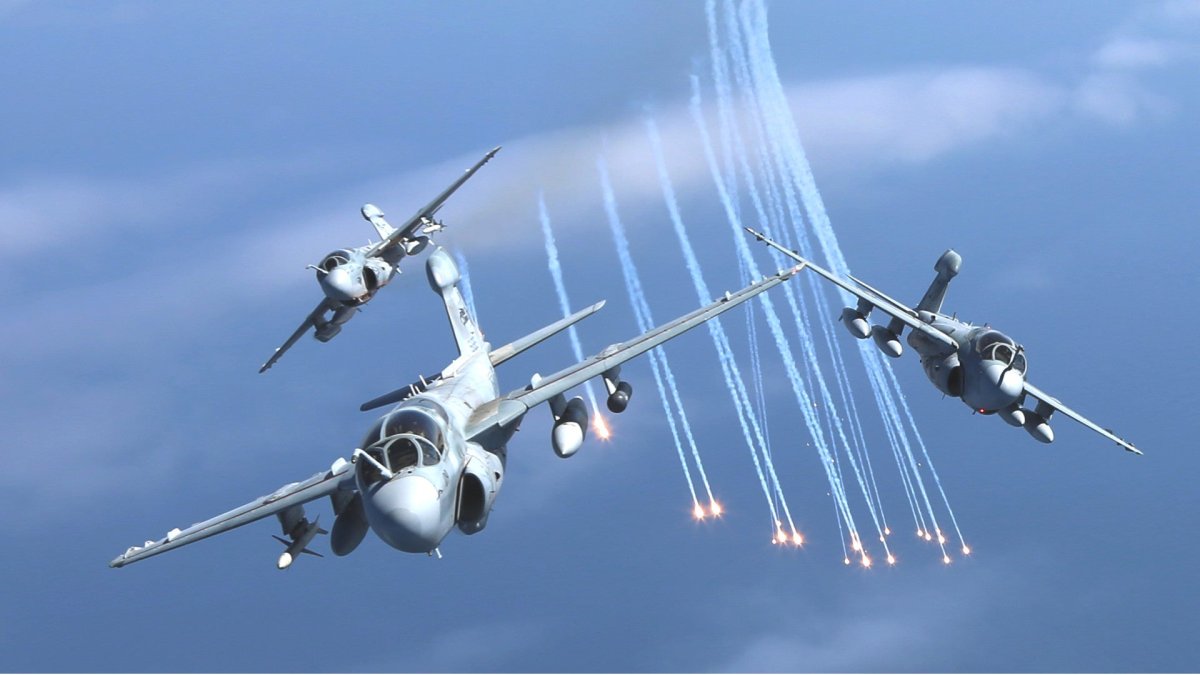
The U.S. military has a variety of aerial and ground-based systems that can perform these missions. The U.S. Air Force, Navy, and Marine Corps all have jamming planes, such as the EC-130H Compass Call and EA-18G Growler . The Marines has almost completely phased out the older EA-6B Prowler electronic attackers , but has continued to send them to bases in Kuwait and Turkey to fight ISIS in the meantime. The Navy and Marines are also fielding a podded electronic warfare system known as Intrepid Tiger II , which could give similar, if reduced capabilities to other types of aircraft including KC-130J Harvest Hawk gunships, MV-22B tilt-rotor transports, and ground attack and fighter aircraft such as the F-35B Joint Strike Fighter.
“We’re here to jam signals and blow stuff up, I guess,” a member of Marine Tactical Electronic Warfare Squadron Three (VMAQ-3) proudly told the American Forces Network in May 2017. At that time, the unit and its EA-6Bs were deployed to Incirlik Air Base in Turkey, technically part of U.S. European Command, but were flying missions from there against ISIS for CENTCOM.
A U.S. Marine Corps EA-6B Prowler in action against ISIS., USAF
On the ground, U.S. Army and Marine units have access to both vehicle and man-portable electronic warfare and signal-snooping equipment that can also be essential for both protecting against roadside bombs or locating enemy forces before they attack. For years now, localized jamming systems have been standard on many American vehicles in hotspots like Afghanistan and Iraq where there is a pervasive danger of IEDs.
On top of these more traditional electronic warfare tools, there have been multiple reports that the coalition’s has been looking at new ways to strike ISIS indirectly electronically, including through cyber warfare. “We are dropping cyber bombs,” Deputy Defense Secretary Bob Work said in April 2016 . “I’ve got to tell you right now it sucks to be ISIL,” he added, using another acronym for the brutal terrorist group. In May 2017, Defense One reported that the Pentagon tasked its brand new Algorithmic Warfare Cross Functional Team with helping hunt ISIS by finding ways to put machine learning and other technology to use in sifting through intelligence data. It seems reasonable to assume that the same systems could potentially be turned around to exploit information from electronic warfare systems, or maybe even coordinate cyber attacks.
So, the seven unclassified functions, combined with these previous reports, make it clear that electronic warfare has already been vital in the fight against ISIS. But America’s electronic warriors may be able to take it one step further in the fight against the terrorists or any other potential opponents in the Middle East.
Contact the author: joe@thedrive.com
Comments couldn’t be loaded. Please refresh the page.
作者:约瑟夫·特雷维西克
更新于美国东部时间2020年7月5日晚上7:03
众所周知,以美国为首的打击“伊斯兰国”的联军已有效地运用电子战手段,干扰恐怖分子的通信,并有可能将其简易爆炸装置(IED)拆除。一份美国军方官方指南指出,在伊拉克、叙利亚及其他地区,电子攻击者可能还有另一项秘密任务。
美国中央司令部(CENTCOM)有一项关于电子战的条例,概述了在其所谓的“责任区”(从埃及延伸至中东和中亚)内执行电子战任务的部队的基本政策、能力和职责。虽然许多章节使用五角大楼既定的定义进行概括性描述,但该文件也包含专门针对司令部参谋人员及其下属单位的说明,其中包括标有“机密”或“秘密”的职能。
《战区》网站通过《信息自由法》获取了一份部分内容且仍被大量删减的记录副本,该记录正式名称为美国中央司令部2012年发布的第525-18号条例《电子战》。该文件的总体密级为机密,美国官员只能将其全部内容透露给除其他美国部队或澳大利亚、加拿大或英国相关机构以外的任何人——这三个机构通常被称为ACGU或“四眼联盟”。
其中一节开头写道:“有效的电子战行动将通过以下方式惠及美国中央司令部”,随后列出了八项具体任务。七项非机密任务并不令人意外,包括干扰敌方指挥控制网络和摧毁敌方防空系统等。此外,还提到保护友军,例如干扰简易爆炸装置的遥控装置或协助发现伏击,以及情报收集,这些都是电子战部队的重要职责。
但第三项“好处”被标记为机密。中央司令部的审查人员以国家安全为由,删除了整条记录,特别是其中可能对美国“军事计划、武器系统或行动”产生负面影响的信息。由于未被删减的内容,我们无法从中找到任何明显的线索来判断这项活动究竟是什么。另一方面,我们却很清楚它不是什么。
一架EC-130H“罗盘呼叫”侦察机启动引擎,准备执行打击ISIS的任务。(美国空军)
除了压制敌方防空系统等既定战术外,该条例还描述了一些鲜为人知的电子战任务,例如“导航战”,即利用地面或空中干扰器攻击敌方使用GPS或其他电子导航设备的能力;以及“信息作战”,其任务包括干扰敌方宣传广播或在无线电波中投放友方信息。在信息作战方面,宾夕法尼亚州空中国民警卫队确实装备了少量独特的EC-130J“突击队员”单兵飞机,这种飞机可以作为空中广播和电视台使用。条例甚至还描述了中央司令部如何在太空、网络空间以及定向能武器领域运用电子战技术。
该条例的其中一节解释说,电子攻击“可用于阻止敌方对太空资产的指挥和控制,或阻止或抵消敌方利用太空系统和服务从事对美国不利活动的能力,从而剥夺敌方在太空的行动自由”。另一节指出,“网络空间行动可用于迫使敌方从有线网络转向易受电子攻击的无线网络”。该指南对定向能战的基本定义是“使用定向能武器、装置和反制措施,使敌方设备、设施和/或人员丧失能力、造成直接损坏或摧毁,或通过破坏、摧毁和干扰来确定、利用、减少或阻止敌方对电磁频谱的敌对使用”。
那么,如果这项机密电子战任务并非上述任何一种情况,它究竟是什么呢?一种可能性是,它可能涉及对运行防空网络、通信系统或执行其他敏感军事功能的设备的计算机系统发起分布式攻击。据悉,英国航空航天系统公司(BAE Systems)已经开发并生产了一款名为“Suter”的神秘计算机程序,该程序能够做到以上所有操作,甚至更多,例如将雷达指向错误方向,或者彻底瘫痪防空网络相关软件。对于像“伊斯兰国”(ISIS)这样技术水平较低的对手来说,这项技术或许作用不大,但对于拥有更完善防御网络的对手,例如伊朗或叙利亚,它却能为美军提供关键优势。出于同样的国家安全原因,该条例中还有一个单独的章节也被标记为机密并完全删节。这部分内容可能包含有关这些功能的详细信息。
无论如何,文件中提到的非机密任务类型对打击“伊斯兰国”而言已经尤为重要。面对美军压倒性的火力,“伊斯兰国”越来越多地转向简易爆炸装置和游击战术。随着伊拉克和库尔德部队推进到拉马迪和摩苏尔等城市,恐怖分子在整栋房屋内设置了爆炸装置,并设置其他障碍阻碍进攻,这一点变得显而易见。美军的电子战装备削弱了恐怖分子应对地面新情况、相互协调以及引爆致命陷阱的能力。
“我们正在给他们的行动制造巨大的混乱和摩擦,”美国空军中校乔什·科斯洛夫(Josh Koslov)在2016年告诉该军方记者。他是驻科威特阿里·萨利姆空军基地第386远征航空联队第43远征电子攻击中队的指挥官。“如果不能沟通,就无法战斗。”
2017年6月6日,由西方支持的叙利亚民主力量(SDF,一个由阿拉伯和库尔德反叛武装组成的联盟)发动了期待已久的攻势,目标是叙利亚境内的“伊斯兰国”实际首都拉卡。可以合理推断,电子战对于此次行动的重要性,丝毫不亚于此前从该恐怖组织手中解放伊拉克和叙利亚主要城市的行动。
美军拥有多种空中和地面系统可以执行这些任务。美国空军、海军和海军陆战队都拥有干扰飞机,例如EC-130H“罗盘呼叫”和EA-18G“咆哮者”。海军陆战队几乎完全淘汰了老旧的EA-6B“徘徊者”电子战飞机,但同时仍将其派往科威特和土耳其的基地,用于打击ISIS。海军和海军陆战队还在部署一种名为“无畏虎II”的吊舱式电子战系统,该系统可以为其他类型的飞机提供类似但威力稍弱的能力,例如KC-130J“丰收鹰”武装直升机、MV-22B倾转旋翼运输机以及F-35B联合攻击战斗机等对地攻击机和战斗机。
“我想,我们来这里是为了干扰信号和摧毁目标,”海军陆战队第三战术电子战中队 (VMAQ-3) 的一名成员在 2017 年 5 月自豪地告诉美国军队广播网。当时,该部队及其 EA-6B 电子战飞机部署在土耳其的因吉尔利克空军基地,名义上隶属于美国欧洲司令部,但实际上却从那里为美国中央司令部执行打击 ISIS 的任务。
美国海军陆战队EA-6B“徘徊者”电子战飞机正在打击ISIS。(美国空军)
在地面部队中,美国陆军和海军陆战队可以使用车载和便携式电子战及信号窃听设备,这些设备对于防范路边炸弹或在敌军发动攻击前定位敌军至关重要。多年来,在阿富汗和伊拉克等简易爆炸装置(IED)威胁普遍存在的热点地区,局部干扰系统已成为许多美军车辆的标配。
除了这些较为传统的电子战工具外,多份报告指出,联军一直在探索以电子方式间接打击“伊斯兰国”(ISIS)的新途径,包括网络战。“我们正在投放网络炸弹,”美国国防部副部长鲍勃·沃克在2016年4月表示。“我必须告诉你们,做‘伊斯兰国’(ISIL)成员真是太惨了,”他补充道,这里他用了另一个缩写来指代这个残暴的恐怖组织。2017年5月,《防务一号》(Defense One)报道称,五角大楼已责成其新成立的算法战跨职能团队,通过探索如何利用机器学习和其他技术来筛选情报数据,从而协助追捕“伊斯兰国”。由此看来,同样的系统或许也能被用来利用电子战系统的信息,甚至可能用于协调网络攻击。
因此,这七项非机密功能,结合之前的报告,清楚地表明电子战在打击“伊斯兰国”的斗争中已经发挥了至关重要的作用。但美国的电子战专家或许能够更进一步,在打击恐怖分子或中东任何其他潜在对手的战斗中发挥作用。
联系作者:joe@thedrive.com
评论加载失败,请刷新页面。