Why Russia’s MiG-35 Is Starting To Look Like A Dead Duck为什么俄罗斯的米格-35看起来像只死鸭子
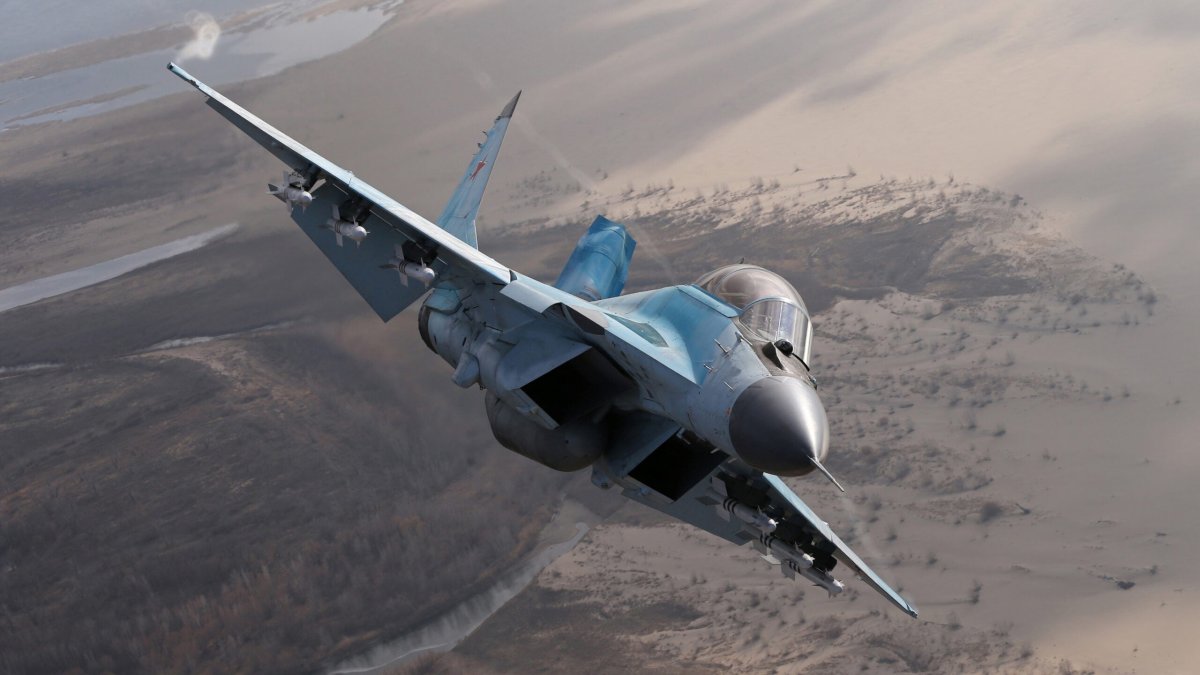
The latest-generation Fulcrum should have been in service by now, so why isn’t it and what went wrong?
新闻视频
Updated Nov 27, 2020 6:34 PM EST
Almost four years on from the MiG-35’s first flight, there’s no sign of the hoped-for large-scale orders for the warplane from the Russian Defense Ministry. The Fulcrum-F — described by the manufacturer as a “Gen 4++” fighter — had been slated to begin frontline squadron service around mid-2020, but to date, Russia has purchased only six examples.
The latest iteration of the Fulcrum, which is based on the standard MiG-29 ‘s 43-year-old Cold War-era design , entered development in 2014 thanks to defense ministry funding ready to meet a domestic requirement, but the fighter is still undergoing its mandated state flight-test campaign. It had been hoped that trials would be completed by late 2018 or early 2019, after which Moscow would place an order for at least 30 aircraft.
Confusingly, the Russian Aircraft Corporation MiG (RAC MiG) has used the MiG-35 designation before its current and latest incarnation. The name was previously applied to a pair of prototypes flown as long ago as December 2011 and then offered, unsuccessfully, to India under its 126-aircraft Medium Multi-Role Combat Aircraft (MMRCA) tender. Although speculative — the prototypes were based on modified MiG-29K/KUB naval fighters — the promised Indian MiG-35 would have been more advanced than the current offering, including a Phazotron-NIIR Zhuk-AE active electronically-scanned array (AESA) radar.
The first two pre-production examples of this latest MiG-35 were presented to officials in an official ceremony at RAC MiG’s Lukhovitsy factory, southeast of Moscow, in January 2017. During the event, Russian Aerospace Forces commander-in-chief Colonel General Viktor Bondarev said that all of the service’s “lightweight” fighters would eventually be replaced by the new MiG-35.
The MiG-35 cockpit is dominated by three liquid-crystal displays and a HUD., RAC MiG
The initial two jets were single-seat MiG-35S, with the bort number ‘702,’ and two-seat MiG-35UB, carrying ‘712’. These aircraft had both completed maiden flights towards the end of November 2016.
While test work continues, the defense ministry has signed up to buy just six MiG-35s, ordered in August 2018 under the State Armament Program. This token force — four single-seaters and a pair of two-seaters — will continue the evaluation effort and are then expected to join the Strizhi (Swifts) aerial display team based at Kubinka near Moscow. In August last year, RAC MiG admitted the joint state tests wouldn’t be complete before the end of 2021.
It’s a far cry from earlier ambitions to introduce the MiG-35 as standard “lightweight” fighter across the Russian Aerospace Forces, also known by the Russian acronym VKS. In the meantime, the requirement for such a fighter looks increasingly questionable. With just one frontline MiG-29 unit remaining in the VKS order of battle, it’s hard to see exactly where the MiG-35 fits in. Rather than trading legacy Fulcrums for brand-new MiG-35s, some squadrons have switched to the “heavyweight” Su-30SM Flanker instead.
Moreover, when it comes to the price tag, the difference between “lightweight” products from RAC MiG and the “heavyweight” offerings from the Sukhoi stable can be overstated. Even in its original form, the cost of a basic MiG-29 was 80% that of the Su-27 Flanker . The difference in operating costs between the two fighters was also similar.
Plans to outfit the Strizhi team with MiG-35s were revealed by the then commander of the VKS, Lieutenant General Andrey Yudin, in March 2017. While the team’s aircrew do have a frontline combat tasking alongside their display work, it’s likely the jets would mainly be used to hunt for lucrative export orders. It was at one stage expected that Strizhi pilots would get their hands on MiG-35s from late 2019, during a conversion course with the 929th Chkalov State Flight-Test Center at Akhtubinsk in Russia’s southwestern Astrakhan region — there is no confirmation that this happened. It’s noteworthy that while the Strizhi team still relies on the veteran Soviet-era MiG-29, the VKS’ Russikiye Vityazi (Russian Knights) team traded its Su-27s for Su-30SMs back in 2017 and has now begun to receive the latest Su-35S Flankers , too.
A MiG-35 prototype carries four KAB-500Kr TV-guided bombs and a pair of inert R-73 air-to-air missiles., RAC MiG
The other prime candidate to receive the MiG-35 within the VKS is the 3624th Aviation Base at Erebuni, in neighboring Armenia — the last of the air arm’s frontline MiG-29 operators. Back in February 2017, the base’s commander, which Russian media only referred to as Colonel Petrov, said that the unit’s aging MiG-29s would be replaced by MiG-35s. With no follow-on contract signed, delivery of the jets to the air force’s Armenian outpost has become an increasingly remote prospect. More recently, it’s been suggested the base will start to receive new Su-30SMs instead .
Should the new-generation Fulcrum ever enter VKS service, it will likely receive the MiG-35S (single-seat) and MiG-35UB (two-seat) designations. Internally, RAC MiG calls these aircraft 9.41SR and 9.47SR respectively — in fact, they both share a common airframe structure and cockpit canopy. The single simply eliminates the seat from the rear cockpit and replaces it with an additional fuel tank.
The MiG-35 is a far cry from the basic and strictly limited capability MiG-29. The advanced cockpit is furnished with three color liquid-crystal displays as well as a monochrome head-up display (HUD). The fighter’s Phazotron-NIIR FGM-129 Zhuk-M radar — inherited from the carrier-based MiG-29KR/KUBR — features a mechanically scanned slotted-array antenna rather than an AESA. It’s combined with a new OLS-UEM optronic system that brings together electro-optical and infrared sensors plus a laser rangefinder/designator. The pilot is also provided with a helmet-mounted display system.
The MiG-35 in single-seat form. Both this and the two-seat fighter share a common cockpit canopy., RAC MiG
While token efforts were made to enhance the MiG-29’s survivability during its early development, the MiG-35 features a more modern self-protection suite in which a radar warning receiver is combined with a missile approach warning system (six ultraviolet sensors to ensure 360-degree coverage) and two wingtip laser warners. The suite can be complemented by an external radar jamming pod.
The latest-generation armament includes both air-to-air and air-to-ground stores, among them the RVV-SD air-to-air missile, an improved version of the R-77 , with active radar seeker for engagements at beyond visual range. Alongside the full range of conventional air-to-ground weapons, new-generation precision-guided stores include the modular Kh-38 air-to-surface missile and the Grom family of glide munitions.
A twin-seat MiG-35 leads a two-ship formation., RAC MiG
The appearance of a further refined MiG-35 at last year’s biennial MAKS airshow outside Moscow indicated that RAC MiG has begun to look for MiG-35 customers further afield. This MiG-35 variant was presented in a “renewed export configuration” with enhanced avionics including open-architecture software, reinstated Zhuk-AE AESA radar, plus a new larger wing and tail. In this form, the jet is being offered to India to meet its new requirement for 114 Multi-Role Fighter Aircraft (MRFA). Here, the Russian manufacturer faces stiff competition from Airbus Defence and Space, Boeing, Dassault Aviation, Lockheed Martin, Saab, and Sukhoi.
Without a doubt, the MiG-35 is a capable fighter. The similar MiG-29M/M2 has also secured an export order from Egypt . However, prospects for the new-generation Fulcrum with the Russian Aerospace Forces appear slim. Combined with the continued ascendancy of the Flanker, and with the all-new Su-57 waiting in the wings, it’s becoming increasingly hard to make the case for a large-scale MiG-35 order.
Contact the author: thomas@thedrive.com
Comments couldn’t be loaded. Please refresh the page.
更新于美国东部时间2020年11月27日下午6:34
米格-35首飞已近四年,但俄罗斯国防部仍未如期下达大规模订单。这款被制造商称为“第四代++”战斗机的“支点-F”原计划于2020年中期左右开始在前线部队服役,但迄今为止,俄罗斯仅采购了六架。
最新型的“支点”(Fulcrum)战斗机基于冷战时期服役43年的标准型米格-29设计,于2014年在国防部的资助下开始研发,以满足国内需求。但该战斗机目前仍在进行国家规定的飞行测试。此前曾预计测试将于2018年底或2019年初完成,之后莫斯科将订购至少30架该型飞机。
令人困惑的是,俄罗斯米格飞机制造公司(RAC MiG)在其当前最新版本之前就曾使用过米格-35这个名称。该名称此前曾用于两架原型机,这两架原型机早在2011年12月就已试飞,之后米格-35曾作为印度126架中型多用途战斗机(MMRCA)招标项目的一部分提供给印度,但最终未能中标。尽管这只是推测——原型机是基于改进型的米格-29K/KUB舰载战斗机——但承诺提供给印度的米格-35战机本应比目前的版本更加先进,包括配备Phazotron-NIIR Zhuk-AE有源相控阵雷达(AESA)。
2017 年 1 月,在莫斯科东南部的卢霍维茨工厂,俄罗斯空天军米格公司举行正式仪式,向官员们展示了最新型米格-35战斗机的首批两架预生产型。仪式上,俄罗斯空天军总司令维克托·邦达列夫上将表示,该军种所有“轻型”战斗机最终都将被新型米格-35战斗机取代。
米格-35的座舱主要由三个液晶显示屏和一个平视显示器(HUD)组成。
最初的两架喷气式飞机分别是单座的米格-35S(机身编号“702”)和双座的米格-35UB(机身编号“712”)。这两架飞机均于2016年11月底完成了首飞。
在测试工作仍在进行的同时,国防部已签署协议,根据国家武器装备计划于2018年8月订购了六架米格-35战斗机。这批象征性的战机——四架单座型和两架双座型——将继续进行评估工作,之后预计将加入驻扎在莫斯科附近库宾卡的“雨燕”(Strizhi)飞行表演队。去年8月,米格飞机公司承认,联合国家测试在2021年底前无法完成。
这与早先将米格-35作为俄罗斯空天军(也称VKS)标准“轻型”战斗机的雄心壮志相去甚远。与此同时,对这种战斗机的需求也越来越令人质疑。目前VKS的作战序列中仅剩一个一线米格-29中队,米格-35的定位显得十分模糊。一些中队并没有用全新的米格-35替换老旧的米格-29,而是转而装备了“重型”苏-30SM“侧卫”。
此外,就价格而言,米格-29“轻型”产品与苏霍伊“重型”产品之间的差异可能被夸大了。即使是最初版本,一架基本型米格-29的成本也只有苏-27“侧卫”的80%。两款战斗机的运营成本差异也相近。
2017年3月,时任俄罗斯空天军司令安德烈·尤金中将透露了为“雨燕”(Strizhi)飞行表演队配备米格-35战机的计划。虽然该表演队的飞行员除了飞行表演外,还承担着前线作战任务,但这些战机很可能主要用于争取利润丰厚的出口订单。此前曾有消息称,“雨燕”飞行表演队的飞行员将于2019年底在位于俄罗斯西南部阿斯特拉罕州阿赫图宾斯克的第929契卡洛夫国家飞行试验中心接受改装训练,从而获得米格-35战机——但目前尚无证据表明此事已成定局。值得注意的是,虽然 Strizhi 战队仍然依靠老旧的苏联时代的 MiG-29,但俄罗斯空军的 Russikiye Vityazi(俄罗斯骑士)战队早在 2017 年就用 Su-27 换成了 Su-30SM,现在也开始接收最新的 Su-35S 侧卫战斗机。
一架米格-35原型机携带四枚KAB-500Kr电视制导炸弹和两枚惰性R-73空空导弹。
俄罗斯空天军(VKS)内另一个最有可能接收米格-35战斗机的基地是位于邻国亚美尼亚埃雷布尼的第3624航空基地——该基地是空天军最后一支仍在使用米格-29战斗机的部队。早在2017年2月,该基地指挥官(俄罗斯媒体只称其为彼得罗夫上校)就曾表示,该部队老旧的米格-29战斗机将被米格-35战斗机取代。但由于后续合同尚未签署,向该空军亚美尼亚前哨基地交付米格-35战斗机的可能性越来越小。最近有消息称,该基地将转而接收新的苏-30SM战斗机。
如果新一代“支点”战斗机最终加入俄罗斯空军服役,它很可能会被命名为米格-35S(单座)和米格-35UB(双座)。在米格公司内部,这两款飞机分别被命名为9.41SR和9.47SR——事实上,它们共享相同的机身结构和座舱盖。单座版只是取消了后座舱的座椅,并用一个额外的油箱取而代之。
米格-35与基础型且能力极其有限的米格-29相比,可谓天壤之别。其先进的座舱配备了三个彩色液晶显示器以及一个单色抬头显示器(HUD)。该战斗机搭载的FGM-129“甲虫-M”雷达——源自舰载米格-29KR/KUBR——采用机械扫描缝隙阵列天线而非有源相控阵天线(AESA)。它与新型OLS-UEM光电系统相结合,该系统集成了光电传感器、红外传感器以及激光测距仪/指示器。此外,飞行员还配备了头盔显示器。
单座型米格-35战斗机。它与双座型战斗机共用一个座舱盖。(RAC MiG)
尽管在米格-29早期研发阶段曾象征性地提升其生存能力,但米格-35配备了更为先进的自卫系统,该系统将雷达告警接收机与导弹逼近告警系统(六个紫外传感器确保360度全方位覆盖)以及两个翼尖激光告警器相结合。此外,该系统还可以加装外部雷达干扰吊舱。
最新一代武器装备包括空空和空地武器,其中包括RVV-SD空空导弹,它是R-77导弹的改进型,配备主动雷达导引头,可进行超视距作战。除了全系列常规空地武器外,新一代精确制导武器还包括模块化Kh-38空地导弹和“雷鸣”(Grom)系列滑翔弹药。
一架双座米格-35战斗机领衔双机编队。(RAC MiG)
去年在莫斯科郊外举行的两年一度的MAKS航展上,俄罗斯米格飞机公司(RAC MiG)展示了一款进一步改进的米格-35战斗机,这表明该公司已开始在更广阔的地区寻找米格-35的客户。这款米格-35改进型以“全新出口配置”亮相,配备了增强型航电系统,包括开放式架构软件、重新启用的Zhuk-AE有源相控阵雷达,以及尺寸更大的新型机翼和尾翼。目前,该机正以这种配置向印度推销,以满足其114架多用途战斗机(MRFA)的新需求。在此,这家俄罗斯制造商面临着来自空客防务与航天公司、波音公司、达索航空、洛克希德·马丁公司、萨博公司和苏霍伊公司的激烈竞争。
毫无疑问,米格-35是一款性能卓越的战斗机。与其类似的米格-29M/M2也已获得埃及的出口订单。然而,新一代“支点”战斗机在俄罗斯空天军的前景似乎并不乐观。加之“侧卫”战斗机持续占据主导地位,以及全新苏-57战斗机蓄势待发,大规模订购米格-35变得越来越困难。
联系作者:thomas@thedrive.com
评论加载失败,请刷新页面。