Estonia nears decision on which missile defense system to buy爱沙尼亚即将决定购买哪种导弹防御系统。
Officials plan to pick an offer this spring, with Patriot, SAMP/T and David's Sling among the likely contenders.
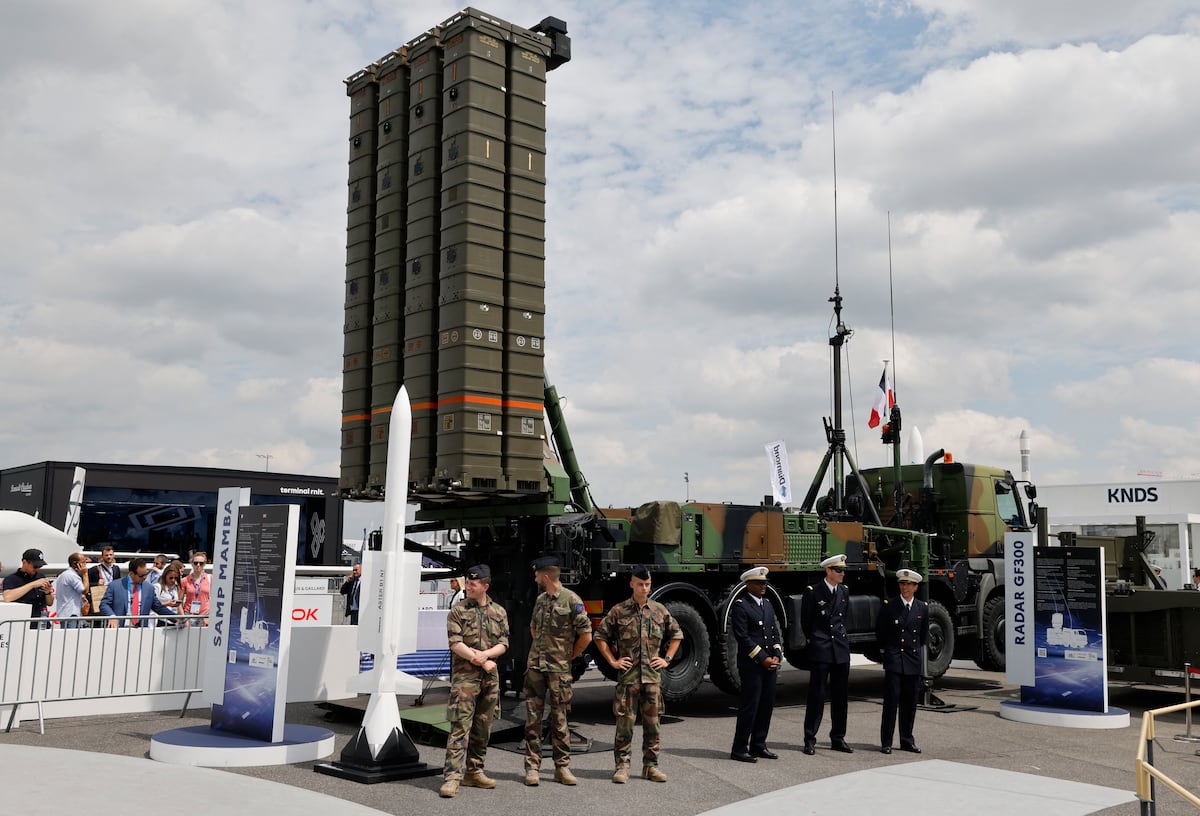
WARSAW, Poland — Estonia is gearing up to acquire a missile defense system, participating in broader efforts by the Baltic States to boost investments in expanding their air-defense network.
The country’s authorities said they plan to select the supplier by the end of March, earmarking up to €1 billion ($1.2 billion) for the purchase. The Estonian Centre for Defence Investments (ECDI), the institution that implements the country’s arms and military equipment procurements, is doing the requisite analytical work for picking the system.
“This means all potential manufacturers have been contacted and provided with detailed information about Estonia’s specific requirements,” Krismar Rosin, a spokesperson for the ECDI, told Defense News.
Tallinn has not disclosed which solutions are currently under evaluation. However, the potential contenders include the Patriot system, a weapon produced by Raytheon, a unit of RTX Corp.; the SAMP/T NG system manufactured by Eurosam, a French-Italian joint venture consisting of Thales and MBDA; and David’s Sling, a solution offered by Israeli defense company Rafael Advanced Systems that was co-developed by Raytheon.
Asked about the expected timeline for the system’s selection, Rosin said that a decision will be made by the end of March 2026 at the latest.
At the same time, “it is very difficult to estimate when a contract might be signed. However, the goal is to conclude the deal as quickly as possible,” the spokesperson added.
Acquisition officials expect that the Estonian Defence Forces could obtain the system in around four years’ time.
“Once the procurement contract is in place, it will still take several years for the air defense batteries to arrive in Estonia” and the system’s delivery in the year “2030 as an estimate seems a feasible deadline,” Rosin said.
With regards to the planned acquisition’s value, the spokesperson said the final cost will depend on the selected system and the number of launchers and missiles to be procured. Estimates range from “few hundred million” to one billion euros, according to the government.
Completing the missile defense acquisition will be one of the main challenges for Elmar Vaher who was appointed in January 2026 as the ECDI’s new director general. Vaher previously served as the head of Estonia’s Police and Border Guard Board.
Speaking on the occasion of Vaher’s appointment to his new role at the ECDI, Estonian Defence Minister Hanno Pevkur said in a statement the “centre today is an organization with a rapidly growing team that manages billions of euros in defense investments”.
Back in 2010, Estonia’s defense-related procurements and investments were worth only around €57.3 million, according to data from the center.
In the aftermath of Russia’s 2022 invasion of Ukraine, Estonia and the remaining two Baltic States, Latvia and Lithuania, have reacted by boosting their military expenditure and accelerating procurements of new weapons and gear. Last year, Estonia spent a total of €1.38 billion on defense, which captured 3.3% of the country’s gross domestic product (GDP). In 2026, the nation’s military expenditure is to pass the 5% threshold for the first time in history.
“In order to strengthen the defense capabilities of Estonia, at least 5% of the GDP will be allocated to national defense in 2026 in accordance with NATO criteria – that is €844.5 million more than this year. Investments in air and missile defense, drone capabilities, as well as long-range and precision strikes are increasing,” the Estonian government said in a statement. “An air defense brigade and new engineer battalions will be established”.
Some of Estonia’s latest defense acquisitions include the December 2025 contract to buy six K239 Chunmoo multiple rocket launchers. The deal to buy the launchers and related equipment from South Korea’s Hanwha Aerospace is worth around €290 million.
In neighboring Latvia , defense spending is also on the rise. Last December, the country’s parliament approved the nation’s record-high 2026 defense budget, which foresees allocating 4.91% of the Latvian GDP, or €2.16 billion ($2.51 billion), to the military. Together with Estonia, Latvia has ordered the IRIS-T medium-range air defense system from Germany’s Diehl Defence.
The third Baltic State, Lithuania , is also increasing its military expenditure, which is to reach almost 5.4% of its GDP in 2026, or close to €4.8 billion. The defense spending hike is facilitating a number of major acquisitions of tanks, infantry fighting vehicles and other equipment. The country’s military modernization push has also triggered the acquisition of the NASAMS mid-range air defense system, a weapon developed by Norway’s Kongsberg Defence & Aerospace.
Jaroslaw Adamowski is the Poland correspondent for Defense News.
波兰华沙——爱沙尼亚正准备购置导弹防御系统,参与波罗的海国家为扩大其防空网络而加大投资的更广泛努力。
该国当局表示,计划在3月底前选定供应商,并为此采购拨款高达10亿欧元(约合12亿美元)。负责该国武器和军事装备采购的爱沙尼亚国防投资中心(ECDI)正在进行必要的分析工作,以最终确定采购方案。
“这意味着所有潜在的制造商都已收到联系,并获得了有关爱沙尼亚具体要求的详细信息,”爱沙尼亚国防工业协会 (ECDI) 发言人克里斯玛·罗辛 (Krismar Rosin) 告诉《防务新闻》。
塔林方面尚未透露目前正在评估哪些解决方案。然而,潜在的竞争者包括:由RTX公司旗下雷神公司生产的“爱国者”导弹系统;由法意合资企业Eurosam(泰雷兹公司和MBDA公司)生产的SAMP/T NG系统;以及由以色列国防公司拉斐尔先进系统公司提供、雷神公司参与研发的“大卫投石索”导弹系统。
当被问及系统选择的预期时间表时,罗辛表示,最迟将在 2026 年 3 月底做出决定。
与此同时,发言人补充说:“很难估计何时能够签署合同。但是,我们的目标是尽快完成交易。”
采购官员预计爱沙尼亚国防军将在大约四年内获得该系统。
罗辛表示:“即使采购合同签订,防空电池组仍需数年时间才能运抵爱沙尼亚”,而该系统“预计在 2030 年交付似乎是一个可行的期限”。
关于此次采购计划的价值,发言人表示,最终成本将取决于所选系统以及拟采购的发射器和导弹数量。据政府估计,金额从数亿欧元到十亿欧元不等。
完成导弹防御系统的采购将是埃尔马·瓦赫尔面临的主要挑战之一。瓦赫尔于2026年1月被任命为爱沙尼亚国防工业公司(ECDI)新任总经理。此前,他曾担任爱沙尼亚警察和边防局局长。
在瓦赫尔被任命为欧洲国防工业中心 (ECDI) 新职务之际,爱沙尼亚国防部长汉诺·佩夫库尔发表声明称,“该中心如今是一个拥有快速增长的团队的组织,管理着数十亿欧元的国防投资”。
根据该中心的数据,2010 年爱沙尼亚与国防相关的采购和投资价值仅为 5730 万欧元左右。
在俄罗斯2022年入侵乌克兰之后,爱沙尼亚以及波罗的海三国中的另外两个国家——拉脱维亚和立陶宛——纷纷增加军费开支,并加快采购新型武器装备。去年,爱沙尼亚国防开支总额达13.8亿欧元,占该国国内生产总值(GDP)的3.3%。预计到2026年,爱沙尼亚的军费开支将首次突破GDP的5%。
爱沙尼亚政府在一份声明中表示:“为了加强爱沙尼亚的国防能力,根据北约标准,到2026年,爱沙尼亚将把至少5%的国内生产总值用于国防——比今年增加8.445亿欧元。对防空和导弹防御、无人机能力以及远程精确打击的投资正在增加。此外,还将组建一支防空旅和新的工兵营。”
爱沙尼亚最近的国防采购项目包括一份将于2025年12月生效的合同,从韩国韩华航天公司购买六套K239“天武”多管火箭炮系统。这笔交易价值约2.9亿欧元,将火箭炮系统及相关设备从韩国韩华航天公司采购。
邻国拉脱维亚的国防开支也在不断增长。去年12月,该国议会批准了创纪录的2026年国防预算,预计将拉脱维亚国内生产总值的4.91%(约合21.6亿欧元,25.1亿美元)用于军事开支。拉脱维亚与爱沙尼亚共同向德国迪尔防务公司订购了IRIS-T中程防空系统。
波罗的海三国之一的立陶宛也在增加军费开支,预计到2026年,其军费开支将达到国内生产总值的近5.4%,约合48亿欧元。国防开支的增长将用于采购一系列重要的坦克、步兵战车和其他装备。该国推进军事现代化进程的同时,也促成了NASAMS中程防空系统的采购,该系统由挪威康斯伯格防务与航空航天公司(Kongsberg Defence & Aerospace)研发。
Jaroslaw Adamowski 是《防务新闻》驻波兰记者。