NATO beware: Drones can’t replace tanks, experts warn北约需警惕:专家警告,无人机无法取代坦克
Rather than exploiting Russia’s weaknesses, a drone-centric NATO could be playing to Russia’s strengths, some experts warn.
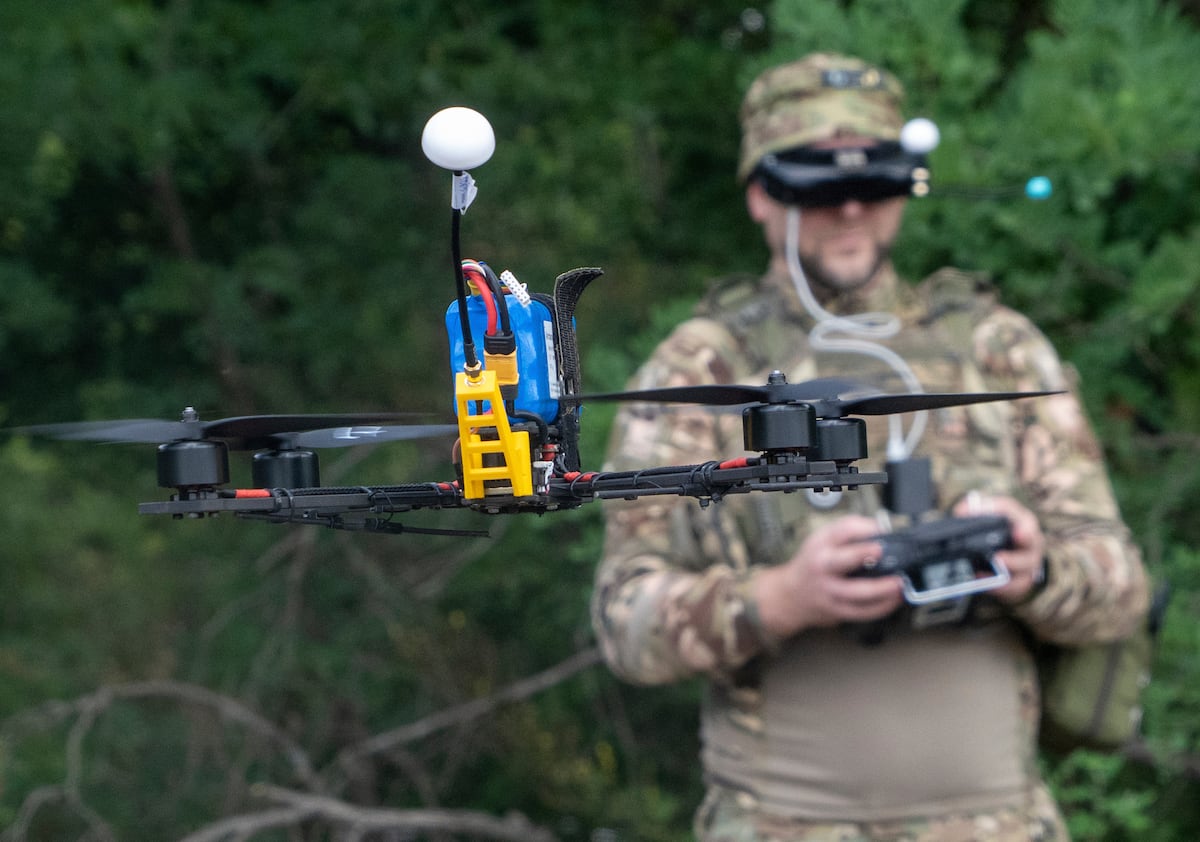
As armies scramble to learn the lessons of the Russia-Ukraine war, one question looms above all: Have drones replaced traditional weapons such as tanks and artillery?
For NATO, the implications are more than tactical. As the alliance struggles to rebuild its long-neglected armies, it faces tough decisions about allocating scarce money and industrial capacity. If robots are the future, then doesn’t it make sense to build $500 drones instead of $5 million tanks?
Not so fast, warn some experts. Replacing old-fashioned firepower with a purely drone force would be a blunder.
“There are several reasons why it would be a mistake for NATO forces to rely heavily on massed small UAS [unmanned aerial systems] and long range OWA [one-way attack] drones to replace traditional weapons systems in pursuit of improved lethality and thus deterrence against future Russian aggression,” argues Justin Bronk , a researcher at the British think tank Royal United Services Institute, in a recent essay.
Rather than exploiting Russia’s weaknesses, a drone-centric NATO could be playing to Russia’s strengths.
“Russian forces currently field the most formidable” counter-UAS capabilities in the world, according to Bronk. In addition to jammers, modified infantry weapons and short-range air defense systems, Russian forces have become accustomed to using anti-drone measures such as netting to deflect unmanned aerial vehicles and armored cages to protect vehicles.
“In most cases, only a small fraction of the huge volumes of drones launched by Ukrainian forces reach their targets, and a still smaller proportion achieve decisive damage when they do,” Bronk wrote.
Indeed, one reason why Ukrainian drones have achieved success at all is the presence of legacy firepower that constrains Russia’s ability to maneuver and to concentrate counter-UAS assets.
“This attrition from UAS has been occurring in the context of a Russian force that is still constrained by minefields and forced to disperse by Ukrainian artillery, GMLRS [Guided Multiple Launch Rocket Systems] and ATACMS [Army Tactical Missile Systems], Storm Shadow/SCALP cruise missiles and glide bombs, Bronk explained. “If NATO forces were to pursue massed UAS at the expense of rebuilding stocks of these traditional fires, Russian forces would find it significantly easier to mitigate UAS lethality than they have up to now in Ukraine.”
Ukrainian soldiers from an air defense unit of the 59th Brigade fire at Russian strike drones in Dnipropetrovsk region, Ukraine, on Aug. 10. (Evgeniy Maloletka/AP)
The impact of drones in Ukraine has been contradictory. On the one hand, they dominate the battlefield, with hordes of omnipresent attack and reconnaissance UAVs paralyzing maneuver and forcing troops and vehicles to remain within cover and fortification. Most recently, waves of unjammable Russian first-person view drones guided by fiber-optic cables have devastated Ukrainian supply lines .
Yet despite enormous effort to innovate and manufacture drones, Ukraine has only been able to limit Russian advances — but not stop them. Advancing behind saturation bombardments by artillery, glide bombs and drones, Russian offensives are succeeding in capturing ground. The gains are meager and the cost is staggering. But the Kremlin doesn’t care about losses, and Ukraine simply lacks sufficient quantities of manpower and traditional weapons to defeat the attackers.
“Ukraine has achieved very impressive defensive results against larger Russian forces, but has not managed to retain the strategic initiative or operational momentum despite deploying millions of UAS that are constantly iteratively developed by a system honed by multiple years of desperate fighting,” Bronk wrote.
The best evidence is that Ukraine is clamoring for legacy weapons such as ATACMS and High Mobility Artillery Rocket System, or HIMARS, rocket launchers, guided artillery shells and anti-tank guided missiles.
“When available, high-end ATGMs [Anti-Tank Guided Missiles], anti-tank BONUS artillery rounds and regular artillery are still prized by many Ukrainian commanders for countering Russian attempts to break through the frontlines, because they are far more responsive and more reliably able to knock out vehicles and suppress massing infantry than FPV drones,” wrote Bronk.
While UAVs have inflicted significant casualties on Russian forces (as have Russian drones on Ukrainian troops), Bronk sees drones at their most valuable as enablers for traditional forms of firepower.
For example, cheap decoy or kamikaze drones can saturate air defense radars and force the defender to expend interceptors that would otherwise target missiles and rockets.
Bronk favors a NATO focus on glide bombs. Though far more expensive than drones, they are far cheaper than guided missiles: A Joint Direct Attack Munition, or JDAM, costs around $25,000, compared to a million-dollar ATACMS rocket. Glide bombs “destroy armored vehicles, fighting positions, supply dumps, warehouses, factories and command posts. They are easy to manufacture at scale with existing factories and multiple bombs can be delivered by a single jet with a targeting pod on each sortie.”
Beyond their battlefield value, Bronk sees glide bombs as a deterrent against Russian aggression. By threatening Russian air defenses, they present Moscow with the prospect of operating at the mercy of NATO airpower.
Rather than playing catch-up with Russia and Ukraine in drone warfare, NATO should use drones to augment its existing strengths, Michael Kofman, a senior fellow at the Carnegie Endowment for International Peace, told Defense News. These include superior precision strike capabilities, better-trained personnel and the ability to conduct joint operations.
“Those are the advantages that are likely to prove much more significant than being second- or third-mover in the drone fight,” Kofman said.
Ultimately, those nations that can integrate drones with conventional weapons will have the advantage over those that rely on masses of drones at the expense of traditional firepower.
“Fundamentally, it is far technically and tactically easier to counter a force that primarily relies on massed, cheap FPV and OWA drones for its primary lethality than it is to counter well-employed airpower, long range fires, armor, artillery and mortars within a professional joint force,” Bronk concluded.
各国军队争相吸取俄乌战争的教训,但有一个问题始终萦绕在人们心头:无人机是否已经取代了坦克和大炮等传统武器?
对北约而言,其影响远不止于战术层面。随着北约努力重建其长期被忽视的军队,它面临着如何分配稀缺资金和工业产能的艰难抉择。如果机器人代表未来,那么建造500美元的无人机而不是500万美元的坦克岂不是更明智?
一些专家警告说,别急。用纯粹的无人机部队取代传统的火力将是一个巨大的错误。
英国智库皇家联合军种研究所的研究员贾斯汀·布朗克在最近的一篇文章中指出:“北约部队如果大量依赖小型无人机系统和远程单向攻击无人机来取代传统武器系统,以追求更高的杀伤力,从而威慑未来的俄罗斯侵略,那将是一个错误,原因有很多。”
与其利用俄罗斯的弱点,以无人机为中心的北约反而可能发挥俄罗斯的优势。
布朗克表示,“俄罗斯军队目前拥有世界上最强大的反无人机系统能力”。除了干扰器、改装的步兵武器和短程防空系统外,俄罗斯军队还习惯于使用反无人机措施,例如用网来偏转无人机,以及用装甲笼来保护车辆。
布朗克写道:“在大多数情况下,乌克兰军队发射的大量无人机中只有一小部分到达目标,而到达目标后造成决定性破坏的比例则更小。”
事实上,乌克兰无人机之所以能够取得成功,其中一个原因是其拥有强大的传统火力,这限制了俄罗斯的机动能力和集中反无人机系统资产的能力。
布朗克解释说:“俄军遭受无人机系统损耗的现状是,俄军仍然受到地雷的束缚,并被迫分散部署,还要应对乌克兰的炮兵、多管火箭炮系统(GMLRS)、陆军战术导弹系统(ATACMS)、风暴阴影/风暴阴影巡航导弹和滑翔炸弹的打击。如果北约部队为了大规模部署无人机系统而放弃重建这些传统火力,俄军将会发现,在乌克兰战场上,他们更容易减轻无人机系统的杀伤力。”
8月10日,乌克兰第聂伯罗彼得罗夫斯克州,乌克兰第59防空旅的士兵向俄罗斯攻击无人机开火。(Evgeniy Maloletka/AP)
无人机在乌克兰的影响可谓喜忧参半。一方面,它们主宰了战场,数量庞大的攻击和侦察无人机无处不在,瘫痪了敌军的机动能力,迫使部队和车辆只能躲在掩体和防御工事内。而最近,一波又一波不受干扰的俄罗斯第一人称视角无人机,利用光纤电缆引导,摧毁了乌克兰的补给线。
尽管乌克兰在无人机的研发和制造方面投入了巨大精力,但只能限制俄罗斯的推进,而无法阻止其发展。在炮火、滑翔炸弹和无人机的饱和轰炸下,俄罗斯的攻势不断推进,屡屡夺取地盘。然而,战果微乎其微,代价却极其惨重。克里姆林宫并不在意这些损失,而乌克兰也确实缺乏足够的人力和传统武器来击败进攻者。
布朗克写道:“乌克兰在对抗规模更大的俄罗斯军队时取得了非常令人印象深刻的防御成果,但尽管部署了数百万架无人机,而这些无人机又是由一个经过多年殊死搏斗不断迭代开发的系统所开发的,乌克兰仍然未能保持战略主动权或作战势头。”
最好的证据是,乌克兰正在强烈要求获得诸如ATACMS和高机动性火箭炮系统(HIMARS)、火箭发射器、制导炮弹和反坦克导弹等传统武器。
布朗克写道:“如果条件允许,高端反坦克导弹、反坦克炮弹和常规火炮仍然受到许多乌克兰指挥官的重视,因为它们比FPV无人机反应更迅速,更可靠地能够摧毁车辆和压制集结的步兵。”
虽然无人机给俄罗斯军队造成了重大伤亡(就像俄罗斯无人机给乌克兰军队造成了重大伤亡一样),但布朗克认为无人机最有价值的地方在于它们是传统火力形式的辅助工具。
例如,廉价的诱饵无人机或自杀式无人机可以饱和防空雷达,迫使防御方消耗原本用于拦截导弹和火箭的拦截器。
布朗克倾向于北约重点发展滑翔炸弹。虽然滑翔炸弹比无人机贵得多,但比制导导弹便宜得多:一枚联合直接攻击弹药(JDAM)的成本约为2.5万美元,而一枚ATACMS火箭的成本则高达百万美元。滑翔炸弹“可以摧毁装甲车辆、作战阵地、补给站、仓库、工厂和指挥所。它们易于利用现有工厂进行大规模生产,而且一架喷气式飞机每次出击都可以携带目标指示吊舱投放多枚炸弹。”
除了战场价值之外,布朗克还认为滑翔炸弹可以威慑俄罗斯的侵略行为。通过威胁俄罗斯的防空系统,它们使莫斯科面临受制于北约空军力量的局面。
卡内基国际和平研究院高级研究员迈克尔·科夫曼告诉《防务新闻》,北约与其在无人机战争方面追赶俄罗斯和乌克兰,不如利用无人机来增强其现有优势。这些优势包括更先进的精确打击能力、训练有素的人员以及开展联合行动的能力。
科夫曼说:“这些优势很可能比在无人机战斗中成为第二或第三行动者要重要得多。”
最终,那些能够将无人机与常规武器相结合的国家,将比那些依赖大量无人机而牺牲传统火力的国家更具优势。
布朗克总结道:“从根本上讲,对抗一支主要依靠大量廉价的FPV和OWA无人机作为主要杀伤力的部队,在技术和战术上要比对抗一支专业联合部队中运用得当的空中力量、远程火力、装甲、火炮和迫击炮容易得多。”