US bombs key Iranian island amid oil concerns美国因石油担忧轰炸伊朗重要岛屿
President Trump said U.S. forces “totally obliterated" every military target on Iran's oil hub, Kharg Island.
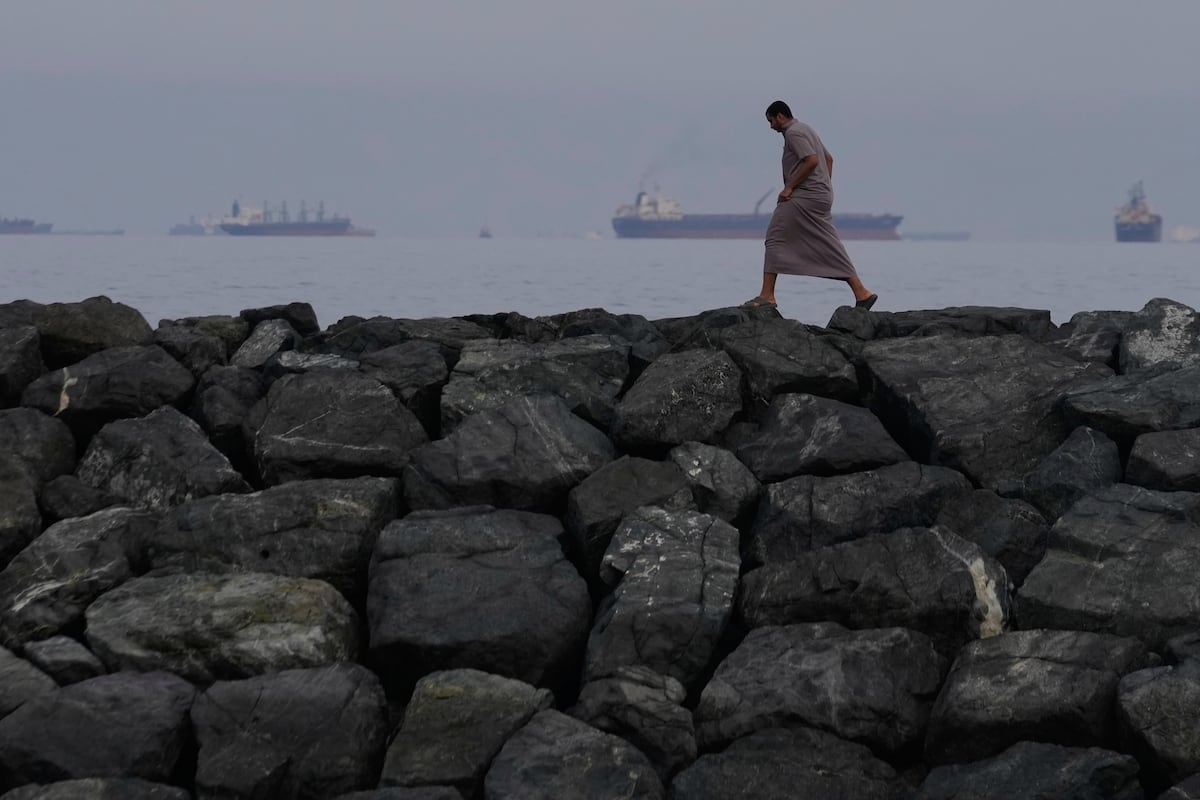
President Donald Trump on Friday evening announced the most aggressive U.S. action to date aimed at easing concerns over global oil supply and getting shipping moving in the vital Strait of Hormuz.
Writing on Truth Social, Trump said that at his direction, Central Command “executed one of the most powerful bombing raids in the History of the Middle East, and totally obliterated every MILITARY target in Iran’s crown jewel, Kharg Island.”
The president said he refrained from wiping out the oil infrastructure on the island, but warned, “should Iran, or anyone else, do anything to interfere with the Free and Safe Passage of Ships through the Strait of Hormuz, I will immediately reconsider this decision.”
Details of exactly what happened on Kharg Island remain unclear but the military gambit outlined by Trump appears to come, at least in part, in response to an earlier statement from Iran’s newly appointed supreme leader, saying that the Islamic Republic would seek to keep the Strait of Hormuz blocked.
Mojtaba Khamenei made the defiant order in a written statement that was read out on Iranian state television. He has yet to be seen in public since being elevated to his current role after his father, Ayatollah Ali Khamenei, was killed on Feb. 28.
More than a dozen ships have reportedly been attacked in the Persian Gulf since the start of the conflict. The Islamic Revolutionary Guard Corps, which declared that any vessel attempting to pass through the strait would be targeted, has claimed responsibility for several of those ambushes.
The supreme leader described the siege of the shipping channel as a “lever” to exert pressure on the nation’s adversaries. The strait is a vital maritime artery, carrying roughly 20% of the world’s petroleum liquids and liquefied natural gas trade.
By snarling shipping through the Strait of Hormuz, Iran has sent Brent crude oil futures soaring past $100 a barrel for the first time since 2022, up from approximately $70 before the war began.
Experts say the Iranian strategy, if not effectively countered, is capable of sowing chaos in the Gulf — with serious ramification for the wider world.
“These strikes target commercial vessels regardless of flag or ownership, including neutral of third-party ships and those connected to Gulf neighbors, fueling widespread fear and uncertainty,” Scarlett Suarez, a senior intelligence analyst at Dryad Global, a maritime research firm, said in an interview with Military Times. “Disruption is achieved through indiscriminate asymmetric attacks.”
During the 1980s “Tanker War” phase of the Iran-Iraq War, the Islamic Republic mined waters in and around the Strait of Hormuz. In 1988, an Iranian mine severely damaged the guided-missile frigate USS Samuel B. Roberts in the Persian Gulf, prompting a major American retaliation, known as Operation Praying Mantis, in which several Iranian vessels and two oil platforms were destroyed.
Tehran’s strategy relies on asymmetric naval warfare, oscillating between the use of fast-attack boats, unmanned vessels, drones, shore-based missile batteries and an array of sea mines.
“It’s a multidimensional threat,” Ret. Navy Capt. Bill Hamblet, now the U.S. Naval Institute’s editor-in-chief of “Proceedings,” told Military Times. “Finding the mines, clearing the mines, that’s a slow, methodical, mechanical process. And then protecting the mine-clearing operation from the other threats that could come out while they are trying to do that.”
Hamblet explained that these additional threats include not only drones and missiles, but also small, nimble attack craft.
“They arm them up with either small missiles or machine guns, and those boats can go at up to 50 knots. So, you need to be able to defend against those threats while clearing mines or escorting merchant ships,” he said.
The Islamic Republic possesses between 5,000 and 6,000 naval mines, according to a congressional report released in 2025. The arsenal includes limpet mines, which are attached directly to a ship’s hull; moored mines, which float beneath the surface and detonate on contact; and bottom mines, which rest on the seafloor and explode when they detect a passing vessel.
Secretary of Defense Pete Hegseth, in a briefing at the Pentagon on Friday, told reporters there is “no clear evidence” that Iran has placed new mines in the Strait of Hormuz.
“As the world is seeing, they are exercising sheer desperation in the Strait of Hormuz,” he said. “Something we’re dealing with, we have been dealing with it.”
Hegseth added: “Don’t need to worry about it.”
Tanya Noury is a reporter for Military Times and Defense News, with coverage focusing on the White House and Pentagon.
周五晚间,美国总统唐纳德·特朗普宣布了迄今为止美国采取的最强硬的行动,旨在缓解全球石油供应的担忧,并恢复霍尔木兹海峡的航运。
特朗普在 Truth Social 网站上撰文称,在他的指示下,中央司令部“执行了中东历史上威力最强大的轰炸行动之一,彻底摧毁了伊朗的掌上明珠——哈尔克岛上的所有军事目标”。
总统表示,他没有摧毁岛上的石油基础设施,但警告说:“如果伊朗或任何其他国家采取任何行动干扰船只自由安全地通过霍尔木兹海峡,我将立即重新考虑这一决定。”
哈尔格岛究竟发生了什么,目前仍不清楚,但特朗普概述的军事策略似乎至少部分是为了回应伊朗新任最高领袖早前的声明,该声明称伊朗伊斯兰共和国将寻求封锁霍尔木兹海峡。
穆杰塔巴·哈梅内伊在一份书面声明中下达了这项公然违抗命令的命令,该声明由伊朗国家电视台宣读。自其父阿亚图拉·阿里·哈梅内伊于2月28日遇刺身亡后,他继任现职以来,尚未公开露面。
据报道,自冲突爆发以来,波斯湾已有十几艘船只遭到袭击。伊斯兰革命卫队曾宣称,任何试图通过该海峡的船只都将成为袭击目标,并已声称对其中几起伏击事件负责。
最高领导人将封锁海峡描述为向国家敌人施压的“杠杆”。该海峡是重要的海上动脉,承载着全球约20%的石油液体和液化天然气贸易。
伊朗通过封锁霍尔木兹海峡,导致布伦特原油期货价格自 2022 年以来首次飙升至每桶 100 美元以上,而战争爆发前的价格约为每桶 70 美元。
专家表示,如果伊朗的战略得不到有效遏制,可能会在海湾地区引发混乱,并对更广泛的世界产生严重影响。
“这些袭击的目标是所有商船,无论其悬挂何种旗帜或属于哪个国家,包括中立的或第三方船只,以及与海湾邻国有关的船只,这加剧了普遍的恐惧和不确定性,”海事研究公司Dryad Global的高级情报分析师斯嘉丽·苏亚雷斯在接受《军事时报》采访时表示。“这种不分青红皂白的非对称攻击旨在破坏秩序。”
在 20 世纪 80 年代两伊战争的“油轮战”阶段,伊朗伊斯兰共和国在霍尔木兹海峡及其周边水域布雷。1988 年,一枚伊朗水雷在波斯湾严重损坏了美国导弹护卫舰“塞缪尔·B·罗伯茨”号,引发了美国的大规模报复行动,即“螳螂行动”,该行动摧毁了数艘伊朗船只和两座石油平台。
德黑兰的战略依赖于不对称海战,在快速攻击艇、无人舰艇、无人机、岸基导弹发射阵地和各种水雷的使用之间灵活切换。
“这是一个多维度的威胁,”退役海军上校比尔·汉布莱特(现任美国海军学会《学会会刊》主编)告诉《军事时报》。“发现水雷、清除水雷,这是一个缓慢、有条不紊、机械化的过程。此外,还要保护扫雷行动免受其他可能出现的威胁。”
汉布莱特解释说,这些额外的威胁不仅包括无人机和导弹,还包括小型、灵活的攻击艇。
他说:“他们会给这些船配备小型导弹或机枪,而且这些船的航速可达50节。所以,在清除水雷或护送商船的同时,你也需要有能力防御这些威胁。”
根据2025年发布的一份国会报告,伊朗伊斯兰共和国拥有5000至6000枚水雷。这些水雷包括直接附着在船体上的吸附式水雷;漂浮在水下并在接触时引爆的系泊式水雷;以及放置在海底并在探测到过往船只时爆炸的底雷。
美国国防部长皮特·赫格塞斯周五在五角大楼举行的新闻发布会上告诉记者,目前“没有明确证据”表明伊朗在霍尔木兹海峡布设了新的水雷。
他说:“正如全世界所看到的,他们在霍尔木兹海峡的做法完全是孤注一掷。我们正在应对这种情况,而且我们一直在应对。”
赫格塞斯补充道:“不用担心。”
Tanya Noury 是《军事时报》和《防务新闻》的记者,她的报道主要集中在白宫和五角大楼。