The Strait of Hormuz offers a lesson in air denial霍尔木兹海峡为我们提供了空中封锁的宝贵经验。
Opinion: "By that measure, the United States does not have air superiority where it counts," write analysts Max Bremer and Kelly Grieco.
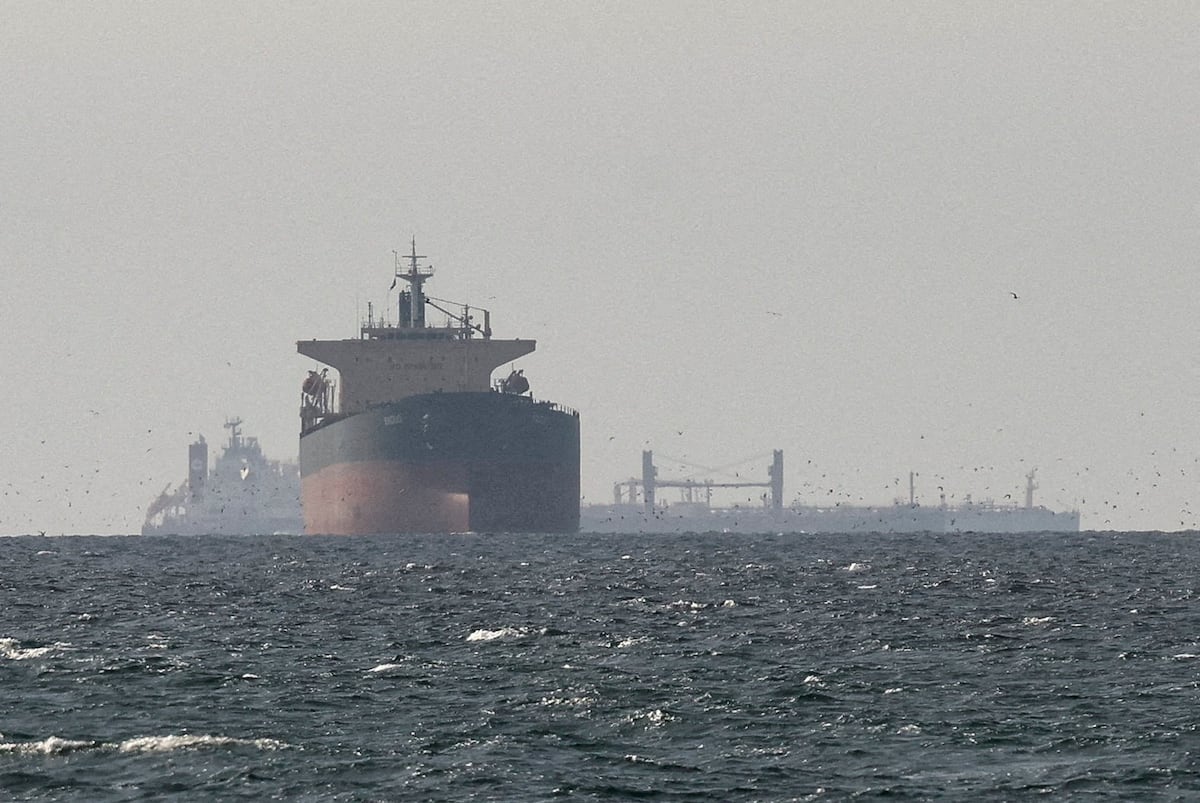
“Iran’s power is the Hormuz Strait.” Those were Iranian foreign minister Abbas Aragchi’s words on state television last week. He wasn’t wrong. Four weeks into this conflict, the United States has struck more than 10,000 Iranian targets, destroyed roughly 80% of Iran’s air defense capabilities, and eliminated its navy as a fighting force. Yet the strait remains effectively closed — and Iran’s drones and missiles are keeping it that way.
Tehran’s goal is to impose persistent economic and political costs until Washington concludes that continuing the war is not worth it. To achieve that, Iran is exploiting a gap in U.S. Air Force doctrine — the distinction between air superiority and air denial, and between the blue skies and the air littoral. So far, it is working.
Air superiority — the control that permits operations at a “given time and place without prohibitive interference from air and missile threats” — is what the United States has achieved over southern and western Iran and is now working to extend eastward. That control allows large-scale strikes and freedom of maneuver at medium and high altitudes. As Gen. Dan Caine, chairman of the Joint Chiefs of Staff, noted on Tuesday , “Given the increase in air superiority, we’ve successfully started to conduct the first overland B-52 missions.”
By that measure, the campaign has been a success. But the strait is still closed.
Air superiority is meant to assure freedom of action not just in the air, but across all domains for the entire joint force.
Air Force Doctrine Publication 3-0 is explicit on this point: air superiority “prevents enemy air and missile threats from effectively interfering with operations of friendly air, land, maritime, space, cyberspace, and special operations forces.” That includes the Navy’s ability to escort commercial vessels through the Strait of Hormuz.
By that measure, the United States does not have air superiority where it counts.
Iran’s drone and missile campaign has already forced American forces back. In 2003, the bulk of U.S. combat and support aircraft operated from forward positions in Kuwait, Qatar and Saudi Arabia while carriers patrolled the Persian Gulf. Today, carriers increasingly operate from the Red and Arabian Seas while land-based airpower has shifted toward bases farther from the strait, leaving U.S. forces positioned for the high-altitude fight over Iran, not the persistent-close-in coverage the strait requires to keep shipping lanes open under continuous drone and missile threat.
Iran’s strategy of air denial is why.
Air denial is a strategy of contesting control of the air without achieving air superiority outright. It leverages the advantages of large numbers of low-cost and mobile systems employed in a distributed way to keep the air domain too dangerous, too costly and too uncertain for joint forces to operate. Critically, the barriers to achieving air denial are considerably lower than those required to gain and sustain air superiority, yet it can impose disproportionate costs.
An Air Force B-52 Stratofortress takes off in support of Operation Epic Fury during the Iran war at an undisclosed location, March 22, 2026. (U.S. Air Force/Handout via Reuters)
In the Strait of Hormuz, Iran is putting this strategy into practice. Tehran is exploiting the air littoral above the strait, employing drones and missiles capable of reaching oil tankers and naval vessels in minutes. Iran has struck more than 20 commercial vessels in and around the strait since the war began, killing at least seven sailors. This action has effectively halted traffic through the strait, except for a handful of ships that Iran has let pass — in many cases, for a hefty fee. The U.S. Navy has reportedly declined requests from the shipping industry for military escorts, citing the ongoing threat.
Iran’s strategy appears to be working. Gas prices have risen a dollar a gallon in a month, U.S. stock markets have entered correction territory, and the White House is under growing pressure to wind down the conflict. Iran planned for exactly this.
Tehran built this playbook, funded it, and watched it succeed. The lessons come straight from the Red Sea, where Houthi proxies used cheap, distributed drones and missiles to impose costs that more than 800 U.S. airstrikes between 2024 and 2025 could not eliminate. Now, Iran is running the same playbook over the Strait of Hormuz.
The United States has no ready answer. Achieving and maintaining air superiority in the air littoral above the strait demands the very layered defense capabilities in which the Pentagon has systematically underinvested: large numbers of low-cost, attritable systems to continuously attack launch locations and dispersed manufacturing; mobile air defenses rapidly and persistently deployable near threatened waterways; low cost persistent airborne platforms capable of detecting and destroying waves of drones; and interceptors capable of sustaining high engagement rates without exhausting inventories.
These are precisely the capabilities decades of procurement choices never built at scale, in favor of the small number of exquisite platforms that have performed so well in the blue skies above Tehran. The gap is not an accident. It is the result of choices. The Strait of Hormuz is one of their consequences.
Addressing this gap requires building low-cost, attritable systems at scale to contest and control the air littoral — not in small numbers as an afterthought, after the high-end aircraft are bought and paid for, but as a core mission — which inevitably means scaling back legacy platforms. The window to absorb that lesson is open now, while the cost is measured in closed shipping lanes and rising gas prices.
Maximilian K. Bremer is a nonresident fellow with the Reimagining US Grand Strategy Program at the Stimson Center and head of Mission Engineering and Strategy for Atropos Group.
Kelly A. Grieco is a senior fellow with the Reimagining US Grand Strategy Program at the Stimson Center and adjunct professor in the Center for Security Studies at Georgetown University.
“伊朗的权力在于霍尔木兹海峡。”这是伊朗外长阿巴斯·阿拉格奇上周在国家电视台所说的话。他所言不虚。冲突爆发四周以来,美国已袭击了超过1万个伊朗目标,摧毁了伊朗约80%的防空能力,并使其海军丧失了作战能力。然而,霍尔木兹海峡仍然处于事实上的封锁状态——而伊朗的无人机和导弹正是维持这一局面的关键。
德黑兰的目标是持续不断地给华盛顿施加经济和政治代价,直到华盛顿最终认为继续战争得不偿失。为了实现这一目标,伊朗正在利用美国空军理论中的一个漏洞——即空中优势与空中拒止、以及蓝天与近海空域之间的区别。到目前为止,这一策略奏效了。
制空权——即在“特定时间和地点不受空中和导弹威胁的严重干扰”的情况下开展作战行动的控制权——是美国在伊朗南部和西部地区取得的,目前正努力向东扩展。这种控制权使得大规模打击和在中高空自由机动成为可能。正如参谋长联席会议主席丹·凯恩将军周二指出的那样,“鉴于制空权的增强,我们已经成功开始执行首次B-52轰炸机陆上作战任务。”
从这个角度来看,这次行动取得了成功。但海峡仍然关闭。
空中优势旨在确保联合部队不仅在空中,而且在所有领域都拥有行动自由。
空军条令出版物 3-0 对此有明确规定:空中优势“能够防止敌方空中和导弹威胁有效干扰我方空中、陆地、海上、太空、网络空间和特种作战部队的行动”。这包括海军护送商船通过霍尔木兹海峡的能力。
按此标准衡量,美国在关键领域并不具备空中优势。
伊朗的无人机和导弹攻势已经迫使美军撤退。2003年,美军大部分作战和支援飞机从科威特、卡塔尔和沙特阿拉伯的前沿阵地起飞,而航母则在波斯湾巡逻。如今,航母越来越多地从红海和阿拉伯海起飞作战,而陆基空军力量则转移到远离霍尔木兹海峡的基地,这使得美军只能在高空与伊朗作战,而无法像以往那样在霍尔木兹海峡附近持续部署近距离空中力量,以确保在无人机和导弹持续威胁下,航道畅通。
这就是伊朗采取空中封锁战略的原因。
空中拒止战略是指在不直接取得空中优势的情况下,通过争夺制空权来控制制空权的战略。它利用大量低成本、高机动性的系统以分布式方式部署,使联合作战部队难以在空中作战,导致作战成本过高、风险过大且不确定性过大。关键在于,实现空中拒止的门槛远低于取得和维持空中优势所需的门槛,但其代价却可能不成比例地高昂。
2026年3月22日,一架美国空军B-52同温层堡垒轰炸机在伊朗战争期间的“史诗狂怒行动”中从某处起飞,该地点未公开。(美国空军/路透社供图)
在霍尔木兹海峡,伊朗正在实施这一战略。德黑兰利用海峡上空的近岸空域,部署无人机和导弹,能够在数分钟内打击油轮和军舰。自战争爆发以来,伊朗已袭击了海峡及其周边地区的20多艘商船,造成至少7名船员死亡。这一行动实际上已经瘫痪了海峡的交通,只有少数几艘船只被伊朗允许通过——在许多情况下,伊朗都收取了高额费用。据报道,美国海军以持续存在的威胁为由,拒绝了航运业提出的军事护航请求。
伊朗的策略似乎奏效了。一个月内汽油价格上涨了一美元/加仑,美国股市进入回调区间,白宫面临越来越大的压力,要求其结束冲突。伊朗正是预料到了这一切。
德黑兰制定了这套策略,为其提供资金,并亲眼见证了它的成功。这些经验直接来自红海,在那里,胡塞武装的代理人利用廉价且分散的无人机和导弹,给伊朗造成了巨大的损失,而美国在2024年至2025年间发动的800多次空袭都未能消除这些损失。如今,伊朗正在霍尔木兹海峡沿岸使用同样的策略。
美国目前没有现成的答案。要在海峡上空近岸空域取得并维持空中优势,需要五角大楼长期以来系统性投入不足的多层次防御能力:大量低成本、可消耗的防御系统,用于持续攻击敌方发射点和分散的制造基地;能够在受威胁水域附近快速且持续部署的移动防空系统;能够探测并摧毁多波无人机的低成本持久性空中平台;以及能够在不耗尽库存的情况下保持高交战频率的拦截器。
数十年来,采购决策始终未能大规模构建这些能力,反而优先发展少数几款性能卓越的平台,这些平台在德黑兰上空表现出色。这种差距并非偶然,而是决策的结果。霍尔木兹海峡就是这些决策的后果之一。
弥补这一差距需要大规模建造低成本、可消耗的系统,以争夺和控制近海空域——不是在高端战机购置完毕后才考虑少量部署,而是将其作为一项核心任务——这必然意味着缩减现有平台的规模。现在正是吸取这一教训的良机,而代价则体现在航道封闭和油价上涨上。
Maximilian K. Bremer 是史汀生中心“重塑美国大战略计划”的非常驻研究员,也是 Atropos 集团的任务工程和战略主管。
Kelly A. Grieco 是史汀生中心“重塑美国大战略计划”的高级研究员,也是乔治城大学安全研究中心的兼职教授。