Exclusive: More than 300 South Korean workers are challenging the Trump administration over its Georgia immigration raid独家报道:超过300名韩国工人就特朗普政府在佐治亚州的移民突袭行动提出质疑
More than 300 South Korean workers who were swept up in last year’s immigration raid at a Hyundai electric-vehicle manufacturing plant in Georgia are challenging the US government, in the first major legal action over one of the largest immigration enforcement operations under President Donald Trump.
US Immigration and Customs/Reuters
More than 300 South Korean workers who were swept up in last year’s immigration raid at a Hyundai electric-vehicle manufacturing plant in Georgia are challenging the US government, in the first major legal action over one of the largest immigration enforcement operations under President Donald Trump.
Administrative claims on behalf of the workers, a mandatory step before a federal lawsuit, have begun to be filed with nine federal agencies, including the Department of Homeland Security, Immigration and Customs Enforcement, Customs and Border Protection, the FBI and the Departments of Justice and Labor, a lawyer representing the claimants told CNN.
Documentation supporting that the first individual claim had been mailed to the agencies was shared with CNN by the lawyer, a Korean attorney practicing in Georgia who has been representing those workers. She asked to be identified only as a Korean lawyer practicing in Georgia, saying it matters to her that the detainees are represented by one of their own. The lawyer said she aims to have all claims filed by end of the year.
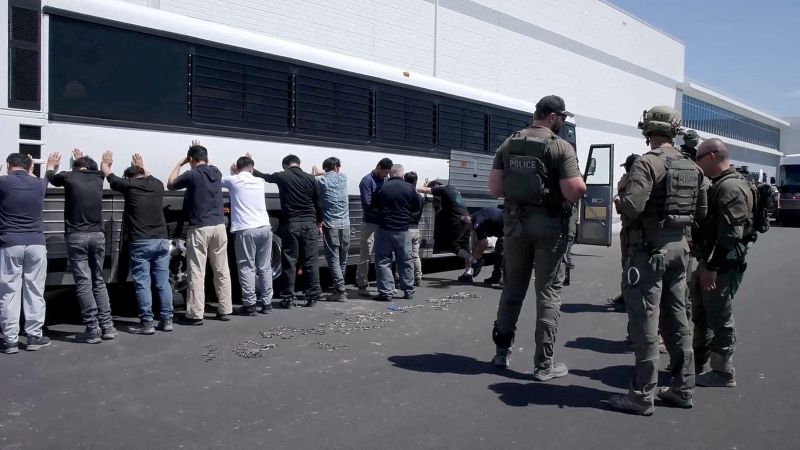
The September 4 raid in Ellabell, Georgia, around 25 miles west of Savannah, was the largest single-site operation in the history of Homeland Security Investigations, authorities said at the time. Nearly 500 federal, state and local officers descended on the sprawling plant, detaining 475 workers, mostly South Koreans. Many ranged in age from 20s to 60s, said Kim, one of the lead organizers, whom CNN is identifying only by his surname.
Several workers CNN spoke to allege they were unlawfully arrested and detained without explanation or interpreters, shackled, forced to sign documents they couldn’t understand and held in overcrowded cells. Despite the treatment, some have since returned to the US, saying it’s a necessary part of their job.
According to a search warrant obtained by CNN, the federal immigration operation in Ellabell named just four target individuals – none of them the Korean workers.
Inside the raid: How a monthslong federal immigration operation led to 475 arrests at a Hyundai plant in Georgia
Kim provided CNN with his claim, the first to be filed, which argues that he was unlawfully detained and “subjected to demeaning living conditions” while in an ICE facility for seven days, adding the raid resulted in “intentional infliction of emotional distress, humiliation… and lasting psychological trauma.”
The claim seeks damages for confiscated belongings, lost work and psychological harm, and alleges false imprisonment, abuse of process and intentional infliction of emotional distress. The lawyer told CNN each of the 300 workers had similar claims and declined to specify the amount of damages sought.
The aim of filing claims, the attorney said, is to make the US government acknowledge an “enormous, unjust mistake” and “admit it and apologize.”
“The US government used the false pretext of finding four undocumented people to send hundreds of agents in full armor to storm the worksite of a Korean company that is one of the largest contributors to the American economy,” the attorney told CNN. “Before the whole world, they put engineers who had come lawfully to install equipment in handcuffs and shackles and paraded them like criminals, shaming all Koreans before the world as if Korean companies were invading the US labor market.”
CNN reached out to all nine agencies, but only received responses from DHS and CBP.
In a response to CNN’s inquiry, DHS said ICE “executed a judicial search warrant as part of an ongoing criminal investigation into allegations of unlawful employment practices and other serious federal crimes.” CBP referred CNN to a September 2025 release , which said those arrested “were found to be working illegally, in violation of the terms of their visas and/or statuses.”
All those taken into custody were suspected of living and working illegally in the US, said Steven Schrank, a Homeland Security Investigations special agent in charge, at the time of the detentions. Some had entered illegally, some had overstayed visas, and some had visa waivers that prohibited working, he said.
Four workers among those detained, who asked not to be fully identified for fear of retaliation, told CNN they were working under valid visas and were given no reason for their arrest when they were taken into custody.
“Even after being fully detained, we didn’t know why we were taken, or what crime we’d committed. No one knew anything. Everyone was just bewildered,” said Ryu, a detained worker who CNN is identifying by a pseudonym.
“There was no proper explanation, and yet this happened to us,” Kim said. “If they had at least explained things while proceeding, I might have understood a little.”
When asked whether the workers’ activities violated the terms of their visas, and why some have since re-entered on the same visas to do the same work, CBP told CNN that admissibility decisions are “made on a case-by-case basis” and that “having a non-immigrant visa from a US Embassy or Consulate, or an approved ESTA does not guarantee that you will be admitted into the United States.”
Asked about the raid, DHS pointed CNN to the White House, which later referred CNN to Trump’s Truth Social post last year urging foreign companies to “bring their people of expertise for a period of time to teach and train our people,” then “phase out” and go home.
Elijah Nouvelage/AFP/Getty Images
The raid has largely been seen as a collision of two Trump priorities: bolstering American manufacturing while enforcing a hardline immigration campaign that has seen mass deportations drain the country’s labor force across manufacturing, agriculture and services .
The 2,900-acre Hyundai Metaplant has two parts: a Hyundai electric-vehicle manufacturing site and an EV battery plant then under construction, a joint venture with LG, where many of the detained Koreans were working.
Kim told CNN he and other workers were held for hours with no Korean interpreters present. They were ordered to sign documents they couldn’t read and later learned were consent-to-arrest forms, workers told CNN. Several signed, believing their agreement would send them home faster.
Kim said they were cuffed at the wrists and ankles and loaded onto buses to a detention center in Folkston, Georgia, where they spent about a week. For the first few days, they were held in a room crammed with up to 80 men, with just a handful of open toilets, in frigid conditions and with only a thin towel to sleep under, before being moved to two-person cells. Some had nothing to sleep under, he said. The food smelled sour and the water tasted off, several said.
Their stories echo those of other detainees across the US alleging packed rooms, inedible food and limited medical care. Such conditions have sparked protests – including last month outside an ICE facility in New Jersey – and several federal lawsuits.
Officers later presented them with voluntary-departure agreements, again with little explanation and without a translator, Kim said. When Kim demanded to know what he had done wrong, an officer said being inside the factory was the violation, warning that contesting it could take months – and, according to his claim, he was told by one agent, “They might torture you.” He signed. So did all the Korean detainees except one, who was married to a US citizen.
ICE did not respond to CNN’s request for comment on the alleged threat against Kim.
Ryu said he was among the workers held longest in the facility, those who entered on visa waivers rather than as B-1 visa holders. He told CNN he returned home nearly 10 pounds lighter. Months later, he was back at the same Georgia plant, where he worked as a project manager.
Anthony Wallace/AFP/Getty Images
The claims filed under the Federal Tort Claims Act not only paves the way for a federal lawsuit, but can also force the government to provide financial payment and put on the record why the workers were detained, what evidence justified it, and whether officers followed or broke agency policy, said Nora Engstrom, a Stanford law professor and tort expert not involved in the case.
If DHS does not respond to their claims within six months , the workers can take the case to federal court, according to the FTCA. Because the FTCA borrows state law, the workers would have to prove unlawful arrest under Georgia law, she said.
The government, she said, will “almost certainly” argue that the claim is barred by protections for injuries caused by federal employees carrying out “discretionary” duties – though that exception was never meant “to create blanket immunity for federal officers.”
The tort claims act requires each person to exhaust their own remedies before the government – one filing cannot speak for all, said James E. Pfander, a Northwestern law professor who studies the federal courts and is also not part of the case.
In the past, workers bringing similar claims have settled for significant damages. After a 2018 raid at a Tennessee meatpacking plant, detained workers alleging racial profiling, excessive force and unlawful arrest – some under the FTCA – settled with the government for more than $1 million, the workers’ attorneys said .
The FTCA is “the only reliable avenue for money damages,” said Kate Goettel, a former senior legal director for the American Immigration Council. Plaintiffs can also sue individual officers for constitutional violations, but the Supreme Court has increasingly shut that door , especially in immigration cases, said Goettel, who is also not involved in the case.
Choi, a field engineer who has since returned to the same Georgia plant, said the claim is about vindication.
“The thing that angers me the most is that there hasn’t been any kind of apology,” he said. “We were all taken, locked up, and left the US as if we were expelled. The impression we got is: ‘We thought you came illegally, so we just arrested you, but since that’s not the case, we’ll let you go. Come back to work if you want, or don’t.’”
Elijah Nouvelage/Bloomberg/Getty Images
For years, Washington has pressed Seoul to invest on American soil , most recently wielding tariff threats to extract some $350 billion in commitments. The Hyundai-LG battery plant is one of South Korea’s big bets.
The raid initially shut down construction, with the battery plant’s operator, HL-GA Battery Co., telling the Associated Press in November that work had resumed with a mix of new and returning workers – including some of the South Korean nationals detained in September.
The facility is now complete and commercial production began in April, the joint venture HLBMA told CNN, with its first shipment of battery cells delivered in May. The company said it now has “more than 500 employees on site, the majority hired locally.”
For highly technical projects, it may “draw on specialized expertise from outside the country,” but “all workers must fully comply with US laws and regulations,” it added.
Industry officials say US manufacturers often rely on foreign specialists to build and launch such plants, but that the visa system does not easily accommodate the assignments those projects require.
Some of the workers CNN spoke to said they had previously used the same business visas to work at battery plants across the US without trouble, including the B-1 business visitor visa, which permits training and setup, but bars production work or receiving a US paycheck.
Kim said they followed those rules while working in Ellabell, were paid in South Korean currency and provided “a great deal of training” to American workers, a process that takes time.
“Our work is highly specialized. No matter how much you provide manuals or training, in certain areas they can’t reach the same level of proficiency that we have,” he said.
In a statement to CNN, LG Energy Solution said it “prioritize(s) strict compliance” and sends experts only temporarily until plants can run on their own.
ICE and South Korea’s Foreign Ministry did not respond to CNN’s questions about the legal basis for the raid, the detention conditions, or the workers’ return on the same visas.
Some Korean workers detained in Georgia immigration raid have returned to their jobs at Hyundai site
Since the raid, many have returned to work at US battery plants doing similar jobs, often on the same visas, while carrying the fear of being swept up again by immigration agents, the workers told CNN.
Jung, a software engineer, flew to Cleveland in June for equipment work and stayed through August. It is the only trade he has ever known, and his only way to make a living. “Even though I’m still scared,” he said, “I have no choice but to go.”
Kim later installed and repaired lithium-ion battery equipment in Lansing, Michigan, on the same B-1 visa he held the morning agents stormed the Georgia plant. He has since returned to South Korea.
Workers returning to the US carry a company-issued card listing their visa, employer and job, “in case immigration enforcement comes again,” Kim said – a new procedure since the Georgia raid.
“Before, my image of the US was that it’s a powerful country, a wealthy country, an ally,” Kim said. “So I didn’t really feel anxious.” That image, he said, “has been greatly shattered.”
“It’s not really that fair, or the land of freedom that we generally think of.”
美国移民和海关/路透社
去年,现代汽车在佐治亚州一家电动汽车制造厂遭到移民突袭,300 多名韩国工人因此被捕。他们正在挑战美国政府,这是唐纳德·特朗普总统上任以来规模最大的移民执法行动之一,也是首例重大法律诉讼。
代表工人的律师告诉 CNN,在提起联邦诉讼之前,必须先向九个联邦机构提交行政索赔申请,这些机构包括国土安全部、移民和海关执法局、海关和边境保护局、联邦调查局以及司法部和劳工部。
这位律师向CNN提供了文件,证明第一份个人索赔申请已邮寄给相关机构。这位律师是一位在佐治亚州执业的韩裔律师,她一直代表这些工人。她要求只透露自己是“在佐治亚州执业的韩裔律师”,并表示她非常重视被拘留者由他们自己人代表。这位律师说,她的目标是在年底前提交所有索赔申请。
9月4日,佐治亚州埃拉贝尔(位于萨凡纳以西约25英里处)发生的突袭行动,是国土安全调查局历史上规模最大的单点行动。当局当时表示,近500名联邦、州和地方执法人员突袭了这家规模庞大的工厂,拘留了475名工人,其中大部分是韩国人。行动的主要组织者之一金(CNN仅以其姓氏指代)表示,许多被拘留者的年龄在20多岁到60多岁之间。
CNN采访的多名工人声称,他们遭到非法逮捕和拘留,没有得到任何解释或翻译,被戴上手铐,被迫签署他们看不懂的文件,并被关押在过度拥挤的牢房里。尽管遭受了如此待遇,一些人还是返回了美国,称这是他们工作的一部分。
根据 CNN 获得的一份搜查令,埃拉贝尔的联邦移民行动只列出了四个目标人物——其中没有一个是韩国工人。
突袭行动内幕:历时数月的联邦移民行动如何导致佐治亚州现代汽车工厂475人被捕
金向 CNN 提交了他的索赔申请,这是第一份提交的索赔申请。申请中称,他被非法拘留,并在移民和海关执法局 (ICE) 的设施中“遭受了有辱人格的生活条件”长达七天。他还补充说,这次突袭行动导致了“故意造成精神痛苦、羞辱……和持久的心理创伤”。
该诉讼要求赔偿被没收的财物、误工损失和精神损害,并指控被告非法监禁、滥用诉讼程序和故意造成精神痛苦。律师告诉CNN,这300名工人提出的诉讼请求大同小异,但拒绝透露具体的索赔金额。
这位律师表示,提起诉讼的目的是让美国政府承认“一个巨大的、不公正的错误”,并“承认错误并道歉”。
“美国政府以发现四名非法移民为借口,派遣数百名全副武装的特工闯入一家韩国公司的工地,而这家公司是美国经济的最大贡献者之一,”这位律师告诉CNN。“在全世界面前,他们给合法前来安装设备的工程师戴上手铐脚镣,像对待罪犯一样游街示众,让所有韩国人蒙羞,仿佛韩国公司入侵了美国劳动力市场。”
CNN联系了所有九个机构,但只收到了国土安全部和海关与边境保护局的回复。
针对CNN的询问,国土安全部表示,移民及海关执法局(ICE)“执行了司法搜查令,这是正在进行的刑事调查的一部分,该调查涉及非法雇佣行为和其他严重联邦犯罪的指控。”美国海关与边境保护局(CBP)则向CNN提供了一份2025年9月发布的文件,该文件称被捕者“被发现非法工作,违反了其签证和/或身份的条款。”
国土安全调查局当时的负责人史蒂文·施兰克表示,所有被拘留者都涉嫌在美国非法居住和工作。他说,有些人非法入境,有些人签证过期滞留,还有一些人持有禁止工作的签证豁免。
被拘留的四名工人因害怕遭到报复而要求不要透露全部身份,他们告诉 CNN,他们持有有效签证,被拘留时没有被告知逮捕的理由。
“即使被完全拘留后,我们也不知道为什么被带走,也不知道自己犯了什么罪。没有人知道任何事情。每个人都感到茫然不知所措,”被拘留的工人柳(CNN 使用化名)说道。
“他们没有给出合理的解释,可这种事却发生在我们身上,”金说。“如果他们在处理事情的过程中至少解释一下,我或许还能理解一点。”
当被问及这些工人的活动是否违反了他们的签证条款,以及为什么有些人后来持同样的签证再次入境从事同样的工作时,美国海关与边境保护局 (CBP) 告诉 CNN,入境许可的决定是“根据具体情况而定”的,而且“持有美国大使馆或领事馆签发的非移民签证,或获得批准的 ESTA 并不能保证您会被允许进入美国”。
当被问及此次突袭时,国土安全部将 CNN 的注意力引向白宫,而白宫随后又将 CNN 引向特朗普去年在 Truth Social 上发表的帖子,该帖子敦促外国公司“将他们的专家带到美国一段时间,教导和培训我们的人民”,然后“逐步撤离”并回家。
Elijah Nouvelage/法新社/盖蒂图片社
这次突袭行动被普遍视为特朗普两项优先事项的冲突:一方面要加强美国制造业,另一方面又要推行强硬的移民政策,大规模驱逐出境导致美国制造业、农业和服务业的劳动力严重短缺。
占地 2900 英亩的现代汽车金属工厂分为两部分:现代电动汽车制造厂和当时正在建设中的电动汽车电池厂(与 LG 的合资企业),许多被拘留的韩国人都在那里工作。
金告诉CNN,他和一些工友被扣留了数小时,现场没有韩语翻译。工人们告诉CNN,他们被命令签署一些看不懂的文件,后来才知道这些文件是同意逮捕协议。一些人签了字,以为这样就能更快回家。
金说,他们被铐上手铐和脚铐,押上巴士前往佐治亚州福克斯顿的一个拘留中心,在那里待了大约一周。最初几天,他们被关在一个挤满了多达80人的房间里,只有几个敞开的厕所,环境寒冷,只能用一条薄薄的毛巾盖着睡觉,之后才被转移到两人一间的牢房。他说,有些人甚至连盖在身上的东西都没有。几个人说,食物闻起来是酸的,水也变质了。
他们的经历与美国各地其他被拘留者的遭遇如出一辙,他们都声称房间拥挤、食物难以下咽、医疗条件有限。这种情况引发了抗议活动——包括上个月在新泽西州一处移民和海关执法局(ICE)设施外的抗议——以及多起联邦诉讼。
金说,官员们后来向他们出示了自愿离境协议,但几乎没有解释,也没有提供翻译。金质问自己做错了什么,一名官员说他违反了规定,待在工厂里就是违规行为,并警告说申诉可能需要几个月的时间——据他所说,一名官员还告诉他:“他们可能会对你施以酷刑。”他签了字。除了一个嫁给了美国公民的韩国人之外,所有被拘留的韩国人都签了字。
美国移民及海关执法局(ICE)没有回应CNN就金某所受威胁一事提出的置评请求。
柳先生说,他是工厂里被关押时间最长的工人之一,这些人都是持免签入境的,而不是持有B-1签证的。他告诉CNN,他回家时体重减轻了近10磅。几个月后,他又回到了位于佐治亚州的那家工厂,担任项目经理。
Anthony Wallace/AFP/Getty Images
斯坦福大学法学教授、侵权法专家诺拉·恩斯特罗姆(她并未参与此案)表示,根据《联邦侵权索赔法》提出的索赔不仅为提起联邦诉讼铺平了道路,还可以迫使政府提供经济赔偿,并记录在案工人被拘留的原因、证明拘留合理的证据,以及执法人员是否遵守或违反了机构政策。
根据《联邦侵权赔偿法》(FTCA),如果国土安全部在六个月内不回应他们的诉求,这些工人可以向联邦法院提起诉讼。她表示,由于FTCA借鉴了州法律,这些工人必须根据佐治亚州法律证明逮捕属于非法逮捕。
她说,政府“几乎肯定”会辩称,联邦雇员在履行“酌情”职责时所受伤害受到保护,因此该索赔不成立——尽管这一例外从来都不是“为了给联邦官员创造一概豁免权”。
西北大学法学教授詹姆斯·E·普凡德(James E. Pfander)研究联邦法院,他本人也并非此案的当事人。他表示,侵权索赔法要求每个人在向政府寻求救济之前,必须用尽自己的救济途径——一份诉求不能代表所有人。
过去,提出类似索赔的工人曾获得巨额赔偿。据工人律师称,2018年田纳西州一家肉类加工厂遭到突击搜查后,被拘留的工人指控存在种族歧视、过度使用武力和非法逮捕(其中一些指控依据《联邦侵权赔偿法》),最终与政府达成和解,获得超过100万美元的赔偿。
美国移民委员会前高级法律总监凯特·戈特尔表示,《联邦侵权赔偿法》(FTCA)是“获得金钱赔偿的唯一可靠途径”。原告也可以就违宪行为起诉个别执法人员,但戈特尔指出,最高法院已逐渐关闭了这条途径,尤其是在移民案件中。戈特尔本人并未参与此案。
崔是一名现场工程师,他后来回到了佐治亚州的同一家工厂。他说,这项诉讼是为了证明清白。
“最让我愤怒的是,他们没有任何道歉,”他说。“我们所有人都被带走、关押,然后像被驱逐出境一样离开了美国。我们感觉他们好像在说:‘我们以为你们非法入境,所以逮捕了你们,但既然事实并非如此,我们就放你们走。想回来工作就回来,不想回来也行。’”
Elijah Nouvelage/Bloomberg/Getty Images
多年来,华盛顿一直敦促首尔在美国投资,最近更是以关税威胁迫使其做出约3500亿美元的投资承诺。现代-LG电池厂是韩国的一项重大投资。
突袭行动最初导致施工停工,电池厂运营商 HL-GA Battery Co. 在 11 月份告诉美联社,工作已经恢复,工人包括新工人和返岗工人——其中包括一些在 9 月份被拘留的韩国国民。
据合资企业HLBMA向CNN透露,该工厂现已竣工,并于4月开始商业化生产,首批电池芯已于5月交付。该公司表示,目前工厂拥有“500多名员工,其中大部分是当地雇员”。
对于技术含量很高的项目,该公司可能会“借鉴国外的专业知识”,但“所有工作人员都必须完全遵守美国的法律法规”,该公司补充道。
业内人士表示,美国制造商通常依靠外国专家来建设和启动此类工厂,但签证制度并不容易满足这些项目所需的派遣需求。
CNN采访的一些工人表示,他们之前曾使用同样的商务签证在美国各地的电池工厂工作,没有遇到任何问题,其中包括B-1商务访客签证,该签证允许进行培训和设置,但禁止从事生产工作或领取美国工资。
金表示,他们在 Ellabell 工作期间遵守这些规则,以韩元支付工资,并为美国工人提供“大量培训”,这是一个需要时间的过程。
“我们的工作非常专业化。无论你提供多少手册或培训,在某些领域,他们也无法达到我们这样的熟练程度,”他说。
LG能源解决方案公司在给CNN的一份声明中表示,该公司“优先考虑严格遵守规定”,并且只会在电厂能够自主运行之前暂时派遣专家。
美国移民及海关执法局 (ICE) 和韩国外交部没有回应 CNN 关于此次突袭的法律依据、拘留条件以及工人能否持原签证返回等问题的提问。
一些在佐治亚州移民局突袭行动中被拘留的韩国工人已返回现代汽车工厂上班。
据 CNN 报道,自那次突袭以来,许多工人回到美国电池厂从事类似的工作,通常持有相同的签证,但他们仍然担心再次被移民官员抓捕。
荣格是一名软件工程师,六月份飞往克利夫兰从事设备维护工作,一直待到八月份。这是他唯一会的本职工作,也是他唯一的谋生手段。“虽然我仍然很害怕,”他说,“但我别无选择,只能去。”
金某后来持同一B-1签证在密歇根州兰辛市安装和维修锂离子电池设备,而就在当天早上,特工人员突袭了他在佐治亚州的工厂。此后,他已返回韩国。
金说,返回美国的工人会携带一张公司发放的卡片,上面列有他们的签证、雇主和工作,“以防移民执法部门再次介入”——这是自佐治亚州突袭事件以来的一项新程序。
金正恩说:“以前,我对美国的印象是,它是一个强大的国家,一个富裕的国家,一个盟友。所以我并不感到焦虑。” 他说,这种印象“已经彻底改变了”。
“这里其实并不公平,也不是我们通常认为的自由之地。”