US Army tailoring Pacific commands for Multi-Domain force美国陆军正在调整太平洋司令部以适应多域作战。
To build capability that will contribute to deterring China, the Army is up-gunning its Multi-Domain Command structure.
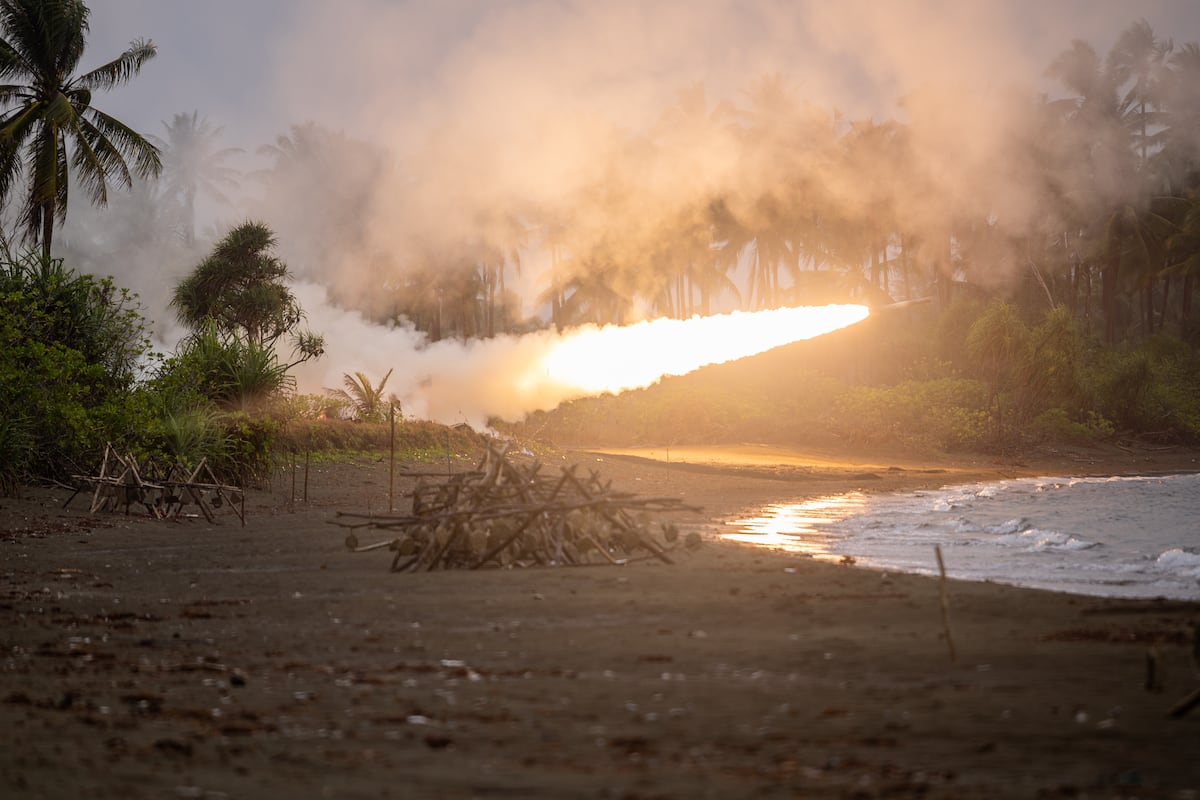
The U.S. Army in the Pacific has begun working through how it will build two Multi-Domain Commands in the theater to oversee and direct the service’s Multi-Domain Task Force units as it continues to expand and refine its presence as part of an overall effort to deter China’s increasing aggression in the region, Gen. Ronald Clark, U.S. Army Pacific commander, told Defense News.
The new Multi-Domain Commands are coming as part of the Army’s new transformation initiative.
According to an Army execution order issued in May, the service plans to build four. Indicative of the Army’s desire to continue to prioritize building up capability in the Pacific theater, two will be focused there: Multi-Domain Command — Pacific and Multi-Domain Command — Japan.
Two others, Multi-Domain Command — Europe and Multi-Domain Command — Army, are taking shape, as well.
The Army is working on sizing the force for the commands “in a way that’s different,” Clark said in a Friday interview.
With the rise of the MDTF capability in the Pacific, “the authorities associated with that, in some cases are to the [Indo-Pacific Command] commander and above,” Clark said.
“So, to be able to ensure that we have the authorities associated with the right level of command and the staffs associated with the tasks required to plan, synchronize, train those assets, a two-star level headquarters is where that will reside.”
The service’s first MDTF was experimental, but since then the Army has operationalized that first unit and will ultimately build four more.
The Army established the initial unit at Joint Base Lewis-McChord in Washington state around 2018. U.S. INDOPACOM theater exercises, with MDTF participation, helped inform the Army’s Multi-Domain Operations warfighting concept, which has now evolved into doctrine.
The Army stood up the second MDTF in Europe in 2021 and the third in Hawaii in 2022. A fourth MDTF will also be devoted to the Pacific, and a fifth, based at Fort Bragg, North Carolina, will be able to deploy rapidly as needed. All five MDTFs will be established by 2028.
The units are designed to operate across all domains — land, air, sea, space and cyberspace — are equipped with the Army’s growing capabilities, such as the Precision Strike Missile, the Long-Range Hypersonic Weapon and the Mid-Range Capability Missile.
MDTFs will also have units devoted to the critical sourcing of intelligence across domains and spectrums and information sharing with the joint force to enable targeting.
The MDTF units’ presence in the Pacific in recent years have been credited with effective deterrence. For instance, the MRC resident with the 1st MDTF has drawn the ire of China since being deployed to the Philippines as part of the last two cycles of U.S. Army exercises with the country.
Recent assessments through exercises and warfighter experimentation have shown the need to operationalize such commands and create a higher level of command authority for the MDTFs, according to Clark.
The new commands are “additive to what we currently have in the Indo Pacific and in U.S. Army Pacific, so with that comes additional tasks and funding,” Clark said.
The Army’s fiscal 2026 budget request reflects some additional funding in order to execute the establishment of the commands.
The 1st and 3rd MDTF will fall under the Multi-Domain Command — Pacific, and the 4th MDTF will be associated with Multi-Domain Command — Japan.
According to the Army’s execution order for the transformation initiative, the Pacific command combines the 7th Infantry Division headquarters with the 1st and 3rd MDTFs. The command in Japan combines U.S. Army Japan’s headquarters with the 4th MDTF.
“The Multi-Domain Task Force is a theater-level capability,” Clark said. “It has inherent capabilities ... cyber, space, electronic warfare, long-range precisions first, it’s ability to be able to conduct integrated air and missile defense in its own defense and in a point defense kind of way, those capabilities ... go beyond an area of joint area of operations.”
MDTFs are commanded by colonels,“which is great,” Clark said, but adding they will now plug into a two-star command structure that can report to U.S. Army Pacific, for example.
“We need to up-gun the level of staff and command,” he said.
Jen Judson is an award-winning journalist covering land warfare for Defense News. She has also worked for Politico and Inside Defense. She holds a Master of Science degree in journalism from Boston University and a Bachelor of Arts degree from Kenyon College.
美国太平洋陆军司令罗纳德·克拉克将军告诉《防务新闻》,美国太平洋陆军已经开始着手研究如何在该地区建立两个多域司令部,以监督和指挥该军种的多域特遣部队,同时继续扩大和完善其在该地区的存在,作为遏制中国在该地区日益增长的侵略性的整体努力的一部分。
新的多域司令部是陆军新转型计划的一部分。
根据陆军五月份发布的一项执行命令,该军种计划建造四座。其中两座将重点部署在太平洋战区:太平洋多域司令部和日本多域司令部,这表明陆军希望继续优先加强在太平洋战区的能力建设。
另外两个机构,即欧洲多域司令部和陆军多域司令部,也正在组建中。
克拉克在周五的采访中表示,陆军正在“以一种不同的方式”调整各司令部的兵力规模。
克拉克说,随着太平洋地区多部门联合特遣部队能力的提升,“在某些情况下,与此相关的权限是(印太司令部)司令及以上级别”。
“因此,为了确保我们拥有与适当级别的指挥权相关的权力,以及与计划、协调和训练这些资产所需的任务相关的人员,二星级司令部将设在这里。”
该部队的第一个多学科特遣部队是试验性质的,但从那以后,陆军已经使第一个部队投入运作,并最终将再建造四个。
陆军于 2018 年左右在华盛顿州刘易斯-麦科德联合基地建立了第一个部队。美国印太司令部战区演习,以及多域特遣部队的参与,帮助完善了陆军的多域作战作战概念,该概念现已发展成为作战条令。
陆军于2021年在欧洲组建了第二支多国联合特遣部队(MDTF),并于2022年在夏威夷组建了第三支。第四支MDTF也将部署在太平洋地区,第五支MDTF将驻扎在北卡罗来纳州布拉格堡,并可根据需要快速部署。所有五支MDTF都将于2028年前组建完成。
这些部队的设计目标是在所有领域——陆地、空中、海洋、太空和网络空间——进行作战,并配备了陆军不断增强的能力,例如精确打击导弹、远程高超音速武器和中程能力导弹。
多领域特遣部队还将设立专门的单位,负责跨领域和跨领域获取关键情报,并与联合部队共享信息,以实现目标定位。
近年来,多国联合特遣部队在太平洋地区的存在被认为发挥了有效的威慑作用。例如,驻扎在第一多国联合特遣部队的军事反应小组(MRC)自部署到菲律宾参加最近两轮美军与菲律宾的联合演习以来,就引起了中国的不满。
克拉克表示,最近通过演习和作战人员试验进行的评估表明,有必要使此类指挥机构投入运作,并为多部门特遣部队建立更高层次的指挥权。
克拉克说:“这些新司令部是对我们目前在印太地区和美国太平洋陆军所拥有的司令部的补充,因此也带来了额外的任务和资金。”
陆军 2026 财年预算申请中包含一些额外资金,用于组建各司令部。
第 1 和第 3 海上多域特遣队将隶属于太平洋多域司令部,第 4 海上多域特遣队将隶属于日本多域司令部。
根据陆军的转型计划执行命令,太平洋司令部将第7步兵师司令部与第1和第3多国特遣部队合并。驻日司令部则将驻日美军司令部与第4多国特遣部队合并。
克拉克说:“多域特遣部队是战区级能力。它拥有固有的能力……网络、太空、电子战、远程精确打击,以及在自身防御和点防御方面进行综合防空和导弹防御的能力,这些能力……超越了联合作战区域的范围。”
克拉克说,MDTF 由上校指挥,“这很好”,但他补充说,他们现在将加入一个两星指挥结构,例如可以向美国太平洋陆军报告。
“我们需要提升人员和指挥水平,”他说。
珍·贾德森是一位屡获殊荣的记者,为《防务新闻》报道陆地战争。她也曾为《政治报》和《内幕防务》工作。她拥有波士顿大学新闻学硕士学位和凯尼恩学院文学学士学位。