Patriot missile involved in Bahrain blast likely US-operated, analysis finds分析发现,巴林爆炸事件中使用的爱国者导弹很可能是美国制造的。
The pre-dawn explosion injured dozens of civilians, including children, and tore through homes in U.S.-ally Bahrain 10 days into the war.
An American-operated Patriot air defense battery likely fired the interceptor missile involved in a pre-dawn explosion that injured dozens of civilians and tore through homes in U.S.-ally Bahrain 10 days into the war on Iran, according to an analysis by academic researchers examined by Reuters.
Both Bahrain and Washington have blamed an Iranian drone attack for the March 9 blast, which the Gulf kingdom said injured 32 people including children, some seriously. Commenting on the day of the attack, U.S. Central Command said on X that an Iranian drone struck a residential neighborhood in Bahrain.
In response to questions from Reuters, Bahrain on Saturday acknowledged for the first time that a Patriot missile was involved in the explosion over the Mahazza neighborhood on Sitra island, offshore from the capital Manama and also home to an oil refinery.
In a statement, a Bahraini government spokesperson said the missile successfully intercepted an Iranian drone mid-air, saving lives.
“The damage and injuries sustained were not a result of a direct impact to the ground of either the Patriot interceptor or the Iranian drone,” the spokesperson said.
Neither Bahrain or Washington has provided evidence that an Iranian drone was involved in the Mahazza incident.
The use of costly, advanced weaponry to defend against attacks by far cheaper drones has been a defining feature of the war. The incident points to the risks and limitations of this strategy: The blast from the powerful Patriot, whether or not it intercepted a drone, contributed to widespread damage and casualties, while Bahrain’s air defenses were unable to prevent strikes that night on the nearby oil refinery, which declared force majeure hours later.
When asked for comment, the Pentagon referred Reuters to Central Command, which did not immediately reply to questions.
In response to questions sent to the White House, a senior U.S. official said the United States was “crushing” Iran’s ability to shoot or produce drones and missiles. “We will continue to address these threats to our country and our allies,” the official said, adding that the U.S. military “never targets civilians.” The official did not answer specific questions about the Patriot attack.
On February 28, the first day of U.S. strikes on Iran, an Iranian girls school took a direct hit. Investigators at the U.S. Defense Department believe U.S. forces were likely responsible, Reuters first reported, possibly because of outdated targeting data, two U.S. sources previously told the news agency.
Video of the aftermath of the Mahazza blast in Bahrain verified by Reuters shows rubble around houses, a thick layer of dust in the streets, an injured man and screaming residents.
Both Bahrain and the United States operate U.S. Patriot air defense batteries in the kingdom, a close U.S. ally located on the Persian Gulf that hosts the U.S. Navy’s Fifth Fleet along with the regional U.S. naval command.
Bahrain plays a critical role in the security of the Strait of Hormuz, the chokepoint that carries about a fifth of the world’s oil and liquefied natural gas and has been almost entirely closed by Iran, causing unprecedented disruption to world oil supplies.
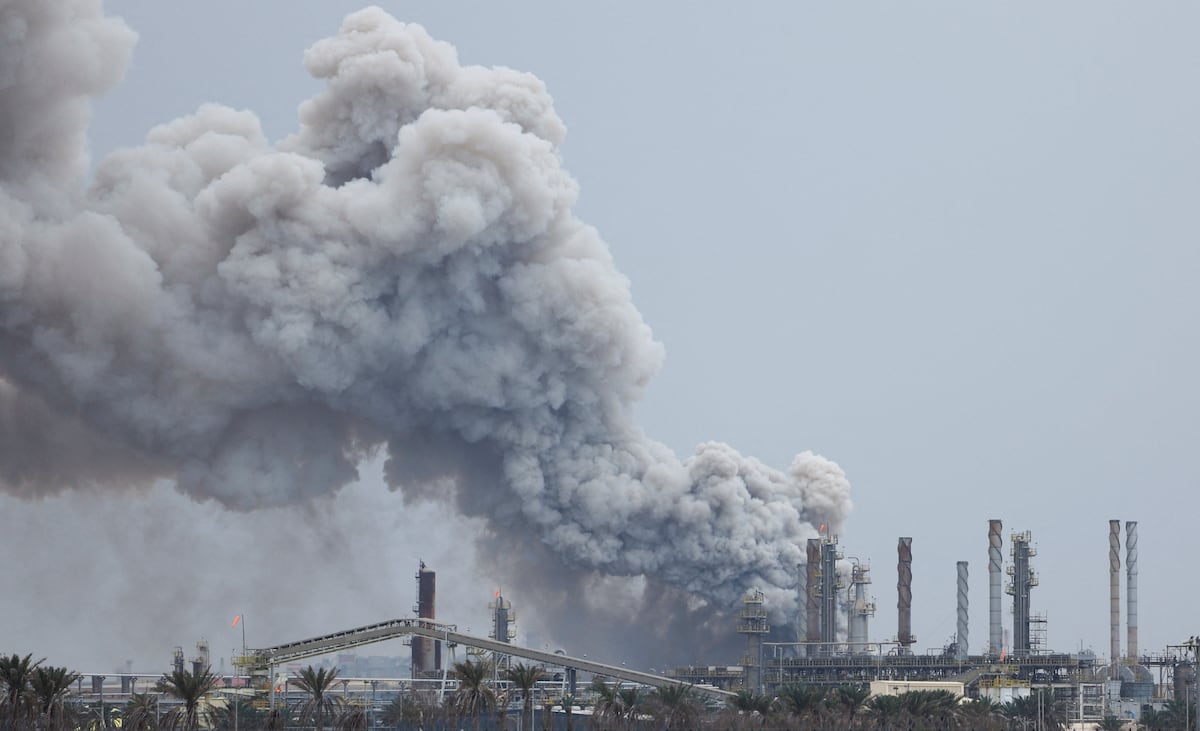
On the night of the explosion in Mahazza, the refinery on Sitra came under Iranian attack, according to Bahraini national oil company Bapco. Videos show smoke rising from the facility on the morning of March 9.
Reuters could not establish whether the cause of the explosion during a night of Iranian attacks on Sitra would have been immediately apparent to U.S. and Bahraini forces. Bahrain in its statement did not say why it had not mentioned the involvement of a Patriot at the time. Iran’s mission to the United Nations did not immediately respond to a request for comment about the incident.
Produced by Raytheon, part of RTX Corp. [RTX], the Patriot is the U.S. Army’s primary high-to-medium-range aircraft-and-missile interceptor system and forms the backbone of U.S. and allied air defenses. Raytheon didn’t respond to a request for comment about the incident.
A PAC-3 MSE interceptor is fired during an exercise. (U.S. Army)
Bahrain’s government declined to say whether the missile that detonated on March 9, was fired by its own forces or by the United States.
But research associates Sam Lair and Michael Duitsman and Professor Jeffrey Lewis of the Middlebury Institute of International Studies at Monterey concluded with moderate-to-high confidence that the suspect missile was likely launched from a U.S. Patriot battery located about 4 miles (7 km) to the southwest of the Mahazza neighborhood.
The conclusions of the three American munitions and open-source intelligence researchers, reported here for the first time, were based on their review of open-source visuals and commercial satellite imagery.
Reuters showed the Middlebury analysis to two target-analysis experts and one Patriot system missile researcher, who found no reason to dispute its conclusion.
One of them, Wes Bryant, a former senior targeting advisor and policy analyst at the Pentagon, said Lair, Duitsman and Lewis’s conclusions were “pretty undeniable.”
Key to the Middlebury analysis was a video shot from an apartment building and shared on social media. The video shows the suspect Patriot roaring across the night sky at low altitude on a northeastern trajectory. It then angled downward and out of sight. A flash of light in the distance appeared to mark its detonation 1.3 seconds later.
Hany Farid, a professor at the University of California at Berkeley specializing in digital forensics, reviewed the video for Reuters to determine if it was generated by artificial intelligence. He found “no obvious evidence that the video is fake.”
Lair, Duitsman and Lewis geolocated the video to a neighborhood in Riffa, Bahrain’s second-largest city. Reuters confirmed the geolocation. The earliest post of the video Reuters could find online was at around 2 am local time on March 9.
“The Riffa site’s location and orientation are consistent with the trajectory” of that of the suspect Patriot, the analysis said.
Multiple videos posted to social media the morning of March 9 show damage to residences in Block 602 of the Mahazza neighborhood. The researchers first geolocated the visuals using landmarks that appeared to match commercial satellite imagery of the area and visible street addresses. Reuters independently verified the geolocation.
The researchers then traced the trajectory of the suspect missile from Block 602 straight back to what they assessed – based on commercial satellite imagery – was the U.S. Patriot battery based less than half a mile from where the video of the missile in flight was recorded in Riffa.
A battery consists of a radar unit, a command hub and up to eight launchers that are integrated to detect, track and intercept aircraft and missiles.
Using commercial satellite imagery, the researchers determined that five launchers were visible at the Riffa site two days before the March 9 incident.
The battery has been there since at least 2009, according to satellite imagery. The Bahraini Defense Force did not start operating its own Patriot systems until 2024, according to a Lockheed Martin press release.
The Riffa site has features that are both distinctive to U.S. Patriot batteries in the region and different from those of known Bahrain-operated batteries, the researchers said, including protective walls, unpaved roads and a lack of permanent buildings. Based on these elements, the researchers concluded that the battery is likely operated by the United States, which uses Patriots to defend its naval sites in Bahrain.
The researchers were unable to say with confidence what caused the Patriot to explode. But they added that based on the available evidence, including the pattern and spread of damage on the ground, it appeared to have detonated mid-flight.
They concluded that it was possible the Patriot was aimed at a low-flying drone and that the combined explosion of the missile and drone ignited the blast, the analysis said.
“If this was the case, this was an irresponsible intercept attempt as it endangered the lives and the homes of allied civilians in a residential area,” the analysis said
This scenario matches what Bahrain’s government spokesperson said happened: that the Patriot intercepted an Iranian drone and both detonated in the air.
However, the analysis said, the direction of the damage and the lack of available evidence of a drone over the neighborhood suggested another scenario, that “the explosion was the result of the detonation of the warhead and unexpended propellant of a Patriot interceptor.”
Despite the claim by Bahrain, the researchers said it was less likely the missile made contact with a drone. Reuters could not independently verify the presence or not of an Iranian drone during the incident.
The analysis said that videos taken after the attack and photographs released by Bahrani authorities show that the blast damage was concentrated along four streets of Mahazza.
A Bahrain television news broadcast on March 9 and a government press release showed an extensively damaged home about 400 feet (120 meters) from the center of the main blast area, with interior photos showing holes in a wall created by shrapnel, the analysis said.
When all the damage is considered together, the Middlebury analysis noted, it matches what one would expect if a Patriot missile exploded in the air over a road intersection in the neighborhood. Pieces of the missile then flew about 120 meters farther and hit another house, the analysis said.
Robert Maher, an audio specialist who reviewed the video at the request of Reuters, said his analysis supports the approximate location of the explosion over the damaged homes.
In the video, a flash is seen about eight seconds in, but an explosion is never heard before the clip ends 19 seconds later. That’s because light travels faster than sound. Based on how long the sound would take to reach the person who shot the video, the explosion had to be more than four miles away. The damaged homes were about 4.6 miles (7.4 km) away, which fits with the timing.
Maher said that in the audio from the video he heard no drones or other missiles, although their sounds would have been faint or inaudible if they were more than four miles away from where the video was taken.
“I don’t see anything that is inconsistent with my observations from the audio,” Maher said after reviewing the Middlebury analysis.
Defense and industry officials say Patriot misfires are rare, but they do happen, including an errant missile in 2007 that hit a farm in Qatar.
In an X post on March 9, U.S. Central Command denounced Iranian and Russian news reports that said the incident in Mahazza was the result of a failed Patriot, calling it a “LIE.” It said an Iranian drone struck a residential neighborhood.
Reuters and the Middlebury researchers were unable to obtain or review any visual evidence of missile or drone fragments. Reuters attempted to contact witnesses in Bahrain, but several people declined to speak, citing fear of reprisals. Human Rights Watch has documented arrests of people in Bahrain during the war for posting videos on social media of attacks.
In the video of the suspect missile in flight, the Patriot appears to pass a much steeper smoke trail that the researchers said likely belonged to a first interceptor fired moments earlier.
Patriots are often fired in pairs to increase the chances that one hits the target. Neither the researchers or Reuters could establish what happened to the first missile.
The low trajectory of the second missile and its deviation from the route of the earlier launch could be signs of a possible problem, the researchers said. But they could not rule out the possibility that it was shot in that direction on purpose.
Bahrain’s spokesperson said any suggestion of malfunction or misfiring of the Patriots in Bahrain “was factually incorrect.”
据路透社查阅的学术研究人员的分析显示,美国运营的“爱国者”防空导弹系统很可能发射了拦截导弹,导致美国盟友巴林在凌晨发生爆炸,造成数十名平民受伤,房屋被炸毁。爆炸发生在对伊朗战争开始 10 天后。
巴林和华盛顿均指责伊朗无人机袭击了3月9日的爆炸事件。巴林方面称,爆炸造成包括儿童在内的32人受伤,其中一些伤势严重。美国中央司令部在袭击当天通过X网站发表评论称,一架伊朗无人机袭击了巴林的一个居民区。
针对路透社的提问,巴林周六首次承认,一枚爱国者导弹与锡特拉岛马哈扎社区上空的爆炸有关。锡特拉岛位于首都麦纳麦近海,岛上还有一座炼油厂。
巴林政府发言人在一份声明中表示,该导弹成功拦截了一架伊朗无人机,挽救了生命。
发言人表示:“所遭受的损失和伤亡并非爱国者拦截器或伊朗无人机直接撞击地面所致。”
巴林和华盛顿都没有提供证据证明伊朗无人机参与了马哈扎事件。
使用昂贵且先进的武器防御远比武器便宜的无人机攻击,一直是这场战争的一大特点。此次事件凸显了这种策略的风险和局限性:强大的“爱国者”导弹的爆炸,无论是否拦截了无人机,都造成了大范围的破坏和人员伤亡;而巴林的防空系统当晚未能阻止对附近炼油厂的袭击,该炼油厂在数小时后宣布无法抗拒。
当被问及此事时,五角大楼将路透社的询问转给了中央司令部,但中央司令部没有立即回复问题。
针对发往白宫的问题,一位美国高级官员表示,美国正在“摧毁”伊朗发射或生产无人机和导弹的能力。这位官员说:“我们将继续应对这些对我们国家和盟友的威胁。”他还补充说,美军“从不以平民为目标”。这位官员没有回答有关“爱国者”导弹袭击的具体问题。
2月28日,美国对伊朗发动空袭的第一天,一所伊朗女子学校遭到直接袭击。路透社率先报道称,美国国防部调查人员认为美军很可能应对此负责,此前两名美国消息人士告诉路透社,这可能是由于目标数据过时造成的。
路透社核实的巴林马哈扎爆炸后的视频显示,房屋周围满是瓦砾,街道上尘土飞扬,一名男子受伤,居民们尖叫不已。
巴林和美国都在巴林王国部署了美国“爱国者”防空导弹系统。巴林是美国的亲密盟友,位于波斯湾沿岸,是美国海军第五舰队和美国地区海军司令部的所在地。
巴林在霍尔木兹海峡的安全中扮演着至关重要的角色。霍尔木兹海峡是世界上约五分之一石油和液化天然气的咽喉要道,已被伊朗几乎完全封锁,给世界石油供应造成了前所未有的混乱。
据巴林国家石油公司(Bapco)称,在马哈扎爆炸当晚,锡特拉炼油厂遭到伊朗袭击。视频显示,3月9日清晨,该炼油厂冒出浓烟。
路透社无法确定,在伊朗对锡特拉发动夜间袭击期间发生的爆炸原因,是否能立即被美巴联军察觉。巴林在声明中并未说明为何当时没有提及“爱国者”导弹系统的介入。伊朗常驻联合国代表团尚未就此事作出回应。
“爱国者”导弹系统由雷神公司(RTX集团旗下公司)生产,是美国陆军主要的中远程飞机导弹拦截系统,也是美国及其盟国防空体系的中坚力量。雷神公司未对此事作出回应。
演习期间,一枚PAC-3 MSE拦截弹发射升空。(美国陆军)
巴林政府拒绝透露3月9日爆炸的导弹是由巴林军队发射还是由美国发射。
但蒙特雷米德尔伯里国际研究学院的研究助理萨姆·莱尔和迈克尔·杜伊茨曼以及杰弗里·刘易斯教授以中等到高度的信心得出结论,这枚可疑导弹很可能是从位于马哈扎社区西南约 4 英里(7 公里)处的美国爱国者导弹发射阵地发射的。
本文首次报道了三位美国军火和开源情报研究人员的结论,这些结论是基于他们对开源视觉资料和商业卫星图像的审查得出的。
路透社将米德尔伯里大学的分析报告给两位目标分析专家和一位爱国者导弹系统研究员,他们认为没有理由质疑该报告的结论。
其中一位是韦斯·布莱恩特,他曾是五角大楼的高级目标顾问和政策分析师,他说莱尔、杜伊茨曼和刘易斯的结论“几乎是无可辩驳的”。
米德尔伯里分析的关键在于一段从公寓楼拍摄并在社交媒体上流传的视频。视频显示,疑似“爱国者”导弹低空掠过夜空,向东北方向飞行。随后,导弹向下倾斜,消失在视野中。1.3秒后,远处的一道闪光似乎标志着导弹爆炸。
加州大学伯克利分校专门研究数字取证的教授哈尼·法里德为路透社审查了这段视频,以确定它是否由人工智能生成。他发现“没有明显的证据表明该视频是伪造的”。
莱尔、杜伊茨曼和刘易斯将视频定位到巴林第二大城市里法的一个街区。路透社证实了这一定位。路透社在网上找到的该视频最早发布时间是3月9日凌晨2点左右。
分析称,“里法遗址的位置和方向与嫌疑人爱国者导弹的飞行轨迹一致”。
3月9日上午,社交媒体上发布的多段视频显示,马哈扎社区602号街区的居民住宅遭到破坏。研究人员首先利用与该地区商业卫星图像和可见街道地址相符的地标对这些视频进行了地理定位。路透社随后独立核实了地理定位结果。
研究人员随后追踪了这枚可疑导弹从 Block 602 发射场的轨迹,并根据商业卫星图像,直接追溯到他们评估认为的美国爱国者导弹发射阵地,该阵地距离在里法拍摄导弹飞行视频的地点不到半英里。
一个导弹发射单元由一个雷达单元、一个指挥中心和最多八个发射器组成,这些发射器集成在一起,用于探测、跟踪和拦截飞机和导弹。
研究人员利用商业卫星图像确定,在 3 月 9 日事件发生前两天,里法发射场附近可以看到五个发射器。
根据卫星图像显示,该导弹防御系统至少从2009年起就已存在。洛克希德·马丁公司发布的新闻稿称,巴林国防军直到2024年才开始使用其自主研发的“爱国者”导弹防御系统。
研究人员表示,里法遗址具有一些特征,这些特征既是该地区美国“爱国者”导弹防御系统所特有的,又不同于已知的巴林运营的导弹防御系统,例如防护墙、未铺设路面的道路以及缺乏永久性建筑物。基于这些特征,研究人员得出结论,该导弹防御系统很可能由美国运营,美国使用“爱国者”导弹防御系统来保护其在巴林的军事设施。
研究人员无法确定爱国者导弹爆炸的具体原因。但他们补充说,根据现有证据,包括地面上的损坏模式和扩散情况,导弹似乎是在飞行途中爆炸的。
分析报告称,他们的结论是,爱国者导弹有可能瞄准的是一架低空飞行的无人机,导弹和无人机的爆炸共同引发了爆炸。
分析报告称:“如果情况属实,这是一次不负责任的拦截行动,因为它危及了居民区内盟军平民的生命和家园。”
这一情景与巴林政府发言人所说的情况相符:爱国者导弹拦截了一架伊朗无人机,两者在空中爆炸。
然而,分析指出,破坏的方向以及附近没有无人机的证据表明存在另一种情况,即“爆炸是爱国者拦截导弹的弹头和未使用的推进剂引爆的结果”。
尽管巴林方面声称导弹击中了无人机,但研究人员表示这种可能性较小。路透社无法独立核实事件发生时伊朗无人机是否在场。
分析称,袭击发生后拍摄的视频和巴赫拉尼当局发布的照片显示,爆炸造成的破坏集中在马哈扎的四条街道上。
分析称,巴林电视台3月9日播出的新闻节目和政府新闻稿显示,距离主爆炸中心约400英尺(120米)的一栋房屋严重受损,内部照片显示墙上有弹片造成的孔洞。
米德尔伯里学院的分析指出,综合所有损失来看,其结果与一枚爱国者导弹在居民区路口上空爆炸的预期情况相符。分析还称,导弹碎片随后又飞出约120米,击中了另一栋房屋。
应路透社要求审查了视频的音频专家罗伯特·马赫表示,他的分析支持爆炸大致发生在受损房屋上方的结论。
视频中,大约8秒处出现一道闪光,但在19秒后视频结束前,始终没有听到爆炸声。这是因为光速比声速快。根据声音到达拍摄者所需的时间,爆炸地点必定在四英里(约6.4公里)以外。受损房屋距离爆炸地点约4.6英里(7.4公里),这与时间吻合。
马赫表示,从视频的音频中,他没有听到无人机或其他导弹的声音,尽管如果它们距离视频拍摄地点超过四英里,它们的声音也会很微弱或听不见。
“我没有发现任何与我从音频中观察到的情况不符的地方,”马赫在查看了米德尔伯里学院的分析后说道。
国防和工业界官员表示,爱国者导弹系统失火的情况很少见,但确实会发生,包括 2007 年一枚偏离航线的导弹击中了卡塔尔的一个农场。
3月9日,美国中央司令部在一份公开声明中谴责了伊朗和俄罗斯的新闻报道,这些报道称马哈扎事件是“爱国者”导弹发射失败造成的,并称其为“谎言”。声明称,一架伊朗无人机袭击了居民区。
路透社和米德尔伯里学院的研究人员未能获得或查阅任何导弹或无人机碎片的影像证据。路透社试图联系巴林的目击者,但多人以害怕遭到报复为由拒绝接受采访。人权观察组织记录了战争期间巴林发生的多起逮捕事件,起因是有人在社交媒体上发布袭击视频。
在疑似导弹飞行的视频中,“爱国者”导弹似乎经过了一条更陡峭的烟迹,研究人员表示,这条烟迹很可能属于几分钟前发射的第一枚拦截导弹。
为了提高命中目标的概率,爱国者导弹通常成对发射。研究人员和路透社都无法确定第一枚导弹的下落。
研究人员表示,第二枚导弹的低弹道及其与先前发射路线的偏差可能预示着存在问题。但他们也不能排除导弹是故意朝那个方向发射的可能性。
巴林发言人表示,任何关于巴林境内爱国者导弹发生故障或发射失误的说法“都与事实不符”。