A new era of uncrewed airpower: GA-ASI’s lineup for high-tech warfare无人空中力量的新时代:通用航空系统公司(GA-ASI)的高科技战争产品阵容
GA-ASI expands its uncrewed aircraft lineup with the FQ-42A, MQ-9B, Mojave STOL and Wildfire for high-tech warfare and contested environments. GA-ASI FQ-42A Collaborative Combat Aircraft
新闻视频
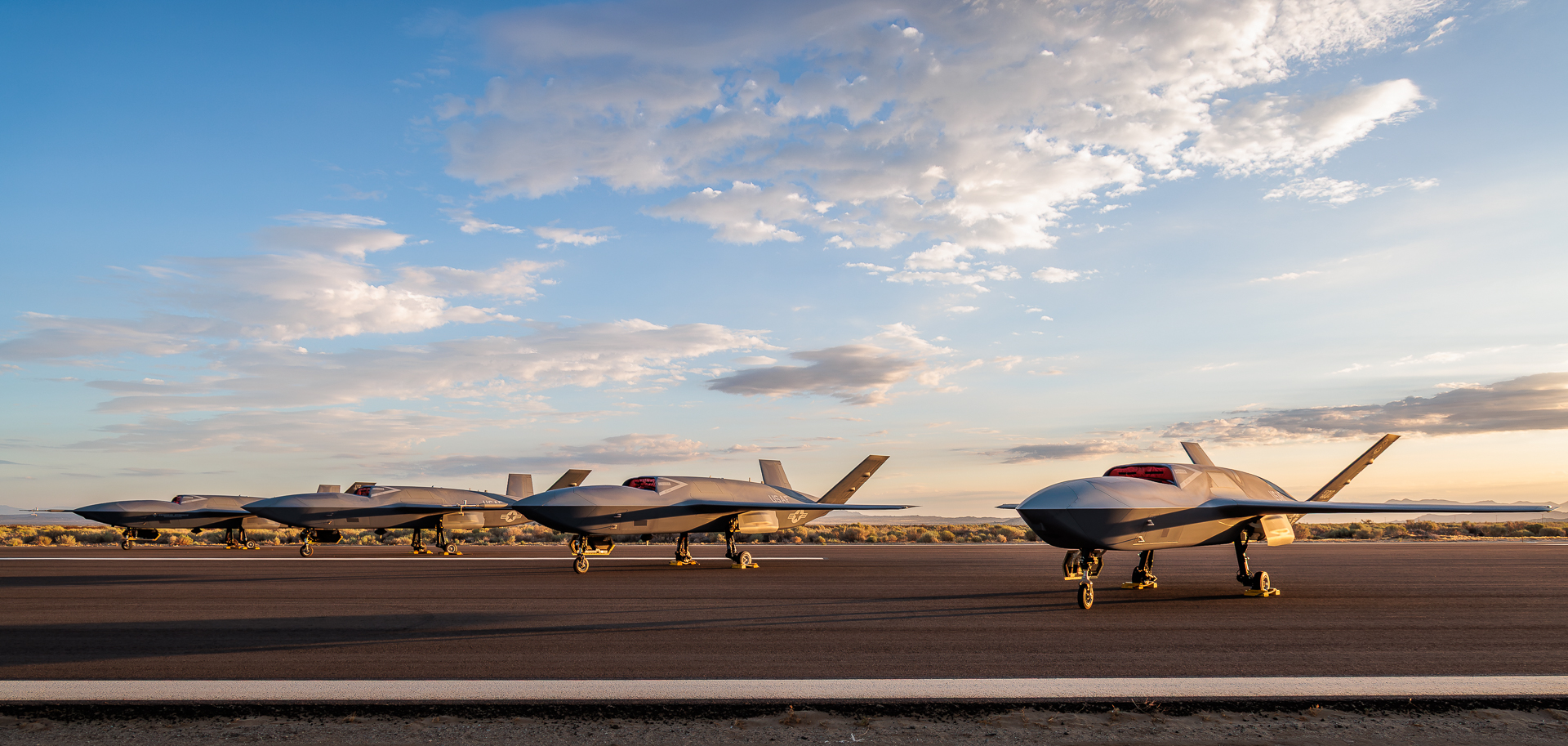
Manufacture of the FQ-42A CCA is in full swing under a production contract awarded by the U.S. Air Force in June 2026.
The United States has entered an era of high-technology warfare against advanced adversaries, where range, persistence, payload, survivability, and scale are non-negotiable.
Winning that fight demands large, capable Uncrewed Aircraft Systems (UAS) that can fly from friendly skies into the teeth of enemy air defenses — and do so affordably, without risking U.S. aircrews.
General Atomics Aeronautical Systems, Inc. (GA-ASI) , the company that introduced the world to uncrewed warfare, has overhauled its lineup to meet that challenge head-on.
Enhancements to its MQ-9B SkyGuardian and SeaGuardian and the short takeoff and landing Mojave STOL are now joined by two new systems: FQ-42A Collaborative Combat Aircraft (CCA), a highly advanced uncrewed air-to-air fighter jet, and the Wildfire Massed Modular Aircraft (MMA), a scalable theater-range platform designed for massed effects.
“We’ve never been a company that rested on its laurels,” said GA-ASI President David Alexander. “The conversation around uncrewed systems has changed, and frankly, it should. The battlefield has evolved, threats have evolved, and so have we.
“We’re keeping ahead of the game, and, in the case of our FQ-42A and Wildfire aircraft, we’ve designed them from the start to overmatch threats today and into the future.”
The company’s ever-expanding portfolio is tailored to the realities of high-end conflict, ensuring that the unique advantages of large uncrewed aircraft remain central to U.S. airpower.
“Can’t Change Physics”
Recent losses in contested environments are sometimes cited as proof that it is time to “move on” from large UAS like the MQ-9 series of aircraft. Alexander argues the opposite — those same campaigns show the value of traditional UAS. They must evolve, not disappear.
“Yes, we’ve seen losses in contested environments,” he said. “We’ve also seen Pentagon leaders call it the ‘MVP’ of the campaign. That tells you something important. When a system consistently delivers decisive effects, you modernize it and build on it. And I believe that’s where the Department of War is headed.”
Alexander said Reaper was purpose-built to provide persistent long-endurance surveillance and precision strike. It delivers these capabilities at scale and at a fraction of the cost of manned platforms that put pilots’ lives at risk.
Despite the hype for small drones, it’s clear that quadcopters, gliders, and short-range rockets “can’t change physics,” Alexander said.
“Long-range, high-payload, high-endurance missions require large, hefty airframes with significant wingspan, fuel capacity, and payload volume,” he went on. “If we are serious about surveilling and targeting across wide ocean areas, tracking mobile missile units, and holding adversary assets at risk from standoff distances, large UAS — modernized for contested environments — are the decisive advantage.”
Alexander said changing battlefield conditions have continually driven the company to advance.
“When you look at the threats we’re seeing in Ukraine and Iran, we already knew our aircraft would need to evolve, and we’ve been pushing ahead there for years now,” he said. “But it seems like every morning the news puts fresh urgency behind delivering that vital combat capability while finding ways to strip out some of what drives up costs.”
MQ-9B: The Flagship for Multi-Mission ISR and Strike
MQ-9B SkyGuardian and SeaGuardian remain GA-ASI’s flagship multi-mission ISR platforms, now upgraded for long-range contested operations:
Long-range weapons: New pylons with 30-inch lug spacing accommodate larger standoff weapons such as the Long Range Anti-Ship Missile and the Joint Strike Missile. Combined with MQ-9B’s ISR suite, these weapons turn the aircraft into a long-range strike and maritime interdiction platform able to engage far outside adversary standoff ranges.
Resilient communications via pLEO: Integration with proliferated low Earth orbit satellite constellations provides low-latency, high-bandwidth, jam-resistant connectivity. In combination with DoD-standard cybersecurity, MQ-9B can maintain secure command-and-control and sensor links from pole to pole in the face of electronic attack.
GA-ASI and Kongsberg are working together to integrate the Joint Strike Missile onto MQ-9B.
For Air Force and joint planners, MQ-9B has moved beyond counterinsurgency. It is now a standoff sensor-shooter that slots into a resilient, distributed kill chain.
Mojave STOL: Expeditionary Airpower Without Fixed Runways
Building on GA-ASI’s other pioneering aircraft, Mojave STOL is designed for modern contested theaters:
Short Takeoff and Landing (STOL): Mojave STOL operates from austere, unprepared locations — open fields, dry riverbeds, even the decks of amphibious assault ships. This advantage generates uncrewed combat airpower from places adversaries cannot easily target.
Advanced sensor integration: Using human-portable, laptop-based ground control, Mojave STOL carries cutting-edge radar, electro-optical/infrared, and signals intelligence payloads. It provides a comprehensive operational picture to enable precise targeting and situational awareness for dispersed forces.
Mojave STOL transforms multi-domain operations with its ability to take off and land virtually anywhere — from unprepared surfaces in austere locations to the decks of warships at sea.
In a combat environment where large runways are vulnerable, Mojave STOL supports airfields without airports and delivers persistent ISR and strike sourced from improvised launch and recovery sites.
Gambit and FQ-42A: Collaborative Combat Aircraft for the Peer Fight
The Gambit Series is GA-ASI’s family of autonomous jets for high-end contested operations, built around a common core that comprises roughly 70 percent of key components. This commonality lowers cost and simplifies production, logistics, and sustainment.
Recently selected by the U.S. Air Force for its CCA program, FQ-42A is the Air Force’s first uncrewed fighter and a member of the Gambit family. Across six missionized variants, Gambit aircraft can support:
Long-endurance ISR in contested airspace
Air-to-air combat and escort missions
Stealth reconnaissance
Carrier-based operations
Penetrating air-to-ground missions and suppression of enemy air defenses
All Gambit aircraft are designed for human-machine teaming with advanced fighters and other UAS, extending sensors, adding weapons capacity, and imposing dilemmas on adversary defenses — precisely the type of effects envisioned in modern Air Force planning.
Wildfire: Theater-Range Attritable Mass
Wildfire is GA-ASI’s theater-range, high-production UAS designed to deliver affordable combat mass in high-threat environments:
Range and payload: Wildfire can carry two Long Range Anti-Ship Missiles or four Joint Strike Missiles for meaningful combat distances and has a ferry range that exceeds 8,000 nautical miles, allowing the aircraft to deliver weapons, sensors, electronic warfare, or communications relay deep in contested battlespace.
Modular design: Open interfaces and hard points that enable modularity support the rapid swapping of payloads so that commanders can adjust quickly to changing missions and threats.
Rapid production: Leveraging more than 5 million square feet of GA-ASI manufacturing capacity and advanced processes, Wildfire is designed to be built and fielded in numbers sufficient to absorb attrition while maintaining persistent pressure across the theater.
GA-ASI’s Wildfire is a scalable, attritable UAS able to deploy long-range precision strike weapons for formidable firepower in the aerial battlespace. (Artist’s rendering)
Wildfire and Gambit together deliver what defense leaders call “attritable mass” — large numbers of capable systems whose loss does not equate to strategic setback because they are affordable, uncrewed, and replaceable.
Taken as a whole, Alexander said, the aircraft portfolio shows that GA-ASI is serious about retaining its position as the leading provider of UAS to the United States and its allies.
“We’ve got nearly 10 million flight hours under our belts, and the vast majority of those were in combat operations,” Alexander said. “We know, to our core, what it takes to deliver relevant systems. We have the people, infrastructure, and capacity in place, today, to do it at scale. GA-ASI is ready to answer the call.”
根据美国空军于 2026 年 6 月授予的生产合同,FQ-42A CCA 的生产正在全面展开。
美国已经进入了与先进对手进行高科技战争的时代,在这个时代,射程、持久性、有效载荷、生存能力和规模都是不容谈判的。
赢得这场战斗需要大型、功能强大的无人机系统(UAS),能够从友方领空飞入敌方防空系统的腹地——而且成本低廉,不会危及美国机组人员的生命。
通用原子航空系统公司(GA-ASI)是向世界推出无人作战技术的公司,该公司已对其产品线进行了全面改革,以正面应对这一挑战。
其 MQ-9B 天空卫士和海洋卫士以及短距起降 Mojave STOL 的改进现在又增加了两个新系统:FQ-42A 协同作战飞机 (CCA),一种高度先进的无人空对空战斗机,以及野火大规模模块化飞机 (MMA),一种可扩展的战区范围平台,旨在产生大规模效果。
“我们从来都不是那种安于现状的公司,”通用原子航空系统公司总裁大卫·亚历山大说。“关于无人系统的讨论已经发生了变化,坦白说,也应该如此。战场在演变,威胁在演变,我们也在演变。”
“我们始终保持领先地位,就我们的 FQ-42A 和野火战机而言,我们从一开始就将它们设计成能够战胜当今和未来的威胁。”
该公司不断扩大的产品组合是根据高端冲突的实际情况量身定制的,确保大型无人飞机的独特优势仍然是美国空军的核心优势。
“物理定律无法改变”
近期在对抗环境中的失利有时被认为是“放弃”MQ-9系列等大型无人机系统的证据。但亚历山大持相反观点——这些战役恰恰展现了传统无人机系统的价值。它们必须发展演变,而不是消失。
“是的,我们在对抗激烈的环境中确实遭遇过失败,”他说。“我们也看到五角大楼的领导人称其为这场战役的‘最有价值球员’。这说明了一些重要的事情。当一个系统持续发挥决定性作用时,你就应该对其进行现代化改造并加以改进。我相信,这正是美国战争部的发展方向。”
亚历山大表示,“死神”无人机是专门为提供持续长时侦察和精确打击能力而设计的。它能够大规模地提供这些能力,而成本仅为有人驾驶平台的几分之一,后者会危及飞行员的生命。
亚历山大说,尽管小型无人机备受追捧,但很明显,四旋翼飞行器、滑翔机和短程火箭“无法改变物理定律”。
他继续说道:“远程、高载荷、高续航任务需要大型、笨重的机身,以及显著的翼展、燃油容量和有效载荷。如果我们真的想在广阔的海洋区域进行监视和目标定位,追踪移动导弹部队,并在远距离威胁敌方资产,那么经过现代化改造以适应对抗环境的大型无人机系统将是决定性的优势。”
亚历山大表示,不断变化的战场形势不断推动着公司向前发展。
他说:“看看我们在乌克兰和伊朗面临的威胁,我们早就知道我们的战机需要升级,而且我们多年来一直在推进这方面的工作。但似乎每天早上的新闻都让我们更加迫切地需要提供这种至关重要的作战能力,同时还要想办法削减一些推高成本的因素。”
MQ-9B:多任务ISR和打击的旗舰
MQ-9B“天空卫士”和“海上卫士”仍然是通用原子航空系统公司(GA-ASI)的旗舰多任务ISR平台,现在已升级用于远程对抗作战:
远程武器:新型挂架采用30英寸的挂耳间距,可挂载远程反舰导弹和联合攻击导弹等大型防区外武器。结合MQ-9B的ISR(情报、监视和侦察)系统,这些武器使该机成为远程打击和海上拦截平台,能够在敌方防区外远距离作战。
通过低地球轨道(pLEO)实现弹性通信:与日益增多的低地球轨道卫星星座集成,可提供低延迟、高带宽、抗干扰的连接。结合符合美国国防部标准的网络安全措施,MQ-9B 能够在面对电子攻击时,维持从极地到极地的安全指挥控制和传感器链路。
通用原子航空系统公司(GA-ASI)和康斯伯格公司正在合作将联合打击导弹集成到MQ-9B无人机上。
对于空军和联合部队的规划人员来说,MQ-9B 的作用已经超越了反叛乱作战。它现在是一种远程传感器射击器,可以融入到具有韧性的分布式杀伤链中。
莫哈韦短距起降:无需固定跑道的远征空中力量
Mojave STOL是在GA-ASI其他开创性飞机的基础上设计的,专为现代竞争激烈的战场环境而打造:
短距起降(STOL):莫哈韦短距起降飞机可在条件简陋、未经准备的地点起降,例如开阔的田野、干涸的河床,甚至是两栖攻击舰的甲板。这一优势使其能够在敌方难以瞄准的地点部署无人作战空中力量。
先进的传感器集成:Mojave STOL 采用便携式笔记本电脑地面控制系统,搭载尖端雷达、光电/红外和信号情报有效载荷。它提供全面的作战态势图,使分散部署的部队能够进行精确目标定位和态势感知。
Mojave STOL 能够从简陋地点的未准备地面到海上军舰的甲板上起降,从而改变了多域作战。
在大型跑道容易受到攻击的作战环境中,Mojave STOL 为没有机场的简易机场提供支持,并从临时起降点提供持续的 ISR 和打击。
“赌徒”和FQ-42A:用于对抗势均力敌对手的协同作战飞机
Gambit系列是通用航空系统公司(GA-ASI)专为高端对抗作战而设计的自主喷气式飞机系列,其核心部件通用性强,约占关键部件总数的70%。这种通用性降低了成本,并简化了生产、后勤和维护。
FQ-42A最近被美国空军选中用于其CCA项目,它是空军首款无人战斗机,也是“赌徒”(Gambit)系列的一员。“赌徒”系列飞机共有六种任务型,可支持:
在受控空域进行长时间的情报、监视与侦察
空对空作战和护航任务
隐蔽侦察
基于运营商的运营
渗透性空对地攻击任务和压制敌方防空系统
所有 Gambit 飞机都设计用于与先进战斗机和其他无人机系统进行人机协同作战,扩展传感器,增加武器容量,给敌方防御带来难题——这正是现代空军规划中所设想的效果。
野火:战区可消耗质量
Wildfire是GA-ASI公司研发的战区级高产量无人机系统,旨在以经济实惠的价格在高度威胁的环境中提供作战力量:
航程和有效载荷:野火战机可携带两枚远程反舰导弹或四枚联合攻击导弹,以达到有意义的作战距离,其转场航程超过 8,000 海里,使该飞机能够将武器、传感器、电子战设备或通信中继设备运送到敌对战场的深处。
模块化设计:开放的接口和硬点支持模块化,从而能够快速更换有效载荷,使指挥官能够快速适应不断变化的任务和威胁。
快速生产:利用 GA-ASI 超过 500 万平方英尺的制造能力和先进工艺,Wildfire 的设计目标是能够以足够的数量进行建造和部署,以吸收损耗,同时在整个战区保持持续的压力。
通用原子航空系统公司(GA-ASI)的“野火”(Wildfire)是一款可扩展、可消耗的无人机系统,能够部署远程精确打击武器,在空中战场上拥有强大的火力。(艺术家渲染图)
Wildfire 和 Gambit 共同构成了国防领导人所说的“可消耗质量”——大量性能优异的系统,由于价格低廉、无人操作且可替换,因此损失这些系统并不等同于战略挫折。
亚历山大表示,总体而言,该飞机产品组合表明,通用航空系统公司 (GA-ASI) 非常重视保持其作为美国及其盟国领先的无人机系统供应商的地位。
“我们拥有近1000万飞行小时的飞行经验,其中绝大部分都用于作战行动,”亚历山大说。“我们深知交付相关系统需要付出怎样的努力。如今,我们拥有所需的人员、基础设施和能力,可以大规模地完成这项工作。通用航空系统公司(GA-ASI)已做好响应号召的准备。”