NATO draws up plans for its own fleet of naval surveillance drones北约正在制定组建自己的海军侦察无人机队的计划
Officials envision fielding a network of drone-based sensors for keeping tabs on vital undersea cables and pipelines in the Baltic and Mediterranean seas.
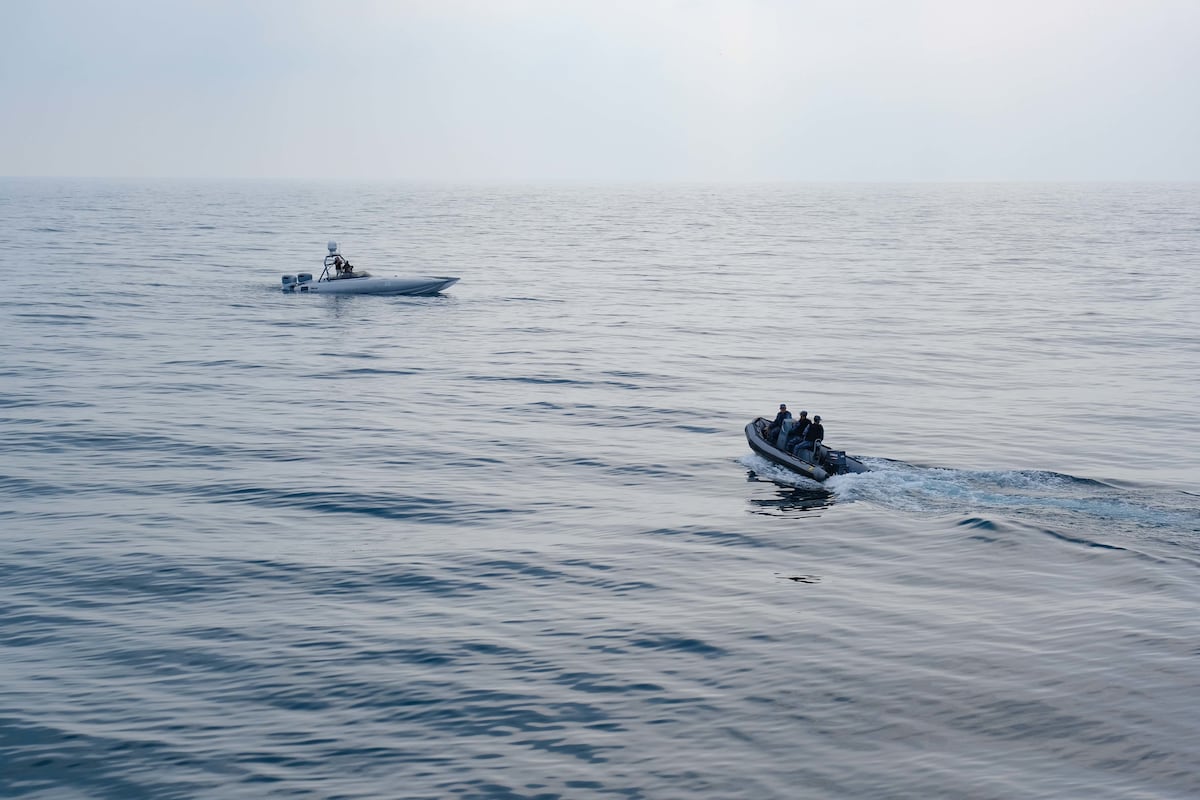
MILAN — The NATO alliance has begun planning for its own fleet of unmanned boats meant to help protect critical undersea infrastructure across the Baltic and Mediterranean seas.
Following a pattern of undersea cable damage across European waters in the last year, with the most recent disruptions happening just weeks ago, top NATO officials have begun envisioning a capability that would allow the alliance to have permanent eyes above and under the waterline.
In an interview with Defense News, Adm. Pierre Vandier, the alliance’s Norfolk, Virginia-based commander for concepts and transformation, likened the idea to police CCTV cameras installed on street lights in urban trouble spots for recording evidence of crimes.
“The technology is there to make this street-lighting with USVs,” he said, using the military’s shorthand for unmanned surface vessel.
Vandier said his team is in the early stages of developing a USV fleet so that “NATO can see and monitor daily its environment.”
The first step would be to achieve this at a surface level, and then later under water.
The new project has already received “great support” from the central command of all NATO maritime forces, known as MARCOM, and the alliance operational headquarters of SACEUR, Vandier added.
While many details still need to be hashed out, officials believe they can equip the drone formation with fielded platforms that are known to work , leaning on experiments done by the U.S. Navy’s Task Force 59.
“There is no name [for now], just USV Fleet,” Vandier told Defense News. “In fact, it already exists, so somehow it’s not very risky. The U.S. has enforced Task Force 59 in the Gulf for years, so everything is known and sold, so it is much more a matter of adoption than technology.”
Launched in 2021, TF 59 is a unit dedicated to integrating unmanned systems and artificial intelligence in the U.S. Navy’s 5th Fleet area of operations. It operates out of Bahrain and includes drones as well as other uncrewed vehicles working alongside manned ships.
In January, a new sub-unit was established, called Task Group 59.1, whose focus is on testing and upgrading industry systems to bolster maritime security across the Middle East region.
As of last month, the unit has trialed, upgraded and experimented with more than 23 different unmanned systems.
The task group took part in exercise Digital Talon in early November, during which it succeeded at remotely launching a loitering munition at sea and tested the vertical take-off and landing of drones from a USV.
According to Vandier, the goal is to launch the drone surveillance fleet before the next NATO Summit, which will be held in the Netherlands next June.
“We are to experiment with the first talks about this and then work with the allies to find a proper way to make this happen,” he added.
The most recent incidents of undersea cable disruptions took place on Nov. 17 and 18, when a cable of a telecommunications company between Lithuania and Sweden was cut, and a cable connecting Finland and Germany was damaged.
Investigations of the incidents are still ongoing.
Elisabeth Gosselin-Malo was a Europe correspondent for Defense News. She covers a wide range of topics related to military procurement and international security, and specializes in reporting on the aviation sector. She is based in Milan, Italy.
米兰——北约联盟已开始计划组建自己的无人船队,旨在帮助保护波罗的海和地中海的关键海底基础设施。
过去一年,欧洲水域海底电缆屡遭破坏,最近一次破坏就发生在几周前。鉴于此,北约高级官员开始设想一种能力,使该联盟能够永久监控水上和水下情况。
在接受《防务新闻》采访时,驻弗吉尼亚州诺福克的联盟概念与转型指挥官皮埃尔·范迪耶海军上将将这一想法比作在城市治安混乱地区的路灯上安装的警察闭路电视摄像头,用于记录犯罪证据。
“利用无人水面艇(USV)进行路灯照明的技术已经存在了,”他说道,这里他使用了军方对无人水面艇的简称。
范迪尔表示,他的团队正处于开发无人水面艇舰队的早期阶段,以便“北约能够每天观察和监测其环境”。
第一步是在水面实现这一点,然后再在水下实现。
范迪尔补充说,新项目已经得到了北约所有海上部队中央司令部(MARCOM)和欧洲盟军最高司令部(SACEUR)的“大力支持”。
虽然还有许多细节需要敲定,但官员们相信,他们可以依靠美国海军第 59 特遣部队所做的实验,为无人机编队配备已知有效的已部署平台。
“目前还没有正式名称,暂且称之为无人水面艇舰队,”范迪尔告诉《防务新闻》。“事实上,它已经存在了,所以风险并不大。美国在海湾地区部署第59特遣部队多年,所有情况都已明确,也已公开宣传,因此这更多的是一个应用问题,而不是技术问题。”
TF 59于2021年成立,是一支致力于在美国海军第五舰队作战区域整合无人系统和人工智能的部队。该部队驻扎在巴林,其成员包括无人机和其他无人载具,与有人舰艇协同作战。
1 月,成立了一个新的分队,名为 59.1 特遣队,其重点是测试和升级行业系统,以加强整个中东地区的海上安全。
截至上个月,该单位已对超过 23 种不同的无人系统进行了试验、升级和实验。
该特遣队于 11 月初参加了“数字利爪”演习,期间成功地在海上远程发射了一枚巡飞弹,并测试了无人机从无人水面艇上的垂直起降。
据范迪尔称,目标是在明年6月于荷兰举行的下一届北约峰会之前推出无人机监视机队。
他补充说:“我们将就此进行初步会谈,然后与盟友合作,找到实现这一目标的合适方法。”
最近一次海底电缆中断事件发生在 11 月 17 日和 18 日,当时立陶宛和瑞典之间一家电信公司的电缆被切断,连接芬兰和德国的电缆遭到损坏。
事件调查仍在进行中。
伊丽莎白·戈斯林-马洛曾任《防务新闻》欧洲通讯员。她的报道涵盖军事采购和国际安全等广泛领域,尤其擅长航空领域的报道。她常驻意大利米兰。