America needs a new grand strategy to navigate the 21st century美国需要一项新的宏观战略来应对21世纪的挑战。
The administration needs a grand strategy that looks beyond potential sanctions and asks what elements comprise a posture that protects the security interests of the West and Ukraine, while satisfying Vladimir Putin’s desire to leave behind a legacy that in his mind makes Russia great again.
The United States and its allies are in a strategic quagmire. Buffeted along the full spectrum of hybrid warfare by peer, near-peer and nonstate adversaries, they are losing ground diplomatically, technologically, militarily and economically.
Inasmuch as they are the guardians of the liberal world order, that order is losing ground to an illiberal, authoritarian alternative. The possible end states to the current trajectory range from gradual decline and descent into a 21st century version of the “second world” to defeat and subordination under authoritarian conquerors.
Our efforts to counter our adversaries on this complex, modern battlefield are ad hoc, feckless and not very effective. There is a path out of this quagmire, but it will demand resolute conviction and a seriousness of purpose not shown by American policymakers in many years: We need a grand strategy for navigating the national security challenges of the 21st century.
The consequences of failing to have one are evident in the current Ukraine crisis , which is being dealt with piecemeal rather than within a framework that identifies and clarifies our broad strategic goals. Such a framework should rationalize our policies not only toward Russia and Ukraine, but toward China, the Western alliance and the rest of the world.
One way to accomplish this and create such a framework is convening a new bipartisan Project Solarium that forges a new grand strategy designed to purpose for today’s global threat environment. Bipartisanship will be essential for this new solarium to succeed and to ensure the durability of the grand strategy it produces. A grand strategy forged with input and support from both parties must be able to survive regardless of which party controls Congress or even if former President Donald Trump returns to the White House.
The more perilous the global security environment, the more critical consistency is for deterrence against our adversaries and credibility for our allies and partners.
What is the Solarium Project?
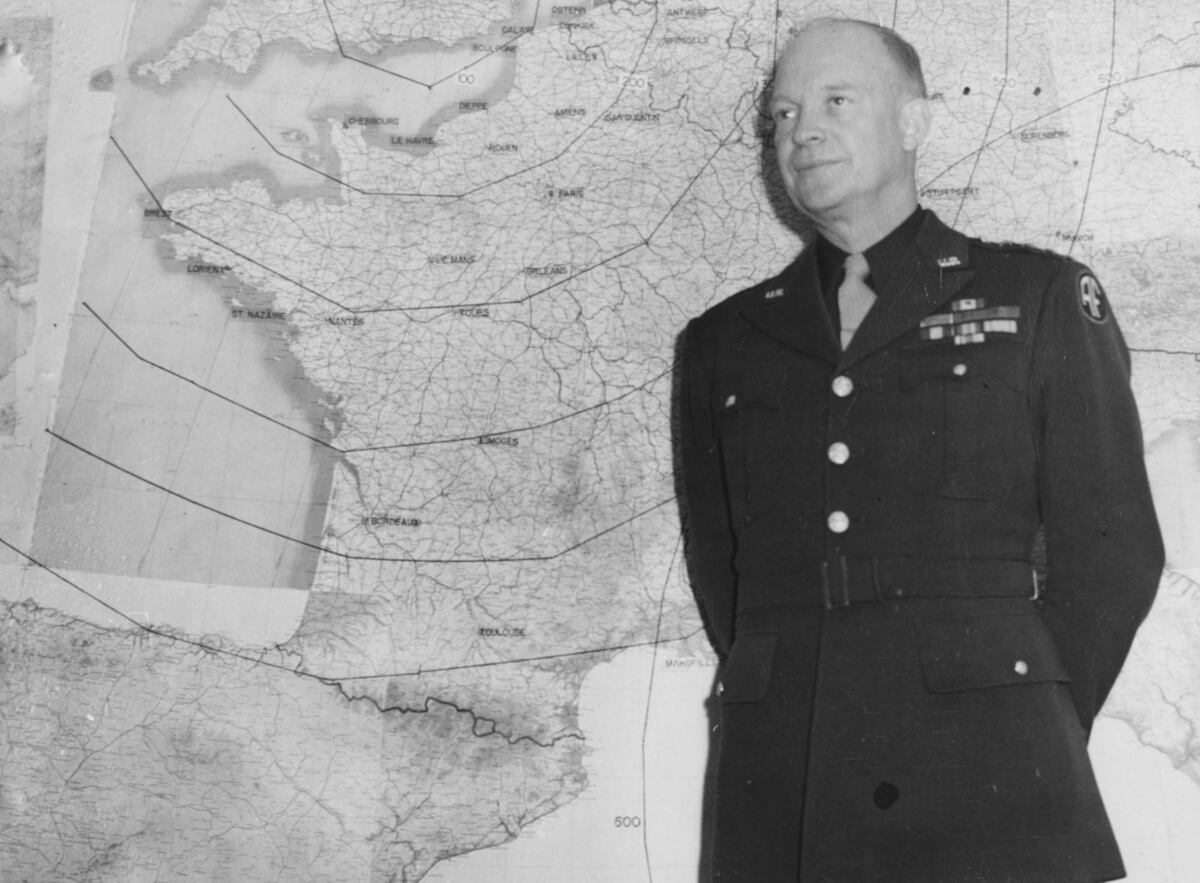
In 1953, President Dwight D. Eisenhower recognized that the United States lacked a grand strategy for combating communism. Behind his grandfatherly public demeanor, Ike was a hard-nosed, practical intellectual who personally knew the key players in the international arena and grasped their worldviews. He scoffed at the idea of coexistence with communism. He wanted to defeat it. A hands-on executive, he recognized the need for a grand strategy.
To meet that challenge, Eisenhower initiated Project Solarium , named for a room in the White House. He created three task forces. Each received the same information and intelligence. The task: Present recommendations for a grand strategy to defeat communism.
Ambassador George F. Kennan’s team argued for a policy of containment. A second team took a tougher view that relied less on allies and more on nuclear capabilities. The third team advocated positive action to roll back Soviet power by any means available. The teams presented their arguments to 60 highly informed individuals.
Ike opted for Kennan’s approach: containment.
Project Solarium was farsighted and wise. We’ve seen the consequences of not having a grand strategy in Iraq, Afghanistan or dealing more effectively with the current Ukraine crisis, which President Joe Biden himself has said will likely produce armed conflict. The administration needs a grand strategy that looks beyond potential sanctions and asks what elements comprise a posture that protects the security interests of the West and Ukraine, while satisfying Vladimir Putin’s desire to leave behind a legacy that in his mind makes Russia great again. It’s not easy, but it is achievable.
Issues a new solarium should address
Policies have a greater chance of running off the rails when dealt with as tactical or operational problems. Crises like Ukraine and Syria, and how we deal with Russia and China, require a grand strategy.
For example, the broader issue that Ukraine raises is not necessarily just how we might respond to a Russian attack on Kyiv (although that’s a key element because while public discourse views a Russian invasion as a two-step punch and counterpunch, you can be certain that every action will provoke a counter-reaction). The dangers of rapid escalation are evident. Anyone who doubts this is possible needs only look back to the outbreak of World War I, where miscalculation ignited a sudden, undesired chain of events.
A convoy of Russian armored vehicles moves along a highway in Crimea, Tuesday, Jan. 18, 2022. Russia has concentrated an estimated 100,000 troops with tanks and other heavy weapons near Ukraine in what the West fears could be a prelude to an invasion.(AP)
A grand strategy should clarify what relationship we desire with Russia that is achievable. Is the goal stability in Europe? Is it preserving democracy in at least western Ukraine? Is it motivating Russia to avoid joining China in an alliance against the U.S. and the West? Russia may not be our friend, but need it be an adversary? What is plausible in forging a relationship with Russia that advances our security interests and satisfies mutual interests?
Should we treat China as a competitor/rival, or an opponent/adversary? What end state with China do we believe satisfies our security concerns and is achievable? How do we counter China’s 2049 vision for global economic supremacy or its rejection of an international rules-based order that supports democracy and freedom of expression? What ways and means should we employ to achieve that end?
Different experts have proposed diverse answers, yet the Biden administration has yet to offer its own grand strategy. Unfortunately, the quadrennial national security strategies and their derivative products are mere amalgams of observations and desires from various parts of the national security architecture and are indeed anti-strategic. Designed according to the same bureaucratic methodology as recent national security strategies, it is unlikely the imminent version will be much of an improvement.
Every administration confronts serious challenges. But taking a leaf from Eisenhower, the U.S. government — for both this or any succeeding administration — would profit greatly by assembling the kind of large, diverse, bipartisan team that made Ike’s Project Solarium a strategic milestone on the road to strengthening our national security and paving the way for the eventual collapse of the Soviet Union. We need a new solarium now, more than ever.
James P. Farwell has advised U.S. Special Operations Command and the Defense Department. He is an associate fellow at King’s Centre for Strategic Communication at King’s College in London, and he is the author of “Information Warfare.” Michael Miklaucic is a senior fellow at the National Defense University and the editor-in-chief of its journal PRISM.
美国及其盟友正陷入战略泥潭。在势均力敌、实力接近的对手以及非国家行为体发起的混合战争的冲击下,它们在外交、技术、军事和经济方面都节节败退。
尽管他们是自由世界秩序的捍卫者,但这一秩序正逐渐被非自由主义的威权主义所取代。当前发展轨迹的最终结果可能包括:逐步衰落,沦为21世纪版的“第二世界”,最终被威权征服者击败并奴役。
在这个复杂现代的战场上,我们应对对手的努力是临时性的、无力的,而且收效甚微。摆脱这种困境并非没有出路,但这需要美国决策者多年来所缺乏的坚定信念和严肃认真的态度:我们需要一项应对21世纪国家安全挑战的宏伟战略。
当前乌克兰危机凸显了缺乏此类框架的后果。这场危机目前采取的是零散处理的方式,而非在一个能够明确和阐明我们总体战略目标的框架内进行应对。这样的框架不仅应该使我们对俄、对乌克兰的政策更加合理,也应该使我们对中国、西方联盟以及对世界其他地区的政策更加合理。
实现这一目标并构建此类框架的一种途径是召集一个新的两党合作的“日光浴项目”(Project Solarium),制定一项旨在应对当今全球威胁环境的全新宏观战略。两党合作对于这个新“日光浴项目”的成功以及确保其所制定宏观战略的持久性至关重要。一项汇集两党意见和支持的宏观战略必须能够经受住国会由哪个党派掌控,甚至前总统唐纳德·特朗普重返白宫的考验。
全球安全环境越危险,保持一致性对于威慑对手、维护盟友和伙伴的信誉就越重要。
什么是日光浴室项目?
1953年,德怀特·D·艾森豪威尔总统意识到美国缺乏对抗共产主义的宏观战略。在慈祥的公众形象背后,艾克是一位精明强干、务实的知识分子,他与国际舞台上的关键人物私交甚笃,并深入了解他们的世界观。他嗤之以鼻与共产主义共存的想法,一心想要彻底击败它。作为一位亲力亲为的领导人,他深知制定宏观战略的必要性。
为了应对这一挑战,艾森豪威尔启动了“日光浴室计划”(Project Solarium),该计划以白宫的一间房间命名。他组建了三个特别工作组,每个工作组都获得了相同的信息和情报。他们的任务是:提出一项击败共产主义的宏伟战略建议。
乔治·F·凯南大使的团队主张采取遏制政策。第二个团队则持更为强硬的立场,认为应该减少对盟友的依赖,更多地依靠核武器能力。第三个团队主张采取一切可行手段,积极遏制苏联的实力。各团队向60位见多识广的人士陈述了各自的观点。
艾克选择了肯南的方法:遏制。
“日光浴计划”极具远见卓识。我们已经目睹了在伊拉克、阿富汗缺乏宏观战略的后果,以及在应对当前乌克兰危机时缺乏有效措施的后果——拜登总统本人也曾表示,乌克兰危机很可能引发武装冲突。本届政府需要一项超越潜在制裁的宏观战略,并探究哪些要素能够构成既保护西方和乌克兰安全利益,又能满足普京希望留下“俄罗斯再次伟大”的政治遗产的战略。这并非易事,但并非不可能实现。
新建日光浴室应解决的问题
如果将政策视为战术或操作层面的问题来处理,则更容易出现偏差。像乌克兰和叙利亚这样的危机,以及我们如何应对俄罗斯和中国,都需要宏观战略。
例如,乌克兰问题引发的更广泛的问题并非仅仅在于我们如何应对俄罗斯对基辅的攻击(尽管这至关重要,因为尽管公众舆论将俄罗斯入侵视为两步走的攻防战,但可以肯定的是,任何行动都会引发反击)。局势迅速升级的危险显而易见。任何对此表示怀疑的人只需回顾第一次世界大战的爆发,当时的误判引发了一系列突如其来的、意想不到的事件。
2022年1月18日星期二,一支俄罗斯装甲车队在克里米亚的一条公路上行驶。据估计,俄罗斯已在乌克兰附近集结了约10万名士兵,配备坦克和其他重型武器,西方担心这可能是入侵的前兆。(美联社)
一项宏观战略应当明确我们希望与俄罗斯建立何种可实现的关系。目标是维护欧洲的稳定吗?是至少在乌克兰西部地区维护民主吗?是促使俄罗斯避免与中国结盟对抗美国和西方吗?俄罗斯或许不是我们的朋友,但我们非得把它当成对手吗?在与俄罗斯建立既能增进我们的安全利益又能满足双方共同利益的关系中,哪些方案是切实可行的?
我们应该将中国视为竞争对手/对手,还是敌对势力/对抗者?我们认为与中国达成怎样的最终状态才能既满足我们的安全关切,又切实可行?我们该如何应对中国2049年实现全球经济霸权的愿景,以及其对支持民主和言论自由的国际规则秩序的拒绝?我们应该采取哪些途径和手段来实现这一目标?
不同专家提出了各种不同的答案,但拜登政府至今仍未提出自己的总体战略。遗憾的是,每四年一次的国家安全战略及其衍生产品,只不过是国家安全体系中各个部门的观察和愿望的拼凑,实际上并非战略性的。由于其设计方法与近期的国家安全战略如出一辙,即将出台的新版本不太可能有所改进。
每一届政府都会面临严峻的挑战。但借鉴艾森豪威尔的经验,无论是本届政府还是任何一届继任政府,美国政府都将受益匪浅,因为组建一支规模庞大、多元化且跨党派的团队,就像当年艾森豪威尔的“日光浴计划”那样,该计划成为加强国家安全、最终促成苏联解体的战略里程碑。如今,我们比以往任何时候都更需要一个新的“日光浴计划”。
詹姆斯·P·法威尔曾为美国特种作战司令部和国防部提供咨询。他是伦敦国王学院国王战略传播中心的副研究员,著有《信息战》一书。迈克尔·米克劳西奇是美国国防大学的高级研究员,也是该校期刊《棱镜》(PRISM)的主编。