Denmark seeks small drones able to operate in cold temperatures丹麦寻求能够在低温环境下作业的小型无人机
The Danish Defence Ministry has issued a multimillion-dollar tender for several small drones intended for intelligence, surveillance and reconnaissance.
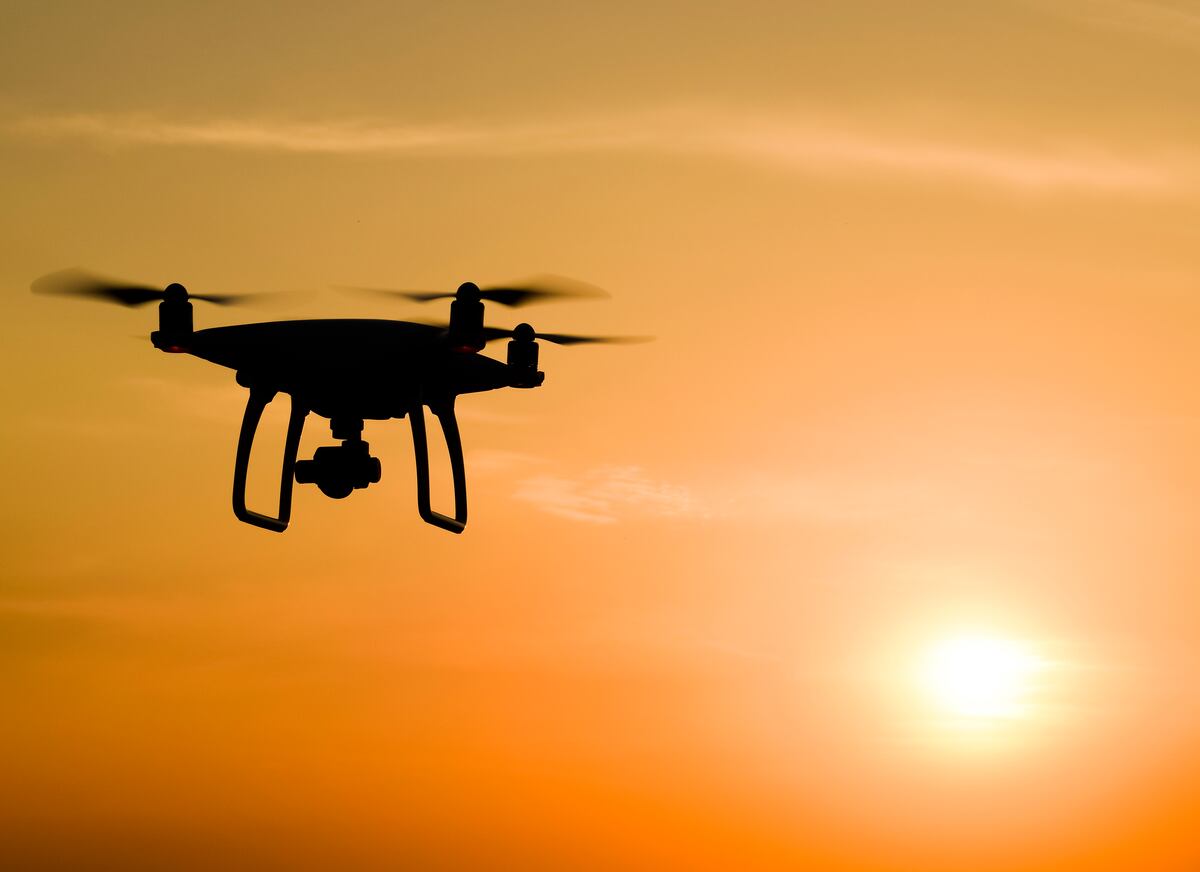
MILAN, Italy — The Danish Defence Ministry has issued a multimillion-dollar tender for several small drones intended for intelligence, surveillance, reconnaissance and fire support operations.
The Tenders Electronic Daily, an online version of the Supplement to the Official Journal of the European Union that details public procurement efforts on the continent, published last month a detailed contract notice for the purchase of NATO Class 1 small unmanned aerial systems as well as sustainment, support and training. This category of drones generally refers to tactical unit systems weighing more than 15 kilograms (33 pounds).
The main components of the order will consist of a minimum of three drones capable of vertically taking off and landing without the need for a separate system, such as launchers or parachutes. Each drone should feature a synthetic aperture radar and a primary sensor package. The order would also include two ground control stations and all necessary ground equipment.
During the assessment phase, the Defence Ministry will consider as the most important factors the specific drone category and the lowest temperature at which the system can operate and land. The value of the initial purchases are expected to be about $107 million, and the tender will close March 23.
Other outlined technical capabilities include:
An on-station time — the ability to maintain an observation position — of at least 8 hours at a range of 90 kilometers (56 miles).
The ability to take off at a temperature of minus 10 degrees Celsius (14 degrees Fahrenheit).
The ability to continue an in-flight mission, including landing, in conditions of minus 40 degrees Celsius.
The ability to launch and land on ships.
The ability to fit in two 10-foot International Organization for Standardization containers for storage.
The drones are intended primarily for national and international ISR missions. Additionally, the online documents stated that each drone is “to be operated from a total of two trucks with ISO containers, making it possible for operators to continually operate one UAV while moving the ground control station from which the drone is operated.”
The Danish military has wanted to increase its unmanned capabilities for several years, specifically to monitor Arctic regions. In 2020, Denmark announced its intention to procure drones, but that notice was terminated. A report from Tenders Electronic Daily shows the decision was made after the Defence Ministry noticed the planned acquisition did not take into account operational needs for the country’s defense.
Denmark previously experimented with several types of smaller drones, but has never possessed larger systems such as the MQ-9 Reaper. Platforms of that size tend to be more costly than smaller variants and require greater infrastructure to operate. As the country has territorial claims in areas around the Faroe Islands and the north of Greenland covering parts of the North Pole, there are few land-based structures from which large drones can land and launch; this could be why the country prefers vertical-takeoff-and-landing platforms.
In 2007, it acquired 12 Raven B small drones from AeroVironment, on which the country relied during operations in Afghanistan. In 2012, Denmark replaced them with Puma AE drones, also produced by the American company, but they were larger and can loiter for longer durations. The country currently does not possess armed variants.
Elisabeth Gosselin-Malo was a Europe correspondent for Defense News. She covers a wide range of topics related to military procurement and international security, and specializes in reporting on the aviation sector. She is based in Milan, Italy.
意大利米兰——丹麦国防部发布了一份价值数百万美元的招标书,采购多架小型无人机,用于情报、监视、侦察和火力支援行动。
《欧盟官方公报增刊》的在线版——《招标电子日报》(Tenders Electronic Daily)——上个月发布了一份详细的合同公告,内容涉及采购北约一级小型无人机系统以及相关的维护、支持和培训服务。该类无人机通常指重量超过15公斤(33磅)的战术单元系统。
该订单的主要内容包括至少三架能够垂直起降的无人机,无需像发射器或降落伞那样的独立系统。每架无人机都应配备合成孔径雷达和主传感器组件。订单还将包括两个地面控制站和所有必要的地面设备。
在评估阶段,国防部将重点考虑无人机的具体类别以及系统能够运行和着陆的最低温度。首批采购金额预计约为1.07亿美元,招标将于3月23日截止。
其他概述的技术能力包括:
在90公里(56英里)的范围内,保持观测位置至少8小时的驻留时间(即保持观测位置的能力)。
能够在零下10摄氏度(14华氏度)的温度下起飞。
在零下 40 摄氏度的条件下继续执行飞行任务(包括着陆)的能力。
具备在舰船上起降的能力。
能够容纳两个 10 英尺国际标准化组织 (ISO) 集装箱进行存储。
这些无人机主要用于国内和国际情报、监视与侦察(ISR)任务。此外,在线文件指出,每架无人机“将由两辆装有ISO集装箱的卡车进行操作,这样操作人员就可以在移动地面控制站的同时,持续操控一架无人机。”
丹麦军方多年来一直希望提升其无人作战能力,尤其是在北极地区的监测方面。2020年,丹麦宣布计划采购无人机,但随后终止了采购。据《招标电子日报》(Tenders Electronic Daily)报道,国防部做出这一决定的原因是,他们发现原计划的采购并未充分考虑丹麦国防的实际作战需求。
丹麦此前曾试验过几种小型无人机,但从未拥有过像MQ-9“死神”这样的大型系统。这类平台通常比小型无人机成本更高,而且需要更完善的基础设施才能运行。由于丹麦对法罗群岛周边地区和格陵兰岛北部(包括部分北极地区)拥有领土主张,因此可供大型无人机起降的陆基设施很少;这或许可以解释为什么丹麦更倾向于使用垂直起降平台。
2007年,丹麦从美国AeroVironment公司采购了12架Raven B小型无人机,并在阿富汗的军事行动中主要依靠这些无人机。2012年,丹麦用Puma AE无人机取代了Raven B,Puma AE无人机同样由这家美国公司生产,但尺寸更大,滞空时间更长。目前,丹麦没有武装型Puma AE无人机。
伊丽莎白·戈斯林-马洛曾任《防务新闻》欧洲通讯员。她的报道涵盖军事采购和国际安全等广泛领域,尤其擅长航空领域的报道。她常驻意大利米兰。