British military’s space campaign picks up steam with ‘Skynet’ upgrade英国军方太空计划因“天网”升级而加速推进
Space programs are expected to be among the winners as the UK government plans to pump additional money into the defense budget in 2021 and beyond.
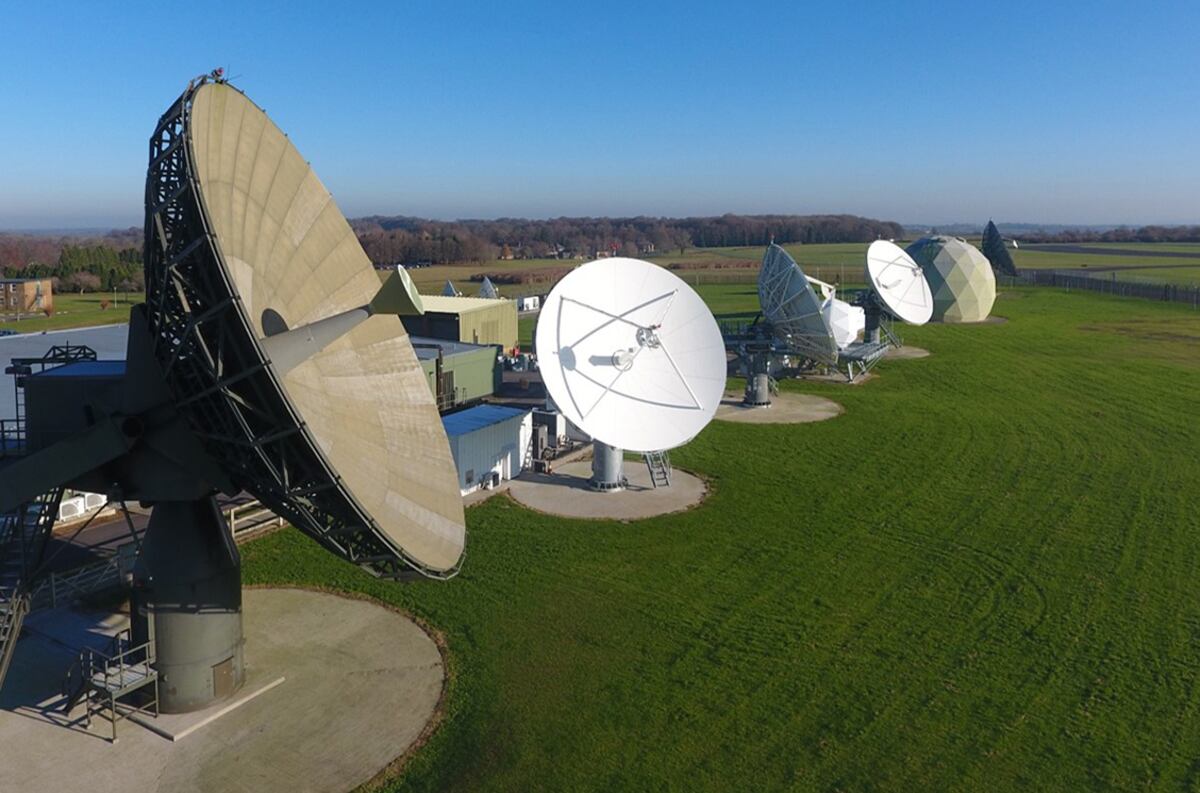
LONDON – Viasat is upgrading Skynet satellite communications capabilities to enable the British military to comply with the latest integrated waveform requirement known as IW Phase 2, the company said on Feb. 8.
The deal was signed in the second quarter of 2020 but the UK arm of the Carlsbad, California-based communications company has only now been able to announce that it is undertaking the upgrade to ultra-high-frequency satellite communications network control stations in the Skynet system.
The upgrade is one in a spate of military-related space announcements in the last few days, which have seen the Ministry of Defence name its first Space Command boss and Lockheed Martin tie up with a rocket supplier for its first vertical launch from a UK spaceport.
The satellite communications contract was awarded by Airbus Defence and Space, the current private finance initiative operator of the Skynet satellites and associated ground control stations.
Airbus operates a clutch of Skynet 4 and 5 satellites and is building another spacecraft known as Skynet 6A.
The Airbus deal to operate Skynet nears its end, and the winner of a competition to operate the ground control stations beyond 2022 is expected soon.
Viasat is supplying its visual integrated satellite communications information, operation and networking software platform, known as Vision, to meet the IW Phase2 requirement.
Britain and its allies are in the process of switching to the new integrated waveform software in order to retain interoperability with U.S. military upgrades.
Last August, Viasat announced it had successfully used Vision in the upgrade of NATO satellite control stations to comply with the new requirement.
Viasat is not a newcomer to Skynet’s supply chain. Airbus has been using earlier versions of the company’s integrated waveform technology in the system since 2012.
Officials hope the upgrade will enhance mission situation awareness and operational insights on the communication system.
Steve Beeching, Viasat UK’s managing director said the upgrade is key to expanding Skynet capabilities.
“With Vision, the network operators will gain more assured, reliable, real-time communications capabilities to reconfigure UHF satellite networks to meet new tactical profiles—as battlefield and warfighter requirements dynamically expand and contract,” Beeching said.
The improved capabilities come at a time of increasing focus on military space by the British. Last year the British government acquired a stake in failed satellite constellation operator OneWeb as part of a deal to revive the operation.
Prime Minister Boris Johnson signaled space as a sector to watch when he announced in a speech last November that the government was intending to raise defense spending by an extra £16.5 billion, or $23 billion, over four years.
In total the British say they are going to raise spending in the defense sector by £24.1 billion over the period.
Space budgets are likely to be a major beneficiary, although details will likely have to await publication of a government integrated review of defense, security, foreign policy and overseas develop policy targeted for the spring.
A defense white paper about defense equipment plans is expected immediately following the review.
Conventional weapon programs are expected to be victims of cuts to make room for investments in space, cyber and other new technologies.
Defense space activities continue to progress here even without spending plan details being public.
Last week the MoD named Air Commodore Paul Godfrey as the first commander of the new UK Space Command.
Godfrey, soon to be promoted to Air Vice-Marshal, is no stranger to the U.S. military. His previous position saw him responsible for the planning and employment of coalition air and space power across the Middle East within the U.S. Air Force Combined Air and Space Operations Center.
Based at RAF High Wycombe, Space Command will be a joint command, staffed from all three arms of the military, the civil service and industry. It brings together under a single two-star military commander: space operations, space workforce generation and space capabilities.
Some of those capabilities may be enhanced by an announcement Feb. 8 that Lockheed Martin UK has contracted ABL Space Systems to launch a rocket from the Shetland Space Centre being created on Britain’s most northerly island.
ABL’s new RS1 rocket is set to become the first ever vehicle to vertically launch small satellites from the UK.
If the Lockheed Martin-led work, known as the UK Pathfinder Launch program, goes to plan, lift-off of the rocket from the Shetland island of Unst is set for next year.
Once the RS1 is in orbit the rocket will release a small launch orbital maneuvering tug built by Reading, southern England-based Moog.
The tug can deploy up to six miniaturized cube satellites. Two of the cubesats deployed will be Lockheed Martin’s own technology demonstration spacecraft.
The RS1 is currently in the final stages of development and a maiden launch is planned for the second quarter of this year from Vandenberg Air Force Base, California.
Andrew Chuter is the United Kingdom correspondent for Defense News.
伦敦——Viasat公司于2月8日表示,该公司正在升级Skynet卫星通信能力,以使英国军方能够满足最新的集成波形要求,即IW Phase 2。
该协议于 2020 年第二季度签署,但这家总部位于加利福尼亚州卡尔斯巴德的通信公司的英国分公司直到现在才宣布,它正在进行 Skynet 系统中超高频卫星通信网络控制站的升级。
此次升级是最近几天一系列与军事相关的太空公告之一,其中包括英国国防部任命了首位太空司令部司令,以及洛克希德·马丁公司与一家火箭供应商合作,从英国航天港进行首次垂直发射。
卫星通信合同由空中客车防务与航天公司授予,该公司是目前运营 Skynet 卫星及相关地面控制站的私人融资计划运营商。
空客公司运营着一批 Skynet 4 和 5 卫星,并且正在建造另一艘名为 Skynet 6A 的航天器。
空客运营 Skynet 的协议即将到期,预计很快就会公布 2022 年以后地面控制站运营权的竞标获胜者。
Viasat 正在提供其视觉集成卫星通信信息、操作和网络软件平台 Vision,以满足 IW Phase2 的要求。
英国及其盟国正在逐步过渡到新的集成波形软件,以保持与美国军方升级的互操作性。
去年八月,Viasat 宣布已成功利用 Vision 技术升级北约卫星控制站,以满足新的要求。
Viasat并非Skynet供应链的新成员。空客自2012年起就在该系统中使用该公司早期版本的集成波形技术。
官员们希望此次升级能够增强对通信系统的任务态势感知和作战洞察力。
Viasat UK 的总经理 Steve Beeching 表示,此次升级是扩展 Skynet 功能的关键。
“借助 Vision,网络运营商将获得更可靠、更稳定的实时通信能力,从而能够重新配置超高频卫星网络,以满足新的战术需求——随着战场和作战人员的需求动态地扩展和收缩,”比钦说。
英国日益重视军事航天领域,而此次能力的提升正值此时。去年,英国政府收购了破产的卫星星座运营商OneWeb的股份,作为重振该公司运营协议的一部分。
英国首相鲍里斯·约翰逊去年 11 月在一次演讲中宣布,政府计划在四年内增加 165 亿英镑(约合 230 亿美元)的国防开支,这表明太空领域值得关注。
英国方面表示,在此期间,他们将在国防领域增加241亿英镑的支出。
太空预算可能会成为主要受益者,但具体细节可能要等到政府对国防、安全、外交政策和海外发展政策进行综合审查后才能公布,该审查计划于春季发布。
预计审查结束后将立即发布一份关于国防装备计划的国防白皮书。
为了给太空、网络和其他新技术领域的投资腾出空间,传统武器项目预计将成为削减预算的牺牲品。
即使支出计划的细节尚未公开,国防航天活动仍在继续推进。
上周,英国国防部任命空军准将保罗·戈弗雷为新成立的英国太空司令部的首任司令。
即将晋升为空军少将的戈弗雷对美国军方并不陌生。他此前曾在美国空军联合空天作战中心负责中东地区联军空天力量的规划和运用。
太空司令部将设在英国皇家空军海威科姆基地,是一个联合司令部,人员来自军队、文职部门和工业界。它将太空作战、太空人才培养和太空能力整合在一个两星上将的指挥下。
2 月 8 日,洛克希德·马丁英国公司宣布与 ABL 航天系统公司签订合同,从英国最北端的设得兰群岛正在建设的设得兰航天中心发射火箭。此举可能会增强这些能力。
ABL 的新型 RS1 火箭将成为英国首个垂直发射小型卫星的运载工具。
如果由洛克希德·马丁公司牵头的英国探路者发射计划按计划进行,那么火箭将于明年从设得兰群岛的昂斯特岛发射升空。
RS1 进入轨道后,火箭将释放由位于英格兰南部雷丁的穆格公司制造的小型发射轨道机动拖船。
这艘拖船最多可以部署六颗微型立方体卫星。其中两颗是洛克希德·马丁公司自主研发的技术验证卫星。
RS1 目前处于开发的最后阶段,计划于今年第二季度从加利福尼亚州范登堡空军基地进行首次发射。
Andrew Chuter 是《防务新闻》的英国记者。