UK $6 billion defense boost targets atomic submarines, weapons top-up英国斥资60亿美元增兵国防,目标是扩充核潜艇和武器装备
The uptick falls short of what Defence Minister Ben Wallace had sought to improve the capabilities of Britain's military as a whole.
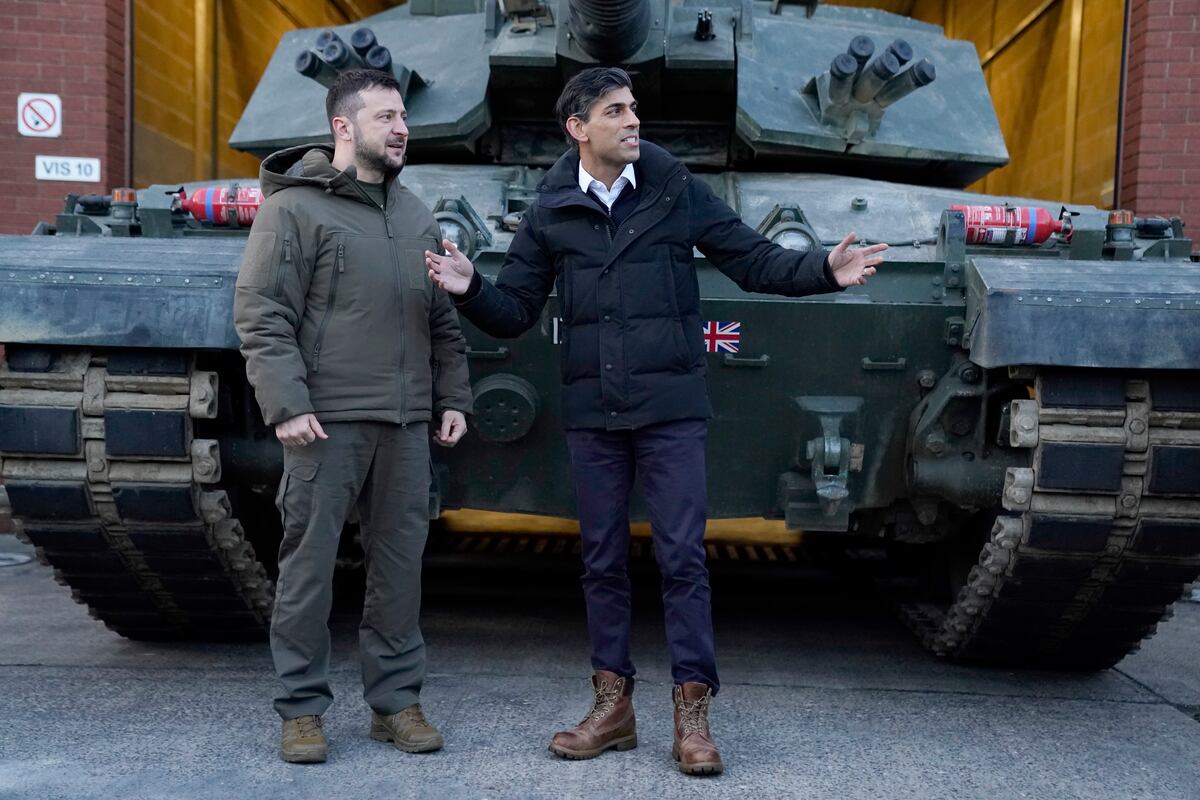
LONDON — Defense spending is getting a £5 billion ($6 billion) boost from the British government, but most of the cash has been earmarked for nuclear programs and rebuilding depleted weapons stocks rather than addressing wider capability gaps in the armed forces.
The funding figures, released Sunday night, will be contained in a refresh of the 2021 integrated defense and security review due to be published later today.
News of the increase came as Prime Minister Rishi Sunak headed off to San Diego, California, for a meeting Mar. 13 with U.S. President Joe Biden and Australian Prime Minister Anthony Albanese to announce details of the AUKUS nuclear submarine pact agreed by the three nations.
The £5 billion figure falls well short of the £8-10 billion funding injection sought by Defence Secretary Ben Wallace .
Around £3 billion of the extra cash will go towards nuclear submarine spending.
Funding Britain’s part of the plan to equip Australia with a fleet of nuclear submarines will consume a significant part of the spending hike planned for the wider nuclear effort, which also includes work on new classes of submarines, nuclear warhead replacement and other programs.
Led by BAE Systems, the British are currently building the final two of seven Astute-class attack submarines and have Dreadnought-class nuclear missile boats also in the construction phase. Spending has also begun on early design concept work for a new class of boats to replace Astute boats in the 2040s.
The remaining funds will go towards replenishing weapon stocks depleted by the ongoing supply of thousands of missiles and other ammunition to Ukraine in its defense against Russia.
The funds will be spent over the next two years, with £1.98 billion budgeted for the upcoming financial year and £2.97 billion the following 12 months.
Details of the plan have yet to emerge so it is unclear for the moment whether the £5 billion is a one-off payment or will be added to the MoD’s base line numbers.
Present defense spending amounts to £48 billion for this fiscal year and is set to rise only marginally in the upcoming fiscal year.
The government committed to a £24 billion, four-year uplift in defense spending in 2020, the largest sustained increase since the Cold War.
Meanwhile, the armed forces, particularly the Army, have seen their capabilities continue to be hollowed out, a situation made worse recently by a battering from inflation and exchange rate costs.
The spending figures see the British defense budget hovering just above the 2% of GDP targeted by NATO for its member states.
Analysts here say the British increase is modest compared with recent defense spending rises by NATO allies like France, Germany and Poland, all of whom have committed to substantial spending hikes in response to the growing threat posed by Russia.
Sunak has set out an ambition to increase defense spending to 2.5% of GDP in the longer term, but has not committed to a date.
The prime minister’s predecessors, Liz Truss and Boris Johnson, both committed to spend 3% of GDP on defense by 2030, but that pledge has not been renewed by Sunak.
The opposition Labour Party, currently far ahead of the ruling Conservative party in the polls, said the government was failing to secure Britain’s defense for the future.
“This announcement does not deal with capability gaps that weaken our national defense and undermine the UK’s NATO contribution,” said John Healey, Labour’s shadow defense secretary.
“When 25 other NATO nations have already rebooted defense plans and spending since Russia’s invasion of Ukraine, the Conservatives are still dragging their feet on the big decisions,” he said.
Andrew Chuter is the United Kingdom correspondent for Defense News.
伦敦——英国政府将国防开支增加 50 亿英镑(60 亿美元),但大部分资金已被指定用于核计划和重建耗尽的武器库存,而不是解决武装部队更广泛的能力差距。
周日晚间公布的拨款数据将包含在今天晚些时候发布的 2021 年综合国防和安全评估更新版中。
就在英国首相里希·苏纳克前往加利福尼亚州圣地亚哥,于 3 月 13 日与美国总统乔·拜登和澳大利亚总理安东尼·阿尔巴尼斯会面,宣布三国达成的 AUKUS 核潜艇协议的细节之际,有关增加军费开支的消息传来。
50亿英镑的数字远远低于国防大臣本·华莱士寻求的80亿至100亿英镑的资金注入目标。
额外增加的资金中约有30亿英镑将用于核潜艇的建设。
为英国向澳大利亚提供核潜艇舰队的计划提供资金,将占用计划用于更广泛的核能事业的支出增长计划中的很大一部分,该计划还包括新型潜艇、核弹头更换和其他项目。
由英国航空航天系统公司(BAE Systems)牵头,英国目前正在建造七艘“机敏”级攻击型潜艇中的最后两艘,同时“无畏”级核导弹潜艇也处于建造阶段。此外,英国也已开始着手研发一种新型潜艇的早期概念设计工作,该型潜艇计划在2040年代取代“机敏”级潜艇。
剩余资金将用于补充因持续向乌克兰提供数千枚导弹和其他弹药以抵御俄罗斯而消耗殆尽的武器库存。
这些资金将在未来两年内支出,下一财政年度预算为 19.8 亿英镑,接下来 12 个月预算为 29.7 亿英镑。
该计划的细节尚未公布,因此目前还不清楚这 50 亿英镑是一次性付款还是将添加到国防部的基本预算中。
本财年国防开支总额为 480 亿英镑,预计下一财年只会略有增长。
2020年,英国政府承诺在四年内增加240亿英镑的国防开支,这是冷战以来最大的持续增幅。
与此同时,武装部队,特别是陆军,其能力持续被削弱,而通货膨胀和汇率成本的冲击更是加剧了这一局面。
支出数据显示,英国国防预算略高于北约成员国设定的占GDP 2%的目标。
分析人士表示,与法国、德国和波兰等北约盟国近期大幅增加的国防开支相比,英国的增幅并不算大。这些盟国都已承诺大幅增加国防开支,以应对俄罗斯日益增长的威胁。
苏纳克已提出一项长期目标,即把国防开支提高到GDP的2.5%,但尚未承诺具体日期。
首相的前任利兹·特拉斯和鲍里斯·约翰逊都曾承诺到 2030 年将国内生产总值的 3% 用于国防,但苏纳克并未重申这一承诺。
目前在民调中遥遥领先于执政保守党的反对党工党表示,政府未能保障英国未来的国防安全。
工党影子国防大臣约翰·希利表示:“这项声明并没有解决削弱我国国防能力和损害英国对北约贡献的能力差距问题。”
他说:“自俄罗斯入侵乌克兰以来,其他 25 个北约国家已经重启了国防计划和开支,而保守党在重大决策上仍然拖延不决。”
Andrew Chuter 是《防务新闻》的英国记者。